Side-by-Side IQ Profiles: Malamute vs. Beardie
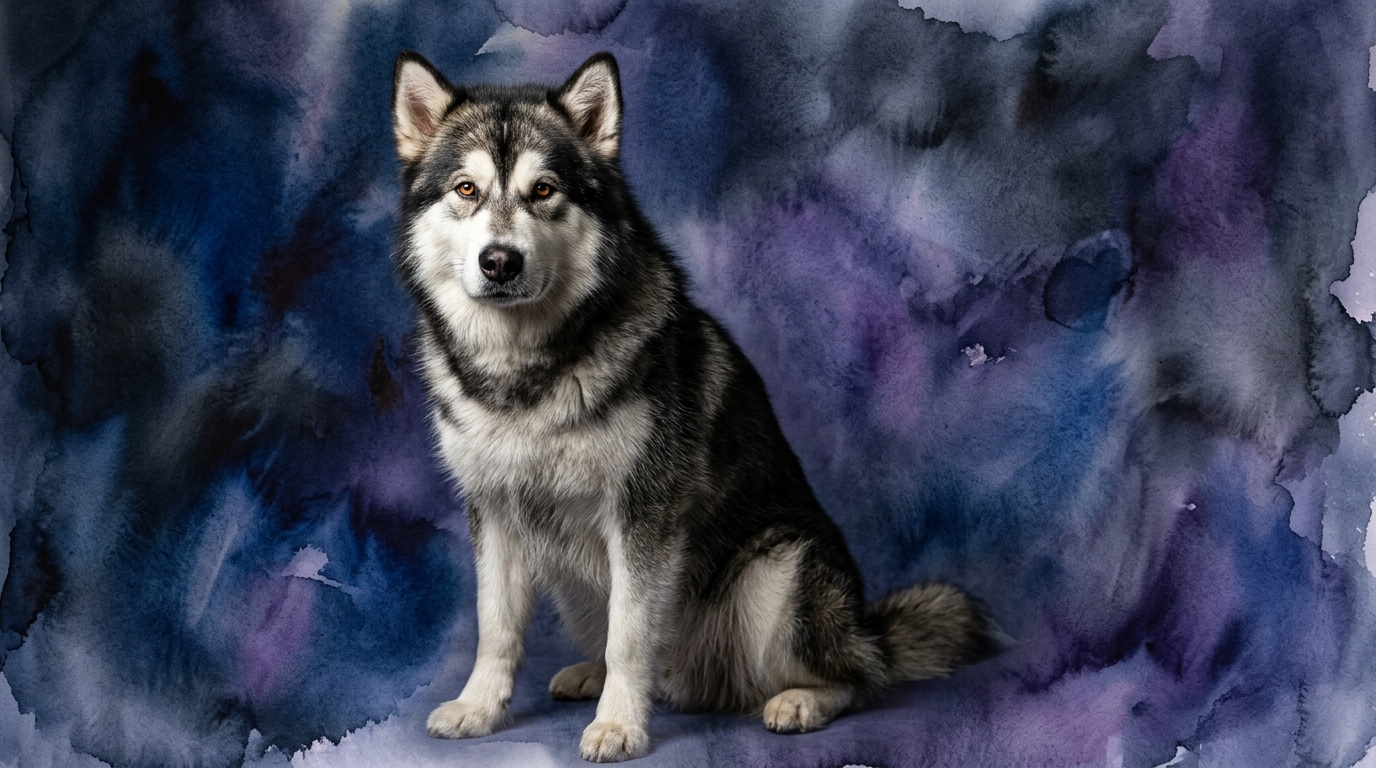
The Cosmic Pet Pet IQ Lab employs a multi-dimensional approach to assess canine cognition, moving beyond a singular 'intelligence' metric. For the Alaskan Malamute, a magnificent working breed, its profile includes a Coren rank of #50. Its Problem Solving score is 4/5, indicating a strong capacity for independent thought and finding solutions, often to its own benefit. Training Speed is 2/5, suggesting a more deliberate and less eager-to-please approach to learning commands. Social Intelligence stands at 3/5, demonstrating an awareness of social cues but often within its own established hierarchy. A defining characteristic is its Instinctive Drive at 5/5, reflecting an unparalleled urge to pull, hunt, and endure. Finally, its Memory is rated 4/5, allowing it to recall complex routes and past experiences vividly.
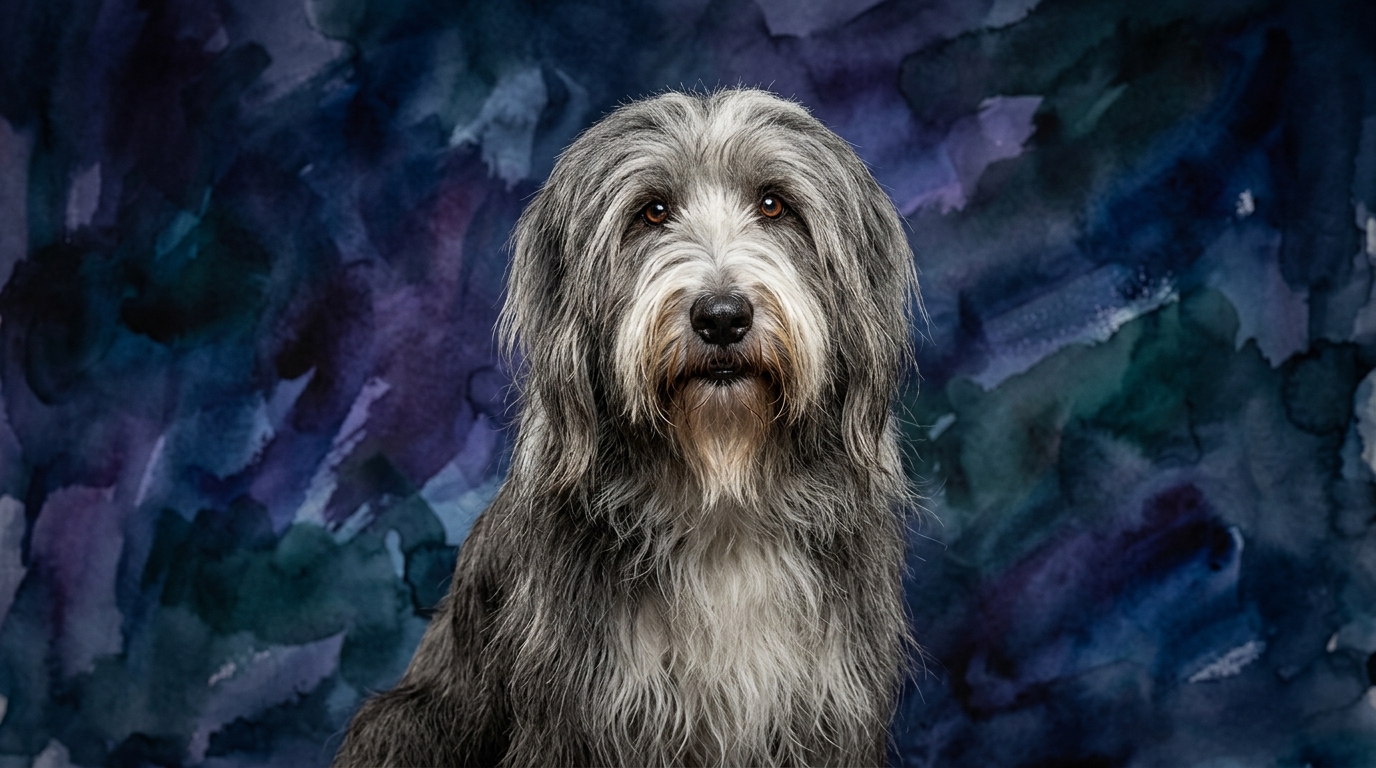
In contrast, the Bearded Collie, a spirited herding breed, holds a more elevated Coren rank of #34. Its Problem Solving score also registers at 4/5, signifying an adaptable mind capable of navigating complex, dynamic situations, particularly those involving livestock. Where it truly diverges from the Malamute is its Training Speed, scoring an impressive 4/5, illustrating a quick grasp of commands and a desire for cooperative learning. Its Social Intelligence is 3/5, similar to the Malamute, indicating an ability to read human intentions but maintaining a degree of independence in its work. The Bearded Collie's Instinctive Drive is 3/5, focused primarily on herding, which is present but generally more manageable than the Malamute's intense drives. Its Memory, like the Malamute's, is also 4/5, enabling it to remember intricate sequences and social interactions.
Where the Alaskan Malamute Wins Cognitively
The Alaskan Malamute's cognitive strengths are deeply rooted in its heritage as an arctic sled dog, where survival and task completion often depended on its own initiative and endurance. Its 5/5 Instinctive Drive is an unmatched asset, manifesting as an inherent, powerful motivation to pull and work in harsh conditions. This isn't merely physical; it's a profound mental drive that allows the Malamute to push through fatigue and adversity, making it exceptional in endurance sports and tasks requiring sustained effort. This drive, combined with its 4/5 Problem Solving, means a Malamute can independently assess a situation and devise a solution, such as finding a path through deep snow or locating a hidden resource, without constant human instruction.
Furthermore, the Malamute's 4/5 Memory is particularly robust for environmental details and spatial navigation. This breed excels at remembering complex routes, landmarks, and the location of resources over vast distances, a critical skill for a dog expected to lead a sled team across unmarked terrain. While its problem-solving might lean towards self-preservation or independent task completion rather than pleasing a handler, this self-reliance is a distinct cognitive advantage in environments where human guidance might be intermittent or challenging. This isn't a lack of cognition, but a different expression of it, favoring autonomy and resilience.
Where the Bearded Collie Wins Cognitively
The Bearded Collie’s cognitive profile shines brightly in areas demanding quick comprehension and a cooperative spirit, directly reflecting its role as a herding dog. Its superior Training Speed, rated 4/5, is a significant advantage. This means a Bearded Collie typically picks up new commands and complex sequences much faster than a Malamute, making it a highly responsive and adaptable pupil. This rapid learning curve is invaluable in herding, where split-second decisions and precise movements dictated by a handler are paramount, allowing the dog to adjust its strategy instantly based on livestock movement and human signals.
While both breeds share a 4/5 Problem Solving score, the Bearded Collie's application of this skill is often more collaborative and agile. It excels at dynamic problem-solving within a structured context, such as maneuvering a flock of sheep through a gate or anticipating their movements. Its higher Coren rank of #34, compared to the Malamute's #50, further suggests a greater capacity for understanding and executing commands, indicating a more direct and efficient communication channel with its human handler. This isn't just about obedience; it's about a sophisticated ability to interpret and respond to human intentions in a complex, ever-changing work environment.
Training: Which is Easier and Why?
When it comes to ease of training, the Bearded Collie holds a distinct advantage, primarily due to its 4/5 Training Speed compared to the Alaskan Malamute's 2/5. This difference is stark: a Bearded Collie typically requires fewer repetitions to grasp a new command and is often more motivated to engage in training sessions as a cooperative activity. Their herding background instilled a desire to work closely with humans, making them generally more responsive to cues and eager to please. Behavioral differences manifest in quicker recall, more consistent command execution, and a higher tolerance for repetitive drills.
The Alaskan Malamute, by contrast, approaches training with a more independent and often pragmatic mindset. Its lower Training Speed means it requires significant patience, consistency, and motivation from its handler. A Malamute might understand a command but choose not to perform it if it doesn't perceive immediate value or if its own strong instincts (5/5 Instinctive Drive) take precedence. Their history as independent problem-solvers in vast, unforgiving landscapes fostered a self-reliant nature; they aren't inherently driven by a strong desire to please in the same way a herding dog might be. Training a Malamute is less about quick obedience and more about building a strong bond based on mutual respect and making training highly rewarding and engaging to overcome their inherent independence.
Suitability for Active vs. Relaxed Owners
Neither the Alaskan Malamute nor the Bearded Collie is truly suited for a 'relaxed' owner in the sense of minimal daily engagement. Both breeds require significant physical and mental stimulation. However, their specific needs cater to different types of active lifestyles. The Alaskan Malamute is unequivocally for the highly active, outdoors-oriented owner who embraces extreme weather and intense physical challenges. Its immense 5/5 Instinctive Drive for endurance and pulling means it thrives on activities like skijoring, canicross, long hikes, and sustained outdoor adventures. A Malamute needs an owner who can consistently provide an outlet for its powerful physical and mental energy, otherwise, it can become restless and destructive.
The Bearded Collie, while also demanding an active lifestyle, suits an owner seeking a more interactive and mentally agile companion for dog sports and cooperative activities. Its 4/5 Training Speed and intelligent problem-solving make it an excellent candidate for agility, obedience, rally, and, of course, herding trials. While it needs ample exercise, perhaps not the sheer, relentless endurance of a Malamute, it thrives on structured activities that engage its mind and body in partnership with its owner. An active owner who enjoys regular training sessions, dog park visits, and varied outdoor excursions will find a compatible partner in a Bearded Collie.
The Verdict
Choose an Alaskan Malamute if you are an experienced, highly active individual or family committed to harnessing a powerful, independent dog for endurance activities and appreciate a companion with a self-reliant problem-solving nature.
Opt for a Bearded Collie if you seek an agile, cooperative, and highly trainable partner for dog sports, advanced obedience, or herding, and enjoy an active lifestyle that includes regular mental and physical engagement.
🧠 Find Your Pet's IQ Score
Our Pet IQ Lab assessment covers 25+ tests across 5 cognitive dimensions — personalized to your breed.
Take the Full IQ Test →Frequently Asked Questions
Are Alaskan Malamutes stubborn during training?
Alaskan Malamutes are often perceived as stubborn due to their 2/5 Training Speed and independent nature. They are not difficult to train because they lack intelligence, but because they prioritize their own motivations and require consistent, highly rewarding training methods to engage their cooperation.
Do Bearded Collies require a lot of exercise?
Yes, Bearded Collies, as herding dogs with a 3/5 Instinctive Drive, require significant daily exercise. This includes not only physical activity like running and long walks but also mental stimulation through training and interactive play to prevent boredom and destructive behaviors.
Can either breed live in an apartment?
While both breeds are high-energy, an Alaskan Malamute is generally less suited for apartment living due to its size, immense exercise needs, and vocal tendencies. A Bearded Collie *might* adapt to a very large apartment with a dedicated owner who provides multiple long walks, dog park visits, and structured mental engagement daily, but a house with a yard is always preferable for both.