Side-by-Side IQ Profile: Malamute vs. Coonhound
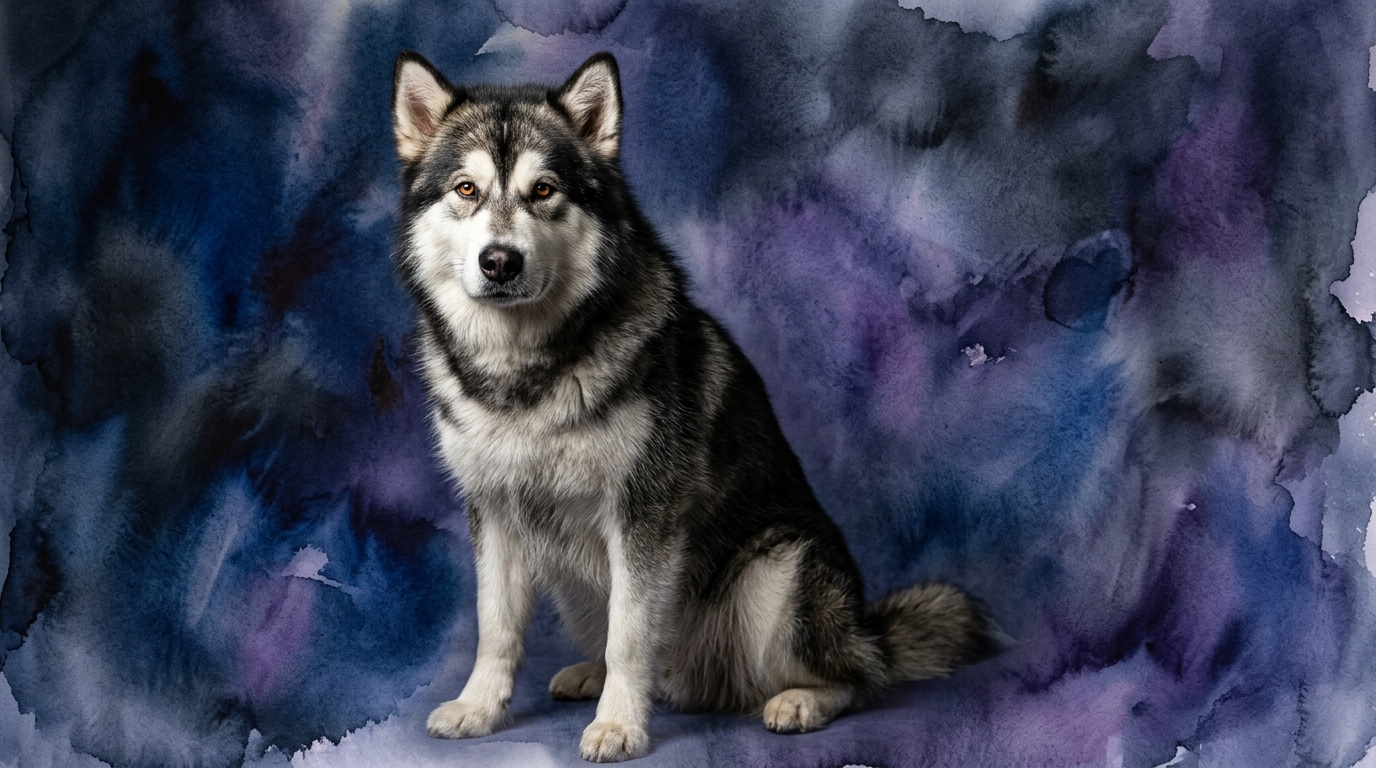
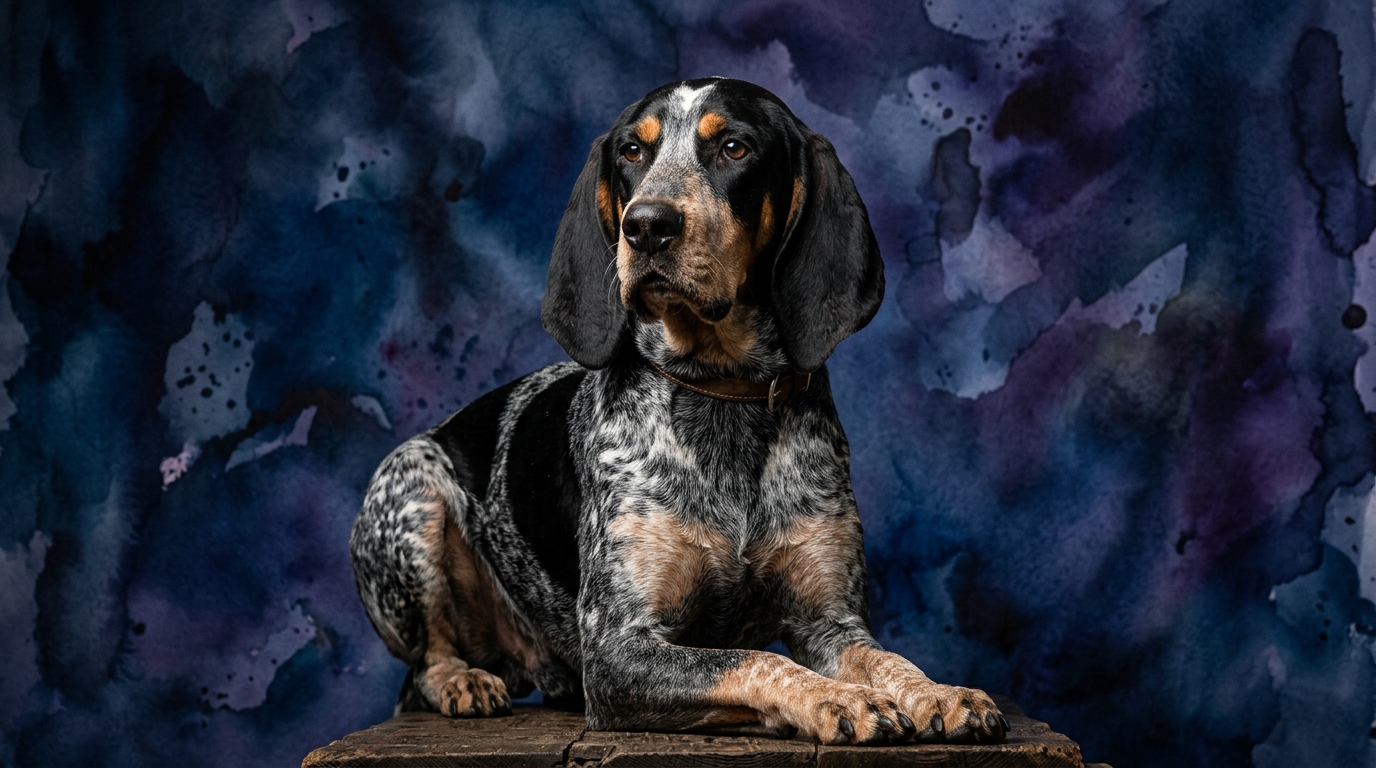
The Alaskan Malamute, a powerful canine hailing from the Arctic, boasts a Coren rank of #50, placing it squarely in the average working intelligence category. Its cognitive strengths are finely tuned for survival and collaboration in harsh environments, emphasizing self-sufficiency and robust physical capability. In contrast, the Bluetick Coonhound, a quintessential Southern scent hound, is not Coren-ranked, indicating a different, often more specialized, cognitive approach not easily captured by traditional obedience metrics. Its intelligence is deeply rooted in its olfactory prowess and relentless pursuit.
When we examine the Alaskan Malamute's Problem Solving at a 4/5, we see a dog that can ingeniously navigate obstacles, figure out how to access resources, or devise strategies to achieve its goals, often with a mischievous flair. This isn't just about obedience; it's about a dog's capacity for independent thought and creative solutions to environmental challenges. Their Training Speed, however, is a moderate 2/5, reflecting their independent spirit and tendency to question commands or prioritize their own agenda over rote repetition. This breed often requires a strong 'why' before compliance.
The Malamute's Social Intelligence is rated 3/5, suggesting they understand pack dynamics and human social cues within that framework, but they are not typically people-pleasers in the same vein as some other breeds. They form deep bonds but maintain a degree of aloofness and self-reliance. Their Instinctive Drive is an impressive 5/5, a testament to their heritage as endurance sled dogs; this drive manifests as an intense need for purposeful work, pulling, and sustained physical activity. Finally, their Memory at 4/5 means they recall complex routes, past experiences, and learned behaviors with significant accuracy, which is crucial for navigation and survival.
Turning to the Bluetick Coonhound, its Problem Solving scores a 3/5. This indicates a solid ability to unravel puzzles, but primarily those related to scent trails and tracking. Their cognitive focus is intensely directed towards following a lead, often to the exclusion of other stimuli, rather than general environmental manipulation. Their Training Speed is 3/5, a slight improvement over the Malamute, implying they can learn commands at a reasonable pace, though their singular focus on scent can often override learned behaviors in the field.
The Bluetick's Social Intelligence also stands at 3/5. They are generally amiable and form strong bonds with their human pack, but like the Malamute, their independence, especially when on a scent, can sometimes make them seem less socially responsive in the moment. Their Instinctive Drive is 3/5, reflecting a powerful, yet specific, drive for scenting, tracking, and baying. This drive is all-consuming when activated, but it doesn't necessarily translate to the same generalized physical endurance or pulling power as a Malamute. Their Memory is 3/5, indicating a good capacity to remember specific trails, scents, and routines, though perhaps not the same depth of complex, multi-faceted recall seen in the Malamute.
Where the Alaskan Malamute Wins Cognitively
The Alaskan Malamute distinguishes itself with superior general problem-solving capabilities and robust memory, crucial for navigating complex environments. Their 4/5 rating in Problem Solving means they are adept at figuring out how to open latches, bypass barriers, or even outsmart their human companions to achieve desired outcomes, demonstrating a resourceful and independent thought process that goes beyond simple learned responses. This cognitive flexibility allows them to adapt and innovate in varied situations, whether securing a treat or finding a way off-leash.
Furthermore, the Malamute's 4/5 Memory score underpins their ability to recall intricate routes, remember past lessons, and learn from experiences, allowing them to build a comprehensive mental map of their world. This memory, combined with their strong instinctive drive for endurance and physical tasks (5/5), makes them exceptional at long-distance travel and remembering complex sequences of physical actions, such as those required for sledding or backpacking. They are dogs who learn from their environment and store that information for future use, making them highly effective at tasks requiring sustained mental application alongside physical exertion.
Where the Bluetick Coonhound Wins Cognitively
While the Bluetick Coonhound's overall problem-solving and memory scores might appear lower than the Malamute's, their cognitive strengths lie in a hyper-specialized domain: olfaction and scent-tracking. Their intelligence is singularly focused on interpreting and following complex scent trails, a task they perform with unparalleled dedication and precision. Their 3/5 Instinctive Drive, while lower than the Malamute's for generalized endurance, is intensely directed towards this specific hunting behavior, making them relentless and virtually unstoppable once they catch a scent.
The Bluetick's cognitive prowess shines in its ability to differentiate subtle scent variations, remember specific odor profiles, and logically piece together a trail even when it's cold or broken. This is a form of problem-solving that most other breeds, including the Malamute, cannot replicate with the same level of focus or success. Their 3/5 Training Speed, combined with their persistent nature, means they can be taught tasks related to their scent work quite effectively, especially when the reward is the pursuit of a trail. Their cognitive strength is less about general adaptability and more about profound mastery of a very specific, ancient skill.
Which is Easier to Train and Why
When it comes to ease of training, neither the Alaskan Malamute nor the Bluetick Coonhound are considered 'easy' in the traditional sense, but their challenges stem from different cognitive profiles. The Alaskan Malamute's Training Speed is rated a 2/5, reflecting a strong independent streak and a 'what's in it for me?' attitude. They are not inherently eager to please and will often weigh the value of a command against their own desires. Their problem-solving abilities can even lead to creative disobedience, as they might figure out how to circumvent rules or tasks they find unappealing. Training a Malamute requires immense patience, consistent motivation, and a deep understanding of their pack-oriented, yet self-reliant, nature.
The Bluetick Coonhound, with a Training Speed of 3/5, presents a different set of training considerations. While they may learn basic commands slightly faster than a Malamute, their primary challenge is an overwhelming instinctive drive for scenting. Once a Bluetick catches a compelling odor, all learned commands, and even their social intelligence, can become secondary. Their focus becomes singularly dedicated to the trail, making recall or redirection incredibly difficult in stimulating environments. Training a Bluetick requires managing this powerful olfactory drive, often through secure environments and consistent positive reinforcement that competes with the allure of a fresh scent. Neither breed is for the faint of heart in training, but the Malamute's challenge is often rooted in stubborn independence, while the Coonhound's is in powerful, singular instinct.
Which Suits Active Owners vs. Relaxed Owners
For the truly active owner, the Alaskan Malamute is a natural fit. Their 5/5 Instinctive Drive for endurance and physical work demands an owner who is not only active but also committed to providing purposeful, challenging outlets. These are dogs built for sustained physical exertion, whether it's long hikes, backpacking, or even urban mushing. A relaxed owner will quickly find themselves overwhelmed by a Malamute's unmet needs, which can manifest as destructive behavior or persistent vocalization born of boredom and excess energy. They thrive with consistent structure, leadership, and a partnership in adventure.
The Bluetick Coonhound, with its 3/5 Instinctive Drive, also requires an active owner, but the nature of that activity is different. While they need regular physical exercise, their primary drive is for scent work. A 'relaxed' owner who expects a casual stroll around the block will fail to satisfy a Bluetick's profound need to use its nose. They require owners who enjoy long, investigative walks, can provide secure areas for off-leash exploration (where legal and safe), or engage in scent-specific activities like tracking or nose work. While they can be calm indoors after proper stimulation, neglecting their olfactory needs will result in a restless, perhaps vocal, and potentially destructive companion. Neither breed is suited for truly relaxed owners; both demand dedicated engagement, albeit in different forms.
The Verdict: When to Choose Each
The Verdict
Choose the Alaskan Malamute if you are an experienced owner seeking a resourceful, physically powerful companion for endurance activities, who appreciates an independent thinker and can provide consistent, firm leadership and extensive physical outlets. This breed thrives with an owner who can match its drive for adventure and challenge its clever mind.
Opt for the Bluetick Coonhound if you are passionate about scent work, can provide secure environments for exploration, and are prepared to engage deeply with a dog driven by its nose and a persistent, focused nature. This breed suits an owner who understands and can channel its powerful tracking instincts into fulfilling activities.
🧠 Find Your Pet's IQ Score
Our Pet IQ Lab assessment covers 25+ tests across 5 cognitive dimensions — personalized to your breed.
Take the Full IQ Test →Frequently Asked Questions
Are Alaskan Malamutes good with children and other pets?
Alaskan Malamutes possess a 3/5 social intelligence, meaning they can form strong bonds within their family pack. They are generally good with respectful children and can coexist with other dogs if properly socialized from a young age, though their strong prey drive (5/5 instinctive drive) means small, non-canine pets might be a risk.
How much vocalization should I expect from a Bluetick Coonhound?
Bluetick Coonhounds are known for their distinctive 'baying' bark, a hallmark of their hunting heritage and a manifestation of their instinctive drive. While not constant, they will vocalize to alert, express excitement, or when on a scent, so prospective owners should be prepared for a dog that is not always quiet.
Can a Bluetick Coonhound be an off-leash dog?
Due to their intense 3/5 instinctive drive for scent, Bluetick Coonhounds are generally not reliable off-leash outside of securely fenced areas or designated tracking zones. Once they catch a compelling scent, their focus becomes singular, making recall extremely challenging and potentially leading them far astray in pursuit of a trail.