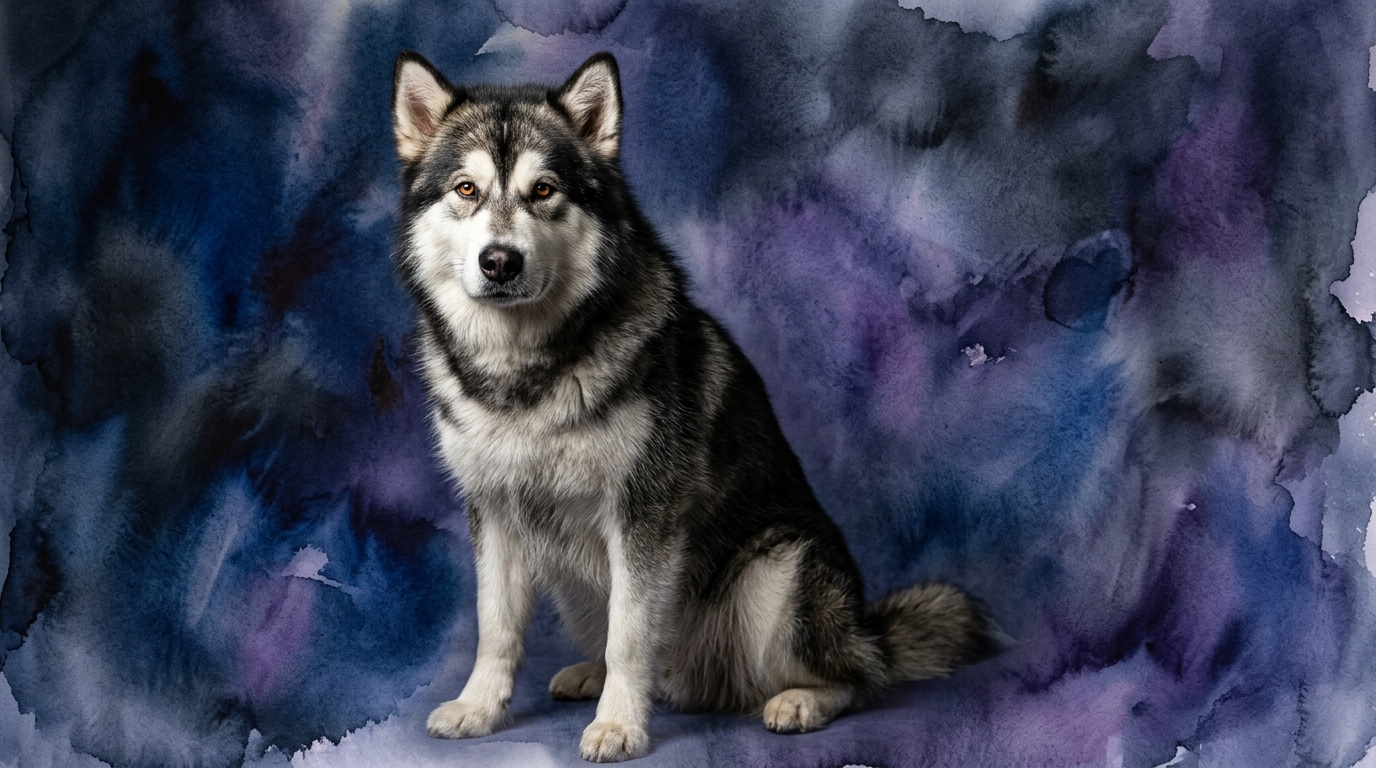
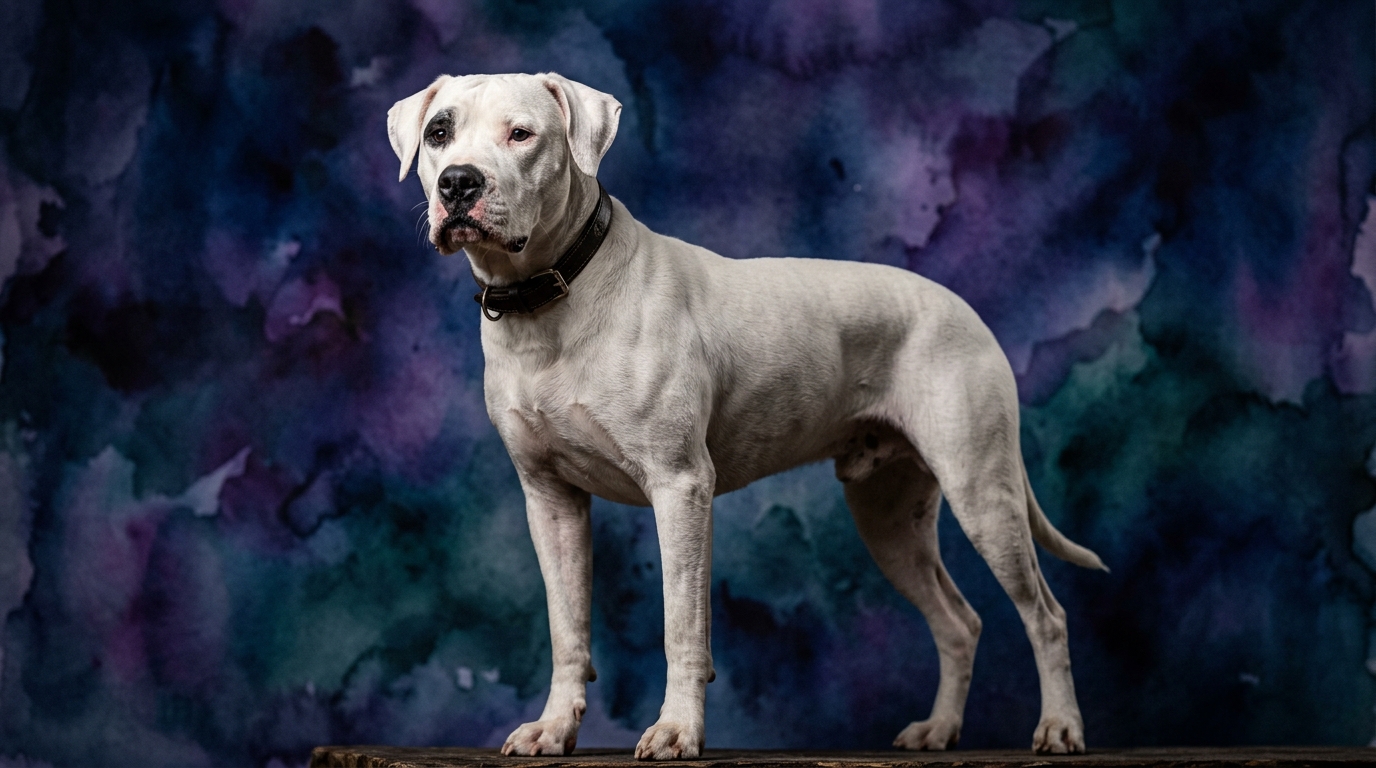
Side-by-Side IQ Profile: Alaskan Malamute vs. Dogo Argentino
To truly understand the cognitive makeup of these two impressive breeds, we delve into The Cosmic Pet Pet IQ Lab's five core dimensions of intelligence.
The Alaskan Malamute, a venerable working breed, ranks #50 on the Coren scale, indicating a deliberate and thoughtful approach to learning. Their Problem Solving is rated 4/5, reflecting a strong capacity for independent thought and resourcefulness in challenging environments, often devising their own solutions to obstacles. Training Speed stands at 2/5, suggesting they are not quick to comply but rather process information on their own terms, requiring significant patience and consistency. Social Intelligence is 3/5, meaning they understand group dynamics and can be discerning in their interactions, often forming strong bonds within their immediate family unit. Their Instinctive Drive is a powerful 5/5, manifesting as a profound urge to pull, hunt, and explore, deeply ingrained from generations of sled work. Finally, their Memory is 4/5, allowing them to retain complex routes, learned tasks, and social cues over extended periods, which is vital for navigating vast, featureless landscapes.
The Dogo Argentino, also a formidable working breed but not Coren-ranked, presents a different cognitive blueprint. Their Problem Solving is 3/5, indicating competence in assessing situations and finding solutions, but perhaps with less independent, novel ingenuity compared to the Malamute. Training Speed is 3/5, positioning them as moderate learners who are generally responsive to clear direction and can maintain focus when engaged in tasks. Social Intelligence is 3/5, similar to the Malamute, showing they are adept at reading human cues and are discerning with strangers, possessing strong loyalty to their family unit. Their Instinctive Drive is 3/5, reflecting a strong prey drive and territorial instincts, but this drive tends to be more controlled and directed than the Malamute's sustained working ethic. Their Memory is 3/5, meaning they remember commands and experiences adequately, but possibly not with the same depth or duration for intricate sequences as the Malamute.
Where the Alaskan Malamute Excels Cognitively
The Alaskan Malamute's cognitive strengths are deeply rooted in its heritage as a powerful sled dog in unforgiving arctic environments. Their Problem Solving at 4/5 is a standout trait, enabling them to independently navigate complex terrains, find alternative routes, or even figure out how to open gates or containers to achieve a desired outcome, often surprising their human companions with their ingenuity. This isn't about rote obedience but about finding a way to get the job done, even if it's not the human-prescribed method.
Furthermore, their Instinctive Drive, rated a robust 5/5, is unparalleled. This isn't just a physical drive; it's a mental fortitude that allows them to sustain effort and focus on a task, like pulling a sled for miles, despite harsh conditions or perceived discomfort. This deep-seated drive means they possess an innate understanding of sustained work and purpose, a cognitive endurance that few breeds match. Paired with their 4/5 Memory, they can recall intricate paths, complex sequences of commands learned over time, and the subtle nuances of their environment, making them exceptional for tasks requiring long-term spatial awareness and recall.
Where the Dogo Argentino Holds a Cognitive Edge
While the Dogo Argentino may not possess the Malamute's extreme independent problem-solving or relentless instinctive drive for sustained, repetitive tasks, they exhibit a distinct cognitive advantage in other crucial areas, particularly their Training Speed at 3/5 compared to the Malamute's 2/5. This moderate pace means Dogos are often quicker to grasp new commands and concepts, responding with a more focused attention on their handler. Their inherent desire to work cooperatively with their human partner, combined with their capacity for learning, makes them more amenable to structured obedience and skill acquisition.
Their Instinctive Drive, rated 3/5, while strong, is often more manageable and can be more readily channeled into specific tasks such as protection, agility, or scent work. This balance allows them to be highly effective in roles requiring focused attention and control, rather than the independent, often self-directed, working ethic of the Malamute. The Dogo's cognitive profile leans towards a more direct, handler-oriented application of their intelligence, making them efficient learners within a clear framework and capable of performing complex tasks with precision when properly motivated and guided.
Trainability: A Tale of Two Working Minds
When it comes to trainability, the differences between these two breeds become particularly apparent, largely due to their disparate Training Speed and Instinctive Drive scores. The Dogo Argentino, with its 3/5 Training Speed, generally presents a more straightforward training experience for a consistent owner. They are often eager to please their family and respond well to clear, firm, and positive reinforcement-based methods. Their moderate instinctive drives, while requiring careful management, are typically more receptive to redirection and focus on a handler's commands. For example, a Dogo is more likely to maintain eye contact and follow a sequence of commands in a structured training session, driven by a desire for partnership and reward.
In contrast, the Alaskan Malamute's 2/5 Training Speed and powerful 5/5 Instinctive Drive make them a more significant challenge. They are not naturally inclined to simply obey; rather, they assess situations and often prefer to follow their own independent agenda. Their historical role demanded self-sufficiency and resourcefulness, meaning they are less 'biddable' and more 'collaborative' on their own terms. Training a Malamute requires immense patience, creativity, and a deep understanding of their motivations. An owner must make training an engaging game that appeals to their desire to work or explore, rather than expecting immediate compliance. For instance, a Malamute might 'problem-solve' a way to avoid a command if they deem it unnecessary or prefer an alternative activity, rather than simply performing the requested action.
Matching Breeds to Lifestyles: Active Owners vs. Structured Engagement
Both the Alaskan Malamute and the Dogo Argentino are working breeds that demand active engagement, making neither suitable for truly 'relaxed' owners in the sense of minimal daily interaction or exercise. However, the *type* of activity and engagement they thrive on differs significantly based on their cognitive profiles.
The Alaskan Malamute, with its 5/5 Instinctive Drive and 4/5 Problem Solving, is best suited for active owners who embrace a companion with a strong independent streak and a profound love for sustained outdoor adventures. These are dogs that thrive on long hikes, pulling sports like canicross or sledding, and exploring new environments. Their independent problem-solving means owners should expect a dog that thinks for itself and needs mental challenges that engage their ingenuity, not just repetitive obedience. An owner who enjoys navigating complex trails or providing puzzle-solving opportunities will find a Malamute a highly rewarding, albeit demanding, partner.
The Dogo Argentino, while equally requiring an active owner, leans towards those who prefer structured activities and a close, focused partnership. With a 3/5 Training Speed and 3/5 Instinctive Drive, they excel in environments where their energy and protective instincts can be channeled into specific tasks. Owners who enjoy activities like agility, protection sports, or consistent, vigorous training sessions will find the Dogo a dedicated and responsive partner. They thrive on clear leadership and consistent boundaries, blossoming when their intelligence is directed towards cooperative tasks rather than independent exploration. This breed suits owners prepared to provide early and ongoing socialization and training to manage their natural protective tendencies effectively.
The Verdict
Choose an Alaskan Malamute if you are an experienced owner seeking a resourceful, independent companion for demanding outdoor adventures and appreciate a dog that thinks for itself, even if it means more patience in training.
Choose a Dogo Argentino if you desire a loyal, focused partner for structured activities and a vigilant guardian, and are prepared to provide consistent, firm guidance and early socialisation to channel their drives.
🧠 Find Your Pet's IQ Score
Our Pet IQ Lab assessment covers 25+ tests across 5 cognitive dimensions — personalized to your breed.
Take the Full IQ Test →Frequently Asked Questions
Are Alaskan Malamutes difficult to train?
Yes, their training speed is rated 2/5 due to their independent nature and strong instinctive drives. They require immense patience, consistency, and motivation-based training to channel their will rather than expecting immediate compliance, often preferring to problem-solve tasks on their own terms.
What kind of owner is best for a Dogo Argentino?
An owner who is active, consistent, and committed to early and ongoing socialization and training is ideal. They thrive with clear leadership and a structured environment to manage their protective instincts and moderate energy levels, enjoying cooperative tasks and a close bond with their family.
How do their problem-solving skills differ in daily life?
The Malamute's 4/5 problem-solving often manifests as finding novel ways to achieve goals, like independently opening gates or navigating complex environments without direct human input. The Dogo's 3/5 problem-solving is more about assessing immediate situations and reacting effectively within a known framework, such as evaluating a perceived threat or quickly learning a new command sequence.