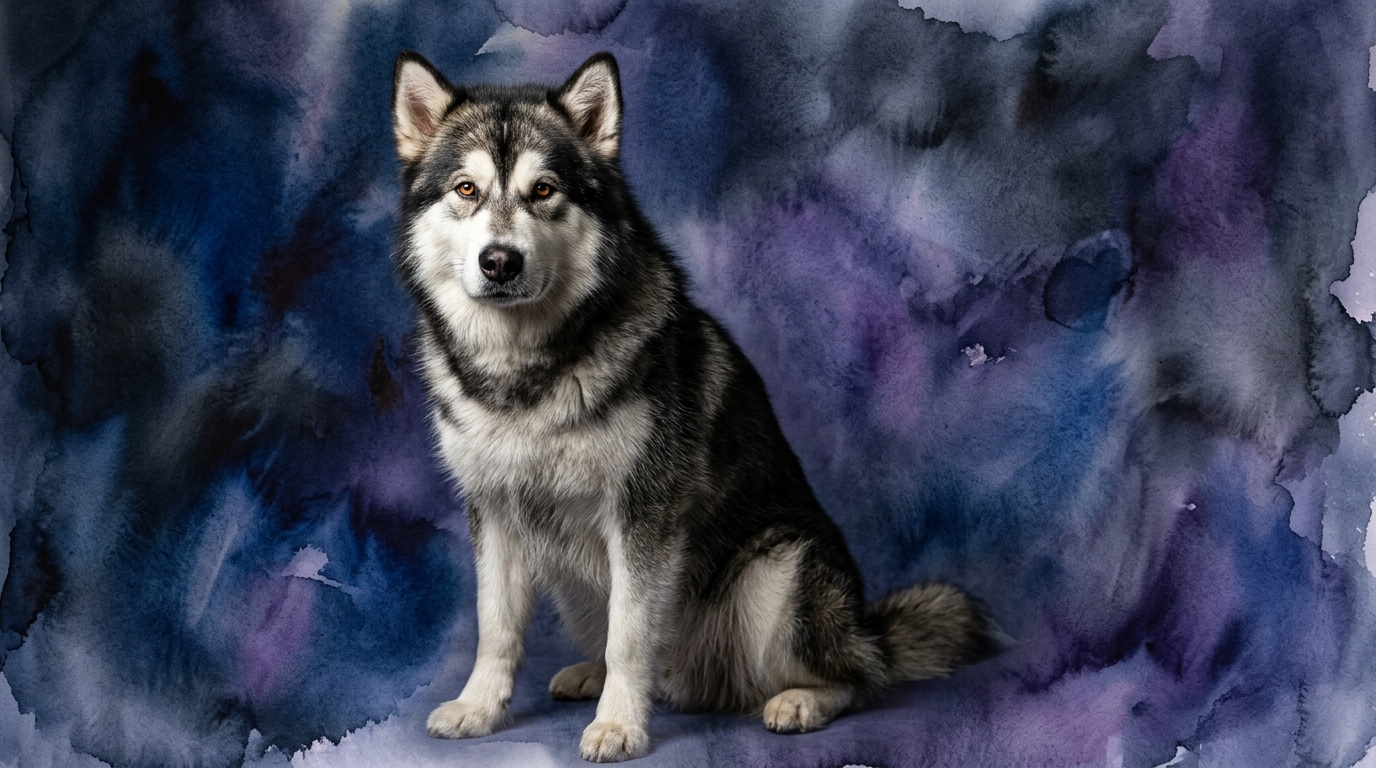

Side-by-Side IQ Profile: Alaskan Malamute vs. English Cocker Spaniel
At The Cosmic Pet Pet IQ Lab, we break down canine intelligence into five key dimensions, providing a nuanced understanding beyond simple obedience. For the Alaskan Malamute (Coren rank #50), their profile highlights a powerful, independent thinker. Their problem-solving capacity scores 4/5, reflecting a strong ability to navigate complex environments and overcome obstacles through self-initiated solutions, rather than human-directed puzzles. Training speed, however, is 2/5, primarily due to their independent nature, historically bred for self-reliance over immediate obedience, necessitating repetition and patience. Social intelligence is moderate at 3/5, indicating an ability to interpret human cues but often with a focus on their own agenda. Their instinctive drive is exceptionally high at 5/5, defining much of their cognitive effort towards pulling, digging, and exploration. Finally, their memory stands at 4/5, enabling recall of vast territories and past experiences.
The English Cocker Spaniel (Coren rank #18) presents a profile optimized for cooperative, precise work. Their problem-solving also scores 4/5, but often involves navigating dense cover to flush game or retrieving objects from challenging spots within a handler-driven context. Training speed is a notable 4/5, as these spaniels are quick learners, eager to grasp commands and respond to cues due to their desire for cooperative work. Social intelligence is 3/5, similar to the Malamute, meaning they are generally attuned to their human companions, enjoying interaction and often seeking approval. Their instinctive drive is 3/5, channeled primarily towards hunting instincts like flushing and retrieving, but more handler-focused. Crucially, their memory is exceptional at 5/5, vital for remembering complex scent trails, multiple retrieval locations, and intricate command sequences over extended periods.
Where the Alaskan Malamute Wins Cognitively
The Alaskan Malamute's cognitive strengths truly shine in environments demanding resilience and autonomous decision-making. Their 5/5 instinctive drive, combined with a 4/5 problem-solving ability, makes them adept at tasks requiring independent initiative, such as navigating complex, often harsh, terrains or figuring out how to access resources when human guidance is limited. This breed excels at self-directed tasks where a strong will and physical prowess are paramount, like finding the weakest link in a fence or devising a way to reach a hidden treat, relying on their ingenuity rather than waiting for instructions. Their 4/5 memory for routes and locations further supports their exploratory and working roles, enabling recall of vast territories and past experiences.
Where the English Cocker Spaniel Wins Cognitively
The English Cocker Spaniel's cognitive profile is optimized for cooperative work and precision, making them excel in tasks requiring keen attention and rapid learning. Their 4/5 training speed, paired with an outstanding 5/5 memory, allows them to quickly master and retain a vast repertoire of commands and intricate sequences, essential for a gundog needing to respond instantly to handler cues in dynamic field conditions. This superior memory also enables tracking and recalling multiple scent trails or marking several fall locations of game, demonstrating sophisticated spatial and task-specific recall. Their problem-solving, while rated 4/5, is often applied to tasks directly related to their working partnership, such as finding creative ways to retrieve an object from difficult cover or navigating obstacles to complete a task given by their handler.
Which is Easier to Train and Why
Comparing training ease, the English Cocker Spaniel, with a training speed of 4/5, is considerably more amenable to instruction than the Alaskan Malamute, rated at 2/5. This difference stems directly from their historical breeding and inherent behavioral traits. English Cocker Spaniels were developed to work in close partnership with hunters, requiring an eagerness to please and a strong desire for cooperation. They are typically motivated by praise and rewards, quickly associating actions with outcomes and readily repeating desired behaviors. Their high memory (5/5) further enhances this, allowing them to retain learned commands with minimal refreshers.
In contrast, Alaskan Malamutes were bred for independent sled pulling and survival in challenging environments, where making their own decisions was often crucial. This fosters a strong-willed, sometimes stubborn, temperament. Their lower training speed reflects this independence; they often question the necessity of a command or prefer to follow their own instincts, requiring more patience, consistency, and creative motivation from their handler. While capable of learning, their steeper curve demands a handler who understands their working dog mentality, focusing on building a strong, respectful partnership rather than expecting immediate obedience.
Which Suits Active Owners vs. Relaxed Owners
For owners seeking a highly active companion, the Alaskan Malamute presents a compelling choice, provided 'active' translates to rigorous, consistent engagement that matches their powerful physique and high instinctive drive (5/5). These dogs require extensive physical exercise, such as long hikes, jogging, or sledding, to satisfy their innate need to move and work. Their problem-solving (4/5) and independent nature also demand mental stimulation through puzzle toys, scent work, or training that challenges their intellect, preventing boredom-induced destructive behaviors like digging or escaping. A relaxed owner, unwilling or unable to commit to several hours of daily, stimulating activity, would likely find a Malamute overwhelming, as unspent energy and independent thinking can quickly lead to behavioral challenges.
The English Cocker Spaniel, while certainly energetic and requiring regular activity, offers a more versatile fit for a broader range of active owners. Their sporting background means they thrive on walks, runs, and engaging play sessions, but they are generally content with moderate daily exercise complemented by mental stimulation through training and interactive games. Their higher training speed (4/5) and exceptional memory (5/5) make them excellent candidates for dog sports like agility, obedience, or scent work, which provide both physical and mental outlets. A relaxed owner might find their energy manageable with consistent daily walks and indoor play, especially if they are willing to engage in regular training sessions to keep their minds sharp. They are generally more adaptable to varying activity levels than the Malamute, provided fundamental needs for companionship and purposeful activity are met.
The Verdict
Choose an Alaskan Malamute if you are a highly experienced, active owner seeking a strong-willed, independent partner for demanding outdoor adventures and are prepared to invest significant time in consistent, patient training tailored to their working heritage.
Opt for an English Cocker Spaniel if you desire an eager-to-please, trainable companion for a moderately active lifestyle, enjoying dog sports or cooperative activities, and appreciate a dog with exceptional memory and a desire to work alongside you.
🧠 Find Your Pet's IQ Score
Our Pet IQ Lab assessment covers 25+ tests across 5 cognitive dimensions — personalized to your breed.
Take the Full IQ Test →Frequently Asked Questions
Is the Alaskan Malamute truly less intelligent than the English Cocker Spaniel based on Coren rank?
Coren's ranking primarily assesses 'working and obedience intelligence,' reflecting a dog's ability to learn and respond to human commands quickly. While the Malamute's rank of #50 is lower than the English Cocker Spaniel's #18, it doesn't imply a lack of overall intelligence, but rather a difference in the type of intelligence they possess, favoring independent problem-solving over immediate obedience.
Do English Cocker Spaniels require less mental stimulation than Alaskan Malamutes?
Both breeds require mental stimulation, but the type differs. English Cocker Spaniels thrive on structured training, puzzle toys, and scent games that engage their keen memory and desire to work with a handler. Alaskan Malamutes need challenges that cater to their independent problem-solving and high instinctive drives, such as complex exploration, scent tracking, or 'work' that allows them to make choices.
Can an Alaskan Malamute live successfully in an apartment if exercised enough?
While physical exercise is crucial, a Malamute's high instinctive drive for exploration, digging, and vocalization, combined with their independent problem-solving, makes apartment living challenging even with sufficient walks. They generally thrive in environments with more space to roam and engage their natural instincts, making a home with a secure yard often more suitable for their cognitive and physical needs.