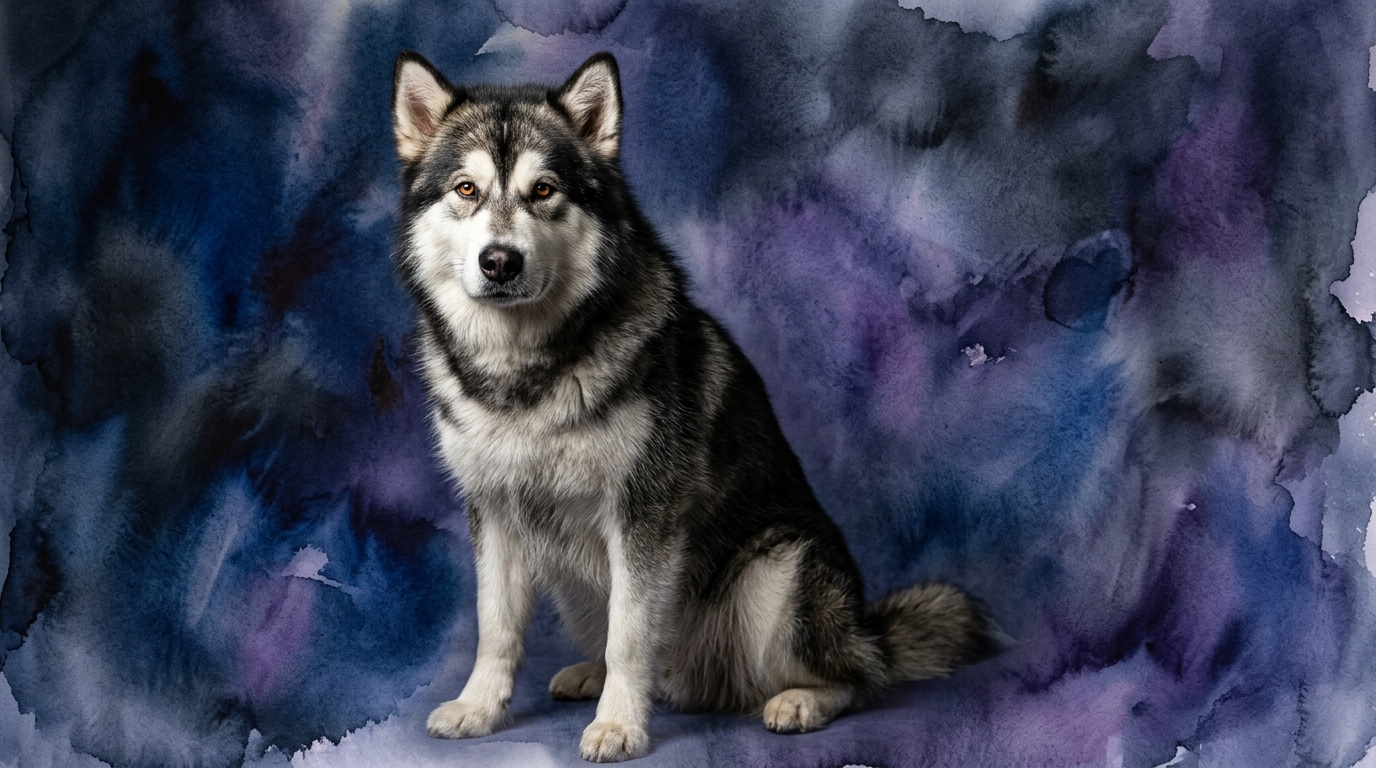
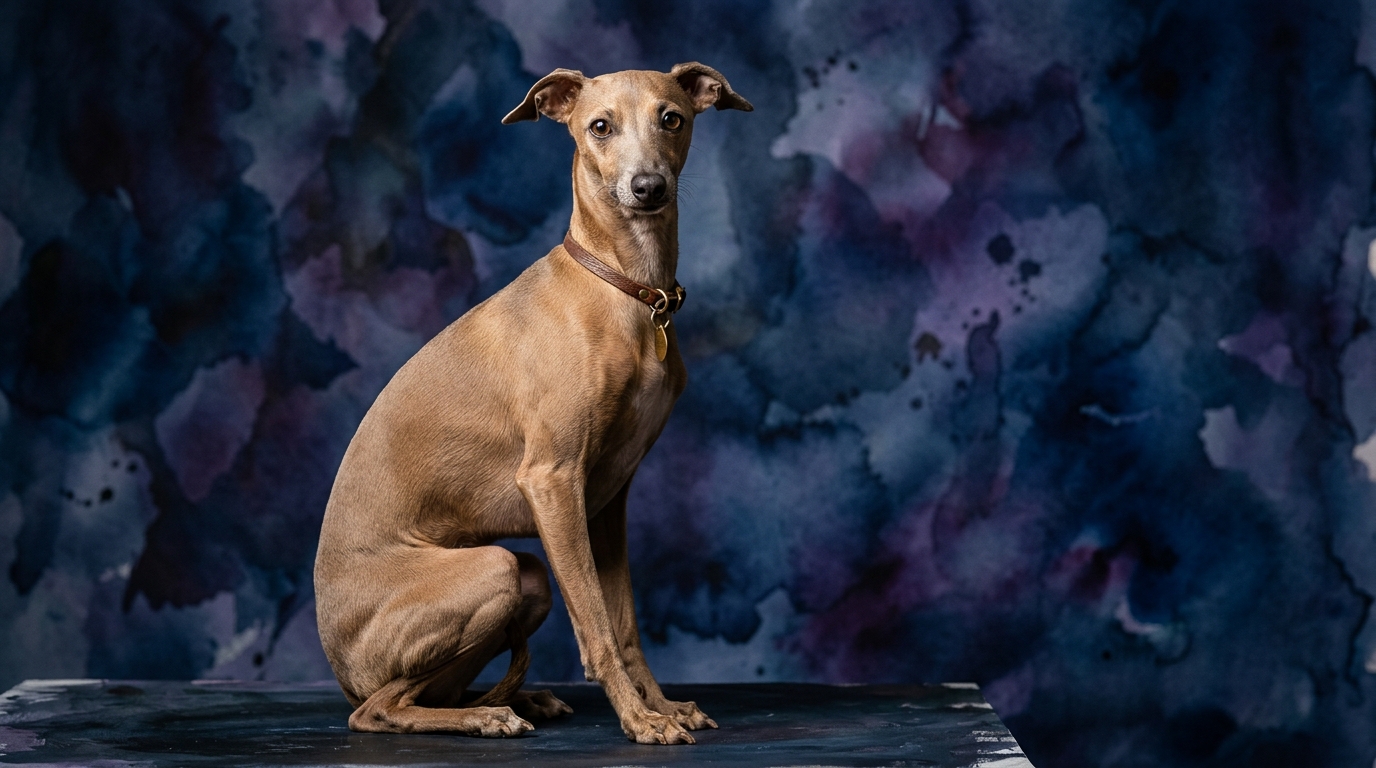
Side-by-Side IQ Profile: Alaskan Malamute vs. Italian Greyhound
The Alaskan Malamute, ranked #50 by Coren, presents a formidable cognitive profile shaped by centuries of demanding work in harsh environments. Their problem-solving capacity scores a robust 4/5, indicating a keen ability to navigate complex situations and devise solutions to obstacles, such as figuring out how to open gates or outsmarting perceived limitations. However, their training speed is a moderate 2/5, reflecting an independent nature that prioritizes their own understanding over rote compliance, often requiring patient, consistent, and highly motivating methods. Social intelligence stands at 3/5, suggesting they understand pack dynamics and human cues within their established social circle, though they aren't typically people-pleasers with strangers. An impressive 5/5 for instinctive drive highlights their powerful urge to pull, dig, and explore, deeply rooted in their heritage as sled dogs. Finally, their memory rates 4/5, allowing them to retain complex routines, learned behaviors, and environmental layouts with remarkable detail.
The Italian Greyhound, a graceful Toy breed, approaches intelligence from a different, often more nuanced, perspective. Their problem-solving ability scores 3/5, demonstrating a capacity for learning routines and navigating their immediate surroundings, but perhaps less inclination for tackling multi-step, abstract challenges. Training speed is a respectable 3/5; these sensitive sighthounds can learn quickly with positive reinforcement, though they may lose interest if tasks become repetitive or if their handler is inconsistent. Social intelligence also scores 3/5, indicating a strong emotional connection to their human companions and an ability to pick up on subtle mood shifts, though they can be reserved or shy with unfamiliar people. Their instinctive drive is 3/5, manifesting primarily as a sighthound's urge to chase small, fast-moving objects, but without the intense, sustained drive of a working breed. Memory registers at 3/5, allowing them to recall commands and routines adequately, forming lasting associations with positive and negative experiences.
Where the Alaskan Malamute Wins Cognitively
When comparing the cognitive strengths, the Alaskan Malamute demonstrably excels in areas tied to their working heritage. Their superior problem-solving score of 4/5, compared to the Italian Greyhound's 3/5, underscores their capacity for independent thought and strategic action. This manifests in their ability to methodically work through environmental puzzles, such as meticulously testing various escape routes from an enclosure or devising ways to reach a coveted item on a counter, rather than simply reacting. Furthermore, the Malamute's instinctive drive, a perfect 5/5 against the Italian Greyhound's 3/5, is a profound cognitive advantage for specific roles. This isn't just about physical prowess; it's about a deep, intrinsic motivation to perform tasks like pulling, exploring vast territories, or digging with a purposeful intensity, which shapes their interactions with the world and their learning processes. Their 4/5 memory also often translates to a more robust recall of complex sequences and spatial information, crucial for navigating trails or remembering intricate commands over long periods, surpassing the Italian Greyhound's 3/5.
Where the Italian Greyhound Wins Cognitively
While the Italian Greyhound's cognitive profile might not boast higher raw scores in most dimensions, their unique strengths lie in the application and nuance of their intellect, particularly in a companion setting. Their training speed, at 3/5, subtly edges out the Malamute's 2/5, suggesting they are often more amenable to learning new commands and routines, provided the methods are gentle and engaging. This isn't about raw processing power but about a disposition that's less resistant to instruction when motivated correctly. Their social intelligence, also rated 3/5, manifests differently from the Malamute's. The Italian Greyhound's social acumen is finely tuned to human emotional states, making them exceptionally empathetic and responsive companions who often anticipate their owner's needs or moods. This deep emotional attunement, while not a numerical 'win,' is a distinct cognitive advantage for a breed whose primary role is close companionship. Their problem-solving, though 3/5, is often directed towards social manipulation or clever ways to secure comfort and affection, demonstrating a different kind of practical intelligence suited to their lifestyle.
Which is Easier to Train and Why?
Evaluating ease of training requires understanding each breed's inherent motivations and behavioral tendencies. The Italian Greyhound, with a training speed of 3/5, is generally considered more straightforward to train than the Alaskan Malamute, which scores 2/5. Italian Greyhounds, being sensitive and highly attached to their owners, often respond well to positive reinforcement and gentle guidance. Their challenges typically stem from a delicate nature that dislikes harsh corrections, a tendency to get distracted, or a sighthound's independent streak when a squirrel appears. Their desire for comfort and companionship can be leveraged effectively in training. In contrast, the Alaskan Malamute's lower training speed is rooted in their strong-willed, independent nature. They were bred to make decisions in challenging environments without constant human direction, leading to a 'what's in it for me?' attitude. Repetitive drills can bore them quickly, and their powerful instinctive drives, like digging or chasing, can override learned commands if not managed with consistent, high-value motivation. Training a Malamute demands immense patience, creativity, and a deep understanding of their stubborn yet intelligent mind.
Suitability for Active vs. Relaxed Owners
The choice between these two breeds significantly hinges on an owner's lifestyle and energy levels. The Alaskan Malamute, with its 5/5 instinctive drive and 4/5 problem-solving, is unequivocally suited for active owners. These dogs thrive when given a 'job' and require substantial daily physical exercise, such as long hikes, jogging, or structured pulling activities, alongside challenging mental stimulation to prevent boredom and destructive behaviors. Their robust nature and love for the outdoors make them ideal companions for those who embrace an adventurous, hands-on lifestyle. Conversely, the Italian Greyhound, with its more moderate 3/5 instinctive drive and delicate physical build, is a better fit for relaxed owners. While they enjoy short bursts of play and daily walks, their exercise needs are considerably lower than a Malamute's. They are content to spend much of their day indoors, often curled up beside their human, making them excellent companions for individuals or families seeking a devoted, affectionate, and relatively low-impact presence in their home. Their social intelligence, focused on human bonding, makes them thrive in a quiet, stable environment.
The Verdict
Choose an Alaskan Malamute if you are an experienced, active owner seeking a robust, independent, and problem-solving companion for outdoor adventures and consistent mental challenges.
Opt for an Italian Greyhound if you desire a sensitive, agile, and affectionate indoor companion who thrives on close human interaction and a more relaxed lifestyle.
🧠 Find Your Pet's IQ Score
Our Pet IQ Lab assessment covers 25+ tests across 5 cognitive dimensions — personalized to your breed.
Take the Full IQ Test →Frequently Asked Questions
Are Italian Greyhounds difficult to housetrain due to their sensitivity?
Italian Greyhounds can be challenging to housetrain because of their delicate nature and low tolerance for cold or wet weather, which makes them reluctant to go outside. Consistent scheduling, frequent potty breaks, and positive reinforcement are crucial for success.
Do Alaskan Malamutes frequently try to escape their enclosures?
Yes, Alaskan Malamutes are notorious for attempting to escape due to their high problem-solving ability and strong instinctive drive to explore. They can figure out latches, dig under fences, and are often motivated by curiosity or a desire to 'patrol' a larger territory.
How much mental stimulation does an Italian Greyhound need compared to an Alaskan Malamute?
An Italian Greyhound needs moderate mental stimulation, satisfied by interactive toys, short training sessions, and social interaction, aligning with their 3/5 problem-solving and memory scores. An Alaskan Malamute, with 4/5 problem-solving and 5/5 instinctive drive, requires significantly more, including puzzle toys, advanced training, and tasks that engage their working instincts.