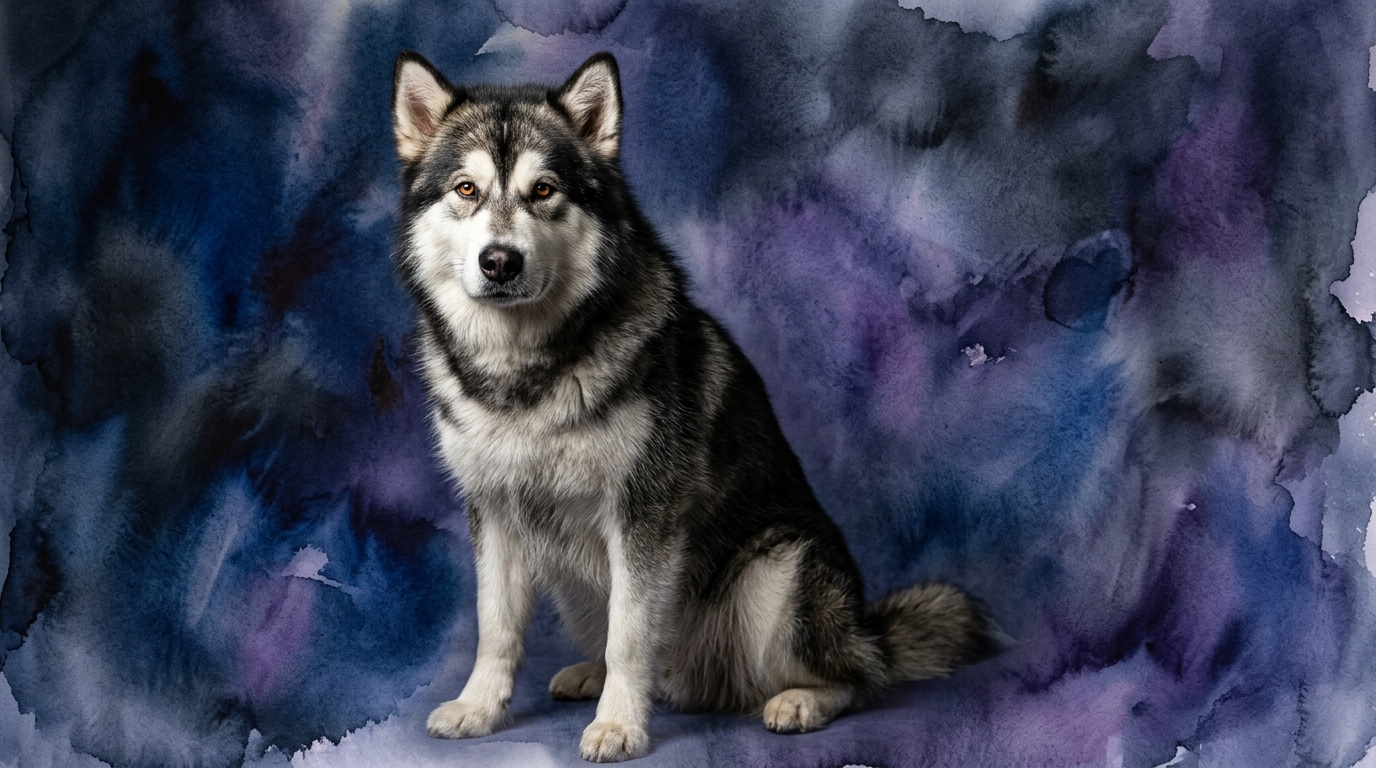
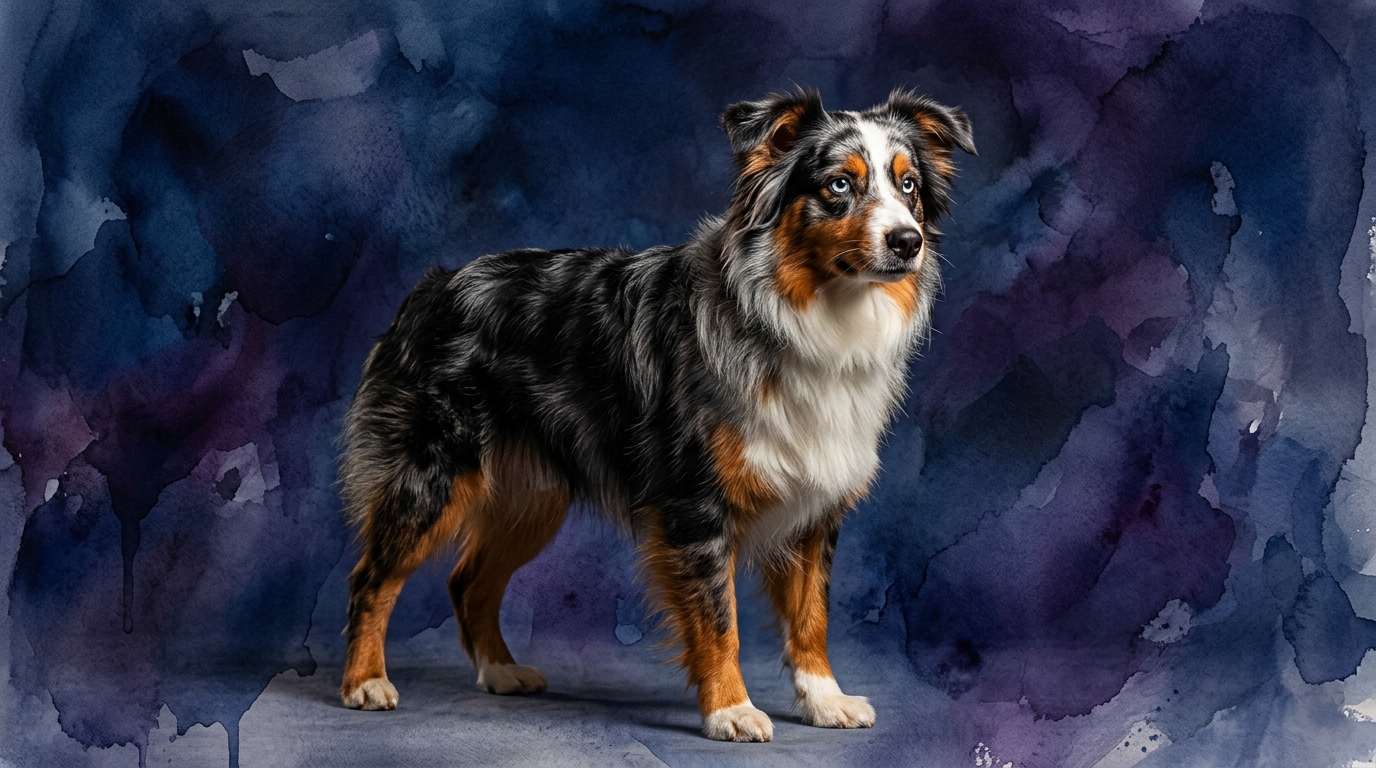
Side-by-Side Cognitive Profiles: Malamute vs. Mini American Shepherd
The Cosmic Pet Pet IQ Lab provides a unique framework to understand the intrinsic cognitive abilities of our canine companions. For the Alaskan Malamute, a Working group dog, its Coren rank of #50 places it in the upper-middle tier for obedience and working intelligence, reflecting a capacity for complex tasks when properly motivated. Its problem-solving score stands at 4/5, indicating a strong ability to independently navigate challenges and devise solutions, often with a self-serving bent. Training speed, however, is rated at 2/5, suggesting that consistent, patient repetition is necessary for this breed to internalize commands, often requiring a clear 'what's in it for me' motivation. Social intelligence is 3/5, meaning they can form bonds and understand social cues, but might not always prioritize human direction over their own agenda. An impressive instinctive drive of 5/5 speaks to their deep-seated urges for pulling, digging, and tracking, behaviors that are intrinsic to their heritage. Finally, memory is a solid 4/5, allowing them to retain learned routes, experiences, and associations over long periods.
In contrast, the Miniature American Shepherd, a Herding group dog and not Coren-ranked, presents a more balanced, moderate cognitive profile across most dimensions. Its problem-solving ability is 3/5, indicating a competent capacity to figure out puzzles and navigate environments, but perhaps with less independent 'scheming' than the Malamute. Training speed is rated at 3/5, suggesting a moderate pace of learning new commands, generally responsive to positive reinforcement and clear guidance. Social intelligence also sits at 3/5, reflecting their ability to engage with their human families and respond to social structures within a pack, though they can be reserved with strangers. Instinctive drive is 3/5, pointing to a moderate urge for herding, chasing, and guarding, which is present but typically more manageable than the Malamute's intense drives. Memory is likewise 3/5, demonstrating a satisfactory ability to recall training, routines, and past interactions.
Where the Alaskan Malamute Excels Cognitively
The Alaskan Malamute's cognitive strengths are deeply rooted in its heritage as a powerful sled dog bred for endurance and navigating challenging Arctic environments. Its 4/5 problem-solving score means these dogs are adept at independent thought, often figuring out how to open gates, access forbidden areas, or strategize to obtain desired items. This isn't just about simple puzzles; it’s about applying logical sequences to achieve goals, which can be both impressive and, at times, mischievous for an owner. This aptitude translates into a dog that can excel in tasks requiring independent decision-making, such as complex scent work or obstacle courses where self-directed navigation is key.
Furthermore, the Malamute’s 5/5 instinctive drive is a significant cognitive advantage for specific roles. This isn't merely physical stamina but a profound mental tenacity and purpose. Their drive to pull, for example, is an innate desire to work as a team member in a forward motion, requiring focus and sustained effort. This strong drive also extends to digging and tracking, where their minds are intensely engaged in deciphering scents and excavating. This deep-seated motivation, coupled with a 4/5 memory, allows them to master and recall intricate routes or complex multi-step tasks that align with their natural inclinations, making them formidable partners in activities like skijoring, dog sledding, or advanced wilderness trailing.
Where the Miniature American Shepherd Shines Cognitively
While the Miniature American Shepherd may not boast the same extreme scores as the Malamute in every cognitive dimension, its balanced profile offers distinct advantages, particularly in a companionship role. The MAS's 3/5 training speed, for instance, is a clear cognitive win when it comes to ease of instruction and adaptability to various household rules. They generally grasp new commands and routines more quickly than a Malamute, making them more amenable to diverse training regimens, from basic obedience to advanced trick training or canine sports. This moderate learning curve means less repetition is typically required, leading to a more satisfying and efficient training experience for both dog and owner.
The Miniature American Shepherd's 3/5 instinctive drive, while not as intense as the Malamute's, is also an advantage in many domestic settings. Their herding instincts are present but typically more controllable and directable, making them less prone to specific, overwhelming urges like constant digging or an unyielding desire to pull. This moderation means their cognitive energy can be more readily channeled into desired behaviors rather than requiring constant management of deeply ingrained, powerful drives. Their 3/5 problem-solving, coupled with their moderate training speed, means they are capable of learning and adapting to new situations without necessarily developing the independent, often challenging, problem-solving strategies of a higher-drive breed, making them generally more predictable and easier to manage in varied environments.
Training Aptitude: Which Breed is More Amenable?
When considering ease of training, the Miniature American Shepherd generally presents a more straightforward path for most owners compared to the Alaskan Malamute. The MAS's training speed of 3/5 indicates a responsive learner, typically eager to engage in training sessions and relatively quick to understand new cues. Their moderate instinctive drive (3/5) means that while they possess a working ethic, it is often more easily directed towards human-desired tasks. They tend to have a higher intrinsic motivation to please their handler, making positive reinforcement highly effective and fostering a cooperative learning environment. Their problem-solving (3/5) is sufficient for learning complex sequences without leading to independent 'workarounds' that can challenge an owner's authority.
The Alaskan Malamute, conversely, presents a more significant training challenge due to its 2/5 training speed and formidable 5/5 instinctive drive. Their independent problem-solving (4/5) often means they will weigh a command against their own desires or perceived efficiency, leading to a 'what's in it for me?' attitude. This breed requires immense patience, creativity, and highly motivating rewards to overcome their innate self-reliance and strong intrinsic motivations like pulling or exploring. Their training often feels less like teaching and more like negotiation, as they possess a strong will and can be selective in their obedience, especially if they deem a task pointless or would prefer to pursue their own agenda, such as digging or tracking a scent. Consistency and clear boundaries are paramount, but owners should expect a longer, more deliberate training journey with a Malamute.
Matching Cognitive Profiles to Owner Lifestyles
The distinct cognitive profiles of the Alaskan Malamute and Miniature American Shepherd naturally align with different owner lifestyles and expectations. Owners seeking a canine partner with profound endurance, independent thought, and a drive for challenging, purpose-driven activities will find a strong match in the Alaskan Malamute. This breed thrives with active owners who are prepared to provide daily, rigorous physical exercise – think long hikes, runs, or structured pulling activities – combined with mental engagement that caters to their problem-solving and memory. Their high instinctive drive means they require an owner who understands and can channel these powerful urges into appropriate outlets, preventing boredom-induced behaviors like excessive digging or chewing. This is not a breed for a relaxed, sedentary owner, as their cognitive needs demand consistent engagement.
The Miniature American Shepherd, with its balanced cognitive scores, suits active owners who appreciate a versatile companion capable of participating in a wide array of activities without the extreme demands of a Malamute. These dogs flourish with owners who can provide consistent exercise, such as agility, obedience, or long walks, but who also enjoy periods of relaxation. Their moderate problem-solving and instinctive drive mean they are less likely to create their own 'jobs' if under-stimulated compared to a Malamute, making them more adaptable to varied living situations. They are generally more content with a blend of structured activity and quiet companionship, making them an excellent choice for individuals or families looking for an engaged, trainable, and moderately active partner that can transition seamlessly between play and downtime.
The Verdict: When to Choose Each Breed
The Verdict
Choose the Alaskan Malamute if you are a highly active, experienced owner prepared to dedicate substantial time to channeling intense instinctive drives and engaging a clever, independent problem-solver in demanding physical and mental tasks.
Opt for the Miniature American Shepherd if you seek a versatile, moderately active companion who learns readily, adapts well to various activities, and offers a balanced cognitive profile for a engaged yet manageable partnership.
🧠 Find Your Pet's IQ Score
Our Pet IQ Lab assessment covers 25+ tests across 5 cognitive dimensions — personalized to your breed.
Take the Full IQ Test →Frequently Asked Questions
Which breed is better for first-time dog owners?
The Miniature American Shepherd is generally a more suitable choice for first-time dog owners due to its moderate training speed and more manageable instinctive drives. The Alaskan Malamute's strong will and independent nature can be challenging for those without prior experience handling powerful, highly driven breeds.
Do Alaskan Malamutes require more mental stimulation than Miniature American Shepherds?
Yes, Alaskan Malamutes typically require a higher degree of specific mental stimulation, especially activities that engage their 4/5 problem-solving and 5/5 instinctive drives like pulling, intricate scent work, or navigating complex environments. Miniature American Shepherds also need mental engagement, but their needs are often met with a broader range of activities like obedience, agility, or puzzle toys.
Which breed is more adaptable to apartment living?
Neither breed is ideally suited for small apartment living without significant owner commitment, but the Miniature American Shepherd is generally more adaptable. While they require daily exercise, their moderate instinctive drives and balanced energy levels can be managed with consistent outdoor activity, whereas the Alaskan Malamute's intense drives and need for expansive exertion make apartment living particularly challenging.