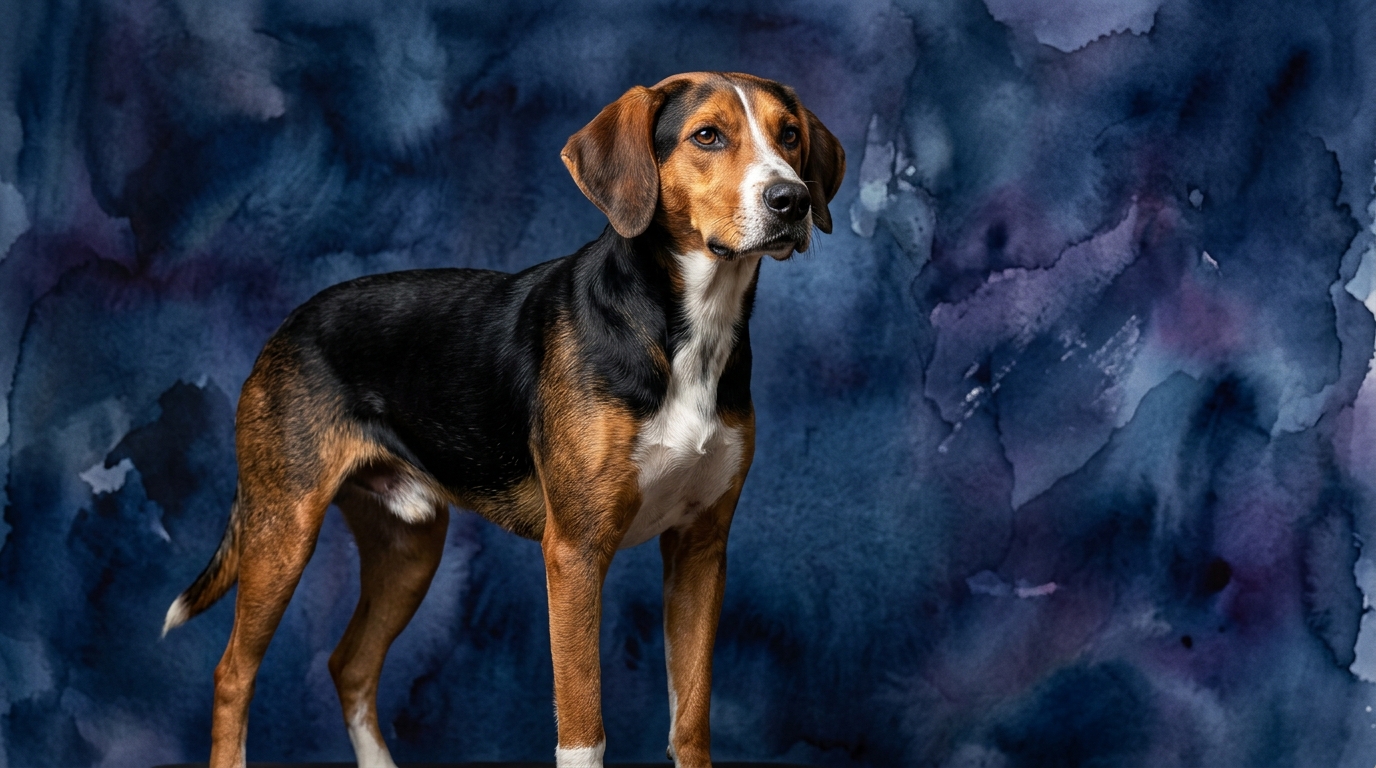
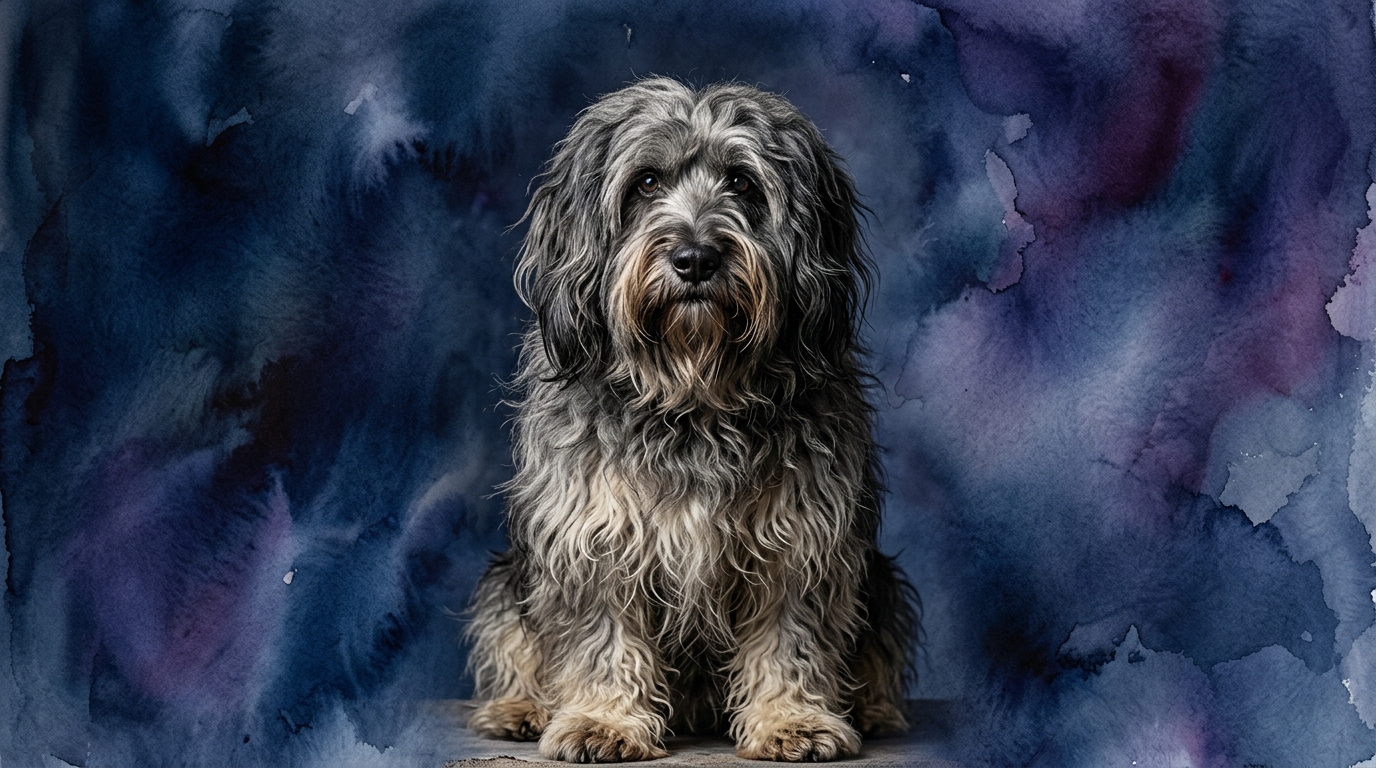
Side-by-Side Cognitive Profiles
At The Cosmic Pet Pet IQ Lab, we analyze canine intelligence across five key dimensions. While both the American Foxhound and the Polish Lowland Sheepdog score a solid 3 out of 5 in each category, their application of these cognitive strengths is profoundly influenced by their distinct breed purposes.
The **American Foxhound**, a breed honed for the chase, exhibits its cognitive strengths in ways deeply tied to its olfactory capabilities. Its **Problem Solving (3/5)** centers on unraveling complex scent puzzles, persistently navigating varied terrain to locate a target, showcasing an iterative and sensory-driven approach to challenges. **Training Speed (3/5)** is moderate; while capable of learning, their profound independent drive to follow scent can sometimes supersede compliance with human commands, demanding consistent, engaging, and patient training. Their **Social Intelligence (3/5)** is generally affable and tolerant, relating well within a canine pack and typically friendly with people, though their primary cognitive focus often remains external, on the environment's olfactory landscape. The **Instinctive Drive (3/5)** is powerfully expressed through their intrinsic need to hunt and trail by scent, a fundamental drive that dictates much of their cognitive application and behavioral patterns. Finally, their **Memory (3/5)** excels in retaining complex scent trails and geographical routes, vital for their historical purpose, though this can sometimes override memory for specific human-initiated commands when a compelling scent is present.
The **Polish Lowland Sheepdog**, forged in the role of a vigilant herder, applies its intellect with a focus on management and interaction. Its **Problem Solving (3/5)** lies in strategic thinking for managing movement and space, adeptly interpreting environmental cues to guide and control, reflecting its herding lineage. **Training Speed (3/5)** is generally responsive; these dogs are eager to engage in learning, quickly grasping commands and routines, especially when the task aligns with their cooperative and purposeful nature. Their **Social Intelligence (3/5)** is highly attuned to their human family's dynamics and moods, displaying a protective yet discerning interaction style, often reserved with strangers but deeply bonded within their immediate circle. The **Instinctive Drive (3/5)** manifests as a persistent desire to gather, protect, and maintain order, translating into vigilance and a need for mental and physical engagement. Their **Memory (3/5)** exhibits robust recall for learned behaviors, household routines, and social interactions, supporting their role as a reliable and consistent companion who remembers past experiences and expectations.
Where the American Foxhound Wins Cognitively
The American Foxhound truly shines in its sustained focus on a singular, external sensory input: scent. Their cognitive advantage lies in their unparalleled ability to filter out a myriad of distractions and dedicate their entire mental processing to following a trail, even over long distances and varied terrains. This translates to an exceptional capacity for independent, self-directed exploration driven purely by olfaction. They excel at intricate environmental navigation based on subtle scent discrimination and a robust scent memory, often outperforming many breeds in tasks requiring persistent, ground-level sensory analysis. Their problem-solving in this domain is less about manipulating objects and more about tenacious investigation and highly specialized sensory processing, a cognitive niche few can rival.
Where the Polish Lowland Sheepdog Wins Cognitively
The Polish Lowland Sheepdog demonstrates a cognitive edge in adaptive spatial reasoning and proactive environmental management. Their herding background has fostered a strength in observing, predicting, and influencing the movement of others within a defined space. This involves a dynamic understanding of cause-and-effect in both social and physical environments, often demonstrating foresight in their actions to maintain order or achieve a specific outcome, such as gently nudging family members. They are adept at reading body language, both human and animal, and adjusting their behavior accordingly, showcasing a more nuanced social intelligence focused on influence, protection, and the subtle art of 'managing' their perceived flock. Their problem-solving is often about anticipating scenarios and strategizing an intervention.
Which Is Easier to Train and Why
Generally, the Polish Lowland Sheepdog is considered easier to train for a wider range of obedience and complex tasks. Their inherent desire to work cooperatively with humans, a hallmark of herding breeds, means they often seek to understand and comply with commands, viewing training as a partnership. They learn quickly when they perceive a purpose or benefit, and their keen social intelligence makes them highly attuned to their owner's cues, fostering a responsive and engaged student. The American Foxhound, while certainly capable of learning, often presents a greater training challenge due to its powerful, independent hunting drive. Their nose can be an overwhelming distraction, making consistent recall or sustained focus on human-initiated tasks incredibly difficult when a compelling scent is present. Training a Foxhound requires immense patience, creativity, and a strong understanding of their motivations, often needing to compete directly with their natural inclination to follow a trail, making engagement a constant effort.
Suited for Active vs. Relaxed Owners
Neither the American Foxhound nor the Polish Lowland Sheepdog are truly suited for genuinely relaxed owners, as both breeds demand significant engagement. However, their activity needs differ in nature. The American Foxhound thrives with owners who embrace long, scent-driven walks, tracking activities, or even field trials where their natural instincts can be fully expressed. They require ample space and securely fenced environments to prevent them from following a compelling scent into danger, as their activity is often about covering extensive ground and independent exploration. For owners who enjoy structured activities and a more interactive companion, the Polish Lowland Sheepdog might be a better fit. They need mental stimulation alongside physical exercise, enjoying agility, obedience, or interactive play within a more contained environment. Their activity can be more varied, including walks, play, and 'work' around the home, but a truly sedentary lifestyle would be detrimental to their well-being.
The Verdict
Select an American Foxhound if you are an experienced owner who cherishes a dog's independent spirit and is prepared to channel their profound drive for scent work into fulfilling activities, embracing a companion whose world is primarily defined by its nose.
Opt for a Polish Lowland Sheepdog if you desire a perceptive, engaged, and protective companion eager to participate in family life and structured activities, valuing a dog that thrives on purpose and partnership in a dynamic home environment.
🧠 Find Your Pet's IQ Score
Our Pet IQ Lab assessment covers 25+ tests across 5 cognitive dimensions — personalized to your breed.
Take the Full IQ Test →Frequently Asked Questions
Do American Foxhounds or Polish Lowland Sheepdogs make good family pets?
Both can be good family pets with proper socialization and training, but their styles differ. Foxhounds are generally amiable and tolerant with children and other pets, while Polish Lowland Sheepdogs are devoted and protective, often forming strong bonds with their family and being watchful over their human 'flock'.
How much exercise do these breeds need daily?
Both require substantial daily exercise. American Foxhounds need extensive opportunities for long walks, runs, or off-leash exploration in secure areas to satisfy their hunting instincts. Polish Lowland Sheepdogs also need daily physical activity, combined with mental stimulation through training or interactive play, to keep their active minds engaged and prevent boredom.
Are there significant grooming differences between them?
Yes, very much so. American Foxhounds have a short, easy-care coat requiring minimal grooming, primarily just occasional brushing. The Polish Lowland Sheepdog, conversely, possesses a long, dense double coat that needs regular, thorough brushing several times a week to prevent matting and maintain its health, demanding a significant grooming commitment.