
Side-by-Side IQ Profile: A Tale of Two Minds
The Cosmic Pet Pet IQ Lab rates both the American Foxhound and the Tibetan Terrier with a 3/5 across Problem Solving, Training Speed, Social Intelligence, Instinctive Drive, and Memory. While these numerical similarities might suggest identical cognitive functions, a closer look at their breed-specific applications of these traits paints a much richer picture.
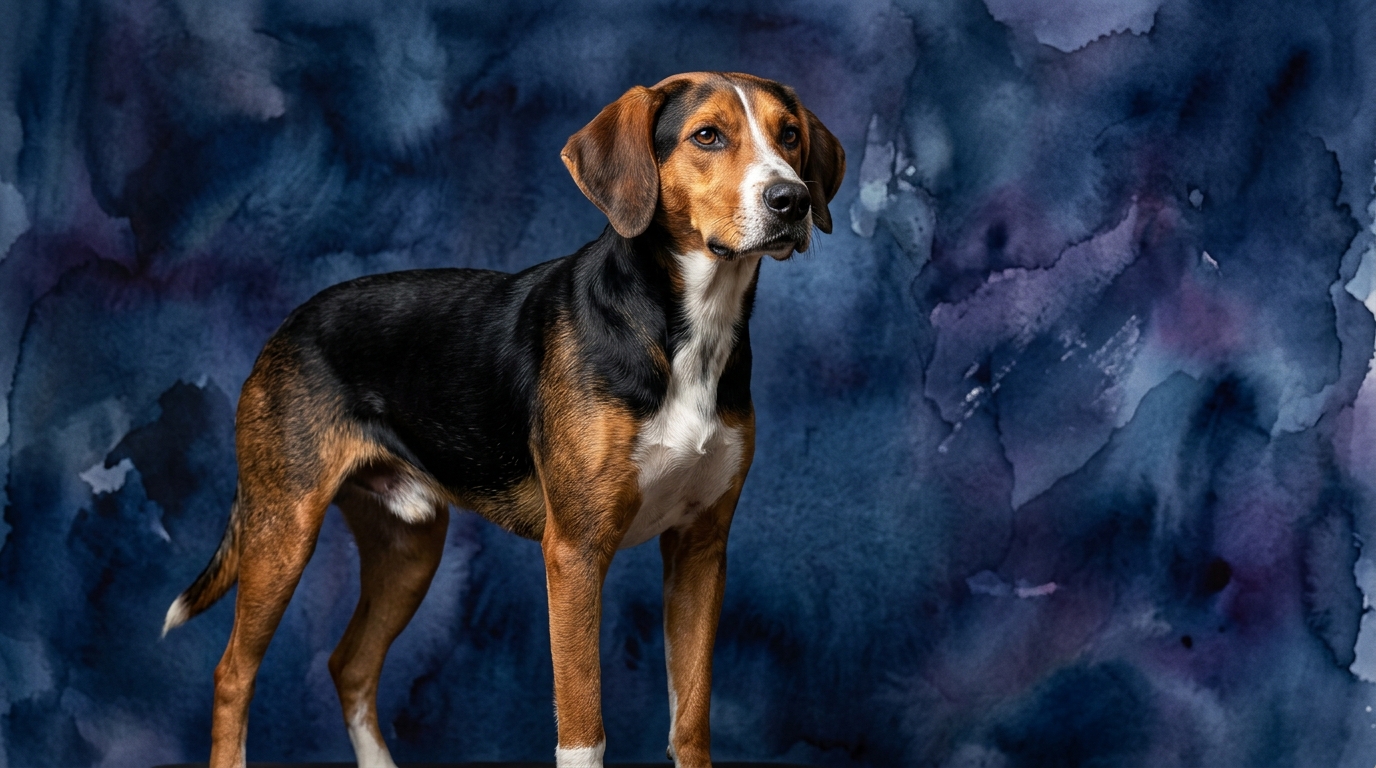
For the American Foxhound, Problem Solving (3/5) manifests as an ability to navigate complex outdoor environments, decipher intricate scent trails, and overcome physical obstacles during a pursuit. Their Training Speed (3/5) reflects their capacity to learn hunting commands and routines, though often with a strong independent streak driven by their primary instincts. Social Intelligence (3/5) pertains to their function within a pack dynamic and their responsiveness to a hunter's cues, rather than subtle human emotional attunement. Their Instinctive Drive (3/5) is profoundly rooted in scent tracking and endurance, making the chase their paramount motivation. Memory (3/5) is specialized for retaining intricate scent patterns, terrain features, and established hunting routes.
The Tibetan Terrier, in contrast, applies its Problem Solving (3/5) to adapting to varied domestic and environmental challenges, such as figuring out how to access a favored toy or navigating diverse terrain. Their Training Speed (3/5) indicates a readiness to learn household rules and commands, though often tempered by a thoughtful, occasionally self-serving independence. Social Intelligence (3/5) is expressed through a keen awareness of their human family's moods and routines, acting as perceptive companions and watchful guardians. Their Instinctive Drive (3/5) includes a natural herding inclination, a strong sense of territory, and remarkable adaptability to harsh conditions. Memory (3/5) is strong for recalling routines, family members, learned commands, and their preferred comfort spots within the home.
Where the American Foxhound's Cognition Excels
The American Foxhound's cognitive strengths are deeply intertwined with its heritage as a scent hound. Their problem-solving abilities truly shine in scenarios demanding environmental mastery and sensory discrimination. They excel at processing a myriad of olfactory information, distinguishing a specific target scent from countless others, and then devising the most efficient route to follow it, often over challenging and varied terrain. This isn't about solving abstract puzzles, but rather dynamically interpreting a complex, ever-changing sensory map in real-time.
Their memory, while rated similarly to the Tibetan Terrier, is uniquely adapted for long-term recall of scent lines and geographical features relevant to a hunt. A Foxhound can remember a particular game trail or the scent signature of a specific animal over vast distances and extended periods. This specialized cognitive mapping allows them to persist tirelessly, demonstrating a single-minded focus that few other breeds can match when engaged in their primary purpose. Their instinctive drive, a powerful force, directs all their cognitive resources towards the pursuit, making them masters of the chase.
Where the Tibetan Terrier's Cognition Shines
The Tibetan Terrier’s cognitive advantages lie in their adaptability and nuanced social understanding, honed by centuries of companionship and watchful guardianship. Their social intelligence, while rated 3/5, is particularly attuned to the subtleties of human family dynamics. They possess a remarkable ability to read emotional cues, often anticipating their owner's needs or moods, and can seamlessly integrate into diverse household routines. This makes their problem-solving skills highly effective in a domestic context, such as figuring out how to get attention or navigating complex social interactions within the family unit.
Their memory is robust for household routines, the specific habits of family members, and the locations of favored objects. This allows them to predict events and participate actively in daily life, contributing to their reputation as perceptive companions. The Tibetan Terrier's instinctive drive, encompassing a protective and watchful nature, means they are constantly processing their immediate environment for changes, demonstrating a keen awareness that supports their role as a devoted family member and guardian, rather than a hunter.
Training Dynamics: Independence vs. Partnership
When considering ease of training, the American Foxhound presents a unique set of challenges rooted in their profound independence and specialized drives. While capable of learning commands (Training Speed 3/5), their primary motivation often lies in following a compelling scent, not necessarily in eager compliance with human directives. Recall, a fundamental command, can be particularly difficult to solidify when a Foxhound's nose is engaged. Their focus is singular and powerful, often overriding other stimuli. Training an American Foxhound demands immense patience, consistency, and an understanding that their natural inclinations are incredibly strong; success often comes from channeling these drives rather than attempting to suppress them entirely.
The Tibetan Terrier, conversely, tends to be more amenable to training, largely due to their desire for partnership and involvement with their family. While they possess an independent streak and a thoughtful nature that can sometimes be mistaken for stubbornness, they generally respond well to positive reinforcement and varied training methods. Their social intelligence and adaptability mean they often enjoy the mental stimulation that training provides, viewing it as a shared activity. They are observant and quick to pick up on routines, and while they might occasionally choose to 'think for themselves,' their inherent desire to be an integral part of the family often translates into a cooperative attitude during training sessions.
Lifestyle Match: Roaming Companion vs. Perceptive Housemate
For owners with an active, outdoor-centric lifestyle, the American Foxhound is an ideal companion. These dogs thrive on extensive daily exercise, needing several hours of vigorous activity, ideally including long runs or scent work in secure, expansive areas. Their endurance and drive make them perfect partners for activities like hiking, trail running, or competitive scent sports. They are not suited for relaxed owners who cannot commit to their substantial exercise requirements, as boredom and pent-up energy can lead to destructive behaviors or persistent vocalizations. Their contentment is directly linked to their ability to engage their powerful physical and cognitive drives.
The Tibetan Terrier, in contrast, offers a more adaptable companionship, suiting a broader range of lifestyles. While they enjoy active outings like walks and playtime, they are equally content to be a perceptive housemate, sharing quiet moments with their family. They require moderate daily exercise to stay healthy and mentally stimulated, but their physical needs are less intense than a Foxhound's. They thrive on mental engagement and family interaction, making them suitable for owners who appreciate a dog that can transition from an energetic walk to a calm presence by their side. Their social intelligence means they are deeply integrated into the household, making them excellent companions for both moderately active and more relaxed owners who prioritize companionship and mental enrichment.
The Verdict
Choose the American Foxhound if you are a dedicated, active owner seeking a robust outdoor partner for scent work, long-distance activities, or a truly independent canine spirit, prepared for consistent, patient training tailored to their primal drives.
Opt for the Tibetan Terrier if you desire an adaptable, perceptive family companion who enjoys both active outings and quiet companionship, and who appreciates a dog with an independent streak and a keen understanding of household dynamics.
🧠 Find Your Pet's IQ Score
Our Pet IQ Lab assessment covers 25+ tests across 5 cognitive dimensions — personalized to your breed.
Take the Full IQ Test →Frequently Asked Questions
Do American Foxhounds make good family pets?
They can be wonderful family pets, but their strong scent drive and high energy mean they need significant daily exercise and structured training to prevent frustration. They are generally good with children and other dogs if properly socialized, though their independent nature and vocalizations require understanding and management.
Are Tibetan Terriers good for first-time dog owners?
Their intelligence and adaptable nature can make them a good fit for first-time owners, provided they are prepared for their independent streak and commit to consistent, positive training. They thrive on interaction and can be sensitive to harsh methods, responding best to gentle guidance and clear communication.
How much exercise do these breeds need?
American Foxhounds require substantial daily exercise, often several hours of vigorous activity like running or scent tracking, to prevent boredom and destructive behavior. Tibetan Terriers need moderate daily exercise, such as long walks or playtime, alongside mental stimulation, to keep them content and prevent restlessness.