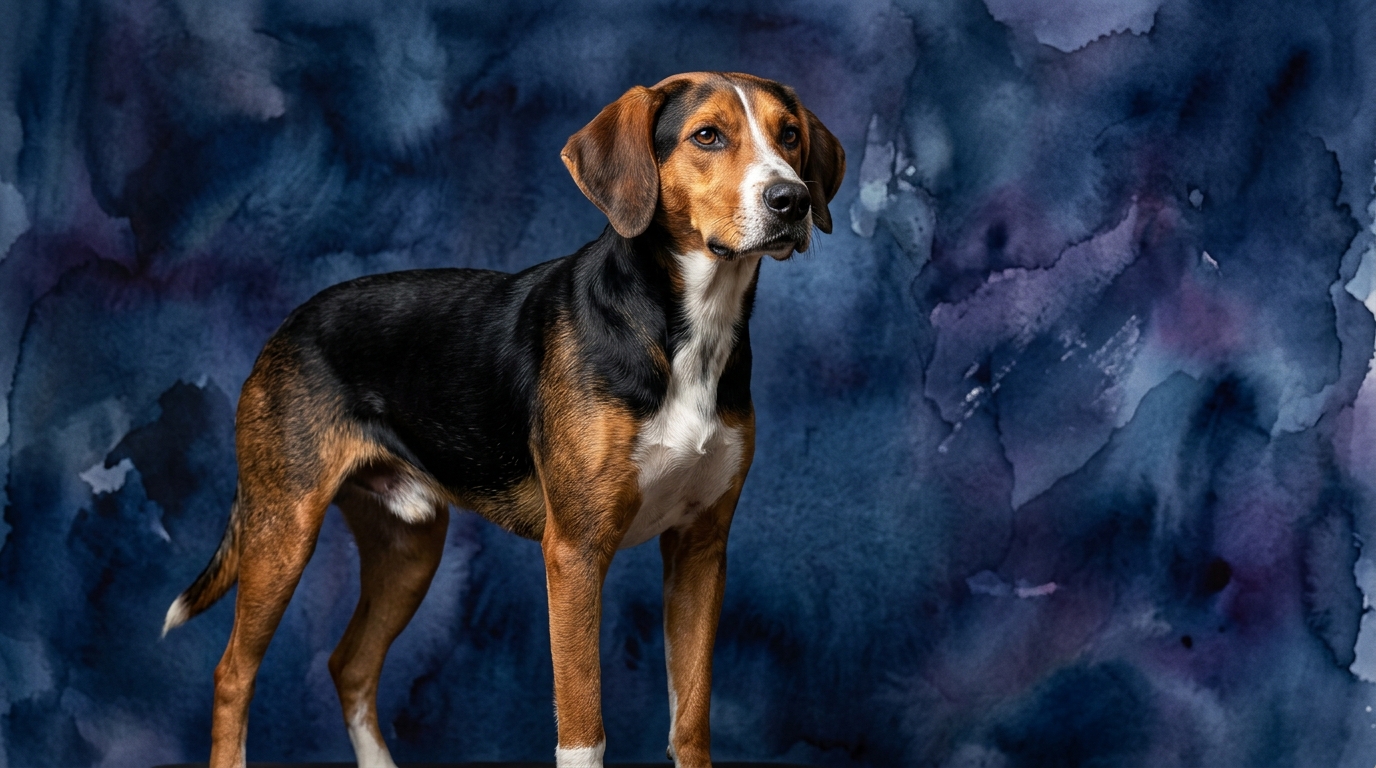
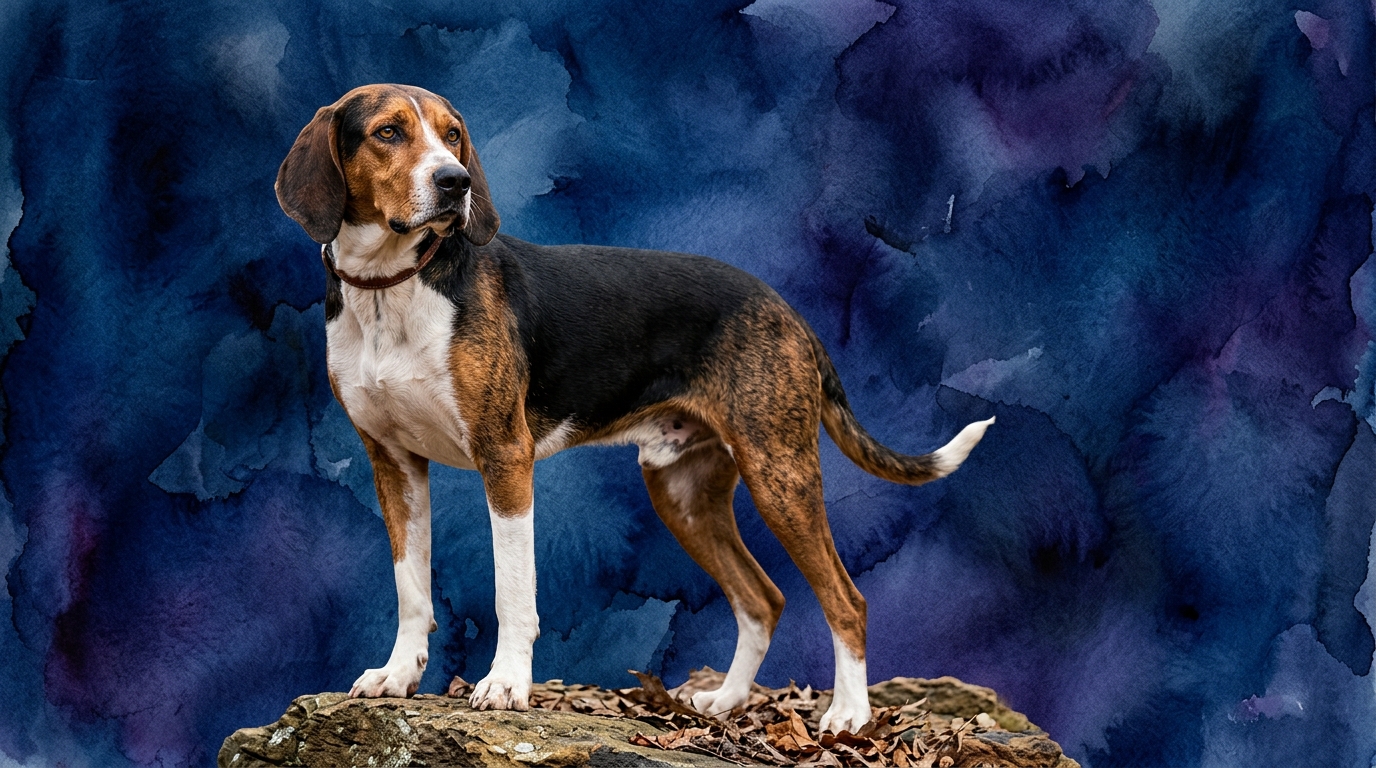
Side-by-Side Cognitive Profiles: Decoding Identical Scores
While both the American Foxhound and the Treeing Walker Coonhound register a consistent 3/5 across all evaluated cognitive dimensions, understanding their historical roles illuminates the subtle differences in how these scores manifest. This isn't about one being 'smarter,' but how their inherent capabilities are applied.
For Problem Solving (3/5), the American Foxhound excels at deciphering complex, often faint, scent trails over vast, varied terrains, demonstrating persistent analytical thought to maintain the chase. The Treeing Walker Coonhound, with the same 3/5, applies its problem-solving acumen to a more vertical challenge: identifying the precise tree where prey has sought refuge and strategizing how to keep it there, often involving intricate scent analysis combined with visual cues and vocalization.
Training Speed (3/5) for the American Foxhound reflects its independence and deep-seated drive to follow a scent, requiring patient, consistent training focused on recall and cooperative pack work over long distances. The Treeing Walker Coonhound's 3/5 indicates a similar independence, but its training often centers on specific 'treeing' commands and vocal signals, demanding a handler who understands how to channel its intense focus on a singular task. Both require motivation to override their powerful olfactory distractions.
Social Intelligence (3/5) in the American Foxhound leans towards inter-canine cooperation within a pack, often showing a more reserved, though polite, demeanor with unfamiliar humans. The Treeing Walker Coonhound's 3/5 often translates to a slightly more direct, albeit still independent, working relationship with its human partner, especially during the hunt, while still possessing a generally affable nature with its family. Both are typically good-natured but not overly effusive.
Instinctive Drive (3/5) for the American Foxhound is characterized by an unwavering, long-distance pursuit of game, driven by an exceptional nose and boundless stamina. The Treeing Walker Coonhound's 3/5 is equally profound, but its drive is channeled specifically into finding, pursuing, and 'treeing' raccoons or other arboreal prey, culminating in its distinctive vocalizations. Both breeds are profoundly driven by their olfactory senses, making this dimension a core aspect of their being.
Memory (3/5) for the American Foxhound refers to its capacity to remember intricate scent patterns and vast geographical routes, crucial for sustained hunting efforts. The Treeing Walker Coonhound's 3/5 in memory enables it to recall specific treeing locations, previous successful hunting strategies, and the unique scent profiles of its quarry, demonstrating a specialized form of spatial and olfactory recall.
Where the American Foxhound's Cognition Shines
The American Foxhound, while scoring identically to its Coonhound cousin, demonstrates a particular cognitive strength in sustained, long-haul problem solving over open country. Its 3/5 in problem-solving manifests as an unparalleled ability to untangle complex scent trails across miles, navigating varied terrain and environmental distractions without losing focus. This requires a sophisticated form of 'cognitive mapping' and an enduring mental fortitude to stick with a challenge for extended periods.
Their memory (3/5) is particularly adapted to retaining vast geographical information and the intricacies of long-distance scent patterns. This allows them to effectively 'retrace' or 'project' a trail, making decisions about the most efficient path to follow based on past experience and current olfactory data. This endurance-based cognitive application is a hallmark of the breed, distinguishing its intelligence within the hound group.
Where the Treeing Walker Coonhound's Cognition Excels
The Treeing Walker Coonhound's cognitive strengths, though numerically identical, are distinctly geared towards a specific, intense form of hunting. Its 3/5 in problem-solving is showcased in its remarkable ability to pinpoint a treed animal with precision, often having to differentiate between multiple potential trees or false leads. This requires rapid assessment, acute auditory interpretation (listening for subtle sounds from the treed animal), and a focused decision-making process.
Their instinctive drive (3/5) is not just about scent, but about the culmination of 'treeing'—a complex sequence of behaviors involving tracking, cornering, and then vocalizing. This specialized drive requires a nuanced cognitive understanding of prey behavior and environmental context. Their social intelligence (3/5) often includes a very specific form of communication with their human handler through distinct vocalizations, which are not merely noise but convey information about the hunt's progress and the location of the prey, demonstrating a specialized form of collaborative intelligence.
Training Nuances: Independent Thinkers Both
Neither the American Foxhound nor the Treeing Walker Coonhound is typically described as 'easy' to train, primarily due to their strong independent thinking and profound scent drive. Both breeds score 3/5 in training speed, indicating that while they are certainly capable of learning, their powerful instincts often take precedence over human commands if not carefully managed. Consistency, patience, and high-value rewards are crucial for both.
The American Foxhound's training often focuses on developing a strong recall over vast distances and reinforcing pack cooperation. They need to understand that returning to the handler, even when on a hot scent, is more rewarding than continuing the chase. This can be a significant challenge, as their drive to follow a trail is immense. Their social intelligence, while good with other dogs, can make them less attuned to subtle human cues compared to breeds bred for closer human partnership.
The Treeing Walker Coonhound, while equally independent, often responds well to training that directly relates to its hunting purpose. Commands like 'tree' or specific vocal signals can be ingrained effectively because they align with the dog's natural instincts. However, convincing them to ignore a compelling scent to perform a non-hunting related task requires significant dedication. Their focused drive on a single quarry can sometimes make them less adaptable to varied training scenarios, compared to a breed that might be more generally biddable.
Matching Breeds to Lifestyles: Active, Always Active
It's crucial to understand that neither the American Foxhound nor the Treeing Walker Coonhound suits a relaxed owner. Both are high-energy working dogs, and their cognitive profiles are intrinsically linked to their need for extensive physical and mental engagement. Their 3/5 instinctive drive demands an outlet.
The American Foxhound thrives with owners who can provide vast spaces for running and opportunities for long, sustained exercise. This could involve daily long-distance jogs, hiking, or participation in scent work that allows them to use their incredible endurance and tracking abilities. They are best suited for owners who enjoy an active outdoor lifestyle and can accommodate a dog that needs to cover serious ground daily.
The Treeing Walker Coonhound also requires an active owner, but its exercise needs might be slightly different in nature. While they also need extensive running, their cognitive satisfaction often comes from focused scent work, 'puzzling' out a trail, and engaging in activities that simulate their treeing instinct. This could mean engaging in barn hunt, tracking, or other scent-based sports that challenge their specific problem-solving and drive. Owners should be prepared for their distinctive vocalizations, especially when they are 'working' a scent. Neither breed is content with short walks around the block; both require a significant investment in their physical and mental well-being.
The Verdict
Choose an American Foxhound if you are an endurance athlete who loves long runs or hikes in open country and can provide ample space for a dog whose cognition thrives on sustained, long-distance scent tracking.
Choose a Treeing Walker Coonhound if you are an active owner who appreciates a dog with highly specialized problem-solving skills for scent work, can manage a vocal breed, and enjoy engaging in focused, stimulating activities that simulate their treeing drive.
🧠 Find Your Pet's IQ Score
Our Pet IQ Lab assessment covers 25+ tests across 5 cognitive dimensions — personalized to your breed.
Take the Full IQ Test →Frequently Asked Questions
Are American Foxhounds good family dogs?
American Foxhounds can be good family dogs, typically being gentle and tolerant with children. However, their high energy and strong scent drive mean they require substantial exercise and a securely fenced yard, making them best suited for active families who understand their needs.
Do Treeing Walker Coonhounds bark a lot?
Yes, Treeing Walker Coonhounds are known for their distinctive vocalizations, including bays and howls, which are integral to their hunting style. While not constant, they can be quite vocal, especially when excited, tracking a scent, or feeling bored, which owners should be prepared for.
Which breed is better for apartment living?
Neither the American Foxhound nor the Treeing Walker Coonhound is typically recommended for apartment living due to their high energy levels, strong need for exercise, and vocal tendencies. Both breeds thrive in homes with large, securely fenced yards and owners committed to providing extensive daily activity.