
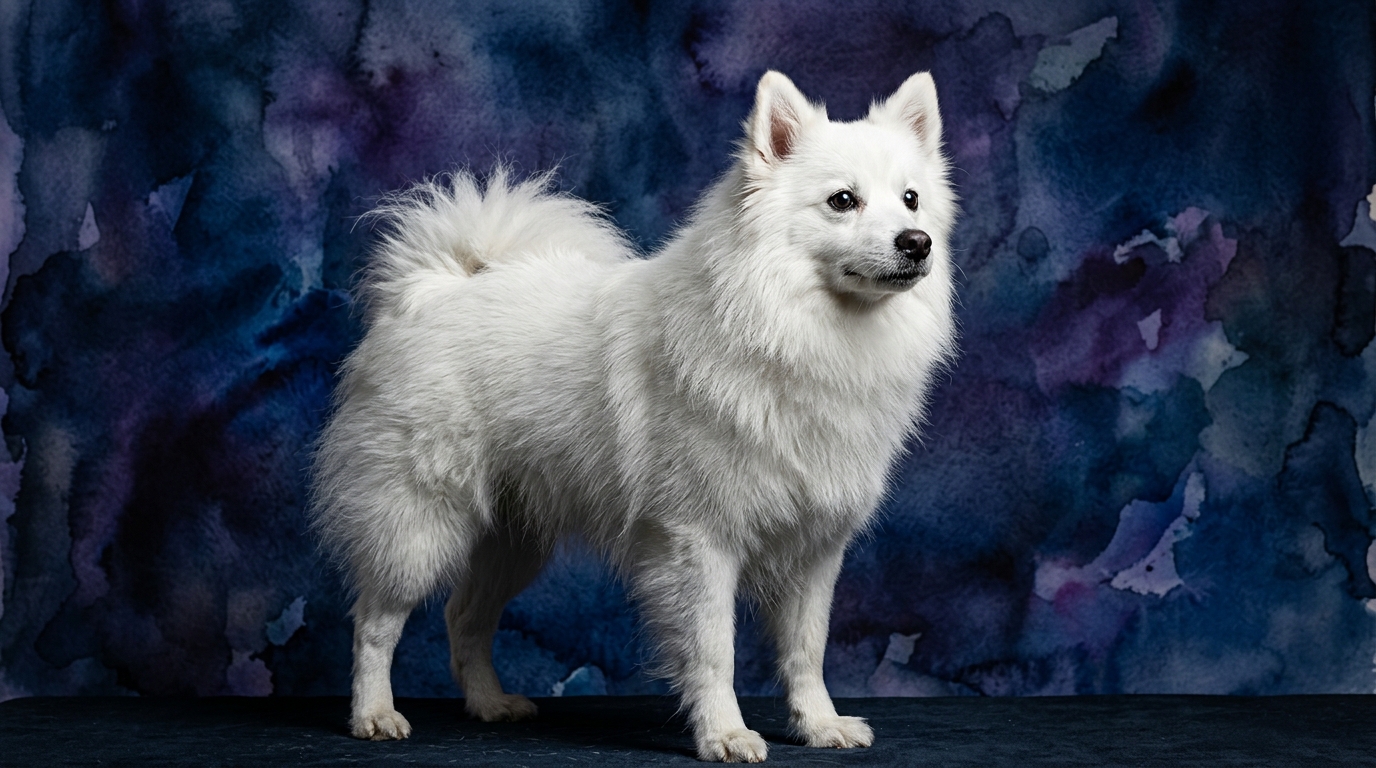
Side-by-Side Cognitive Profiles
The American Staffordshire Terrier, recognized by Coren's ranking at #48, demonstrates a respectable capacity for obedience and working intelligence. Their Problem Solving is rated 3/5, indicating a moderate ability to navigate novel situations, often employing persistence. Training Speed is also 3/5, reflecting a moderate pace of learning new commands, responsive to clear and consistent guidance. Their Social Intelligence stands at 3/5, meaning they possess an average capacity to interpret human cues and social dynamics, forming strong bonds within their family. An Instinctive Drive of 3/5 suggests a moderate level of inherent drives, such as a desire for engagement and task fulfillment. A standout trait is their Memory, rated 4/5, signifying a strong ability to retain information and recall learned behaviors with considerable accuracy, which is highly beneficial for long-term training.
The American Eskimo Dog, while not Coren-ranked, presents a unique cognitive blueprint that aligns with its historical roles. Their Problem Solving is 3/5, similar to the AmStaff, often manifesting as cleverness and resourcefulness in their environment, sometimes with an independent flair. Training Speed is also 3/5, indicating they learn at a moderate pace, responding well to positive reinforcement, though their independent streak can occasionally influence their willingness to comply immediately. Social Intelligence is 3/5, showcasing an average ability to interpret social cues, often expressing strong family bonds and a reserved, observant nature with strangers. Their Instinctive Drive, also 3/5, often translates into a keen alertness and a strong desire to communicate through vocalization, stemming from their watchdog heritage. Their Memory is rated 3/5, meaning they possess a moderate capacity for recalling commands and routines, benefiting from consistent reinforcement to solidify long-term retention.
Where the American Staffordshire Terrier Excels Cognitively
The American Staffordshire Terrier exhibits a distinct cognitive advantage in memory, rated at 4/5 compared to the American Eskimo Dog's 3/5. This enhanced recall means AmStaffs are typically quicker to solidify learned behaviors and commands into long-term habits, making them adept at remembering complex sequences or routines over extended periods. For tasks requiring a consistent application of previously taught skills, such as advanced obedience trials or multi-step agility courses, their superior memory allows for more reliable and fluid performance. This robust memory also contributes to their ability to recall past experiences, both positive and negative, which influences their behavioral responses and strengthens their understanding of boundaries established through consistent training and consistent interactions.
Where the American Eskimo Dog Demonstrates Unique Cognitive Strengths
While the American Eskimo Dog shares similar numerical ratings in several cognitive dimensions, its unique application of problem-solving and social intelligence presents distinct advantages in specific contexts. Their problem-solving at 3/5 often manifests as cleverness and resourcefulness, particularly in navigating their environment or signaling needs, sometimes with an independent streak that allows them to devise solutions without constant human prompting. Their social intelligence, also 3/5, is often expressed through keen observation and a distinctive vocal repertoire, allowing them to communicate alerts and emotional states effectively, making them exceptional watchdogs who 'solve' the problem of alerting their family to perceived threats. This blend of observational acuity and expressive communication, while not always translating to traditional obedience metrics, signifies a cognitive strength in their historical role as companion alarms and independent thinkers.
Training Dynamics: AmStaff vs. Eskie
When considering ease of training, both the American Staffordshire Terrier and the American Eskimo Dog are rated at 3/5 for training speed, suggesting they learn at a moderate pace, but their underlying cognitive profiles lead to different training experiences. The AmStaff's stronger memory (4/5) means that once a command or behavior is understood, it tends to stick more firmly, potentially requiring fewer refresher sessions over time. Their moderate instinctive drive (3/5) can be channeled into productive tasks, and their desire to engage with their human companions often makes them willing participants in training, thriving on the mental engagement. In contrast, while the Eskie also learns at a moderate pace, their 3/5 memory score implies that consistent, ongoing reinforcement might be more critical to maintain long-term recall. Their independent problem-solving approach and strong vocal communication, while valuable, can sometimes lead to a focus on self-directed activities rather than immediate compliance, requiring trainers to be particularly engaging and patient. Therefore, while both require consistency, the AmStaff’s memory might make the retention phase slightly smoother, whereas the Eskie might demand more creativity to keep them consistently focused on the task at hand.
Matching Cognitive Profiles to Owner Lifestyles
For active owners seeking a canine partner for structured activities, the American Staffordshire Terrier’s cognitive profile aligns well with a desire for engagement and progression. Their superior memory (4/5) and moderate instinctive drive (3/5) make them suitable for owners who enjoy consistent training, dog sports like agility, or engaging in complex problem-solving games that build upon learned skills. They thrive on having a 'job' and benefit from owners who provide clear direction and mental stimulation, rather than just physical exercise, flourishing when given opportunities to apply their robust recall in dynamic environments. Conversely, the American Eskimo Dog, with its moderate problem-solving and social intelligence, might appeal more to owners who appreciate a companion with a keen sense of observation and an independent spirit, even if they aren't pursuing competitive dog sports. They are alert and communicative, making them excellent companions for owners who value a watchful presence and enjoy a dog that might 'think for itself' occasionally. While they still require mental engagement, their fulfillment might come from different avenues, such as puzzle toys that cater to their ingenuity or simply being involved in daily family routines, rather than extensive formal training sessions.
The Verdict
The American Staffordshire Terrier is an excellent match for owners who value a dog with strong recall and a desire for structured engagement in training and activities, thriving on consistent mental stimulation and task fulfillment.
The American Eskimo Dog will thrive with owners who appreciate an alert, communicative companion with an independent streak, offering a different but equally rewarding cognitive partnership rooted in keen observation and cleverness.
🧠 Find Your Pet's IQ Score
Our Pet IQ Lab assessment covers 25+ tests across 5 cognitive dimensions — personalized to your breed.
Take the Full IQ Test →Frequently Asked Questions
Does Coren ranking mean one breed is definitively smarter than the other?
Coren ranking primarily assesses 'working and obedience intelligence,' which measures a dog's ability to learn and comply with human commands. It doesn't encompass all forms of intelligence, so a non-ranked breed like the American Eskimo Dog may excel in other cognitive areas not measured by this scale, such as observational skills or independent problem-solving.
How does memory difference impact daily life for these breeds?
The AmStaff's higher memory score means they might remember house rules, commands, and routines more consistently over time, potentially requiring less frequent reinforcement to maintain desired behaviors. The Eskie, with its moderate memory, might benefit from more regular practice to keep learned behaviors sharp, especially if they are not consistently applied in daily life.
Are these breeds good for first-time dog owners?
Both breeds possess moderate training speeds and instinctive drives, meaning they are trainable but benefit immensely from consistent, positive reinforcement methods. While their cognitive profiles are manageable, neither is typically recommended as the easiest for an absolute novice; however, a dedicated first-time owner committed to understanding and addressing breed-specific traits could certainly succeed with either.