Side-by-Side IQ Profile: Unpacking Cognitive Dimensions
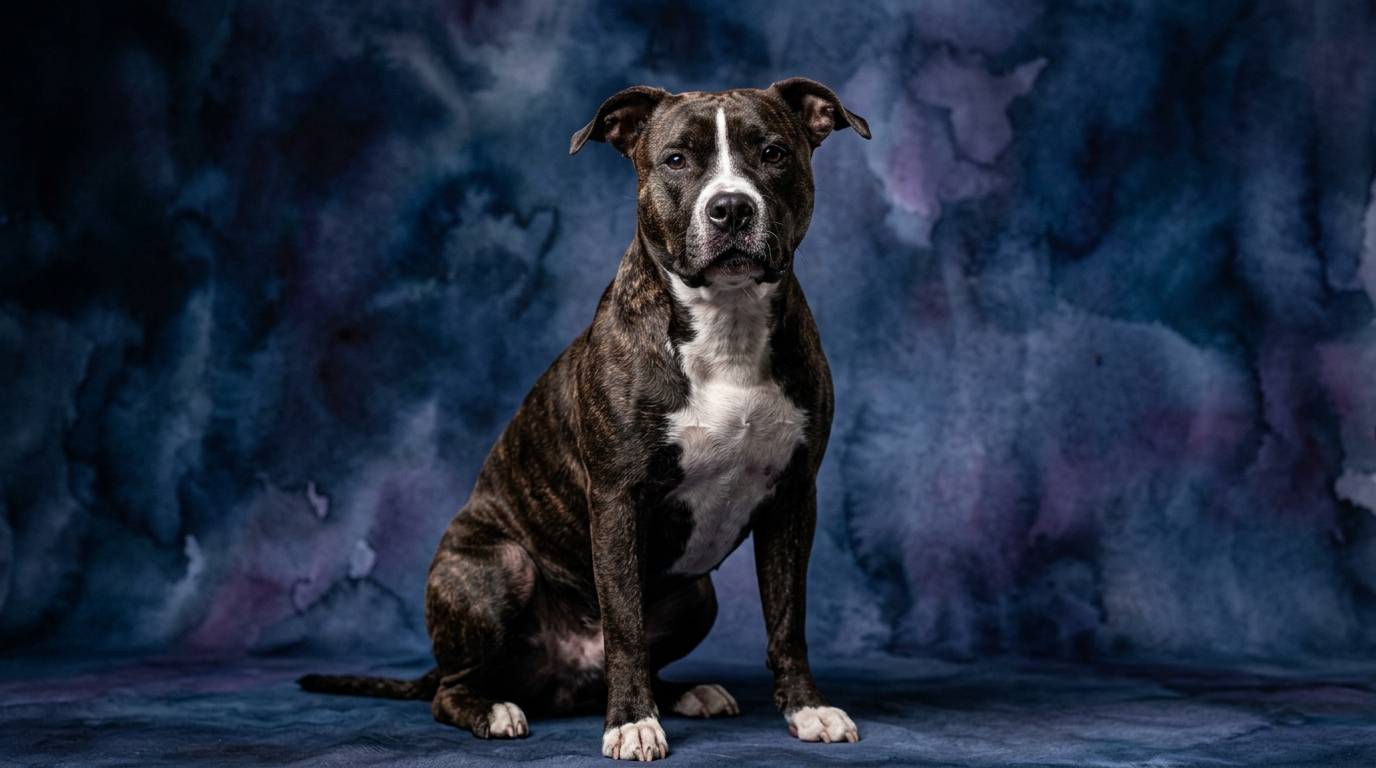
The Cosmic Pet Pet IQ Lab employs a five-dimensional framework to assess canine intelligence, moving beyond simplistic 'smartness' labels. For the American Staffordshire Terrier, a breed acknowledged with a Coren ranking of #48, its cognitive profile paints a picture of robust adaptability and strong recall. Its Problem Solving is rated 3/5, indicating a dog capable of navigating moderately complex challenges, often employing learned strategies to achieve goals. Training Speed, also at 3/5, suggests a willingness and capacity to grasp new commands at a steady pace, benefiting from consistent, positive reinforcement. Social Intelligence, another 3/5, highlights their ability to interpret and respond appropriately to human cues and social dynamics within their environment. The Instinctive Drive, at 3/5, points to a moderate inherent motivation for tasks linked to their breed history, such as guarding or companionship, which can be channeled effectively. A standout for the AmStaff is its Memory, scoring 4/5, signifying an excellent capacity for retaining complex sequences of commands, routines, and experiences over extended periods.
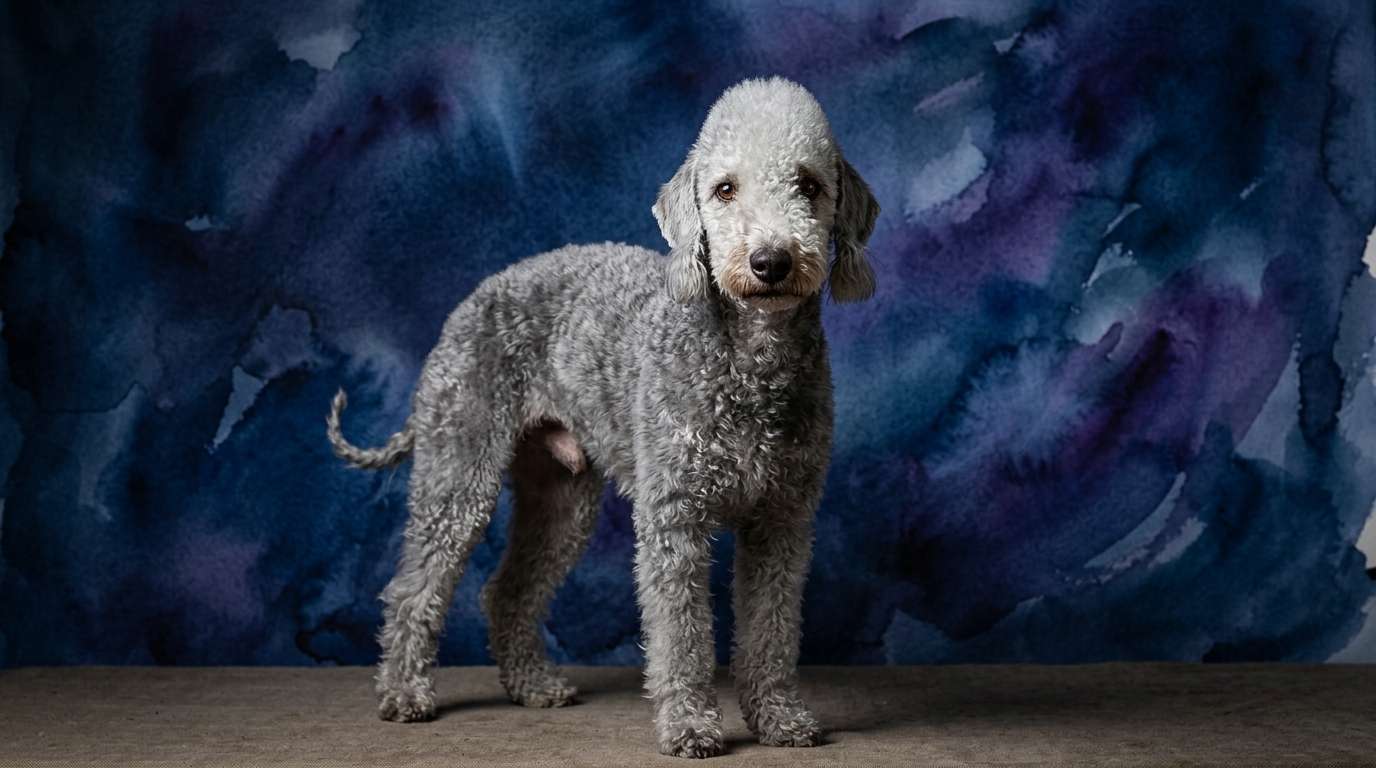
The Bedlington Terrier, while not appearing on Coren's broader ranking for working and obedience intelligence, presents a consistent cognitive profile across our dimensions. Its Problem Solving is rated 3/5, suggesting an ability to tackle challenges with a clever, independent approach, often characteristic of terriers engaging with their environment. Training Speed, also 3/5, indicates that Bedlingtons can learn new behaviors reliably, though their independent streak might require engaging and patient training methods to maintain focus. Social Intelligence, at 3/5, reflects their capacity to read and react to social signals, often displaying a nuanced sensitivity in interactions. Their Instinctive Drive, also 3/5, suggests a moderate, focused drive, particularly towards tasks related to their historical role as agile hunters of vermin, without being overwhelmingly intense. The Bedlington's Memory is rated 3/5, denoting a solid ability to recall commands and routines, though perhaps requiring slightly more reinforcement for long-term retention of intricate sequences compared to breeds with higher memory scores.
Where the American Staffordshire Terrier Wins Cognitively
The American Staffordshire Terrier exhibits a distinct cognitive advantage in its memory capabilities, scoring a 4/5 compared to the Bedlington's 3/5. This superior recall means an AmStaff is often quicker to solidify complex command sequences and retain learned behaviors over time, requiring less frequent refreshers once a skill is mastered. This cognitive strength translates into a dog that can reliably perform multi-step tasks and adapt more readily to evolving routines, making them highly receptive to advanced obedience or skill-based training. Furthermore, the AmStaff's inclusion in Coren's ranking at #48 underscores its capacity for adaptive obedience, signifying a cognitive profile that excels in understanding and executing human directives effectively within a structured learning environment.
Where the Bedlington Terrier Wins Cognitively
While the Bedlington Terrier's numerical scores largely mirror the AmStaff's in most dimensions, its cognitive strengths lie in the nuanced application of these abilities within its unique context. With a 3/5 in Problem Solving, the Bedlington often demonstrates a focused, agile intelligence particularly adept at navigating intricate physical challenges, a direct reflection of its history as a quick-thinking vermin hunter. This isn't about solving abstract puzzles faster, but about efficient, precise cognitive deployment in specific, often confined, scenarios requiring swift decision-making and tenacity. Their consistent 3/5 scores across the board can also be interpreted as a balanced cognitive profile, less prone to the potential for overthinking or complex behavioral issues that sometimes accompany higher drives or more intricate memory capacities, making their cognitive demands predictable and manageable for many owners.
Which Is Easier to Train and Why
When evaluating ease of training, the American Staffordshire Terrier holds a slight edge, primarily due to its 4/5 Memory score. While both breeds share a 3/5 Training Speed, the AmStaff's superior recall means it can retain learned commands and complex sequences more effectively over time. This cognitive strength often translates into less repetition required for mastery and greater reliability in recalling commands, especially after a break from training. An AmStaff's adaptive obedience, further supported by its Coren ranking, suggests a dog generally more inclined to engage with and respond to human instruction, making the training process feel more collaborative and rewarding for many owners. Their eagerness to please, when channeled correctly, can transform training into a highly efficient and enjoyable activity.
The Bedlington Terrier, with its 3/5 Training Speed and 3/5 Memory, is certainly trainable, but owners might find the process requires a touch more patience and creativity. Their terrier independence, while not indicating a lack of intelligence, can sometimes translate into a preference for self-directed activity over strict adherence to commands. This means that while they grasp concepts, consistent motivation and engaging training techniques are crucial to maintain their focus and ensure long-term retention. Owners might need to work harder to make training feel like a game or a rewarding challenge, rather than a rote exercise, to overcome their independent streak and leverage their inherent cleverness effectively.
Which Suits Active Owners vs. Relaxed Owners
For active owners seeking a canine companion, both breeds offer engagement, but with different intensities. The American Staffordshire Terrier, despite a 3/5 Instinctive Drive, is a physically robust and energetic breed that thrives on consistent, vigorous exercise and mental stimulation. Their powerful build and history suggest a need for structured activities like long walks, runs, agility, or engaging play sessions that challenge both their body and their problem-solving mind. Owners who enjoy outdoor adventures, dog sports, or simply a consistent routine of physical and mental engagement will find the AmStaff a willing and capable partner, channeling their moderate drive into productive outlets. Neglecting their need for activity can lead to boredom and potential behavioral manifestations of unspent energy.
The Bedlington Terrier, also with a 3/5 Instinctive Drive, presents a different profile for activity. While certainly energetic and playful, their smaller stature often means their exercise requirements can be met with slightly less intensity than an AmStaff. They enjoy brisk walks, secure off-leash play, and games that engage their quick wit and agility. For relaxed owners, the Bedlington can adapt well to a comfortable indoor lifestyle, provided their daily needs for mental engagement and moderate physical activity are met. They are often content with focused bursts of play and companionship, making them suitable for individuals or families who appreciate a lively presence without the demand for extreme athletic feats. Their keen senses and terrier curiosity still necessitate opportunities for exploration and mental puzzles, preventing complacency.
The Verdict: When to Choose Each
Choosing between an American Staffordshire Terrier and a Bedlington Terrier hinges on an owner's lifestyle, training philosophy, and appreciation for specific cognitive traits. The AmStaff's superior memory and proven adaptive obedience make it an excellent choice for owners prepared to engage in consistent, structured training, particularly if interested in advanced obedience, dog sports, or roles requiring reliable recall and complex task execution. They thrive with active engagement and clear guidance, offering a rewarding partnership to those who invest in their development.
The Bedlington Terrier, with its balanced cognitive profile and inherent terrier independence, is an ideal fit for owners who appreciate a clever, agile companion with a focused drive, and who are willing to employ engaging, patient training methods. They suit those seeking a moderately active dog that excels in specific, quick-thinking challenges and offers a charming blend of tenacity and companionship, fitting well into various home environments with consistent mental stimulation.
The Verdict
Choose the American Staffordshire Terrier if you value superior memory for training, are prepared for robust physical and mental engagement, and seek a highly trainable companion for structured activities and potentially advanced obedience.
Opt for the Bedlington Terrier if you appreciate a clever, agile companion with a balanced cognitive profile, are willing to engage in patient and creative training, and desire a moderately active dog adept at quick-thinking challenges.
🧠 Find Your Pet's IQ Score
Our Pet IQ Lab assessment covers 25+ tests across 5 cognitive dimensions — personalized to your breed.
Take the Full IQ Test →Frequently Asked Questions
Does a Coren ranking mean a dog is universally smarter?
The Coren ranking primarily assesses 'working and obedience intelligence,' which reflects a dog's capacity to learn and execute human commands quickly and consistently. While an indicator of adaptive learning, it doesn't encompass all facets of canine cognition, such as problem-solving in natural environments or social intelligence, which our IQ Lab framework evaluates more broadly.
How does a 3/5 instinctive drive manifest in these breeds?
A 3/5 instinctive drive means both breeds possess a moderate, inherent motivation for tasks tied to their historical roles, like the AmStaff's companionship/guarding tendencies or the Bedlington's vermin hunting. This drive is manageable but requires appropriate outlets; for instance, the AmStaff needs structured exercise and social interaction, while the Bedlington benefits from puzzle toys or scent games to satisfy its curiosity without becoming overly intense.
If problem-solving scores are the same, how do they differ?
While both score 3/5 in problem-solving, the *nature* of their problem-solving can differ. The AmStaff's might be geared towards understanding human expectations and navigating social structures, while the Bedlington's could lean towards independent, quick-witted solutions in physical environments, reflecting its history of outsmarting prey. Both are capable, but their preferred problem-solving contexts can vary.