Side-by-Side Cognitive Profiles
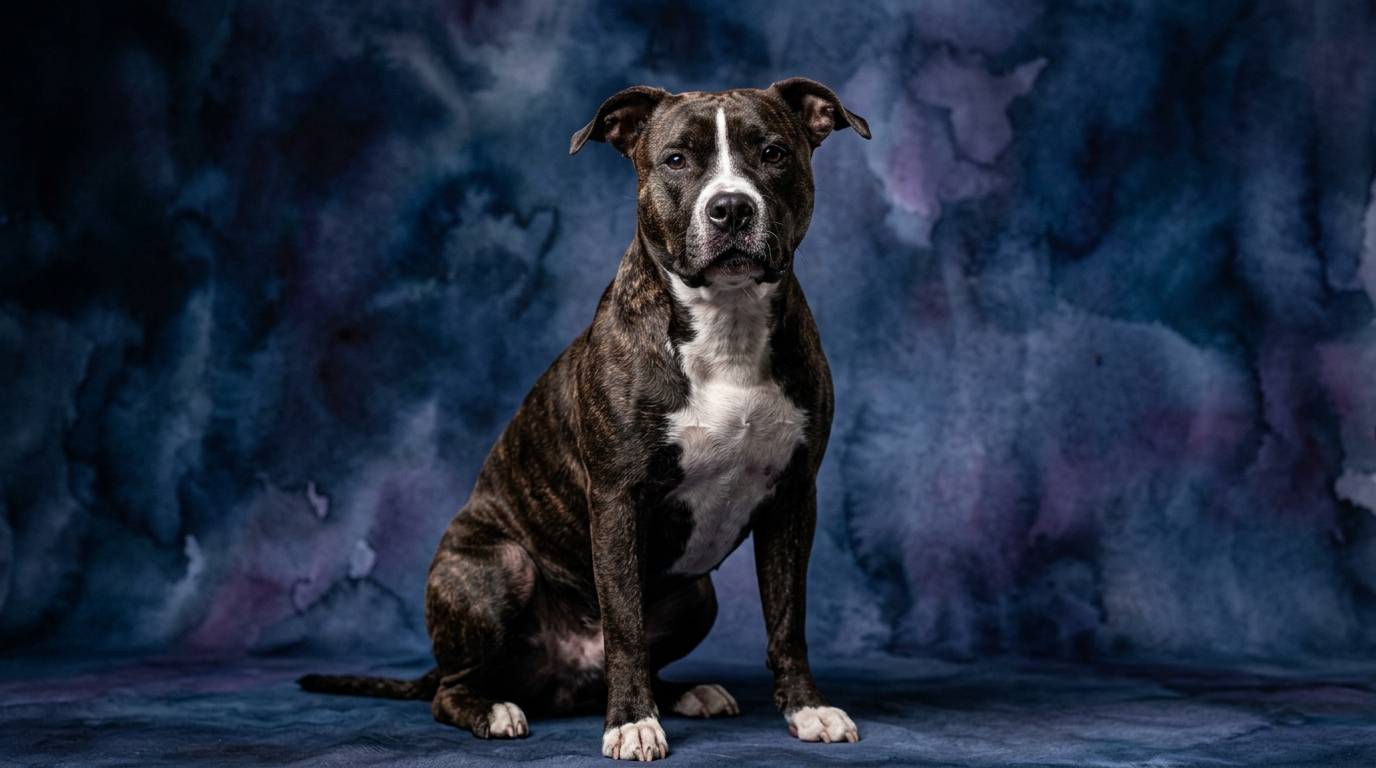
The American Staffordshire Terrier, a robust terrier type, holds a respectable Coren rank of #48, suggesting a good capacity for obedience and working intelligence. Its cognitive breakdown includes a Problem Solving score of 3/5, indicating a competent ability to navigate new situations and learn from experiences. Training Speed is also rated 3/5, meaning they grasp new commands at a moderate pace, requiring consistent but not overly repetitive instruction. Their Social Intelligence stands at 3/5, reflecting a good understanding of human cues and a capacity for strong, responsive bonds. An Instinctive Drive of 3/5 points to moderate prey drive and protective instincts, which are manageable with proper guidance. Notably, their Memory is scored at 4/5, a significant asset for retaining learned behaviors and complex sequences over time.
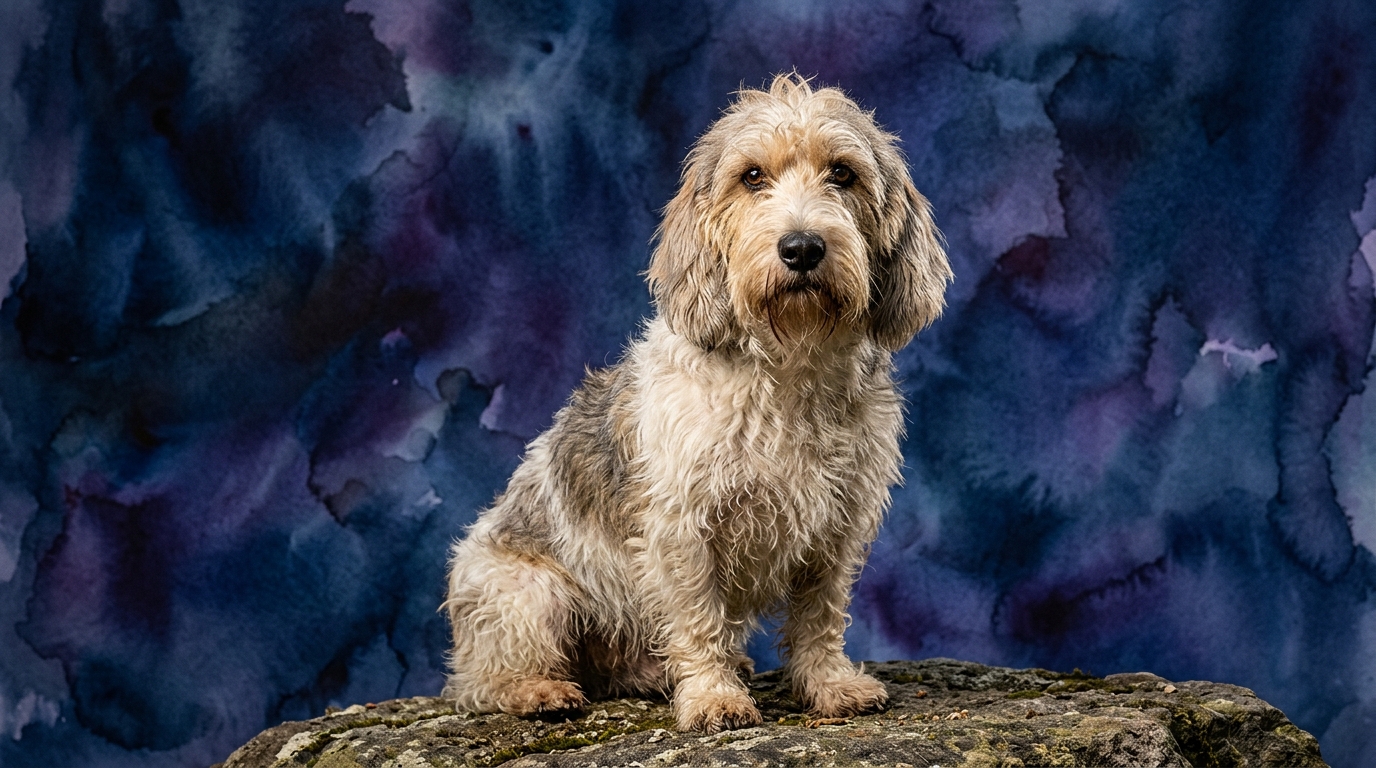
In contrast, the Petit Basset Griffon Vendéen (PBGV), a lively hound, is not listed in Coren's rankings, which often reflects a different kind of specialized working intelligence rather than a deficit. The PBGV shares several scores with the AmStaff: Problem Solving at 3/5, suggesting they can figure out challenges, often by applying their acute senses. Their Training Speed is 3/5, indicating they learn at a moderate rate, though their independent hound nature can influence the consistency of their responses. Social Intelligence is also 3/5, signifying their ability to interact well within a pack and with their human companions, often with a cheerful, boisterous demeanor. Their Instinctive Drive is 3/5, but this score manifests primarily as an intense, unwavering focus on scent. Their Memory, however, is rated 3/5, implying they retain information adequately but may require more reinforcement than a breed with a higher memory score.
Where the American Staffordshire Terrier Wins Cognitively
The American Staffordshire Terrier demonstrates a distinct cognitive edge primarily in its superior memory and overall aptitude for conventional obedience. With a Memory score of 4/5, compared to the PBGV's 3/5, AmStaffs are more adept at recalling commands, routines, and past experiences. This enhanced retention means they typically require fewer repetitions to solidify a behavior and are more consistent in their responses once a command is learned. This strong memory is a cornerstone of their success in various dog sports and working roles, allowing them to perform complex sequences with reliability.
Furthermore, the AmStaff's Coren ranking of #48 provides a valuable insight into their working intelligence. While not a direct IQ score, this ranking reflects a breed's capacity for understanding and executing human commands with relative ease and consistency. This suggests a cognitive framework that is well-suited to formal training and structured tasks, where quick comprehension and reliable execution are paramount. Their combined cognitive scores, particularly memory and moderate training speed, position them as highly capable learners in a structured environment, making them generally more predictable in their responses to training cues.
Where the Petit Basset Griffon Vendéen Excels Cognitively
While the PBGV's scores might appear similar or lower in some traditional metrics, their cognitive strengths lie in their specialized hound abilities, particularly their instinctive drive and application of problem-solving. Both breeds score 3/5 in Instinctive Drive, but for the PBGV, this translates into an extraordinary focus on scent. Their ability to persistently follow a scent trail, often for long distances and over varied terrain, demonstrates a unique form of problem-solving and sustained cognitive effort. This isn't about solving human-designed puzzles, but about effectively navigating and interpreting a complex sensory world to achieve a specific goal: finding the source of a scent.
The PBGV's Problem Solving score of 3/5, while matching the AmStaff's, is applied differently. They excel at figuring out how to overcome obstacles or navigate challenging environments by relying on their nose and innate hunting strategies. This requires a specific type of environmental awareness and decision-making that is distinct from the AmStaff's more generalized problem-solving. Their social intelligence, also 3/5, is geared towards cooperative hunting within a pack, highlighting a capacity for independent action while maintaining awareness of their canine companions, a crucial cognitive skill for a hound working in a group.
Which Is Easier to Train and Why
Based on their cognitive profiles, the American Staffordshire Terrier generally presents as the easier breed to train for conventional obedience and complex tasks. Their superior Memory score of 4/5 means they retain commands and behaviors more effectively, requiring less repetition for mastery. Coupled with a Training Speed of 3/5 and their Coren ranking, AmStaffs are typically eager to please and responsive to consistent, positive reinforcement. Their social intelligence also makes them highly attuned to their human companions' expectations, fostering a strong desire to cooperate in training sessions. They learn rules and boundaries quickly, making them adaptable to various training disciplines.
The Petit Basset Griffon Vendéen, while also scoring 3/5 in Training Speed, presents a different set of challenges rooted in their strong instinctive drive and independent nature. Their powerful scent drive means that an interesting smell can often override a human command, requiring immense patience and creativity in training. While they are capable of learning, their moderate memory (3/5) suggests that consistent, ongoing reinforcement is crucial for retention. Training a PBGV often involves making lessons highly engaging and rewarding, frequently incorporating scent work to leverage their natural instincts. Their 'not Coren-ranked' status is not an indictment of their intelligence, but rather an indication that their working mind is less geared towards rote obedience and more towards independent problem-solving in the field, which can translate to a more persistent and less immediately compliant training experience in a domestic setting.
Which Suits Active Owners vs. Relaxed Owners
Neither the American Staffordshire Terrier nor the Petit Basset Griffon Vendéen are truly suited for purely 'relaxed' owners, as both breeds possess significant energy levels and require mental stimulation. The American Staffordshire Terrier, with its robust build and moderate instinctive drive, thrives with active owners who can provide consistent physical exercise and structured mental engagement. Their problem-solving skills and strong memory make them excellent candidates for activities like obedience classes, agility, or engaging puzzle toys. They benefit from a routine that includes vigorous play, long walks, and opportunities to learn new skills, making them a great fit for owners who enjoy an active lifestyle and want a companion to participate in structured activities.
The Petit Basset Griffon Vendéen, despite its 'basset' moniker, is a durable, energetic hound built for long days of tracking in the field. They require substantial daily exercise, ideally with opportunities for safe, off-leash exploration where they can indulge their powerful scent drive. Their instinctive drive means they are not content with short, leashed walks; they need to investigate their environment with their nose. PBGVs are best suited for active, adventurous owners who appreciate a dog with an independent spirit and are prepared to embrace long hikes, scent games, and outdoor exploration. They are not for owners seeking a sedentary companion, but rather one who thrives on purposeful activity and a bit of playful mischief, often following their nose wherever it leads.
The Verdict
Choose the American Staffordshire Terrier if you seek a loyal companion with a strong memory and a pronounced aptitude for structured obedience training, thriving in a home that offers consistent engagement and opportunities for learning new skills.
Opt for the Petit Basset Griffon Vendéen if you're an adventurous owner who values an independent, scent-driven companion, is prepared for creative training approaches, and enjoys long, exploratory outdoor excursions that cater to their innate tracking instincts.
🧠 Find Your Pet's IQ Score
Our Pet IQ Lab assessment covers 25+ tests across 5 cognitive dimensions — personalized to your breed.
Take the Full IQ Test →Frequently Asked Questions
Do AmStaffs or PBGVs make better family pets?
Both breeds can make excellent family pets with proper socialization and training. AmStaffs, with their 3/5 social intelligence, often form deep bonds and are loyal protectors. PBGVs, also 3/5 in social intelligence, are typically cheerful, outgoing, and good with children, enjoying being part of a lively household.
How do their instinctive drives impact daily life?
The AmStaff's 3/5 instinctive drive can manifest as protective instincts and moderate prey drive, requiring consistent management and training to ensure appropriate behavior. The PBGV's 3/5 instinctive drive is primarily scent-focused, meaning they will relentlessly follow a compelling smell, which necessitates a secure yard and diligent leash training to prevent them from wandering off.
Is the PBGV's 'not Coren-ranked' status a sign of lower intelligence?
No, being 'not Coren-ranked' doesn't signify lower intelligence, but rather a different type of working intelligence. Coren's rankings primarily assess obedience and working intelligence from a human-centric perspective; many hounds, including the PBGV, possess a specialized, independent problem-solving intelligence geared towards their historical role in hunting, which isn't always reflected in these rankings.