Side-by-Side IQ Profile: AWS vs. Pekingese
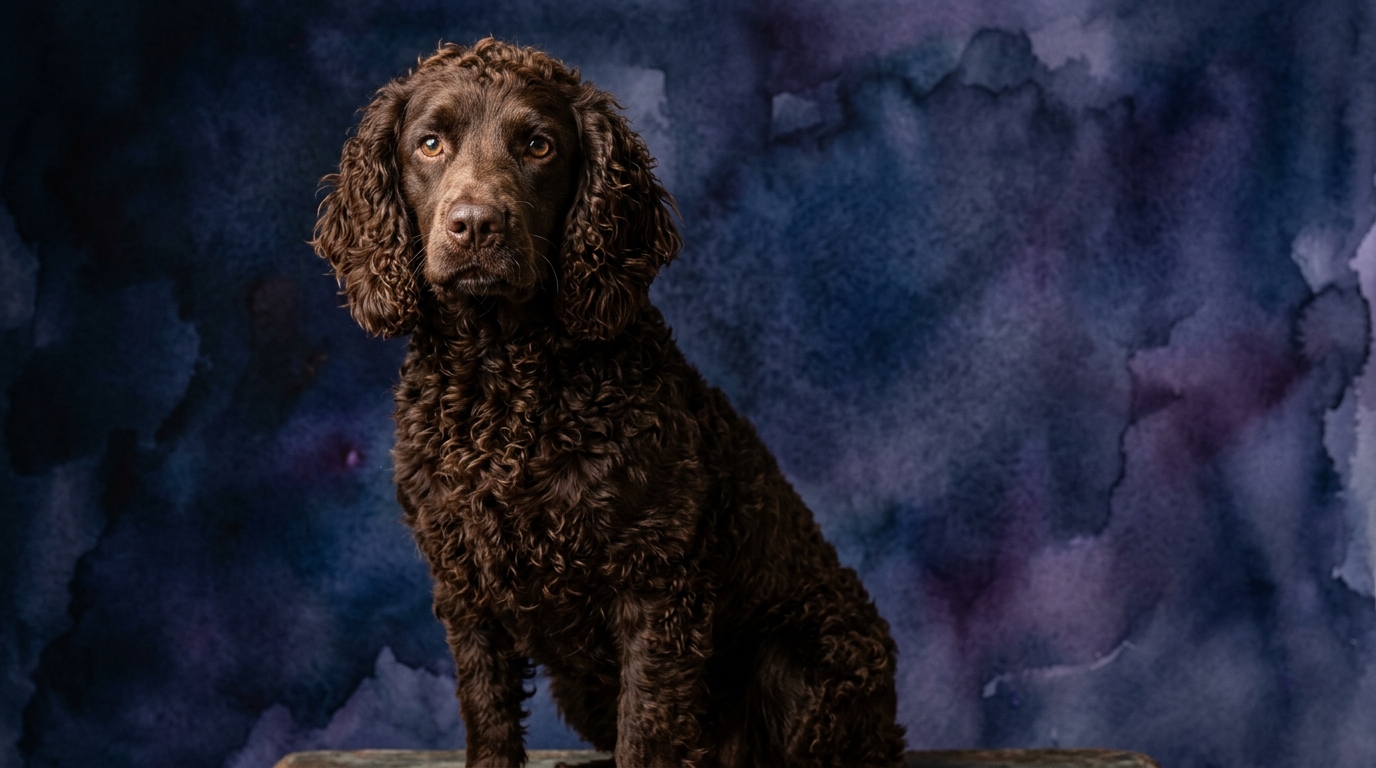
The Cosmic Pet Pet IQ Lab employs a multi-dimensional approach to assess canine intelligence, moving beyond a single 'smartness' metric to evaluate specific cognitive strengths. For the American Water Spaniel, a breed historically engaged in waterfowling, we observe a Coren rank of #44, indicating a moderate capacity for understanding new commands and executing them reliably. Its Problem Solving score of 3/5 reflects a practical ingenuity, capable of figuring out how to navigate varied terrains or retrieve objects from challenging environments. Training Speed, also at 3/5, suggests a consistent learning pace, responsive to clear instructions and positive reinforcement. Social Intelligence, rated 3/5, points to a cooperative nature, attentive to handler cues and comfortable integrating into a family unit. An Instinctive Drive of 3/5 highlights its inherent desire to work, particularly in tasks involving scent and retrieval. Crucially, its Memory stands at 4/5, indicating a strong ability to recall complex sequences of commands, locations, and learned behaviors over time.
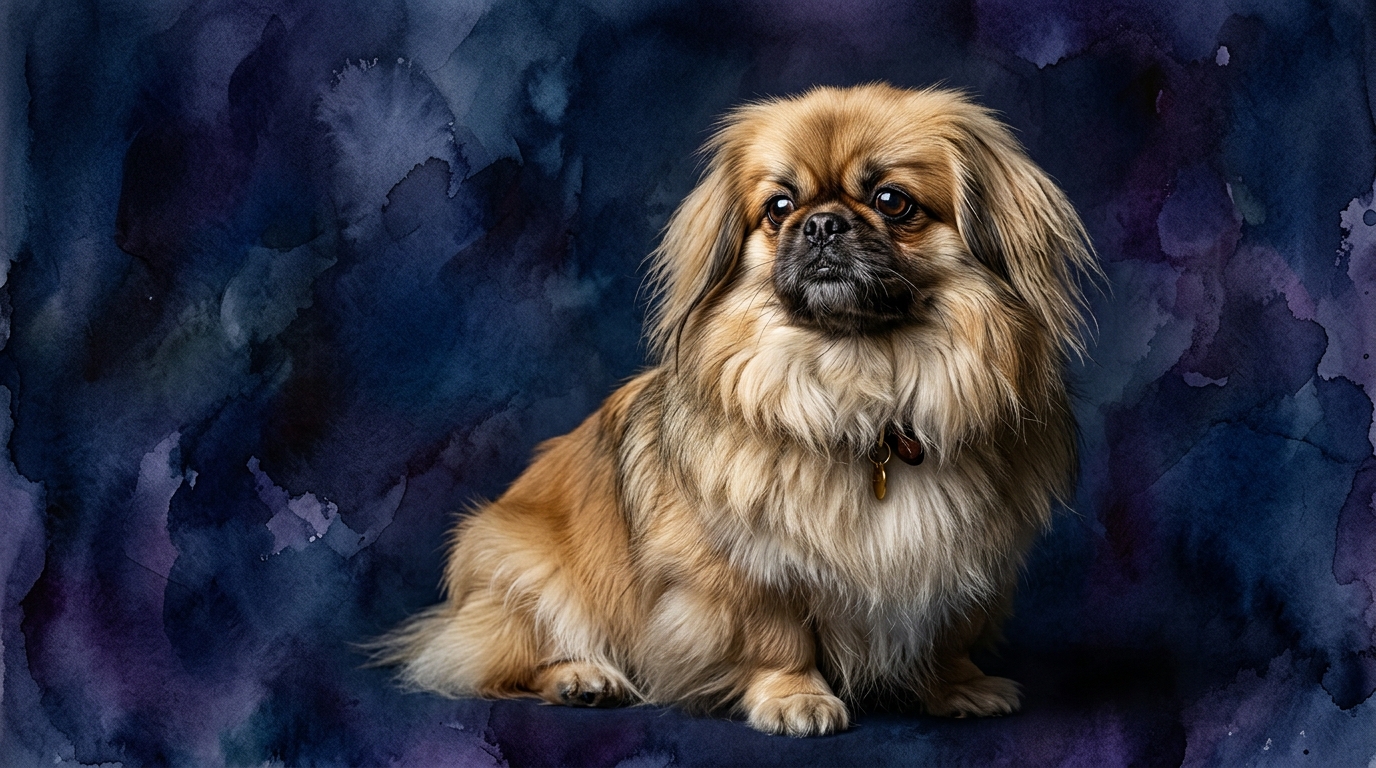
In contrast, the Pekingese, a breed cherished for centuries as a regal companion, holds a Coren rank of #77, placing it lower on the scale for immediate obedience training compared to many working breeds. Its Problem Solving score of 3/5 often manifests as an independent capacity to strategize for comfort or to subtly communicate needs within its immediate environment, rather than solving complex handler-directed tasks. Training Speed, also 3/5, suggests that while capable of learning, the Pekingese often requires more patience, motivation, and a nuanced approach tailored to its independent spirit. Social Intelligence, at 3/5, reveals a discerning nature, forming deep bonds with its chosen people while often remaining aloof with strangers. An Instinctive Drive of 3/5 typically translates to a strong sense of self-preservation, a desire for comfortable routines, and a watchful, if not overtly protective, demeanor towards its household. Its Memory score of 3/5 indicates a reliable recall for familiar routines, people, and places, though perhaps less capacity for intricate, multi-step command sequences than the AWS.
Where the American Water Spaniel Excels Cognitively
The American Water Spaniel's cognitive profile is distinctly geared towards purpose-driven engagement and retention, particularly evident in its superior Memory score of 4/5 compared to the Pekingese's 3/5. This enhanced memory is not merely an academic advantage; it underpins its effectiveness as a working retriever. An AWS can reliably remember intricate scent trails, retrieve numerous fallen game birds in sequence, or recall complex multi-step commands necessary for competitive dog sports. This strong recall allows it to build upon learned experiences efficiently, leading to more polished and consistent performance in tasks requiring sequential understanding and execution. Furthermore, its higher Coren rank of #44 suggests a greater predisposition to understand and comply with new human commands with fewer repetitions, making it generally more receptive to formal training protocols designed for cooperative partnership. The AWS’s cognitive strengths are deeply intertwined with its historical role, favoring a mind that can process, store, and act upon information relevant to a shared objective with its human handler.
Where the Pekingese Demonstrates Unique Cognitive Strengths
While its Coren rank and raw memory score might appear lower, the Pekingese possesses unique cognitive strengths that align with its role as a discerning companion. Its 3/5 Social Intelligence, for instance, manifests as a keen observational capacity within the domestic sphere. A Pekingese excels at reading subtle human cues, understanding household routines, and discerning who belongs and who doesn't with remarkable accuracy. This isn't about performing tricks, but about navigating complex social dynamics within its immediate family unit, often communicating its needs or desires through nuanced body language and vocalizations that attentive owners learn to interpret. Its 3/5 Problem Solving, while not geared towards complex retrieve tasks, can involve sophisticated strategies for securing its preferred resting spot, avoiding unwanted interactions, or subtly manipulating situations to its advantage (e.g., getting a treat). This breed's independence, often perceived as stubbornness in training, can also be viewed as a cognitive strength in self-reliance and an unwavering conviction in its own preferences, requiring a different kind of respect and understanding from its human companions. The Pekingese's intelligence lies in its ability to master its immediate environment and social relationships on its own terms, thriving on predictability and a deep, if exclusive, bond.
Its Instinctive Drive of 3/5, while not focused on hunting, is strongly directed towards the protection and comfort of its human family and territory. This translates into a sharp awareness of its surroundings and a readiness to alert to perceived intruders, showcasing a form of practical intelligence centered on vigilance and loyalty within its defined domain. This discerning nature, coupled with its ability to adapt subtly to a calm household, highlights a distinct form of cognitive aptitude focused on personal and social well-being rather than overt task execution.
Ease of Training: Behavioral Differences
When considering ease of training, the American Water Spaniel generally presents a more straightforward path for the average owner due to its inherent desire to collaborate and its stronger memory for commands. Its Sporting group heritage means it often approaches training as a cooperative endeavor, eager to please and to engage in activities alongside its human. The AWS's moderate Training Speed of 3/5, coupled with its excellent Memory of 4/5, means that once a command is learned, it tends to stick, requiring fewer refreshers. Behavioral differences like its tendency towards enthusiasm and a strong work ethic make it receptive to positive reinforcement and structured lessons, particularly those that incorporate its natural retrieving instincts.
The Pekingese, conversely, presents a greater challenge for traditional obedience training. Its Coren rank of #77 reflects a breed that often requires more repetitions to learn new commands and may not reliably execute them without strong motivation or a perceived benefit. This isn't a deficit in capacity but rather a difference in motivation and temperament; the Pekingese is a companion first, not a working partner. Its independent streak, a hallmark of its personality, means it often evaluates requests based on its own perceived value or comfort, rather than an inherent desire to please. Training a Pekingese demands immense patience, creativity, and an understanding of its discerning nature, focusing on short, engaging sessions and high-value rewards to bypass its innate self-sufficiency and occasional stubbornness. Real behavioral differences include the AWS's eagerness to retrieve compared to the Pekingese's preference for lounging, which naturally impacts their respective enthusiasm for repetitive, task-oriented training.
Matching Breeds to Lifestyles: Active vs. Relaxed Owners
The cognitive and behavioral profiles of these two breeds offer clear guidance for prospective owners considering their lifestyle. The American Water Spaniel is an ideal fit for active owners who seek an engaged, cooperative partner for outdoor adventures and structured activities. Its 3/5 Instinctive Drive for working, combined with its 4/5 Memory and Coren rank of #44, means it thrives when given a 'job' to do, whether it's retrieving in the field, participating in dog sports like agility or dock diving, or accompanying owners on long hikes. This breed requires consistent mental and physical stimulation to prevent boredom and channel its energies constructively. Owners who enjoy training and want a dog that actively participates in their hobbies will find the AWS a rewarding companion, as it flourishes with purpose and shared experiences.
Conversely, the Pekingese is better suited for relaxed owners who appreciate a discerning, independent, and relatively low-energy companion that thrives in a calm, attentive indoor environment. Its cognitive strengths lie in subtle social interaction and navigating its immediate domestic world, rather than high-intensity physical or mental tasks. Owners who value a dog's presence as a quiet, affectionate companion, content with short walks and indoor play, will find the Pekingese a delightful match. Its 3/5 Social Intelligence and Instinctive Drive are perfectly aligned with a lifestyle centered on close companionship and a predictable routine, where its acute observation skills and discerning affection can be fully appreciated. This breed is for those who cherish a regal, self-possessed companion rather than an eager-to-please working partner.
The Verdict
Choose the American Water Spaniel if you are an active owner seeking a cooperative, trainable partner for outdoor activities and enjoy engaging in structured training that leverages its strong memory and eager disposition.
Opt for the Pekingese if you are a relaxed owner desiring a discerning, independent companion who thrives in a calm indoor setting and appreciates subtle social cues and a strong, if exclusive, bond.
🧠 Find Your Pet's IQ Score
Our Pet IQ Lab assessment covers 25+ tests across 5 cognitive dimensions — personalized to your breed.
Take the Full IQ Test →Frequently Asked Questions
Is the American Water Spaniel truly 'smarter' than a Pekingese?
The concept of 'smarter' is nuanced. The AWS excels in cooperative task-oriented intelligence and memory for commands, reflected in its higher Coren rank and 4/5 memory score. The Pekingese demonstrates a different kind of intelligence, excelling in social discernment and independent problem-solving within its domestic environment, which is equally valid but less aligned with traditional obedience metrics.
What kind of mental stimulation does a Pekingese need?
A Pekingese benefits from mental stimulation that respects its independent nature and preference for comfort. This includes puzzle toys that offer treats, engaging in short, positive reinforcement-based training sessions for basic manners, and consistent social interaction that allows it to exercise its discerning social intelligence within its trusted circle. It thrives on predictability and gentle, consistent attention.
How does the memory difference impact daily life for these breeds?
The AWS's 4/5 memory means it quickly learns and retains complex routines, multi-step commands, and the locations of various objects, making it highly adaptable for working roles or dog sports. The Pekingese's 3/5 memory is sufficient for remembering household members, routines, and safe spots, but it might require more consistent reinforcement for new, arbitrary commands, reflecting its focus on its immediate comfort and social environment rather than extensive task recall.