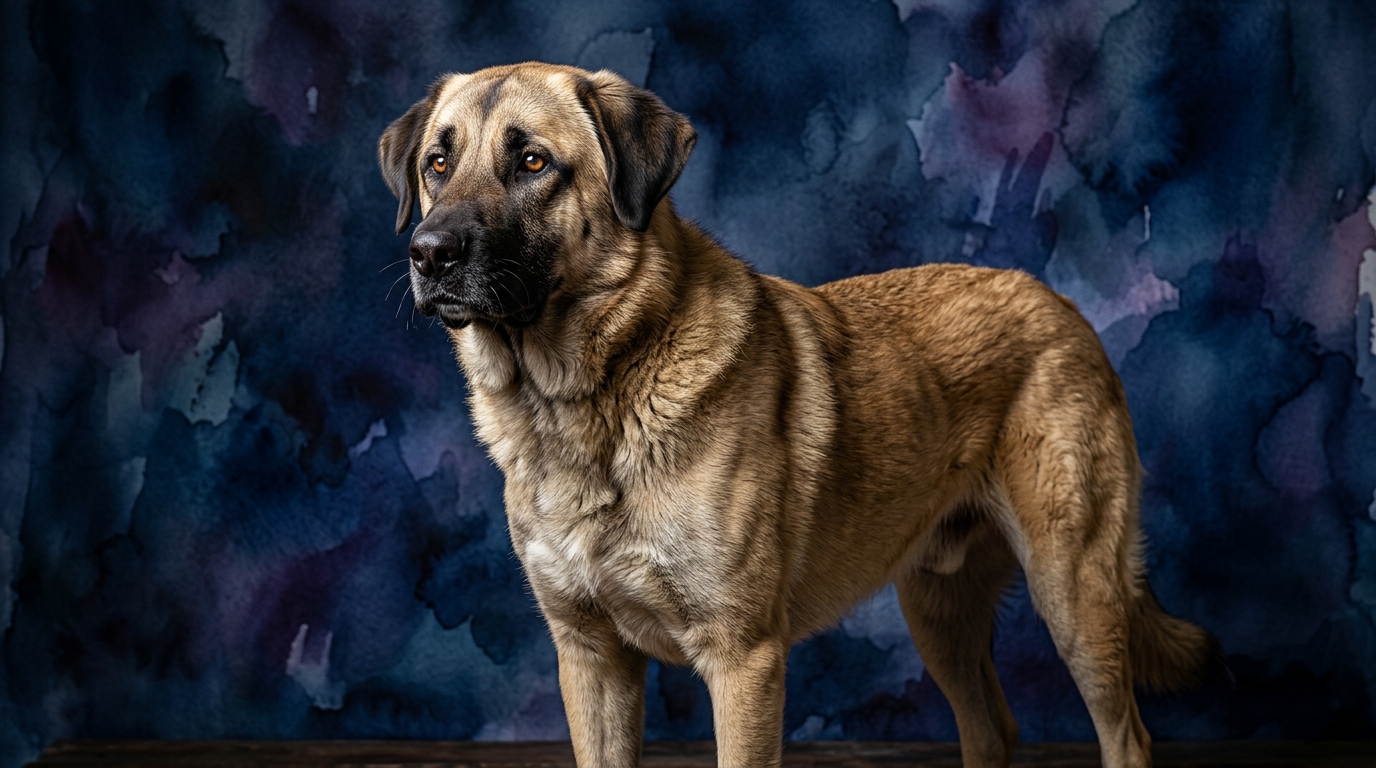
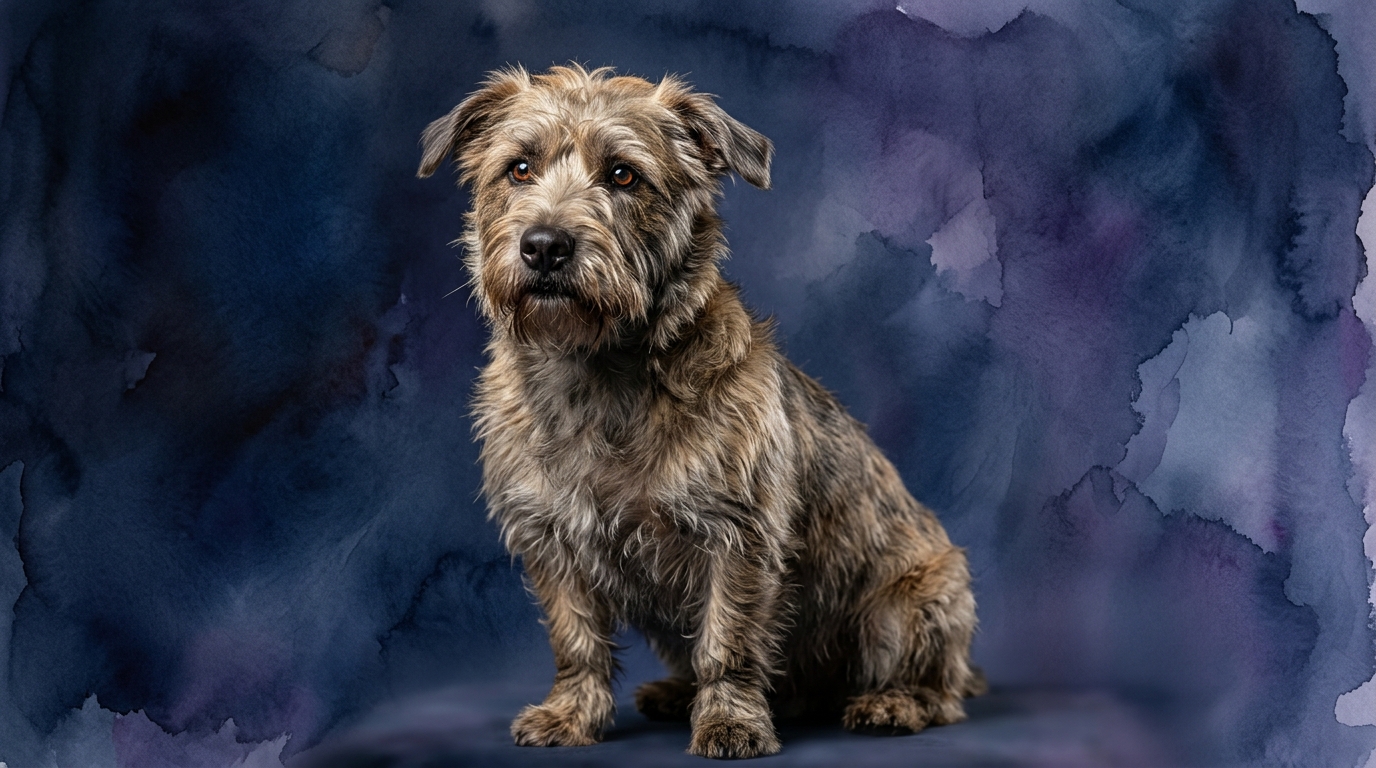
A Side-by-Side Look at Cognitive Profiles
Both the Anatolian Shepherd Dog and the Glen of Imaal Terrier register a consistent 3 out of 5 across all five cognitive dimensions in The Cosmic Pet IQ Lab. However, these identical scores belie profoundly different manifestations of their mental faculties, shaped by centuries of distinct working lives.
For the **Anatolian Shepherd Dog**, a breed traditionally tasked with guarding livestock across vast, often solitary landscapes, a 3/5 in **Problem Solving** signifies a steady, independent capacity for strategic thinking. They excel at assessing environmental threats, understanding flock dynamics, and finding effective deterrents without direct human instruction. Their problem-solving isn't about quick tricks but about sustained, autonomous decision-making in a complex, live environment. Their **Training Speed** at 3/5 reflects an ability to learn, but often on their own terms; they absorb commands that make practical sense for their guarding duties, valuing purpose over rote repetition. A 3/5 in **Social Intelligence** means they are acutely aware of their charges and potential threats, exhibiting a reserved but watchful demeanor with strangers and a deep bond with their immediate family and flock. Their **Instinctive Drive** at 3/5 is primarily centered around protection and territoriality, a deep-seated impulse to patrol and defend. Lastly, their **Memory** at 3/5 is robust for recognizing patterns, remembering threats, and recalling the layout of their expansive territories, crucial for effective long-term guardianship.
The **Glen of Imaal Terrier**, conversely, with its history of badger and fox hunting, applies its 3/5 cognitive scores in a manner perfectly suited to its tenacious underground work. Their 3/5 **Problem Solving** is characterized by persistent, often physical, ingenuity in tight spaces—navigating burrows, outsmarting quarry, and finding escape routes. This is a gritty, determined form of cognitive application. Their **Training Speed** at 3/5 indicates they are certainly capable learners, but their terrier independence means they thrive on engaging, varied tasks and can become bored or stubborn with monotonous drills. A 3/5 in **Social Intelligence** suggests they are perceptive within their family unit and can read intentions, though they often possess a selective social circle and a strong sense of self-preservation. Their **Instinctive Drive** at 3/5 is a potent blend of prey drive, digging, and unwavering determination, pushing them to pursue tasks relentlessly. Finally, their **Memory** at 3/5 allows them to recall specific scent trails, successful hunting strategies, and the layout of familiar terrain, alongside retaining learned behaviors and routines, whether positive or negative.
Where the Anatolian Shepherd Dog Holds a Cognitive Edge
The Anatolian Shepherd Dog's cognitive strengths truly shine in scenarios demanding independent, strategic oversight and a broad understanding of environmental dynamics. Their problem-solving, while rated 3/5, is geared towards complex, unfolding situations requiring calm assessment and proactive defense over immediate, reactive responses. They excel at identifying subtle shifts in their surroundings that might indicate a threat, such as changes in wind direction carrying a predator's scent or unusual animal behavior. This spatial and situational awareness, coupled with their reserved social intelligence, allows them to manage a living landscape without constant human input, making decisions that protect their charges and territory effectively over long periods. Their memory for patterns and territory boundaries is not just about recall, but about applying past experiences to new, evolving threats, demonstrating a sophisticated form of practical intelligence.
Where the Glen of Imaal Terrier Demonstrates Cognitive Superiority
The Glen of Imaal Terrier's cognitive prowess, also rated 3/5 across dimensions, finds its peak in tasks requiring intense focus, physical persistence, and nimble, localized problem-solving. Their problem-solving manifests as an unwavering determination to overcome immediate physical obstacles, whether it's navigating a complex network of tunnels or figuring out how to get at a perceived 'prey' item. This breed’s instinctive drive, coupled with their tenacious approach to problem-solving, allows them to work independently in confined, challenging environments, exhibiting remarkable resilience and ingenuity in pursuit of a goal. Their memory for specific tasks and the precise locations of objects or smells is exceptionally keen, enabling them to repeatedly perform specialized functions with precision and grit. They are masters of the immediate, tangible challenge.
Training: Distinct Approaches for Each Breed
Despite both breeds having a 3/5 training speed, the practical experience of training them diverges significantly due to their inherent behavioral patterns. The Anatolian Shepherd Dog, with its independent guarding mentality, often questions the necessity of a command. Training requires immense patience, consistency, and a clear demonstration of how a requested behavior benefits their guarding role or family unit. They are not typically driven by an eagerness to please in the same way a retriever might be; instead, they respond best to fair, respectful leadership and understanding *why* they should comply. Repetitive drills can be met with disinterest or subtle resistance. Their training is more about building a partnership based on trust and mutual respect, appealing to their inherent desire for order and protection.
The Glen of Imaal Terrier, on the other hand, possesses the characteristic terrier tenacity and independence. While intelligent and capable of learning quickly, their training success hinges on making sessions engaging, varied, and fun. They can become bored easily by repetition and may decide to pursue their own agenda if the training isn't stimulating enough. Their strong instinctive drive means they can be easily distracted by scents or potential 'prey.' Training a Glen requires a creative approach, utilizing positive reinforcement, short sessions, and clear, consistent boundaries to channel their determination effectively. Unlike the Anatolian, who might assess the utility of a command, the Glen might simply decide it has better things to do, making motivation and maintaining focus the primary training challenges.
Matching Breeds to Lifestyles: Active vs. Relaxed Owners
For active owners, especially those with extensive property or a lifestyle that involves outdoor work and independent companionship, the Anatolian Shepherd Dog can be a fitting choice. Their cognitive profile lends itself to a role where they are expected to be observant, make their own decisions, and patrol large areas. They require mental stimulation through their 'job,' whether it's actual livestock guarding or simply overseeing a large property. While they are not typically high-energy in the sense of needing constant running, they need space and purpose. An owner who understands and respects their independent nature and provides outlets for their guarding instincts will find a loyal, watchful companion. They are not suited for apartment living or owners who desire an 'always on' interactive companion, preferring to observe and act when necessary.
The Glen of Imaal Terrier is an excellent fit for active owners who enjoy engaging their dogs in varied activities, from earthdog trials to agility, or simply long, interesting walks. Their cognitive strengths thrive on challenges that involve problem-solving, scent work, and physical exploration. They need consistent mental and physical outlets to prevent boredom and destructive behaviors. While sturdy and capable, they are also adaptable to indoor living, provided their exercise and mental stimulation needs are met daily. Their tenacious spirit means they appreciate an owner who can match their enthusiasm and provide structured activities to channel their drives. They are not for owners seeking a purely relaxed lap dog, as their independent streak and desire for 'work' will inevitably surface.
The Verdict
Choose the Anatolian Shepherd Dog if you seek an independent, watchful guardian for a large property, valuing a dog that makes its own strategic decisions and offers a reserved, protective companionship.
Opt for the Glen of Imaal Terrier if you desire a tenacious, problem-solving companion for engaging activities, appreciating a dog with a determined spirit and a need for consistent mental and physical challenges.
🧠 Find Your Pet's IQ Score
Our Pet IQ Lab assessment covers 25+ tests across 5 cognitive dimensions — personalized to your breed.
Take the Full IQ Test →Frequently Asked Questions
Do Anatolian Shepherd Dogs make good family pets?
Anatolian Shepherd Dogs can be wonderful family pets, especially when raised with children and other animals. Their social intelligence allows them to form deep bonds with their 'flock' (family), but they remain reserved with strangers and require early socialization to ensure appropriate behavior with outsiders. Their protective instincts are strong, so consistent training and management are essential.
Are Glen of Imaal Terriers good with other dogs?
Glen of Imaal Terriers can coexist peacefully with other dogs, particularly if socialized from a young age. However, their strong instinctive drive and tenacious nature mean they might not back down from challenges and can be selective about their canine companions. Introductions should always be supervised, especially with same-sex dogs or those with a similar assertive temperament.
How much exercise does a Glen of Imaal Terrier need?
Despite their compact size, Glen of Imaal Terriers require a moderate amount of exercise, typically 30-60 minutes of vigorous activity daily, plus mental stimulation. This can include walks, playtime, scent work, or engaging in dog sports. Their cognitive profile means they benefit greatly from activities that challenge their problem-solving and instinctive drives, beyond just physical exertion.