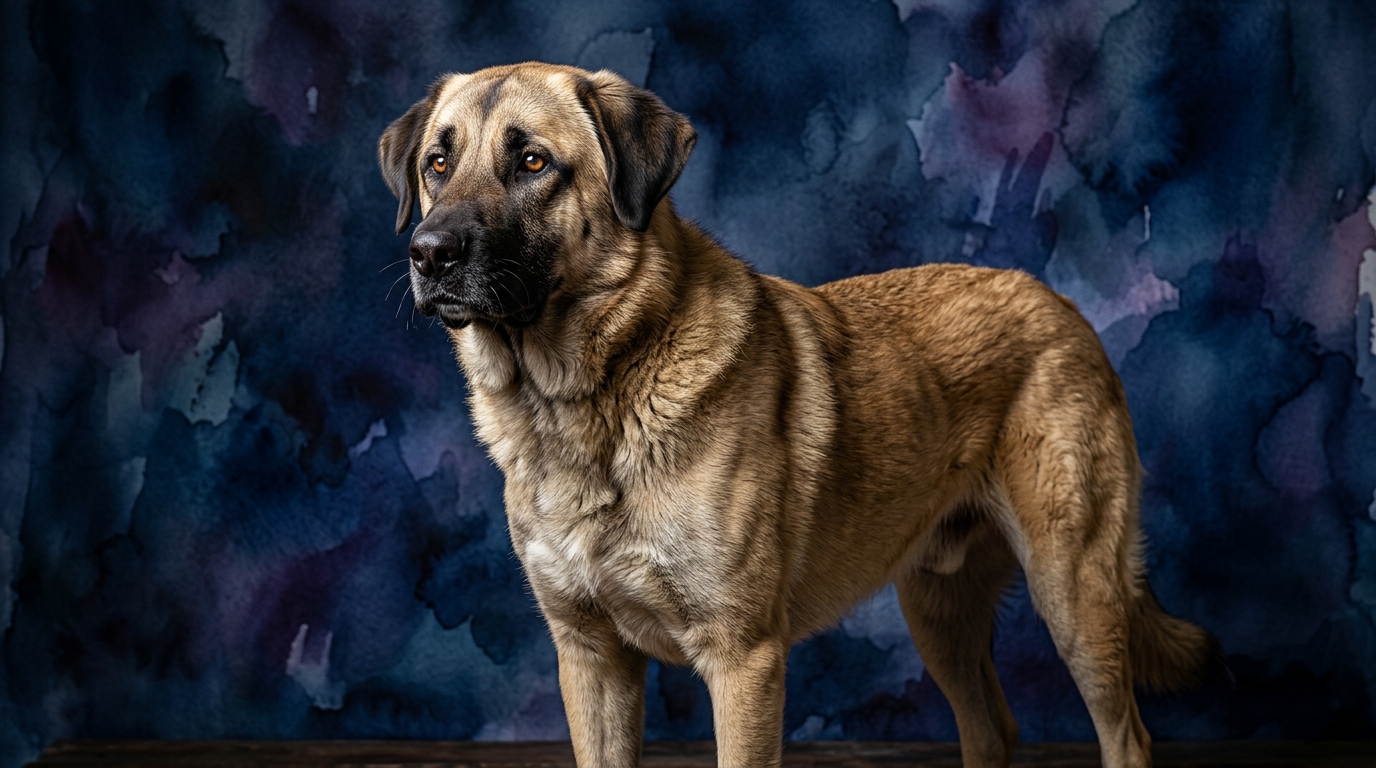
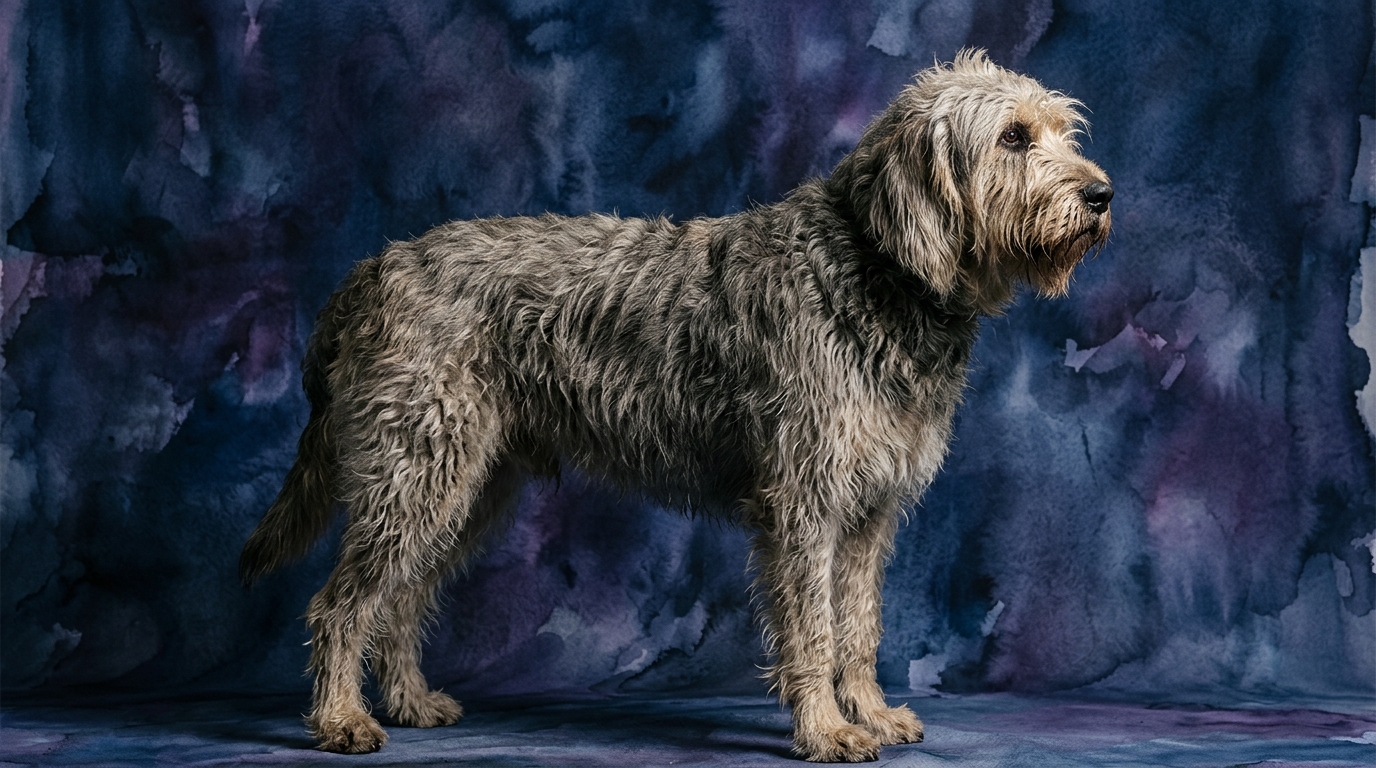
Side-by-Side IQ Profile: Guardians vs. Scent Hounds
The Cosmic Pet Pet IQ Lab assesses five crucial dimensions of canine intelligence. For the Anatolian Shepherd Dog, a working breed, their Problem Solving (3/5) centers on independent decision-making to protect livestock, often involving assessing threats and strategizing deterrence without direct human command. Training Speed (3/5) reflects their capacity to learn tasks, though their inherent independence means they often weigh commands against their perceived duty. Their Social Intelligence (3/5) is finely tuned to understanding the dynamics of their flock or family, identifying subtle shifts in behavior that might signal danger. Instinctive Drive (3/5) is profoundly expressed in their territorial and protective behaviors, a deep-seated urge to guard. Memory (3/5) allows them to retain knowledge of their territory, regular patterns, and past encounters.
The Otterhound, a hound breed, also scores 3/5 across the board, but these scores manifest very differently due to their historical purpose. Their Problem Solving (3/5) is geared towards the intricate challenges of tracking, such as deciphering complex scent trails over varied terrain and navigating obstacles to locate quarry. Training Speed (3/5) indicates a learning capacity, yet this can be challenged by their powerful, independent scent drive, which often takes precedence. Social Intelligence (3/5) is crucial for cooperative pack hunting, understanding the cues of fellow hounds and human handlers during a chase. Instinctive Drive (3/5) is powerfully expressed through their relentless pursuit of scent, their deep bay, and their endurance. Memory (3/5) is vital for recalling specific scent patterns, successful hunting strategies, and the layout of hunting grounds.
Where the Anatolian Shepherd Dog Excels Cognitively
The Anatolian Shepherd Dog's cognitive strengths distinctly lie in its capacity for autonomous judgment and protective strategy. Their Problem Solving, rated 3/5, is remarkable for its application in real-time, high-stakes scenarios where a quick, independent assessment of a situation is paramount for the safety of their charges. Unlike many breeds that defer to human command, the Anatolian's cognitive framework allows it to interpret environmental cues, anticipate threats, and initiate defensive actions on its own. This involves complex spatial reasoning to patrol vast territories effectively and a sophisticated understanding of predator behavior to implement appropriate deterrents. Their memory is particularly robust in retaining specific details about their environment and the individuals within it, contributing to their effective guardianship.
Where the Otterhound Excels Cognitively
The Otterhound's cognitive brilliance shines in its specialized sensory processing and unwavering persistence. Their Problem Solving, also 3/5, is a masterclass in olfactory deduction, enabling them to follow a faint scent trail across diverse landscapes, through water, and over long distances, often ignoring other stimuli. This requires a profound ability to discriminate between countless odors and maintain focus on a singular target, a task that demands significant cognitive effort and sustained attention. Their instinctive drive, equally rated 3/5, is a testament to their enduring mental fortitude, allowing them to pursue a goal with relentless determination, even when faced with exhaustion or distraction. This combination of sensory acuity and mental stamina makes them unparalleled in their original hunting role, demonstrating a unique form of applied intelligence.
Training Dynamics: Independence vs. Instinct
While both breeds share a 3/5 Training Speed, the practical experience of training them diverges significantly due to their core behavioral drivers. The Anatolian Shepherd Dog's independence, rooted in centuries of making their own decisions as guardians, means they often require a trainer who understands their motivations and can build a relationship based on mutual respect rather than absolute obedience. They are capable learners but may question the necessity of a command if it doesn't align with their protective instincts or perceived logical outcome. Training an Anatolian often involves patient, consistent reinforcement and clear communication about expectations, as they are not typically eager to perform repetitive tasks without a clear purpose.
The Otterhound, conversely, presents training challenges primarily due to their formidable scent drive. While they possess a 3/5 Training Speed, their nose can override nearly any other stimulus, making focus a constant battle. A captivating scent can render them temporarily 'deaf' to commands, requiring trainers to employ high-value rewards and engage in training sessions designed to compete with environmental distractions. Their pack-oriented nature can make them amenable to working with humans, but their single-minded pursuit of scent means that recall and impulse control are critical areas requiring intensive and consistent work. Training an Otterhound demands creativity in engagement and an understanding of their deep-seated instinct to follow a trail.
Lifestyle Match: Active Engagement vs. Relaxed Companionship
Matching these breeds to owner lifestyles requires an appreciation for their intrinsic energy levels and cognitive needs. The Anatolian Shepherd Dog, despite its imposing size, can often be suited for more relaxed owners in terms of daily activity, provided they have ample space and a clear role within the family unit. Their activity is often characterized by patrolling and observing, rather than constant high-intensity exercise. However, they are not 'relaxed' in a cognitive sense; they require an owner who can manage their strong protective instincts and provide consistent, confident leadership. They thrive when they understand their boundaries and responsibilities, making them suitable for owners who appreciate a watchful, independent presence.
The Otterhound, with its history as a persistent hunter, generally requires a more active owner. Their stamina and love for exploration mean they benefit greatly from regular, vigorous exercise, especially opportunities to engage their powerful sense of smell. Owners who enjoy long walks, hikes, or scent work activities will find a willing and enthusiastic companion in the Otterhound. While they can be calm indoors, their need for mental and physical stimulation outdoors is considerable. They are well-suited for owners who are prepared to embrace their adventurous spirit and manage their potential for getting 'nose-led' during outings, making them a fit for those seeking an engaging and robust partner for outdoor pursuits.
The Verdict
Choose the Anatolian Shepherd Dog if you seek a vigilant, independent guardian with a calm demeanor who excels at autonomous decision-making in a protective role.
Opt for the Otterhound if you desire an adventurous, scent-driven companion who thrives on extensive outdoor activity and complex olfactory challenges.
🧠 Find Your Pet's IQ Score
Our Pet IQ Lab assessment covers 25+ tests across 5 cognitive dimensions — personalized to your breed.
Take the Full IQ Test →Frequently Asked Questions
Do Anatolian Shepherd Dogs and Otterhounds learn at the same pace?
While both breeds have a Training Speed score of 3/5, their learning styles differ. Anatolians learn effectively but their independence means they often evaluate commands, while Otterhounds learn quickly but can be distracted by their strong scent drive. Consistent, tailored training is key for both.
Which breed is better for a first-time dog owner?
Neither breed is typically recommended for first-time owners due to their strong instincts and specific needs. Anatolian Shepherds require experienced handling of their protective nature, and Otterhounds demand significant management of their powerful scent drive and exercise requirements. Both benefit from owners familiar with strong-willed breeds.
How do their social intelligence scores of 3/5 manifest differently?
For the Anatolian Shepherd Dog, 3/5 social intelligence manifests as a keen awareness of their family or flock's dynamics and potential threats. For the Otterhound, it's about understanding pack cooperation and human handler cues during a hunt. Both show a good capacity for social understanding, but applied in different contexts.