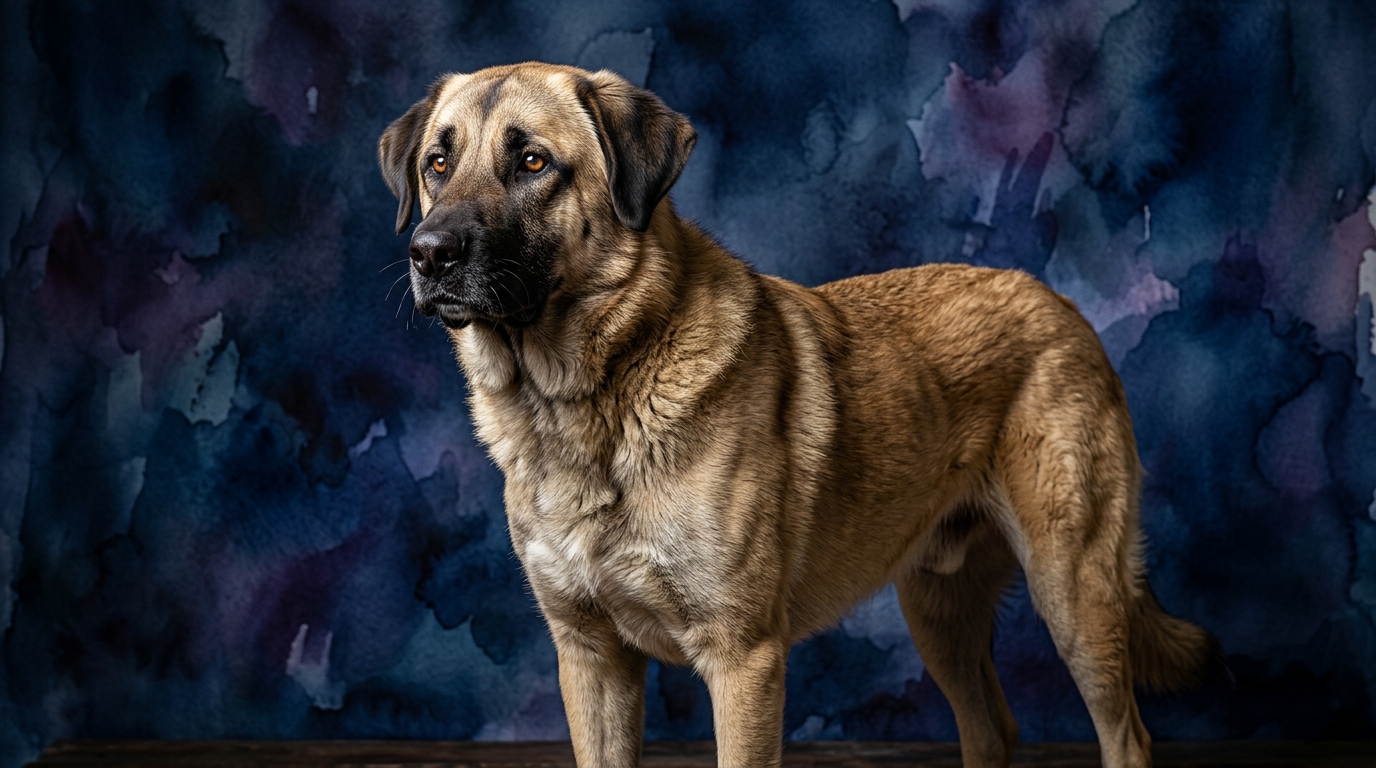
Side-by-Side IQ Profile: Anatolian Shepherd Dog
The Anatolian Shepherd Dog, a working breed, exhibits a robust, self-reliant intellect, perfectly suited to its historical role.
Problem Solving (3/5): This breed approaches challenges with deliberate, often independent methods. Their problem-solving isn't about rapid puzzle-solving for human entertainment, but rather assessing threats and finding practical solutions in a livestock guarding context, often without direct human instruction.
Training Speed (3/5): Anatolians absorb commands at a moderate pace, learning best through consistent, clear instruction and repetition. They are not quick to comply with arbitrary commands but are steadfast once they understand the purpose and expectation, especially when it aligns with their protective instincts.
Social Intelligence (3/5): Their social intelligence manifests as discernment. They are adept at recognizing familiar faces and assessing intentions, forming deep bonds with their family and flock, but may appear reserved or aloof to strangers.
Instinctive Drive (3/5): Their drive is predominantly rooted in their ancient guardian role, manifesting as a strong territorial instinct and an innate desire to protect. This commitment to vigilance makes them highly attuned to their environment and its potential threats.
Memory (3/5): Anatolians possess a robust memory for routines, locations, and individuals, especially those related to their guarding duties. They recall boundaries, perceived threats, and the people they are entrusted to protect with enduring clarity, supporting their practical, purpose-driven intellect.
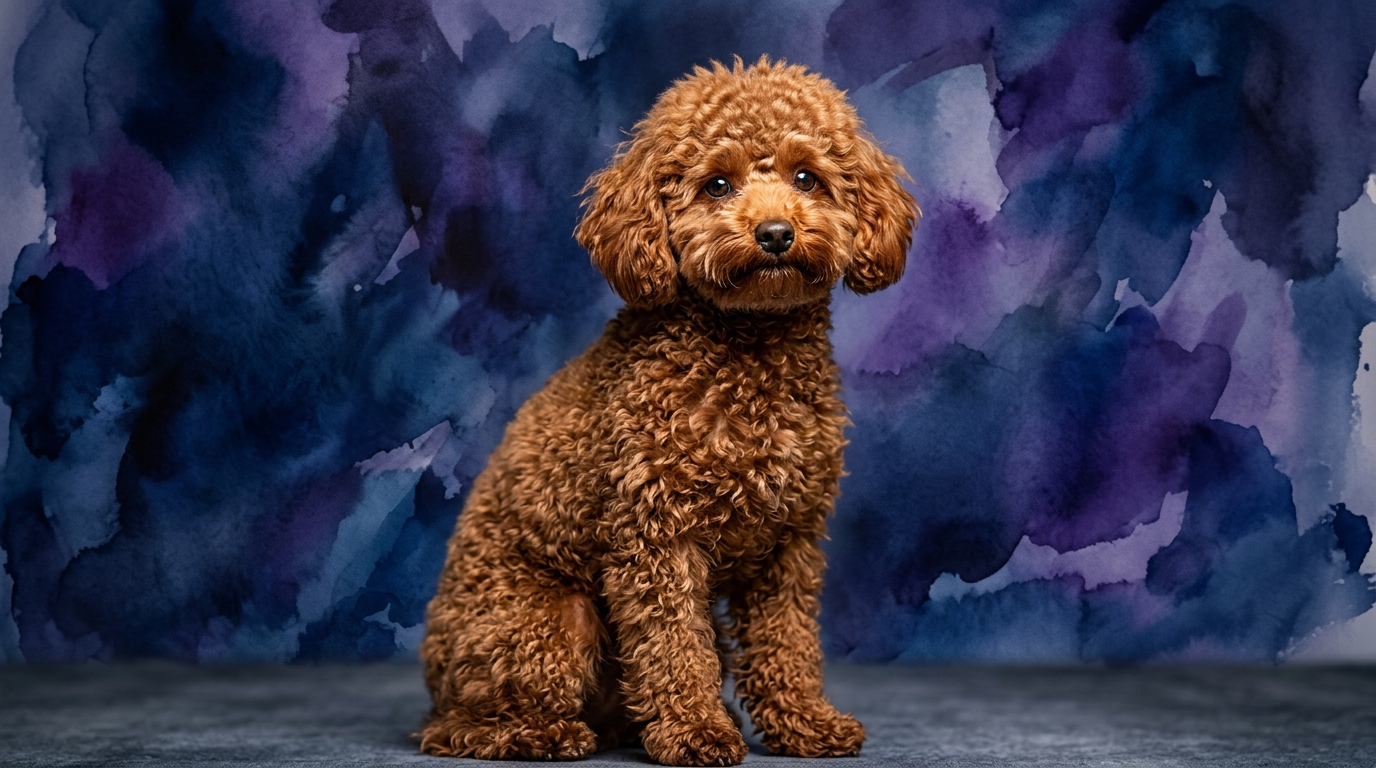
Side-by-Side IQ Profile: Toy Poodle
The Toy Poodle, ranking #2 in Coren's intelligence scale, showcases a highly adaptable and agile mind, excelling in companion and performance roles.
Problem Solving (5/5): Toy Poodles excel at navigating complex situations and figuring out novel solutions, whether it's opening a cabinet, learning a new trick sequence, or understanding a multi-step game. Their cognitive flexibility allows them to quickly adapt strategies and experiment with different approaches.
Training Speed (5/5): This breed is exceptionally quick to grasp new commands and concepts, often requiring only a few repetitions to solidify a behavior. Their eagerness to engage and capacity for rapid association make them a joy to train, allowing them to accumulate a vast repertoire of learned behaviors.
Social Intelligence (3/5): Toy Poodles exhibit a respectable level of social awareness, capable of reading human emotions and responding to social cues. They form strong bonds with their primary caregivers and can navigate social interactions, though their focus is often on their immediate family unit.
Instinctive Drive (3/5): While often associated with companionship, Toy Poodles retain a moderate instinctive drive, often expressed through their historical hunting lineage. This can manifest as a keen interest in scent work, retrieving, or a playful chase, typically channeled through human-directed activities.
Memory (5/5): Toy Poodles boast an outstanding memory, capable of retaining a vast array of commands, routines, and experiences over long periods. They recall intricate sequences, specific training cues, and the outcomes of past interactions with remarkable accuracy, making them highly consistent in learned behaviors.
Where the Anatolian Shepherd Dog Wins Cognitively
The Anatolian Shepherd Dog's cognitive strengths shine brightest in areas demanding independent judgment and unwavering resolve, particularly within their ancestral guarding role. Their problem-solving at 3/5, while not about speed, reflects a deep capacity for strategic, self-directed thought in complex, real-world scenarios. An Anatolian might assess a potential threat to their flock or property and independently decide the most effective deterrent, whether it’s a warning bark or a strategic patrol, without constant human oversight.
Their social intelligence, also at 3/5, is geared towards discerning genuine threats from benign visitors, a crucial skill for a guardian. This isn't about eager friendliness to all, but a sophisticated understanding of subtle cues to protect their charges. Their 3/5 memory supports this with an enduring recall of boundaries, known individuals, and past incidents, allowing them to build a comprehensive mental map of their territory and its evolving dynamics. This breed excels when the 'problem' is maintaining safety and order in a large, often solitary, environment, demonstrating a robust, self-reliant intellect.
Where the Toy Poodle Wins Cognitively
Conversely, the Toy Poodle's cognitive superiority is evident in their unparalleled adaptability and rapid acquisition of new information. With a perfect 5/5 in both problem-solving and training speed, they are canine sponges, soaking up new commands, tricks, and intricate routines with astonishing efficiency. Their problem-solving isn't about independent guarding; it's about figuring out how to manipulate their environment for desired outcomes, whether that means unlatching a gate or mastering a multi-step agility course.
This breed thrives on intellectual challenges presented by their human companions, quickly grasping complex concepts and applying them creatively. Their 5/5 memory is a cornerstone of this ability, enabling them to retain a vast lexicon of cues and perform elaborate sequences with precision, even after long breaks. This exceptional recall allows them to build upon prior learning rapidly, making them outstanding candidates for dog sports, theatrical performances, or service roles where intricate, reliable behaviors are paramount.
Which is Easier to Train and Why
When it comes to ease of training for most conventional obedience and skill-based learning, the Toy Poodle undeniably holds an advantage. Their 5/5 training speed means they pick up commands swiftly, often after just a few repetitions, and their strong memory (5/5) ensures these lessons stick. They tend to be highly motivated by positive reinforcement and are eager to engage in mental exercises with their owners, making the training process feel like a collaborative game. This rapid learning curve allows for quick progression through various levels of obedience, agility, or trick training.
In contrast, the Anatolian Shepherd Dog, with its 3/5 training speed, requires a different approach. Their independent nature and historical role of making their own decisions mean they are not inherently driven to perform arbitrary commands solely for human approval. Training an Anatolian demands immense patience, consistency, and a deep understanding of their guardian instincts. Commands need to be presented with purpose and clarity, often requiring more repetitions and a focus on building a strong, respectful partnership rather than expecting immediate, eager compliance. While capable of learning, their training journey is often slower and more about shaping their natural protective behaviors than teaching a broad range of tricks.
Which Suits Active Owners vs. Engaged Owners
Choosing between these breeds based on an owner's activity level requires considering the *nature* of that activity. For owners who enjoy dynamic, interactive pursuits like competitive dog sports, advanced obedience, or intricate trick training, the Toy Poodle is an ideal match. Their boundless mental energy and 5/5 problem-solving make them thrive on constant intellectual stimulation and physical challenges that involve precision and quick thinking. They are well-suited for owners who want a highly engaged partner to explore various canine activities and maintain a rigorous learning schedule.
On the other hand, the Anatolian Shepherd Dog appeals to owners whose activity is more aligned with purpose-driven work and a vast, open environment. These dogs require ample space and a 'job,' whether it's patrolling a large property, guarding livestock, or accompanying their owner on extensive, steady walks. While they don't demand the same rapid-fire mental gymnastics as a Poodle, they need consistent engagement with their environment and opportunities to exercise their independent decision-making and protective instincts. Both breeds require significant mental and physical investment, albeit in different forms of engagement.
The Verdict
Choose an Anatolian Shepherd Dog if you need a dedicated, independent guardian, have ample space, and appreciate a self-sufficient intellect that thrives on purpose-driven work.
Choose a Toy Poodle if you desire a highly trainable, mentally agile companion for dog sports, complex learning, or urban adaptability, and are ready to provide consistent mental stimulation.
🧠 Find Your Pet's IQ Score
Our Pet IQ Lab assessment covers 25+ tests across 5 cognitive dimensions — personalized to your breed.
Take the Full IQ Test →Frequently Asked Questions
Are Anatolian Shepherds good family pets?
Yes, Anatolian Shepherds can be devoted family pets, especially to their immediate family. However, their strong guarding instincts mean they require early socialization and consistent training to ensure they are discerning guardians rather than overly protective, particularly with strangers and other animals.
Do Toy Poodles bark a lot?
Toy Poodles can be prone to barking, especially if not adequately stimulated or trained. Their alertness and social nature mean they might bark at new sounds, visitors, or out of boredom, so consistent training and mental engagement are key to managing this behavior.
What is the main difference in their intelligence?
The main difference lies in the *application* of their intelligence: Toy Poodles exhibit a rapid, adaptable intelligence for learning complex, human-directed tasks, while Anatolian Shepherds possess a more independent, strategic intellect geared towards autonomous problem-solving and protection in their environment.