Side-by-Side Cognitive Profiles
The Cosmic Pet Pet IQ Lab's framework allows us to dissect the cognitive strengths of these two distinct breeds. The Australian Cattle Dog, ranking #10 on Coren's list and hailing from the Herding group, presents a formidable cognitive profile. The Airedale Terrier, a member of the Terrier group and Coren rank #29, offers a different, yet equally compelling, set of intellectual attributes.
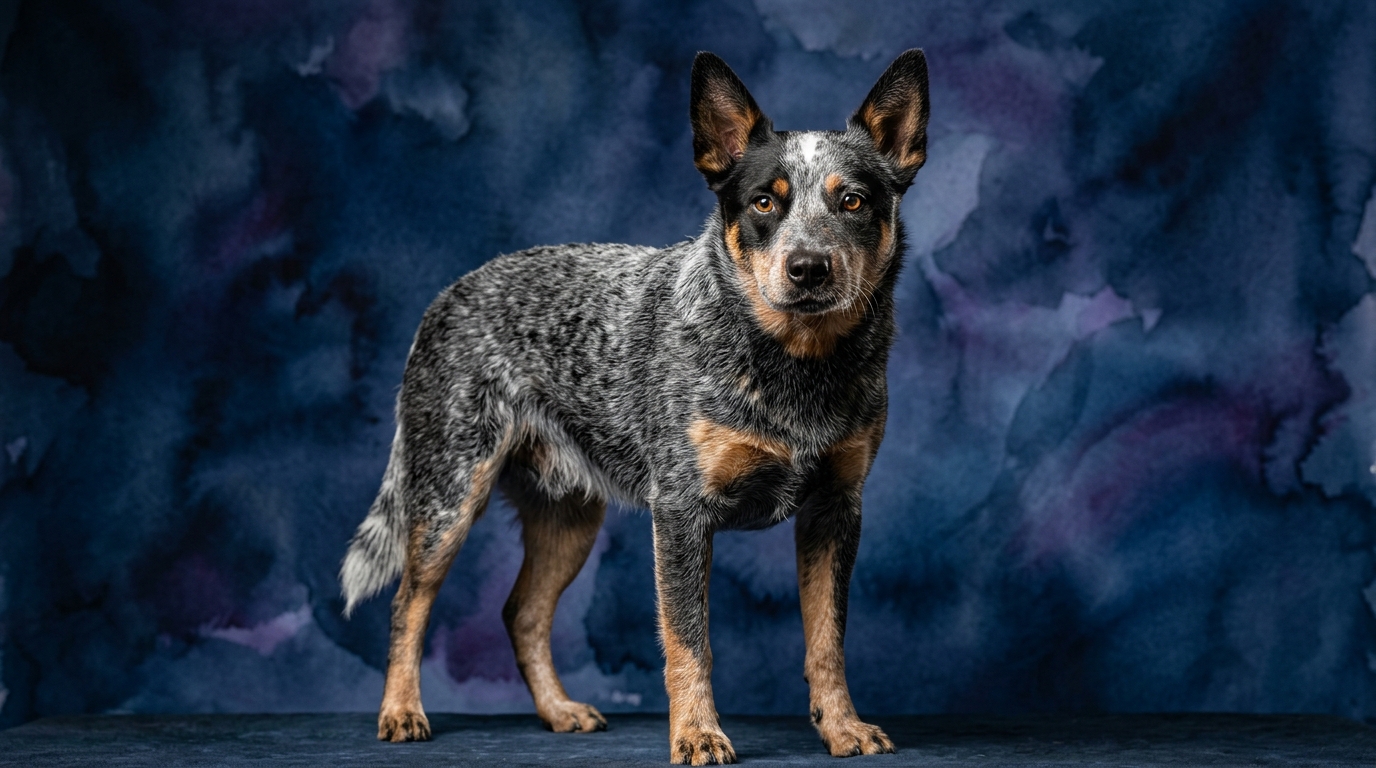
For the **Australian Cattle Dog (ACD)**:
**Problem Solving (5/5):** This breed excels at intricate tasks, often demonstrating creative solutions to obstacles. Their ancestral role demanded independent thought to manage livestock across vast, unpredictable terrains, leading to a deep capacity for strategic thinking and adapting to novel situations, not just following commands.
**Training Speed (5/5):** Learning new commands and routines is exceptionally rapid for an ACD. Their eagerness to engage and work alongside their human means they pick up new concepts with remarkable alacrity, requiring minimal repetition before a behavior is solidified.
**Social Intelligence (3/5):** ACDs possess a moderate level of social intelligence. They form strong, often singular bonds with their primary human, showing loyalty and protective instincts. However, they can be reserved or wary of strangers and other animals, preferring a limited social circle.
**Instinctive Drive (5/5):** The instinctive drive of an ACD is profoundly high. This manifests as an intense desire to herd, chase, and control movement, stemming directly from their genetic blueprint. They possess an innate need for a purpose, channeling energy into tasks that mimic their ancestral roles.
**Memory (5/5):** Australian Cattle Dogs exhibit exceptional memory. They recall complex sequences of commands, object locations, and past experiences with remarkable accuracy. This superior recall is vital for a herding dog needing to remember intricate routes and learned strategies.
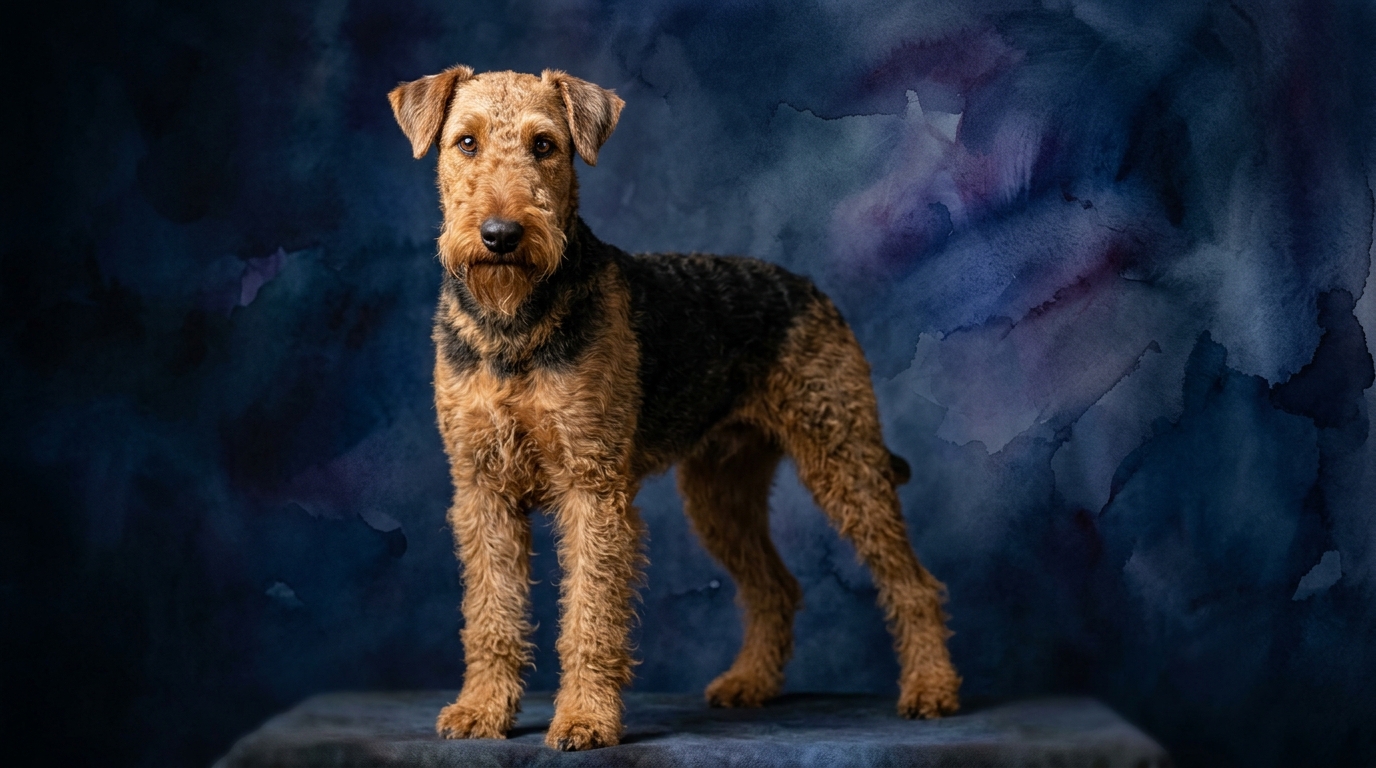
Now, for the **Airedale Terrier**:
**Problem Solving (4/5):** The Airedale displays strong problem-solving skills, characteristic of a terrier needing to outsmart quarry. They are adept at figuring out how to achieve a goal, whether opening a gate or retrieving a hidden toy, showcasing persistence and keen observation.
**Training Speed (4/5):** Airedales learn quickly, absorbing new information and commands efficiently. Their intelligence allows them to grasp concepts readily, but their independent terrier spirit means they might sometimes choose to learn on their own terms, requiring consistent, motivational techniques.
**Social Intelligence (3/5):** Similar to the ACD, Airedales exhibit moderate social intelligence. They are devoted to their families but can be discerning with outsiders. Their terrier heritage often means a self-assured demeanor that can be perceived as aloofness towards those outside their immediate pack.
**Instinctive Drive (3/5):** Airedale Terriers have a notable instinctive drive, though distinct from the ACD's herding focus. Their drive is rooted in hunting and pursuit, manifesting as a strong prey drive and a desire to explore and dig. While potent, it's typically less all-consuming than the ACD's imperative.
**Memory (4/5):** Airedales possess a very good memory, capable of retaining learned behaviors, commands, and experiences over long periods. They remember people, places, and routines effectively, which aids in their training and daily life, providing robust and reliable recall for practical applications.
Where the Australian Cattle Dog Excels Cognitively
Australian Cattle Dogs demonstrate a clear cognitive edge in several areas, particularly those tied to their demanding herding heritage. Their 5/5 scores in Problem Solving, Training Speed, Instinctive Drive, and Memory are not just high marks, but indicators of a unique mental architecture geared for complex, dynamic work. Their problem-solving isn't merely about finding a solution; it's about efficiently devising strategies to manipulate a moving flock, often without direct human command, making rapid, effective decisions. Their training speed is unparalleled, absorbing intricate command sequences with minimal repetition, making them highly responsive partners in complex tasks. This rapid acquisition, combined with a perfect memory score, means an ACD can retain vast amounts of information and apply it flexibly across different scenarios. Their instinctive drive, rated 5/5, isn't just about energy; it's a deep-seated motivation to work and control, providing an internal engine for sustained mental engagement that many other breeds lack. This combination makes them exceptionally self-motivated learners and doers, always seeking a purpose.
Where the Airedale Terrier Shines Cognitively
While the Airedale Terrier's scores might appear slightly lower in direct comparison, their cognitive profile offers distinct advantages, particularly in scenarios where independent thought and adaptability are prioritized over relentless task focus. Their 4/5 in Problem Solving, combined with a strong memory, means they are adept at figuring things out for themselves, often with a clever, terrier-specific approach. This isn't the strategic, flock-managing problem-solving of an ACD, but rather a tenacious, individualistic pursuit of a goal. Their instinctive drive (3/5) is less intense than the ACD's, which can be a cognitive 'win' for owners not seeking a full-time working partner. This moderated drive allows them to channel their energy into a broader range of activities beyond herding, making them more versatile in a typical companion setting while still retaining a robust desire for engagement. Their independence, while sometimes a training challenge, also means they are less prone to separation anxiety or constant need for human direction, thriving on a balance of companionship and self-directed activity.
Training Dynamics: Which Breed is Easier?
When it comes to ease of training, the Australian Cattle Dog (Training Speed 5/5) generally holds an advantage due to their inherent eagerness to work and profound desire for a 'job.' They are bred to take direction and respond with remarkable speed, absorbing complex commands and routines with minimal repetition. Their high instinctive drive and problem-solving abilities mean they not only learn *what* to do but also *why* it's important, making them highly compliant and focused students.
Conversely, the Airedale Terrier (Training Speed 4/5) is a highly capable learner, but their terrier independence often means training requires a different approach. While they grasp concepts quickly, their self-assured nature can sometimes lead to selective hearing or a preference for doing things their own way. They respond best to positive reinforcement, consistency, and making training feel like a fun, engaging challenge rather than a strict command-and-obey session. Their strong will means an owner needs patience and creativity to keep them motivated, whereas an ACD is often self-motivated by the sheer act of working.
Active Owners vs. Relaxed Owners
The Australian Cattle Dog unequivocally suits active owners, ideally those seeking a dedicated canine partner for demanding activities. Their 5/5 instinctive drive and high energy levels necessitate a consistent outlet for their physical and mental prowess. Owners who engage in dog sports like agility, flyball, herding trials, or long, challenging hikes will find an ACD thrives on such engagement. They require a 'job' to feel fulfilled, and without sufficient stimulation, their problem-solving skills might be directed towards less desirable behaviors.
The Airedale Terrier, while also requiring an active lifestyle, offers a slightly more flexible energy profile. Their 3/5 instinctive drive means they need regular exercise, mental challenges, and adventurous outings, but perhaps not the relentless, structured 'work' that an ACD demands. They are well-suited for active families who enjoy daily walks, runs, backyard play, and exploring, but might not necessarily be seeking a partner for competitive dog sports. Neither breed is suitable for truly 'relaxed' owners who prefer a sedentary lifestyle, as both will become bored and potentially destructive without adequate engagement.
The Verdict
Choose the Australian Cattle Dog if you are an experienced, active owner seeking an intensely driven, highly trainable, and devoted working partner eager for complex tasks and consistent mental challenges.
Opt for the Airedale Terrier if you desire an intelligent, tenacious, and independent companion for an active family life, one who enjoys a good adventure and mental stimulation but with a slightly less demanding 'job' requirement than the ACD.
🧠 Find Your Pet's IQ Score
Our Pet IQ Lab assessment covers 25+ tests across 5 cognitive dimensions — personalized to your breed.
Take the Full IQ Test →Frequently Asked Questions
Are Australian Cattle Dogs good family pets?
Australian Cattle Dogs can be excellent family pets for the right household, particularly those that understand their need for mental and physical stimulation. They form strong bonds with their primary human and can be protective, but their reserved social intelligence means early and consistent socialization is crucial, especially around children and strangers. They thrive in active homes where they have a clear role.
Do Airedale Terriers get along with other pets?
Airedale Terriers can coexist with other pets, especially if raised with them from a young age. However, their terrier hunting instincts mean they may have a strong prey drive towards smaller animals, and their independent nature can lead to challenges with other dogs if not properly socialized. Careful introductions and supervision are always recommended.
What kind of mental stimulation do these breeds need?
Both breeds require significant mental stimulation, but the type differs. Australian Cattle Dogs thrive on complex tasks, puzzle toys, and training that mimics herding or problem-solving scenarios, needing to use their sharp memory and strategic thinking. Airedale Terriers benefit from varied activities like scent work, interactive games, and training that challenges their independent problem-solving and tenacity, keeping their clever minds engaged.