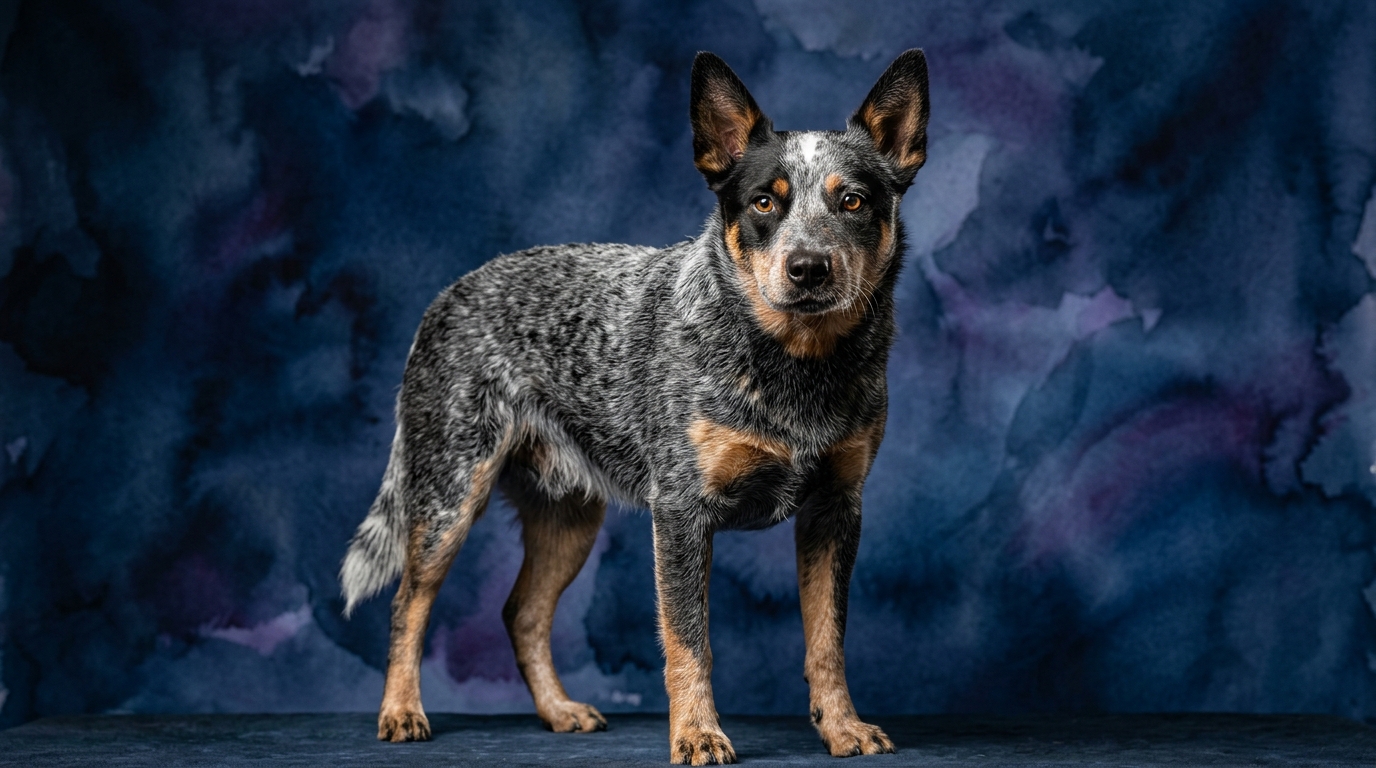
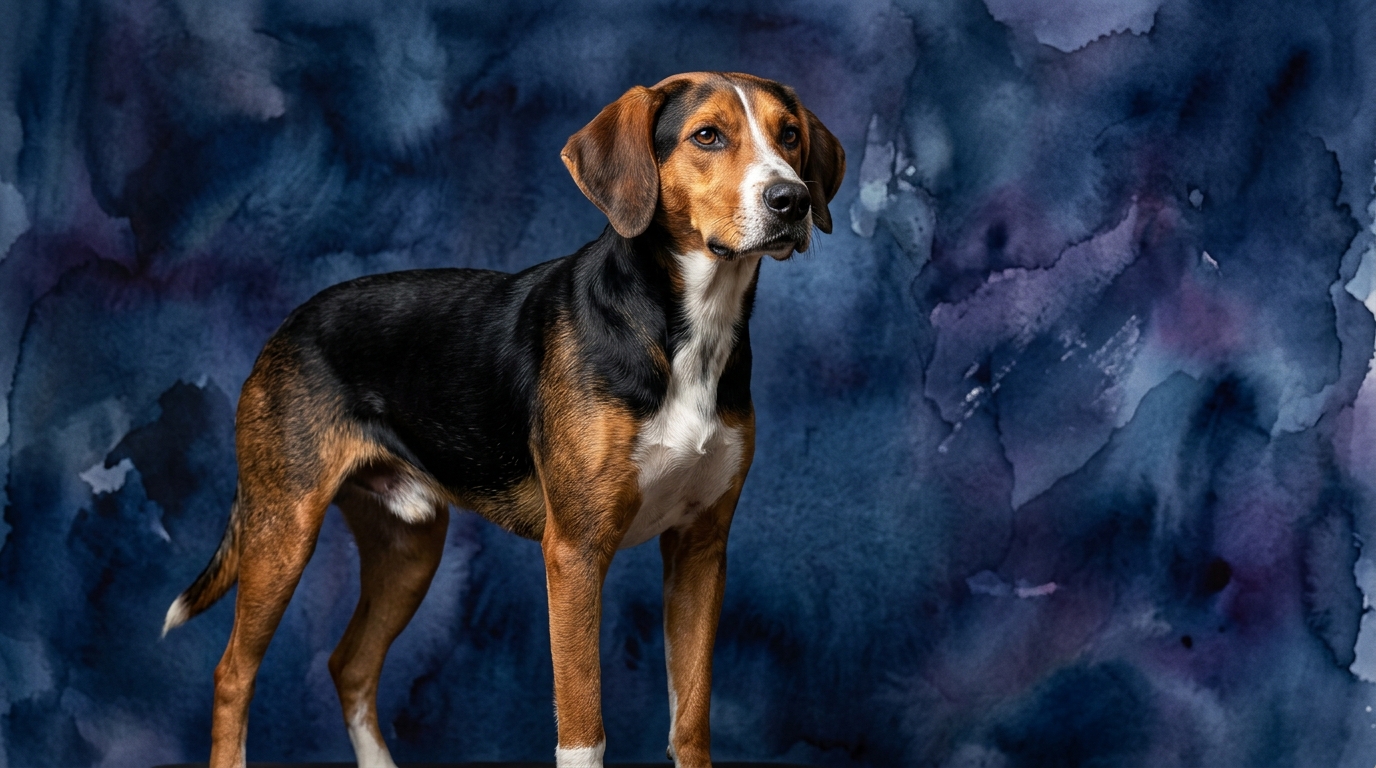
Side-by-Side Cognitive Profiles: A Deep Dive
The Australian Cattle Dog (ACD), a Herding breed, consistently ranks among the top working dogs, securing Coren rank #10. Their cognitive profile is marked by exceptional scores: Problem Solving 5/5, Training Speed 5/5, Social Intelligence 3/5, Instinctive Drive 5/5, and Memory 5/5. This indicates a dog with outstanding mental agility, a rapid capacity for learning, and a profound, sustained motivation for task execution, supported by remarkable recall. They excel at deciphering complex situations and retaining vast amounts of information, though their social interactions are more task-oriented.
The American Foxhound (AFH), a Hound breed, does not feature on Coren's list, reflecting a different set of cognitive priorities. Their IQ scores paint a picture of specialized intelligence: Problem Solving 3/5, Training Speed 3/5, Social Intelligence 3/5, Instinctive Drive 3/5, and Memory 3/5. These scores suggest a competent but more moderate approach to general problem-solving and learning. Their intelligence is primarily expressed through their unparalleled olfactory capabilities and their endurance in pursuing a scent, rather than through abstract reasoning or rapid obedience to complex human directives. Their social intelligence is adequate, allowing for pack cohesion and interaction, but their world is often dominated by their nose.
Where the Australian Cattle Dog's Mind Shines Brightest
The Australian Cattle Dog's cognitive edge lies in their unparalleled capacity for complex, directed work. Their problem-solving prowess isn't just about brute force; it involves strategic thinking, anticipating movements, and adapting on the fly, essential for managing livestock in dynamic environments. This cognitive flexibility, combined with a lightning-fast training speed, means they absorb new commands and intricate sequences with remarkable ease, often needing just a few repetitions to solidify a behavior. Their formidable memory supports this, allowing them to recall vast amounts of information – from specific commands to the layout of a field or the habits of individual animals – which makes them incredibly reliable partners in demanding situations. Furthermore, their instinctive drive, rated 5/5, isn't just about raw energy; it's a deep-seated mental focus that fuels their work ethic and persistence, channeling their cognitive strengths into a tireless pursuit of their objectives. This combination makes them exceptional at tasks requiring precision, quick decision-making, and sustained mental effort.
The American Foxhound's Unique Cognitive Strengths
While the American Foxhound doesn't boast the same high scores across the board as the ACD, their cognitive strengths are uniquely adapted to their purpose: scent work. Their problem-solving (3/5) is highly specialized; it manifests as an exceptional ability to follow complex scent trails, interpret subtle olfactory cues, and navigate varied terrain based almost entirely on smell. This isn't about abstract puzzle-solving, but an intricate, multi-sensory cognitive process. Their instinctive drive (3/5) is profoundly tied to their nose, compelling them to pursue a scent with unwavering determination, often to the exclusion of other stimuli. This persistence, fueled by their olfactory intelligence, allows them to cover vast distances and overcome environmental challenges that would deter many other breeds. Their social intelligence (3/5), while not as handler-focused as some, allows them to work cooperatively within a pack and communicate effectively through vocalizations and body language during the hunt, demonstrating a different facet of understanding and interaction. Their memory (3/5) supports their ability to retain complex scent patterns and navigate familiar hunting grounds, ensuring they don't lose their way or forget a promising trail.
Training Dynamics: A Tale of Two Approaches
The training experience with an Australian Cattle Dog is generally characterized by rapid progress and a keen desire for engagement. With a training speed of 5/5 and problem-solving at 5/5, they quickly grasp new concepts and enjoy the mental stimulation of learning. They thrive on clear direction and consistent challenges, often anticipating commands and responding with precision. Their strong instinctive drive means they need a job, and training provides that outlet, channeling their boundless energy and focus into productive behaviors. Their social intelligence, rated 3/5, indicates they understand human cues, but their motivation is often rooted in the task itself rather than solely people-pleasing, requiring a consistent, firm, and fair approach.
Conversely, training an American Foxhound presents a different set of considerations. Their training speed is 3/5, indicating a more deliberate learning pace. The primary challenge stems from their powerful instinctive drive for scent (3/5); once a captivating smell is encountered, their focus can become singularly dedicated to tracking it, making it difficult to redirect their attention. Their social intelligence, while adequate, doesn't always translate into a strong desire to please a handler above all else, as their world is often dictated by their nose. Therefore, American Foxhounds require immense patience, positive reinforcement, and a deep understanding of their scent-driven motivations. Training often involves leveraging their natural instincts, perhaps through scent games, rather than trying to suppress them entirely, focusing on recall and impulse control in distracting environments.
Lifestyle Match: Active Owners vs. Relaxed Owners
For the Australian Cattle Dog, an active owner is not just preferred, but essential. With their 5/5 instinctive drive and high physical stamina, these dogs demand constant mental and physical engagement. They excel in dog sports like agility, herding trials, and obedience, and need owners who are equally committed to providing daily challenges and vigorous exercise. A relaxed owner, one who prefers quiet evenings and minimal outdoor activity, would quickly find themselves overwhelmed by an ACD's unmet needs, potentially leading to destructive behaviors or excessive vocalization stemming from boredom. Their sharp problem-solving mind needs constant work to prevent it from inventing its own, often undesirable, 'jobs.'
The American Foxhound, while possessing endurance for the hunt, can be surprisingly amenable to a more relaxed indoor life, provided their fundamental needs are met. They are not typically as intensely demanding of constant mental puzzles as the ACD. However, a 'relaxed owner' for a Foxhound still needs to be prepared for significant outdoor activity, albeit often self-directed. Their instinctive drive (3/5) means they require secure, expansive areas to explore scents safely, or regular, long walks/runs where they can engage their nose. While they might be content to nap for hours indoors, the call of the wild, or rather, the call of the scent, is strong, and owners must accommodate this fundamental aspect of their being without expecting the same level of interactive play or structured activity as an ACD.
The Verdict
Choose an Australian Cattle Dog if you are an experienced, active owner seeking a highly trainable, intensely focused working partner who thrives on complex mental and physical challenges and clear direction.
Opt for an American Foxhound if you appreciate an independent, scent-driven companion, are prepared for consistent, patient training, and can provide ample opportunities for them to engage their powerful nose in a safe environment.
🧠 Find Your Pet's IQ Score
Our Pet IQ Lab assessment covers 25+ tests across 5 cognitive dimensions — personalized to your breed.
Take the Full IQ Test →Frequently Asked Questions
Are Australian Cattle Dogs good family pets?
Australian Cattle Dogs can be loyal family pets, but they require significant socialization from a young age and a clear understanding of their herding instincts. They need a job to do and thrive in active households that can provide consistent mental and physical stimulation, or they may become bored and destructive.
What kind of exercise does an American Foxhound need?
American Foxhounds need substantial daily exercise, primarily involving opportunities to run and explore scents, ideally in a securely fenced area or on a long lead. Their endurance means they can go for miles, so regular long walks, runs, or supervised off-leash time are crucial to satisfy their instinctive drive.
How do the breeds differ in their interaction with strangers?
Australian Cattle Dogs tend to be reserved with strangers, evaluating new people cautiously due to their protective instincts, whereas American Foxhounds are generally more amiable and less wary, often greeting newcomers with a wagging tail, though their attention might quickly divert to an interesting scent.