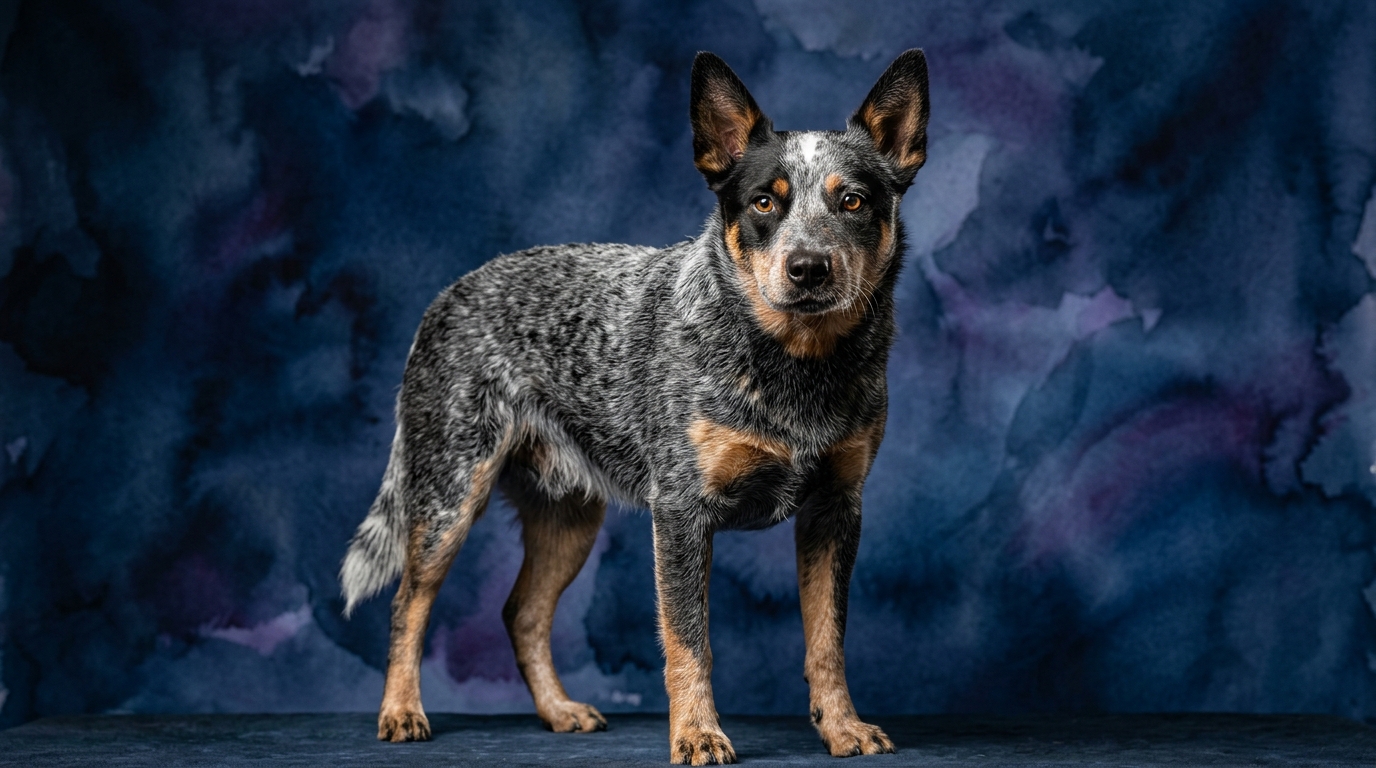
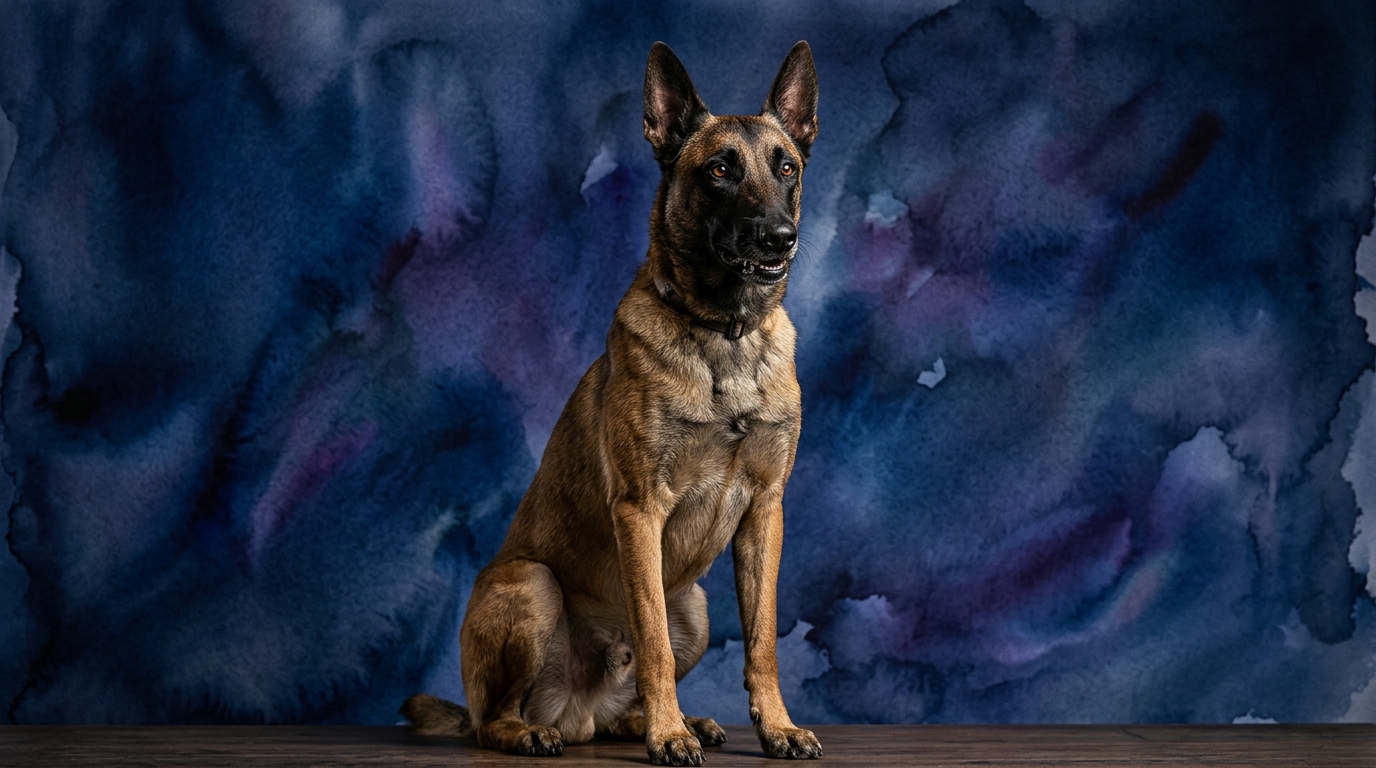
Side-by-Side IQ Profile: Australian Cattle Dog vs. Belgian Malinois
The Cosmic Pet Pet IQ Lab provides a detailed breakdown of cognitive dimensions, allowing us to pinpoint the specific mental attributes of these formidable breeds. Understanding these nuances is key to appreciating their individual brilliance.
For the Australian Cattle Dog (ACD), with a Coren rank of #10, their IQ profile is: Problem Solving 5/5, Training Speed 5/5, Social Intelligence 3/5, Instinctive Drive 5/5, and Memory 5/5. ACDs excel at independent thought, particularly in navigating complex, dynamic environments. They can assess situations like a scattering flock and devise effective, often unconventional, solutions to regain control without constant human direction. Their capacity to quickly grasp and retain intricate command sequences, especially those related to herding or agility, is remarkable. Socially, ACDs typically exhibit a reserved demeanor, forming deep bonds with primary handlers but often remaining aloof or wary of strangers, with their social understanding primarily geared towards their immediate family unit. Their powerful herding instinct is central, manifesting as a relentless desire to control and gather, extending to a strong protective impulse. They possess an exceptional memory for routines, commands, and spatial layouts, crucial for consistent performance over long periods.
The Belgian Malinois (BM), holding a Coren rank of #22, presents an IQ profile of: Problem Solving 5/5, Training Speed 5/5, Social Intelligence 4/5, Instinctive Drive 5/5, and Memory 5/5. Malinois are adept at analytical problem-solving, particularly in tasks requiring sequential steps or overcoming obstacles, such as tracking a scent through varied terrain or navigating search and rescue scenarios. They are renowned for their rapid acquisition of new skills and commands, absorbing instructions with astonishing speed due to an intense desire to work and please. While intensely loyal and protective, Malinois often display a more outwardly engaged social intelligence than ACDs, capable of interpreting human cues and adapting their behavior in various social environments, though remaining highly observant of strangers. Their formidable prey drive and strong protective instinct drive their focus and intensity, manifesting as a relentless pursuit of goals. Malinois exhibit outstanding memory retention, essential for recalling intricate command sequences, tracking complex scent trails, or executing multi-stage routines with consistency.
Where the Australian Cattle Dog Wins Cognitively
The Australian Cattle Dog's cognitive edge often lies in its capacity for independent, strategic decision-making within dynamic, unpredictable environments. While both breeds excel at problem-solving, the ACD frequently demonstrates a unique knack for self-directed tactical adjustments, particularly evident in their herding heritage. They can assess a chaotic livestock situation and devise on-the-spot solutions without constant handler input, showcasing a proactive mental agility. This manifests as a subtle, yet firm, control over their charges, often anticipating movements and positioning themselves to prevent issues before they escalate, rather than reacting forcefully. Their problem-solving isn't just about accomplishing a task, but about maintaining order through foresight and calculated action, a cognitive strength rooted in their original purpose.
Where the Belgian Malinois Wins Cognitively
The Belgian Malinois often demonstrates a cognitive advantage in its heightened social intelligence and unparalleled handler focus, especially within structured, high-pressure working scenarios. While the ACD is reserved, the Malinois’s 4/5 social intelligence score highlights a greater capacity for interpreting human cues and adapting its behavior in varied social settings, crucial for roles involving public interaction or diverse team members. Their intense drive for cooperation and eagerness to please their handler translates into a remarkable ability to execute complex, sequential tasks with precision and unwavering attention. This mental architecture allows them to maintain a laser-like focus on a specific objective, often under significant distraction, and process multiple commands in rapid succession, making them exceptional in roles requiring meticulous adherence to instruction and intricate procedural memory.
Which is Easier to Train and Why?
While both the Australian Cattle Dog and the Belgian Malinois share a top-tier 5/5 rating for training speed, the *experience* of training them can diverge significantly due to their distinct social intelligence and inherent drives. The Malinois, with its 4/5 social intelligence, often proves more straightforward to train for a dedicated handler. Their intense desire to engage and please, coupled with a remarkable focus on their human partner, means they eagerly absorb commands and strive for precision. Their biddability is a hallmark, making them exceptionally responsive to positive reinforcement and clear direction, quickly mastering intricate sequences for protection sports or obedience trials. In contrast, the Australian Cattle Dog, with a 3/5 social intelligence, can present a different training dynamic. While equally capable of learning at speed, their independent problem-solving nature means they might occasionally 'question' a command or seek to complete a task in their own perceived most efficient manner. They require a trainer who understands their need for purpose and respects their innate decision-making capabilities, thriving on tasks that challenge their strategic thinking rather than just rote obedience. Therefore, while both learn quickly, the Malinois’s inherent biddability and acute handler focus often make the *process* of achieving compliance feel more fluid and less challenging for the average dedicated owner.
Suitability for Active vs. Relaxed Owners
When considering suitability for owners, it's crucial to state upfront that *neither* the Australian Cattle Dog nor the Belgian Malinois is a match for a relaxed or sedentary lifestyle; both demand an exceptionally active and engaged owner. The Australian Cattle Dog, while needing extensive physical exercise to satisfy its powerful herding drive, also requires significant mental engagement. Owners must provide consistent challenges that tap into their problem-solving IQ, such as advanced obedience, agility, or actual herding work. Without a 'job' that stimulates their strategic mind, an ACD can become bored and channel their considerable energy into undesirable behaviors, requiring an owner who can consistently provide structured outlets for their independent thought and physical prowess. The Belgian Malinois, on the other hand, demands an even higher intensity of commitment. Their potent combination of high instinctive drive and acute training speed necessitates not just physical activity, but highly structured, purpose-driven work that channels their relentless energy and focus. Owners must be prepared for daily, rigorous training sessions in disciplines like protection sports, advanced obedience, or tracking, which satisfy their profound prey and protection drives. A Malinois isn't content with just a long walk; they thrive on being given complex tasks to master and a clear purpose, making them ideal for owners who are equally dedicated to a high-octane, disciplined working partnership.
The Verdict
Choose an Australian Cattle Dog if you appreciate an independent thinker, a subtle strategist, and can provide a 'job' that allows for self-directed problem-solving in a structured, engaging environment.
Choose a Belgian Malinois if you seek an intensely focused, biddable, and highly trainable partner for high-level performance sports or protection work, and are prepared to manage profound drive with consistent, structured training.
🧠 Find Your Pet's IQ Score
Our Pet IQ Lab assessment covers 25+ tests across 5 cognitive dimensions — personalized to your breed.
Take the Full IQ Test →Frequently Asked Questions
Are Australian Cattle Dogs good family pets?
ACDs can be devoted family members, forming strong bonds with their immediate human pack. However, their reserved social intelligence means they may be wary of strangers and require early, consistent socialization to ensure they are comfortable in various family and social settings.
Are Belgian Malinois good for first-time dog owners?
Belgian Malinois are generally not recommended for first-time dog owners due to their extreme energy, intense drives, and demanding training requirements. They thrive with experienced handlers who understand working breeds and can provide consistent, high-level engagement and structure.
How much exercise do these breeds need daily?
Both breeds require substantial daily exercise, far beyond simple walks. ACDs need at least 1-2 hours of vigorous activity combined with mental challenges, while Malinois often need 2+ hours of intense, structured work like running, advanced training, or protection sports to satisfy their profound drives.