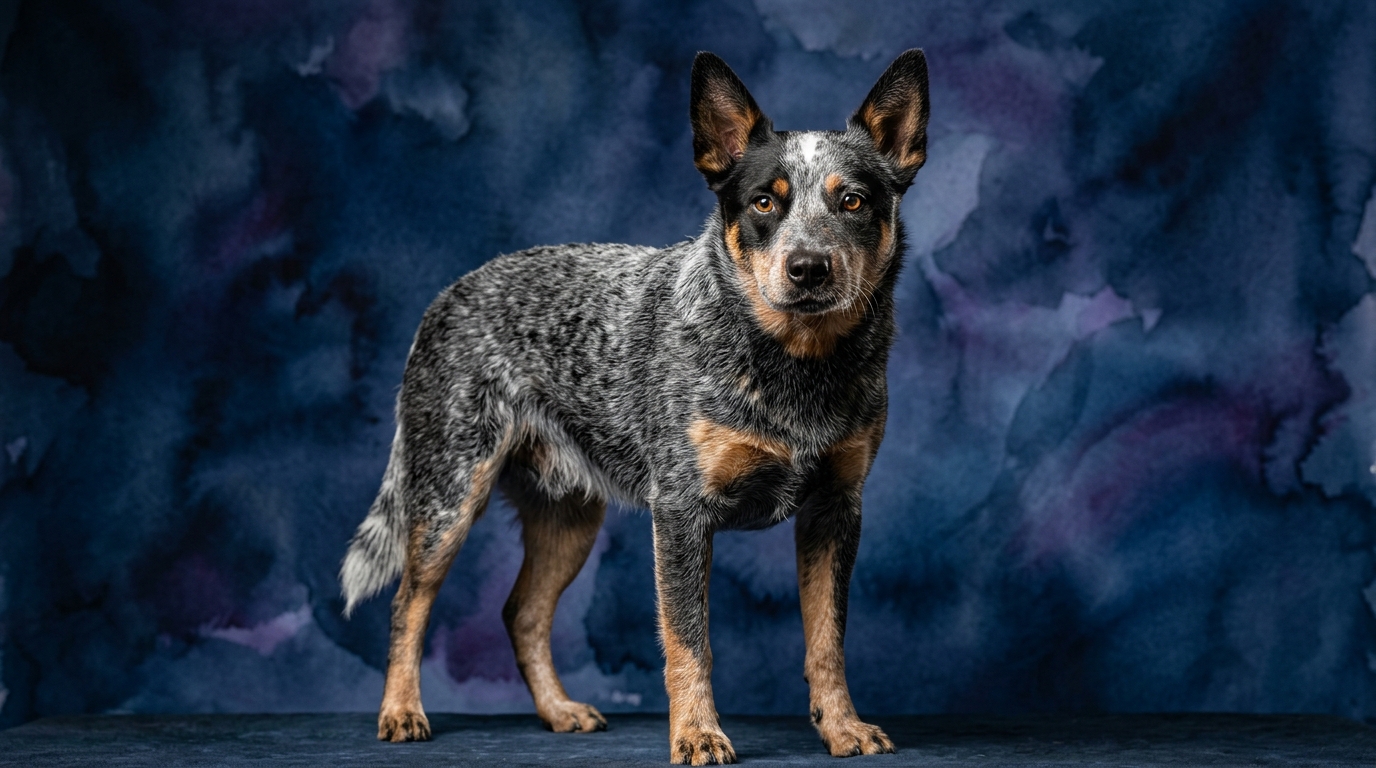
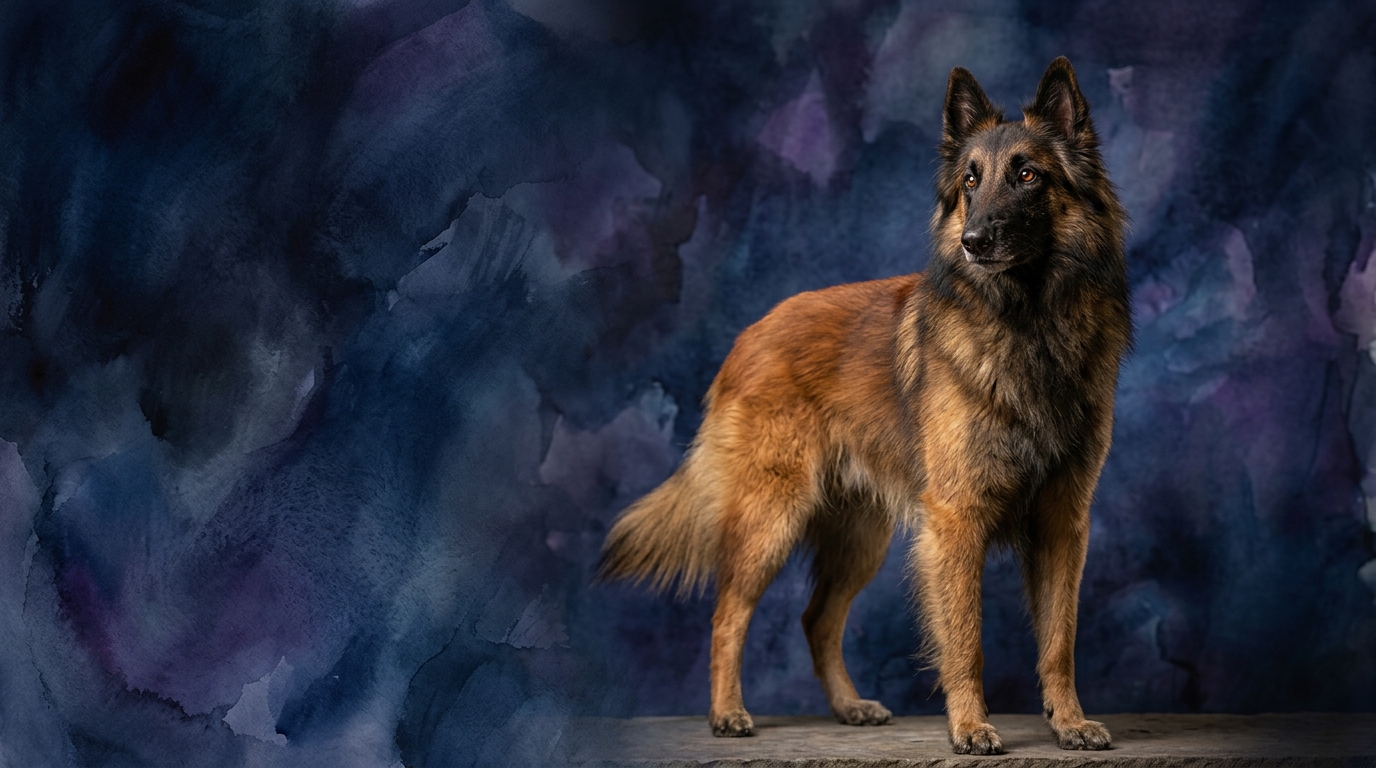
Side-by-Side Cognitive Profiles
At The Cosmic Pet Pet IQ Lab, we analyze canine cognition across five key dimensions. The Australian Cattle Dog, ranking #10 on Coren's scale, and the Belgian Tervuren, at #14, both demonstrate exceptional mental faculties, though with distinct expressions.
Problem Solving (ACD: 5/5, Tervuren: 5/5): Both breeds exhibit top-tier problem-solving capabilities. The Australian Cattle Dog typically approaches challenges with a tenacious, often physical, trial-and-error methodology, driven by an inherent need to complete a task, particularly in livestock management. They are adept at navigating complex environments independently. The Belgian Tervuren, while equally capable, often displays a more analytical and strategic approach, observing situations and formulating solutions with a keen eye for detail and a preference for intricate mental puzzles.
Training Speed (ACD: 5/5, Tervuren: 5/5): Both breeds are remarkably quick learners, earning perfect scores. The Australian Cattle Dog's rapid acquisition of commands stems from their intense eagerness to work and a strong drive to understand and execute tasks for their trusted handler, making quick associations between actions and outcomes. The Belgian Tervuren matches this speed through sharp focus, a profound desire for mental engagement, and an exceptional ability to recognize patterns, allowing them to absorb complex sequences with impressive efficiency.
Social Intelligence (ACD: 3/5, Tervuren: 3/5): Both breeds share a moderate score in social intelligence, indicating a specific relational style. Australian Cattle Dogs are reserved with strangers, forming deep, singular bonds with their primary family members and exhibiting a strong ability to read their handler's subtle cues. They are not outwardly gregarious. Belgian Tervurens are similarly watchful and discerning, developing profound connections with their inner circle but maintaining a certain aloofness with unfamiliar individuals, sensitive to their handler's emotional state but not universally effusive.
Instinctive Drive (ACD: 5/5, Tervuren: 3/5): This is where a key cognitive divergence occurs. The Australian Cattle Dog possesses an intense, all-consuming herding instinct, coupled with a significant prey drive and seemingly boundless energy for work. Their drive is persistent and deeply ingrained, fueling their readiness for sustained effort. The Belgian Tervuren also carries a herding instinct, but it's typically less overwhelming and more amenable to refinement. Their drive, while robust, can be channeled into a broader range of activities beyond singular work focus, such as various dog sports, demonstrating a more versatile application of their intrinsic motivations.
Memory (ACD: 5/5, Tervuren: 5/5): Both breeds boast exceptional memory. Australian Cattle Dogs reliably recall commands, intricate routines, specific locations, and past experiences, critically remembering livestock patterns and terrain. This memory is crucial for their independent work. Belgian Tervurens demonstrate a profound capacity for remembering complex sequences, a vast vocabulary, individual faces, past interactions, and intricate routes, excelling in tasks requiring recall of detailed information over time.
Where the Australian Cattle Dog Wins Cognitively
The Australian Cattle Dog's cognitive strengths truly shine in scenarios demanding unwavering self-sufficiency and raw determination. Their 5/5 instinctive drive is not just about energy; it’s a profound internal compass that guides their 5/5 problem-solving and memory in challenging environments. This breed excels when tasked with autonomous decision-making, such as mustering scattered livestock over vast, varied terrain without constant human direction. Their ability to assess a situation, devise a strategy, and execute it with relentless purpose, often relying on their physical prowess and deep memory for past successes and failures, makes them unparalleled in demanding, independent work roles. They process information through the lens of utility and task completion, demonstrating a tenacious focus on achieving their objective, regardless of obstacles.
Where the Belgian Tervuren Wins Cognitively
The Belgian Tervuren’s cognitive profile offers a different kind of brilliance, excelling in tasks requiring nuanced analysis and intricate learning. While also a 5/5 in problem-solving and memory, their approach is often more refined and strategic. Tervurens shine in activities demanding complex sequencing, abstract conceptual understanding, and rapid adaptation to new rules or environments, such as advanced obedience, agility, or detection work. Their acute observational skills and sensitivity allow them to pick up on the most subtle cues, making them exceptional partners for handlers who appreciate a dog that actively 'thinks with' them, engaging in a collaborative intellectual process. Their drive, while a 3/5, is highly channelable, allowing for precise shaping into intricate behaviors and prolonged mental engagement without the same level of independent, physical tenacity as the ACD.
Training: Similar Speed, Different Approaches
Both the Australian Cattle Dog and Belgian Tervuren are rated 5/5 for training speed, indicating they absorb new information rapidly. However, the 'how' of their training reveals crucial behavioral differences. The Australian Cattle Dog thrives on clear, consistent, and active training, where they are given a distinct job and understand their role within a structured hierarchy. Their strong will and inherent independence mean a trainer must possess equal consistency and resolve, often requiring more physical engagement and redirection of their intense drives. They learn quickly but require substantial mental and physical challenge to prevent boredom or resistance, which can manifest as stubbornness or inventing their own 'jobs.'
The Belgian Tervuren, conversely, responds exceptionally well to positive reinforcement, patience, and a handler who understands their sensitivity. While equally quick to grasp complex concepts, they can be easily discouraged or 'shut down' by harsh methods or inconsistency. Their desire for mental stimulation means they relish the process of learning new things and excel in varied, intricate training regimens that engage their analytical minds. Their drive, while present, is often more amenable to shaping into precise, detailed behaviors, making them adept at high-level competitive obedience or protection work where exactness is paramount. The key difference lies in the ACD's need for a job to do versus the Tervuren's enjoyment of the learning process itself.
Owners: Active & Rugged vs. Active & Engaged
Owners considering either of these breeds must be prepared for an active lifestyle, but the nature of that activity differs. The Australian Cattle Dog is unequivocally suited for owners who are equally rugged, independent, and possess an unyielding commitment to providing constant physical and mental engagement. Their 5/5 instinctive drive and problem-solving capacity demand a 'job,' whether it's genuine herding, extensive dog sports like agility or flyball, or demanding outdoor adventures. A relaxed owner would quickly find themselves overwhelmed by an under-stimulated ACD, leading to destructive behaviors or excessive demands for attention, as their innate drive to work will find an outlet, one way or another.
The Belgian Tervuren also requires active owners, but with a slightly different emphasis. While they need significant physical exercise, their mental needs are equally, if not more, paramount. They thrive on engaging activities like advanced obedience, agility, tracking, or protection work that challenge their analytical minds and foster a deep partnership. They can adapt to a slightly less physically demanding lifestyle *if* their mental needs are met with consistent, intricate training and interaction that appeals to their strategic intellect. A truly relaxed owner would struggle with a Tervuren's need for engagement, but one who enjoys complex training and varied, thoughtful activities will find an immensely rewarding companion.
The Verdict
Choose the Australian Cattle Dog if you seek a robust, independent, and intensely driven partner for demanding outdoor activities, livestock work, or high-energy dog sports, and you value a dog capable of autonomous decision-making in challenging environments.
Opt for the Belgian Tervuren if you desire a sensitive, analytical, and profoundly trainable companion for advanced dog sports, protection work, or roles requiring nuanced communication and intricate problem-solving, and you can provide consistent, engaging mental stimulation.
🧠 Find Your Pet's IQ Score
Our Pet IQ Lab assessment covers 25+ tests across 5 cognitive dimensions — personalized to your breed.
Take the Full IQ Test →Frequently Asked Questions
Are Australian Cattle Dogs good family pets?
Yes, with the right environment and consistent training. They form deep bonds with their immediate family but can be reserved with strangers and require early, extensive socialization to manage their strong protective instincts and herding behaviors, especially around children.
Do Belgian Tervurens shed a lot?
Yes, Belgian Tervurens possess a thick double coat and experience moderate shedding throughout the year, with heavier periods of seasonal shedding occurring twice annually. Regular brushing, at least a few times a week, is essential to maintain their coat health and manage loose hair.
Which breed is better for apartment living?
Neither breed is ideally suited for apartment living due to their inherently high energy levels and profound needs for mental stimulation. If an apartment is the only option, the Belgian Tervuren *might* adapt marginally better if provided with extensive daily exercise and rigorous mental work, but both truly thrive in more spacious environments with ample room to move and explore.