Side-by-Side Cognitive Profiles
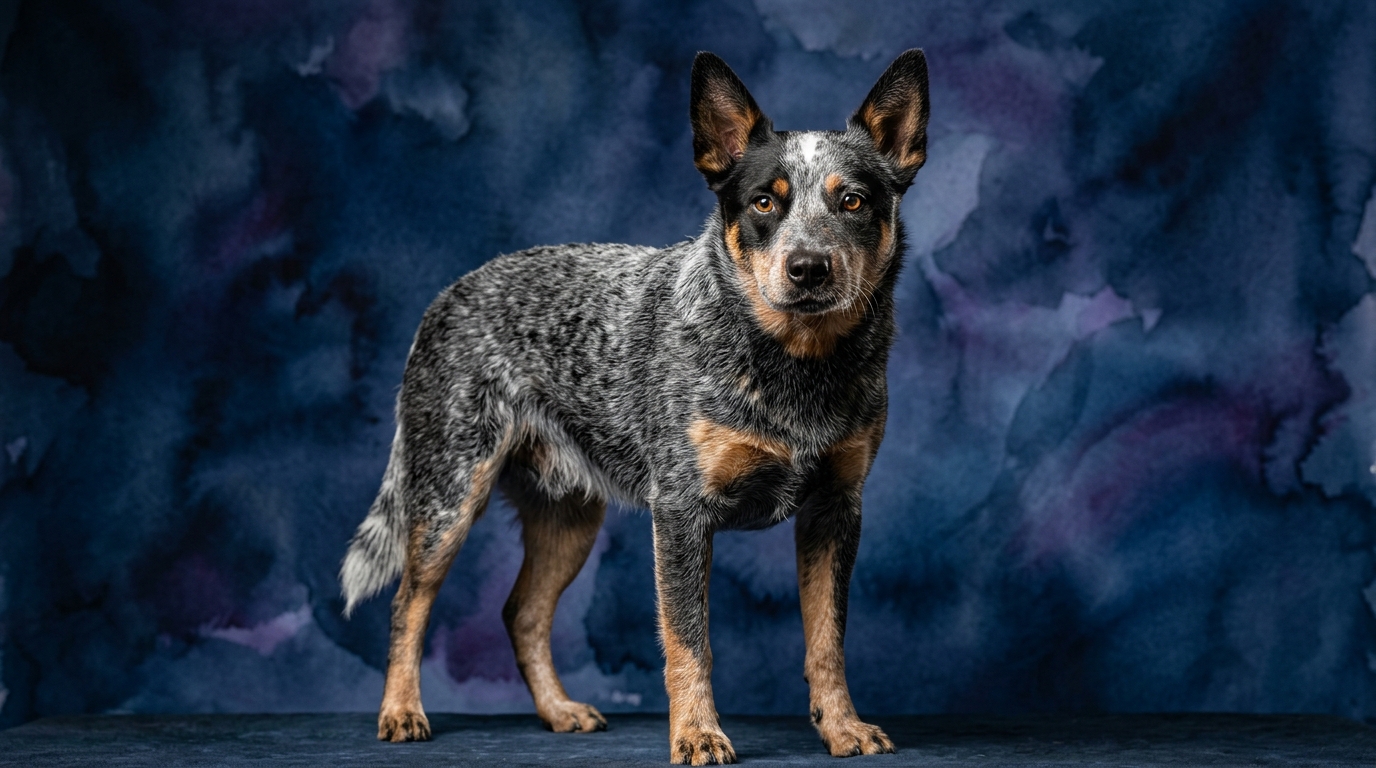
The Australian Cattle Dog (ACD), a Herding breed ranking #10 in Coren's scale, demonstrates a cognitive makeup honed for intense, independent work. Their Problem Solving is rated 5/5, indicating an exceptional capacity to devise solutions to complex challenges, often thinking several steps ahead. Training Speed also scores 5/5, highlighting their remarkable efficiency in learning and retaining new commands and multi-step routines. Social Intelligence for the ACD is 3/5, suggesting a more pragmatic, task-focused approach to interactions rather than broad emotional attunement. Their Instinctive Drive is a powerful 5/5, reflecting an inherent, relentless need for purpose and activity, typically manifesting as herding or working behaviors. Finally, their Memory is 5/5, enabling them to recall intricate sequences, locations, and learned strategies with impressive accuracy over extended periods.
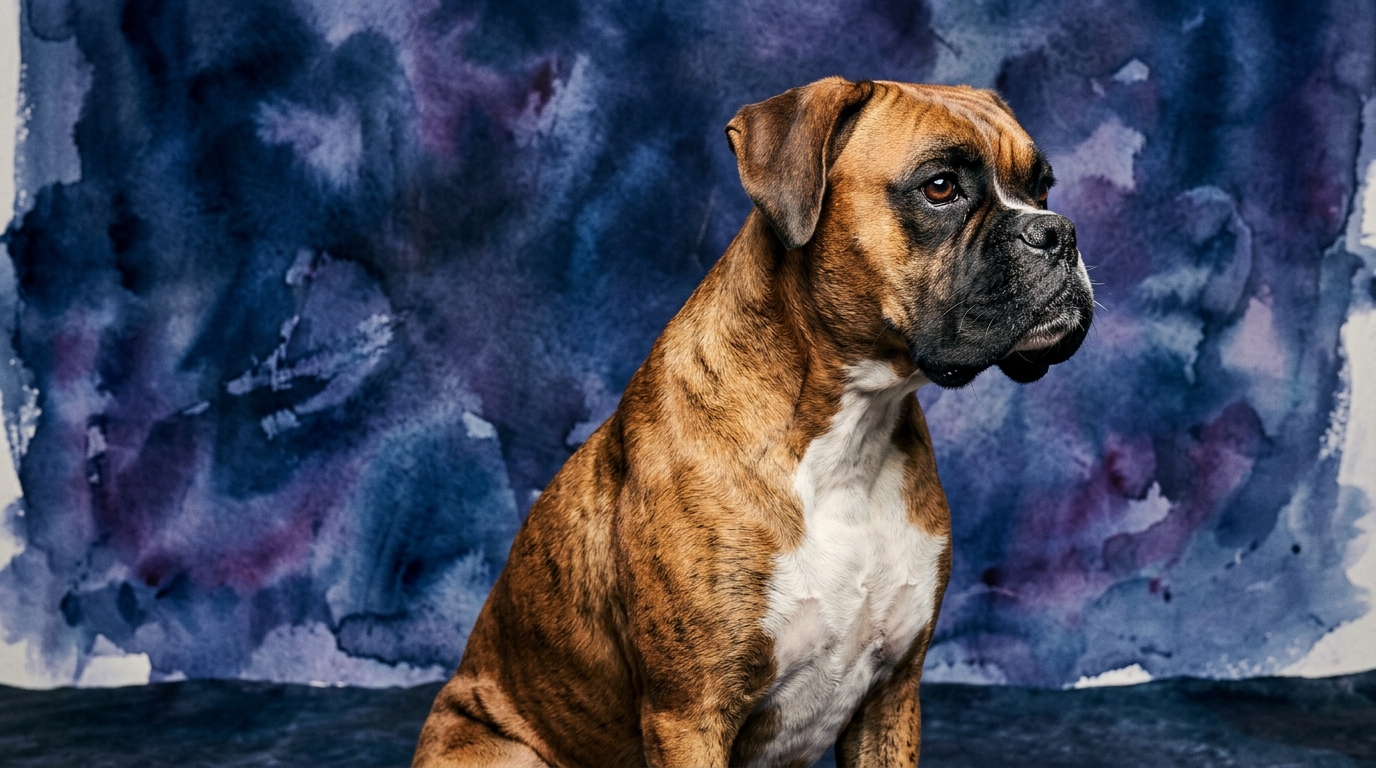
In contrast, the Boxer, a Working breed with a Coren rank of #48, presents a cognitive profile emphasizing companionship and engagement. Their Problem Solving is 3/5, meaning they can navigate familiar challenges but may require more guidance for novel or intricate puzzles. Training Speed also sits at 3/5, indicating they learn at a more deliberate pace, benefiting from consistent, positive reinforcement rather than rapid assimilation. The Boxer truly excels in Social Intelligence, scoring a perfect 5/5, signifying a profound ability to understand and respond to human emotions and social cues. Their Instinctive Drive is 4/5, a strong internal motivation often channeled into playful interaction, companionship, and protective loyalty rather than specific work tasks. Their Memory is 3/5, functional for routines and frequently practiced commands, but perhaps less robust for highly detailed information over long periods without reinforcement.
Where the Australian Cattle Dog Excels Cognitively
The Australian Cattle Dog's cognitive profile is overwhelmingly geared towards independent, efficient work. Their remarkable 5/5 in Problem Solving means they don't just follow instructions; they actively strategize, often anticipating next steps or finding creative ways to overcome obstacles in their environment, such as figuring out how to open a gate. This is complemented by a 5/5 Training Speed, allowing them to absorb and implement complex commands at an astonishing rate, making them adept at learning intricate sequences required for herding or advanced dog sports. Furthermore, their 5/5 Instinctive Drive fuels an unwavering focus and stamina for tasks, ensuring they pursue objectives with relentless determination, while their 5/5 Memory ensures these learned behaviors and problem-solving strategies are retained long-term, building a deep reservoir of practical knowledge.
Where the Boxer Excels Cognitively
The Boxer truly shines in the realm of social interaction, boasting a perfect 5/5 in Social Intelligence. This indicates an exceptional capacity to read and respond to human emotions, nuances in body language, and social dynamics within a family unit. Unlike the more task-focused ACD, the Boxer's cognitive strengths lie in forming deep, empathetic connections, making them intuitive companions who often seem to understand their owner's mood without a word. Their 4/5 Instinctive Drive, while not as task-specific as a herding dog's, fuels a powerful desire for play, engagement, and protective loyalty, translating into a strong bond and a dog eager for shared experiences rather than solitary work.
Training Dynamics: Australian Cattle Dog vs. Boxer
From a purely cognitive efficiency standpoint, the Australian Cattle Dog (Training Speed 5/5, Problem Solving 5/5) presents as the more straightforward dog to train for complex tasks. Their rapid assimilation of commands means fewer repetitions are needed to achieve mastery, and their strong problem-solving skills allow them to generalize learned behaviors to new situations with minimal guidance. For instance, an ACD might quickly grasp a multi-step agility course, understanding the sequence and adjusting if a jump is moved. This efficiency stems from their inherent drive to work and their capacity for independent thought in task execution, making them highly responsive to clear, consistent direction.
In contrast, the Boxer (Training Speed 3/5, Problem Solving 3/5) requires a more patient and consistent approach. While certainly trainable, their learning process is more gradual, and they may be more prone to playful distractions, necessitating shorter, more engaging sessions. A Boxer might excel at a specific “sit-stay” in a familiar environment but could take longer to reliably perform it amidst new stimuli, often needing more reinforcement to overcome their natural exuberance. Their training benefits greatly from positive reinforcement and making the learning process feel like a fun game, leveraging their strong social intelligence and desire for interaction to build cooperation.
Matching Breeds to Lifestyles: Active vs. Relaxed Owners
For truly active owners, particularly those involved in dog sports, working roles, or extensive outdoor adventures, the Australian Cattle Dog is an ideal match. Their 5/5 Instinctive Drive and 5/5 Problem Solving demand constant mental and physical engagement, thriving on a structured “job” and high-intensity activities like agility, flyball, or long-distance hiking. An ACD needs an owner who can consistently provide challenging mental puzzles and ample physical exercise. A relaxed owner might find an ACD's unmet cognitive and physical needs manifesting as destructive behaviors or excessive herding of family members, as their powerful internal drive seeks an outlet.
The Boxer, with its 4/5 Instinctive Drive and 5/5 Social Intelligence, suits an active owner who also values deep companionship and playful interaction. They require regular exercise and mental stimulation, but their drive is often channeled into spirited play sessions, walks, and family activities rather than intense, solitary work. While they enjoy activity, a moderately active owner who enjoys daily walks, playtime in the yard, and snuggling on the couch would find a Boxer's needs more aligned than an ACD's. Their high social intelligence means they thrive on being an integral, engaged part of the family, making them excellent companions for those seeking an interactive, affectionate partner.
The Verdict
Opt for the Australian Cattle Dog if you are an experienced, highly active owner seeking a canine partner for demanding tasks, advanced training, or competitive dog sports, ready to fulfill their profound cognitive and physical work ethic.
Choose the Boxer if you desire a highly social, affectionate, and playful companion who thrives on family interaction, daily moderate activity, and can be integrated deeply into a loving, engaged household.
🧠 Find Your Pet's IQ Score
Our Pet IQ Lab assessment covers 25+ tests across 5 cognitive dimensions — personalized to your breed.
Take the Full IQ Test →Frequently Asked Questions
Do Australian Cattle Dogs make good family pets despite their lower social intelligence score?
Yes, while their social intelligence (3/5) is more focused on task cooperation, ACDs form deep, loyal bonds with their immediate family. They may not be overly effusive with strangers but are devoted to their chosen people, especially with proper socialization and consistent interaction.
Is a Boxer too limited to train for anything complex, given its 3/5 problem solving and training speed?
Absolutely not. While their training speed and problem solving are moderate (3/5), Boxers are very capable of learning complex commands and tricks with consistent, positive reinforcement. They learn differently, often through repetition and play, rather than rapid independent problem-solving, making training a fun, engaging process.
How does the 'Instinctive Drive' score impact daily life for these breeds?
The ACD's 5/5 drive means they constantly seek purpose and activity, needing a 'job' to prevent boredom, which can manifest as destructive behavior or nipping. The Boxer's 4/5 drive is strong but often channeled into play and social interaction, requiring regular exercise and engagement to satisfy their energetic nature without the same intense occupational demands.