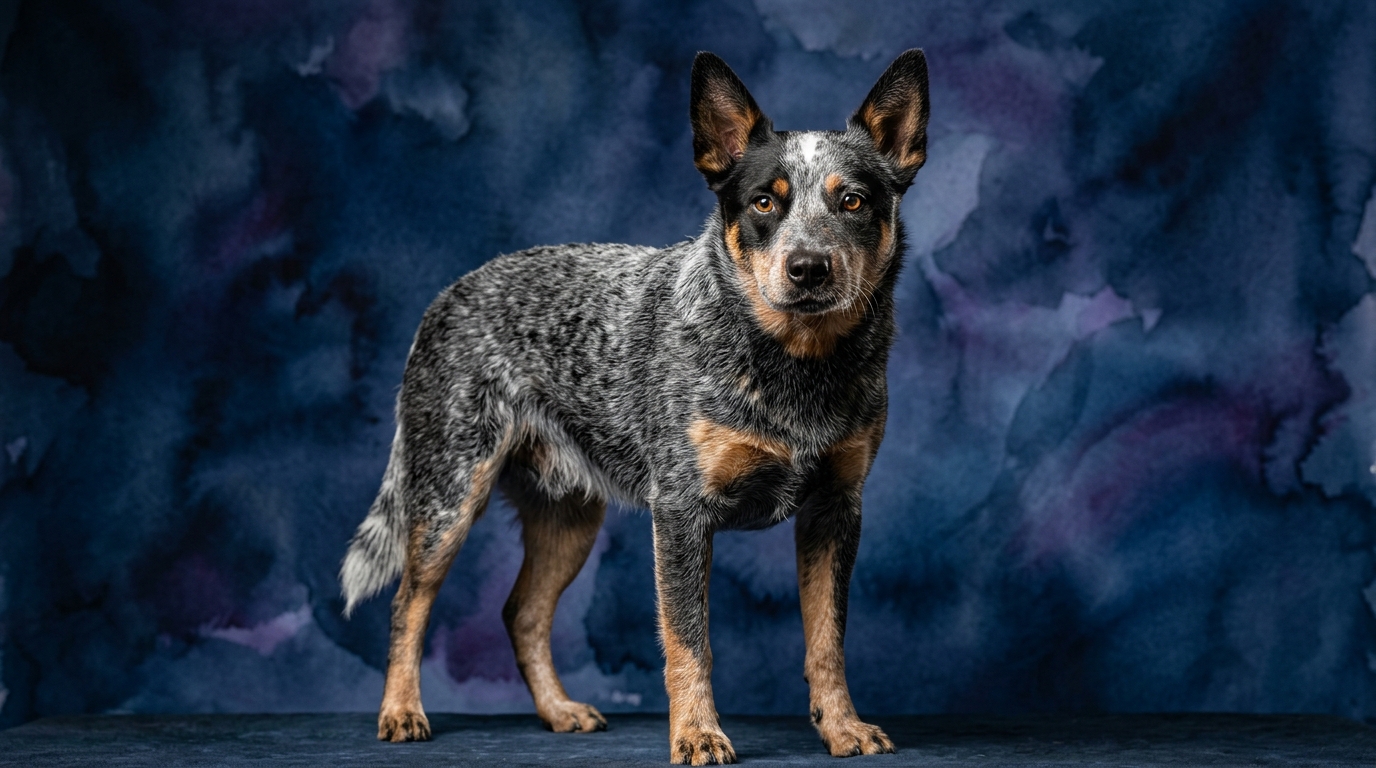
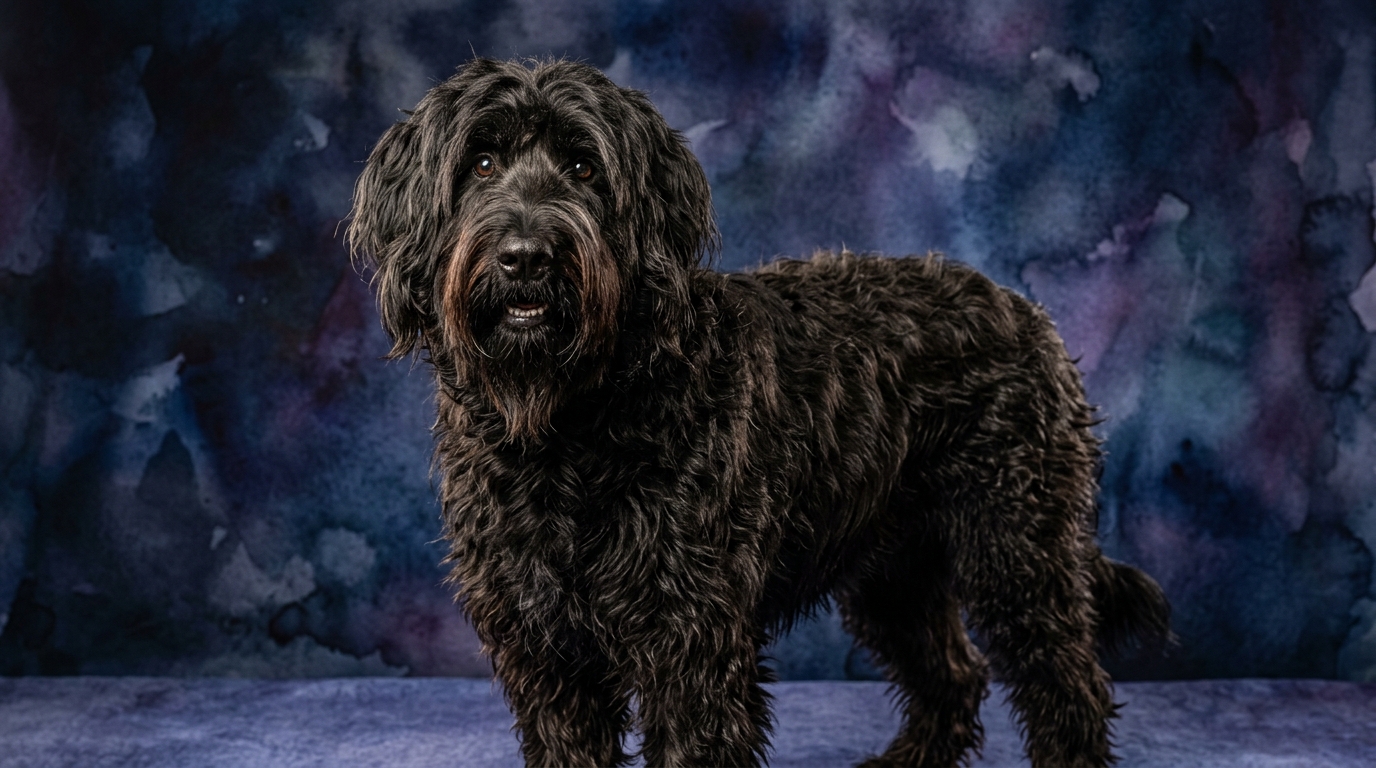
Side-by-side IQ profile
The Cosmic Pet Pet IQ Lab provides a detailed lens into canine cognition, revealing distinct mental strengths for the Australian Cattle Dog and Briard. The Australian Cattle Dog, ranking #10 on Coren's scale, demonstrates exceptional Problem Solving at 5/5, indicating an innate ability to navigate complex situations and find independent solutions. Their Training Speed is also top-tier at 5/5, suggesting rapid assimilation of commands and new tasks, while Social Intelligence stands at 3/5, meaning they understand human cues but aren't necessarily seeking constant social feedback. A formidable Instinctive Drive of 5/5 underscores their strong innate working behaviors, complemented by a perfect Memory score of 5/5, allowing them to retain vast amounts of information and learned behaviors over time.
In contrast, the Briard, positioned at #30 on Coren's scale, presents a different cognitive makeup. Their Problem Solving capability is strong at 4/5, showing competence but perhaps less independent ingenuity. Training Speed is also robust at 4/5, indicating they learn readily, though potentially requiring a few more repetitions. Like the Cattle Dog, their Social Intelligence is rated 3/5, suggesting a balanced approach to human interaction. They diverge significantly in Instinctive Drive, rated 3/5, meaning their natural herding or protective urges are present but less intense or persistent. Their Memory is also commendable at 4/5, allowing for good retention of learning, albeit not at the Cattle Dog's perfect recall level.
Where Australian Cattle Dog wins cognitively
The Australian Cattle Dog's cognitive strengths are particularly evident in its raw problem-solving prowess and memory. A 5/5 in Problem Solving means these dogs don't just follow instructions; they actively analyze their environment, devise strategies to overcome obstacles, and adapt to changing conditions with remarkable ingenuity. This was crucial for their original role, independently moving stubborn cattle across challenging terrains. Their perfect Memory score of 5/5 ensures that once a solution is found or a command is learned, it's deeply ingrained, leading to consistent performance without frequent refreshers. This combination of independent thought and exceptional recall makes them formidable partners in complex tasks, capable of remembering intricate patterns and specific livestock behaviors. Their 5/5 Instinctive Drive further fuels this, providing relentless internal motivation to apply their cognitive skills to their work.
Where Briard wins cognitively
While the Australian Cattle Dog excels in independent problem-solving and drive, the Briard offers a compelling balance of cognitive attributes, making it a uniquely capable companion and worker. The Briard’s 4/5 in Problem Solving and Training Speed, coupled with a 3/5 in Instinctive Drive, points to a dog that is highly trainable and capable of complex tasks, often preferring to work in close collaboration with its handler. Their cognitive strength lies in their ability to absorb and execute commands reliably, without the same intense independent drive that can sometimes lead an ACD to "think for itself" too much. This makes them exceptionally responsive and cooperative, thriving in structured environments where clear direction is provided. Their 4/5 Memory ensures they retain what they learn, fostering a consistent and predictable partnership. The Briard's strength is in its capacity for consistent, directed effort, making it a dependable worker that values a collaborative approach.
Which is easier to train and why
When considering ease of training, the Australian Cattle Dog (ACD) and the Briard present distinct approaches. The ACD, with its 5/5 Training Speed, grasps new commands and concepts remarkably quickly, often requiring very few repetitions. This rapid learning, combined with a 5/5 Problem Solving ability, means they often anticipate what's expected and can generalize learned behaviors efficiently. However, their equally strong 5/5 Instinctive Drive and independent nature can sometimes pose a challenge: they might choose their own agenda if not consistently engaged and directed. Training an ACD demands mental stimulation, consistency, and a handler who can channel their intense focus and drive effectively.
The Briard, with a 4/5 Training Speed, still learns quickly, though perhaps not with the lightning-fast acquisition of the ACD. Their 4/5 Problem Solving suggests they can work through new tasks effectively, and their 3/5 Instinctive Drive means they are less likely to be overwhelmed by internal motivations to herd or patrol independently. This makes them generally more amenable to following human direction and less prone to "freelancing." Training a Briard often feels more like a collaborative effort, as they are eager to please and respond well to positive reinforcement. They thrive on clear, consistent communication and appreciate a structured learning environment, making them a straightforward choice for owners who prefer a dog that readily accepts guidance.
Which suits active owners vs relaxed owners
The choice between an Australian Cattle Dog and a Briard largely depends on an owner's lifestyle and energy levels. Australian Cattle Dogs are unequivocally suited for highly active owners who can meet their substantial physical and mental demands. Their 5/5 Instinctive Drive and high Problem Solving mean they require constant engagement; without a job or challenging activities, they can become bored and destructive. They excel in dog sports like agility, flyball, and advanced obedience, thriving with owners who enjoy hiking, running, or working on a farm. A relaxed owner would quickly find themselves overwhelmed by the ACD's relentless need for stimulation and purpose.
The Briard, while still an active breed from a herding background, offers a more adaptable energy profile. Their 3/5 Instinctive Drive suggests they possess a working ethic but are not driven by the same constant, intense urge as the ACD. They enjoy regular exercise and mental challenges, but can also appreciate downtime and quiet companionship with their family. They are well-suited for active owners who enjoy daily walks, moderate hikes, and consistent training, but might tolerate an occasional less intense day without significant behavioral fallout. For a truly relaxed owner, even a Briard might prove too much, but for someone seeking an active companion without the ACD's extreme intensity, the Briard presents a more balanced option.
The Verdict
Choose an Australian Cattle Dog if you are an experienced, highly active owner who thrives on providing consistent mental and physical challenges for a dog with exceptional problem-solving and an intense work ethic.
Choose a Briard if you seek a loyal, trainable companion who enjoys activity and mental engagement but also appreciates a collaborative partnership and a more balanced energy profile than the intensely driven Cattle Dog.
🧠 Find Your Pet's IQ Score
Our Pet IQ Lab assessment covers 25+ tests across 5 cognitive dimensions — personalized to your breed.
Take the Full IQ Test →Frequently Asked Questions
Do Australian Cattle Dogs get along with other pets?
Australian Cattle Dogs, with their 3/5 Social Intelligence and strong herding drive, can be particular about other pets. They often do best when raised with other animals from a young age or carefully introduced, as their instinct to "herd" can extend to smaller creatures. Consistent training and supervision are key to harmonious multi-pet households.
Are Briards good family dogs?
Briards can be excellent family dogs, exhibiting a balanced 3/5 Social Intelligence, meaning they are generally devoted to their human family. They tend to be protective and form strong bonds, often doing well with children if properly socialized and trained from puppyhood to manage their size and boisterousness. Their loyalty makes them wonderful companions in a family setting.
How much exercise does a Briard need daily?
A Briard, with its 3/5 Instinctive Drive, requires a good amount of daily exercise to stay content and well-behaved. This typically includes at least 60-90 minutes of vigorous activity, such as brisk walks, runs, or play sessions, combined with mental stimulation through training or puzzle toys. While active, they are less relentlessly driven than some other herding breeds.