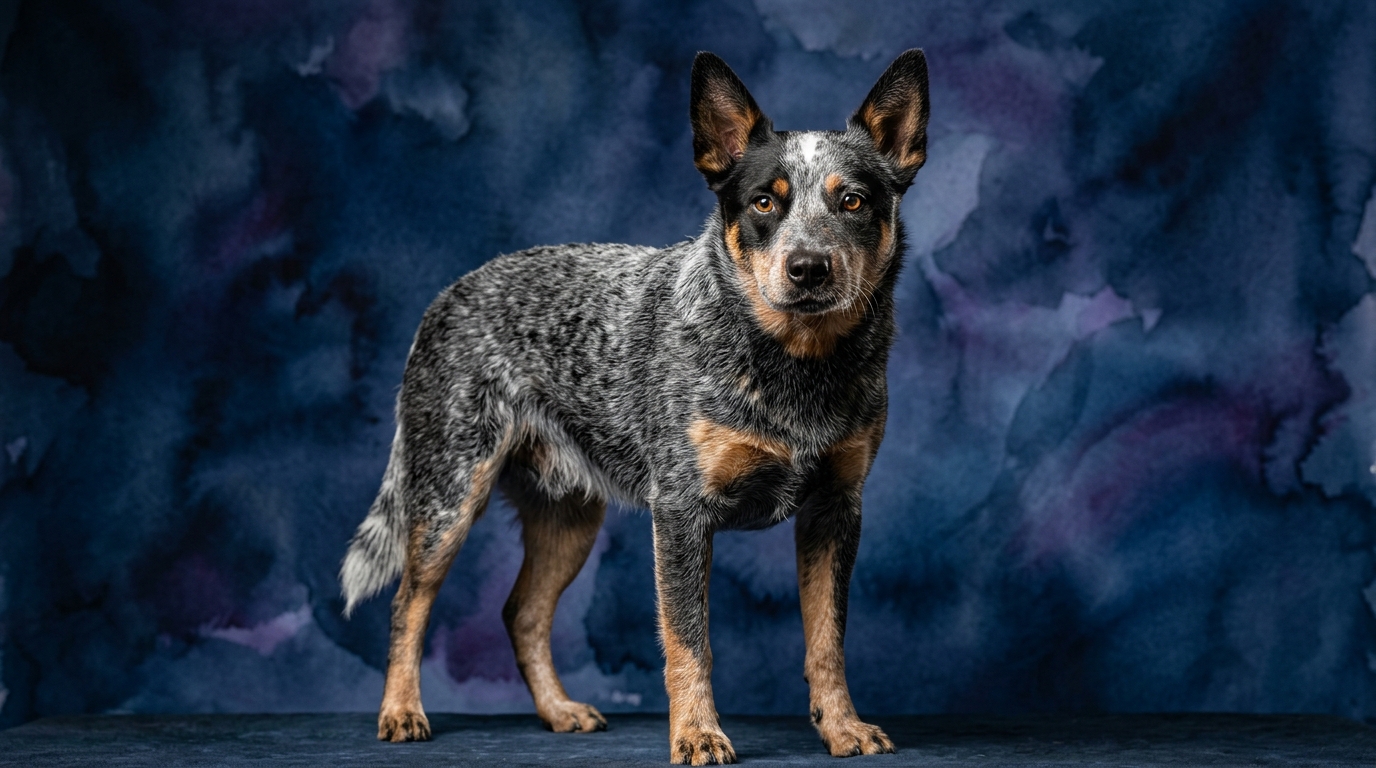

Side-by-Side Cognitive Profiles: ACD vs. Bulldog
The Cosmic Pet Pet IQ Lab's profiling illuminates stark differences in the cognitive makeup of these two breeds. The Australian Cattle Dog, a Herding group member, showcases a mind built for complex tasks and independent thought. Its Problem Solving score is 5/5, indicating a strong capacity for navigating intricate situations and devising solutions. Training Speed also registers at 5/5, meaning they grasp new concepts and commands with remarkable rapidity. Their Social Intelligence, at 3/5, suggests they form strong bonds but often prioritize tasks over purely social engagement, sometimes displaying a more reserved demeanor. An Instinctive Drive of 5/5 highlights their profound herding instincts and a persistent desire to manage their environment, while a Memory score of 5/5 reflects an excellent recall for learned behaviors and spatial information.
In contrast, the English Bulldog, from the Non-Sporting group, presents a different set of cognitive priorities. Its Problem Solving score is 2/5, indicating a less urgent or complex approach to challenges, often preferring persistence or owner guidance. Training Speed also sits at 2/5, meaning new commands typically require more patience and repetition to embed. However, their Social Intelligence shines at 4/5, demonstrating a keen awareness of human moods and a strong desire for affectionate companionship. Their Instinctive Drive is a moderate 3/5, focusing more on comfort and gentle interaction rather than intricate tasks. Finally, a Memory score of 2/5 suggests their recall for complex sequences may be less robust, though they remember people and familiar routines well.
Where the Australian Cattle Dog Excels Cognitively
The Australian Cattle Dog's cognitive strengths are deeply rooted in its heritage as a working partner. Their top scores in problem-solving, training speed, instinctive drive, and memory describe a canine mind that is constantly processing and adapting. An ACD doesn't just learn; it synthesizes information, making independent decisions crucial for managing livestock in challenging terrains. This manifests in their ability to quickly understand multi-step commands, anticipate their owner's next move, and even devise novel ways to accomplish a task, like figuring out how to open a gate or retrieve a specific item.
Their exceptional memory allows them to retain a vast repertoire of commands and routines, making them highly reliable in performing complex sequences or navigating extensive properties. This breed thrives on mental engagement, viewing learning and problem-solving as inherent parts of their daily existence. Owners will observe their ACD assessing situations, strategizing, and executing actions with an efficiency that reflects their profound cognitive wiring for purpose-driven activity.
Where the English Bulldog Excels Cognitively
While not built for demanding mental labor, the English Bulldog's cognitive prowess lies squarely in its social intelligence. With a 4/5 score, this breed exhibits a profound capacity for emotional connection and companionship. They are adept at tuning into human moods, offering comfort and seeking affection, making them exemplary family members. Their intelligence here is about connection, understanding the subtle cues of their human companions, and fostering a harmonious home environment.
Bulldogs excel at being steadfast, reassuring presences, preferring the warmth of a lap to the rigors of a training field. Their cognitive makeup prioritizes peace and comfort, allowing them to adapt seamlessly to household routines and family dynamics, often becoming the calm anchor of a home. This ability to integrate so deeply into family life, offering unwavering loyalty and gentle companionship, is a testament to their unique social cognition.
Training Dynamics: Which is Easier and Why?
When it comes to ease of training for commands and tasks, the Australian Cattle Dog takes a clear lead. Their 5/5 training speed means they absorb new concepts with minimal repetition, often eager to participate in learning as a form of mental stimulation. This, combined with their strong problem-solving ability, allows them to generalize learned behaviors to new situations and even figure out complex tasks independently. Their instinctive drive for purpose makes them highly responsive to consistent, positive reinforcement, transforming training into a dynamic partnership.
The English Bulldog, with its 2/5 training speed, presents a different training journey. Teaching new commands requires significant patience, numerous repetitions, and often high-value rewards to maintain engagement. Their motivation is primarily comfort-driven, and they may exhibit what appears to be a stubborn streak if not properly motivated. Training sessions for a Bulldog should be kept short, positive, and enjoyable, focusing on gentle persuasion and positive association rather than intense drilling. While they are capable of learning, their learning style is more about gradual absorption and motivation through comfort than an inherent drive for mastery.
Matching Breeds to Owner Lifestyles
For active individuals or families seeking a canine partner for extensive adventures and mental challenges, the Australian Cattle Dog is an ideal match. Their high instinctive drive and significant cognitive capacities demand a lifestyle rich in physical activity and consistent mental stimulation. Activities like agility, herding trials, long hikes, or complex puzzle toys are not just beneficial but essential for an ACD's well-being. An owner without the time or inclination to provide these outlets might find an ACD overwhelming, as unchanneled energy and intellect can lead to frustration and undesirable behaviors.
Conversely, the English Bulldog, with its lower instinctive drive and preference for comfort, is perfectly suited for relaxed owners who appreciate a calm, companion-oriented pet. Their physical limits and cognitive approach mean they are content with moderate engagement, such as gentle strolls and quiet companionship, rather than constant high-intensity activity. They are often well-suited for apartment living or households where the primary desire is for a loyal, affectionate presence that enjoys comfortable naps and gentle interaction more than strenuous outdoor pursuits.
The Verdict
Choose an Australian Cattle Dog if you are an active individual or family seeking a mentally agile, highly trainable partner for sports, work, or extensive outdoor adventures.
Opt for an English Bulldog if you desire a calm, affectionate companion content with a relaxed lifestyle, gentle walks, and abundant cuddles, prioritizing companionship over high activity.
🧠 Find Your Pet's IQ Score
Our Pet IQ Lab assessment covers 25+ tests across 5 cognitive dimensions — personalized to your breed.
Take the Full IQ Test →Frequently Asked Questions
Are English Bulldogs difficult to train?
English Bulldogs can require more patience during training due to their lower training speed and different motivational drives. Consistent, positive reinforcement and making training fun and rewarding are key to success.
How much exercise does an Australian Cattle Dog need daily?
Australian Cattle Dogs typically require significant daily exercise, often an hour or two of vigorous activity, combined with mental challenges like puzzle toys or training sessions, to keep their active minds and bodies content.
Which breed is generally better with children?
Both breeds can be good with children, but their approaches differ. English Bulldogs are often noted for their patient and gentle demeanor, making them naturally tolerant companions. Australian Cattle Dogs can be protective and may attempt to 'herd' children, requiring supervision and early training to channel this instinct appropriately.