
Side-by-Side Cognitive Profiles
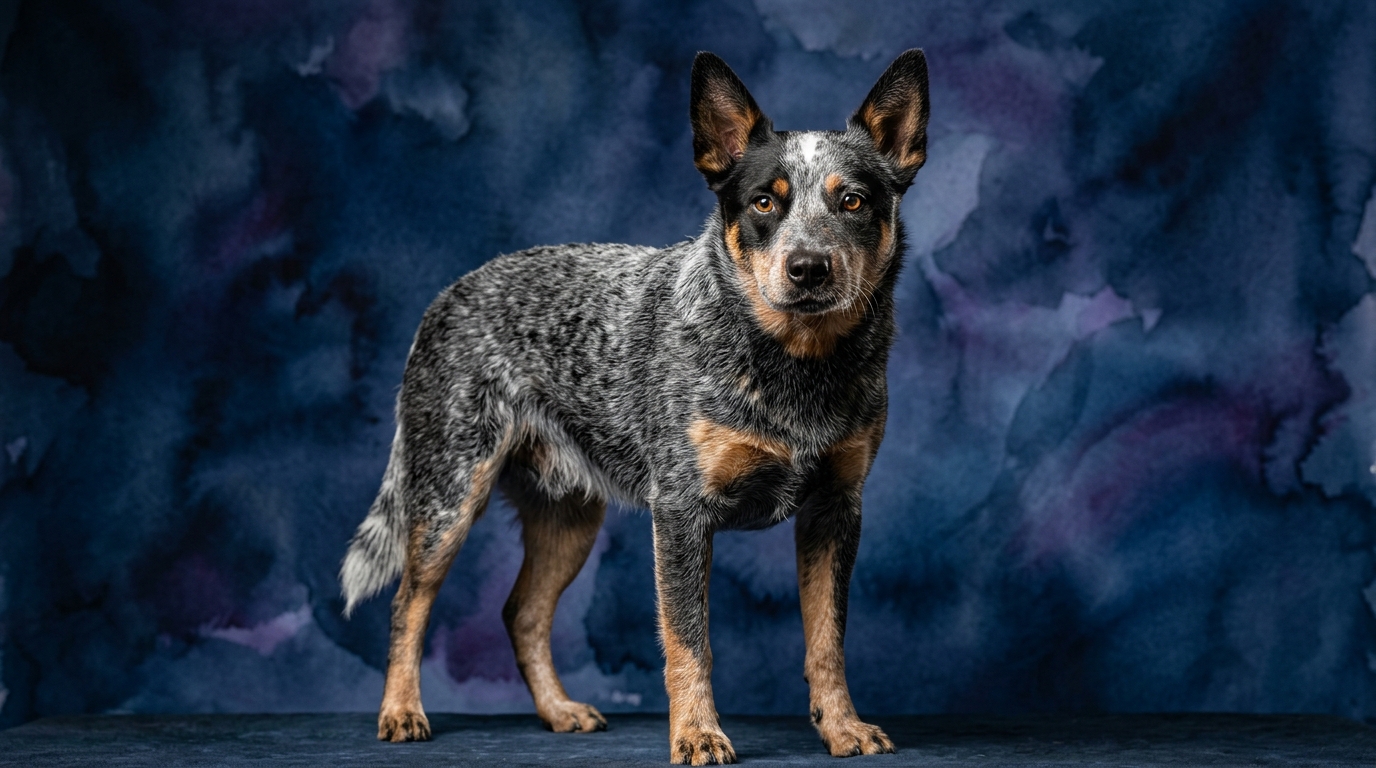
The Australian Cattle Dog, a breed known for its robust working capabilities, consistently demonstrates a formidable cognitive architecture. Its Problem Solving is rated 5/5, indicating an exceptional capacity for independent thought and strategic action in novel situations. Training Speed also stands at 5/5, reflecting rapid assimilation of new commands and complex sequences with minimal repetition. While its Social Intelligence at 3/5 suggests a more task-focused interaction style rather than broad social sensitivity, its Instinctive Drive is a powerful 5/5, channeling its innate herding behaviors into purposeful engagement. Finally, a Memory score of 5/5 means these dogs possess an enduring recall for routines, commands, and environmental details, contributing to their placement at #10 in Stanley Coren's ranking of dog intelligence.
In contrast, the French Bulldog presents a different set of cognitive strengths, tailored for companionship. Its Problem Solving is rated 3/5, indicating a moderate ability to navigate challenges, often relying on learned behaviors rather than intricate strategic planning. Training Speed is also 3/5, meaning they learn steadily and require consistent, positive reinforcement to solidify commands. Where the French Bulldog truly shines is in Social Intelligence, scoring a perfect 5/5; they are highly attuned to human emotions and social cues, making them exceptional companions. Their Instinctive Drive is a modest 2/5, reflecting a low inclination for work or intense physical tasks, while their Memory at 3/5 ensures they retain core commands and important routines without the extensive recall of more complex working breeds.
Where the Australian Cattle Dog Excels Cognitively
The Australian Cattle Dog's cognitive triumphs are rooted in its heritage as a working dog, requiring both intellect and drive. Their 5/5 Problem Solving means they are adept at figuring out intricate puzzles, navigating complex environments, and even outsmarting livestock. This breed doesn't just follow instructions; it often understands the intent behind them, making it capable of independent decision-making in real-world scenarios. Coupled with a 5/5 Training Speed and 5/5 Memory, they absorb vast amounts of information quickly and retain it for the long term, making them exceptional candidates for advanced obedience, agility, herding, or search and rescue roles. Their profound 5/5 Instinctive Drive fuels their desire for purpose, finding satisfaction in engaging their minds and bodies in challenging activities.
Where the French Bulldog Excels Cognitively
The French Bulldog's cognitive prowess lies primarily in its exquisite Social Intelligence, scoring a perfect 5/5. This breed is a master of emotional attunement, capable of reading subtle shifts in human mood and responding with comforting presence or playful antics. They excel at forming deep, intuitive bonds with their human companions, often anticipating needs for affection or quiet companionship without explicit cues. Their strength isn't in executing complex tasks, but in providing profound emotional support and understanding, making them incredibly empathetic and responsive family members. This social acumen ensures they integrate seamlessly into family life, thriving on interaction and connection rather than strenuous mental challenges.
Training: Ease and Behavioral Differences
When it comes to ease of training, the Australian Cattle Dog generally presents a more straightforward path for handlers seeking rapid skill acquisition. Their 5/5 Training Speed means they grasp new commands with remarkable swiftness, often requiring only a few repetitions before understanding. Their 5/5 Problem Solving allows them to connect actions with consequences efficiently, and their powerful 5/5 Instinctive Drive translates into a keen desire to engage in structured activities. For instance, an Australian Cattle Dog might learn a multi-step fetch routine in a fraction of the time a French Bulldog would, and its natural inclination for work means it often views training as a fulfilling task, eager for the next challenge.
The French Bulldog, with its 3/5 Training Speed and 3/5 Problem Solving, requires a different approach. While eager to please due to their high Social Intelligence, they learn at a more moderate pace, benefiting from short, positive, and consistent training sessions. They may take longer to generalize commands to different environments or to link complex sequences. For example, teaching a French Bulldog to 'stay' may require more patient repetitions and enticing rewards than with an Australian Cattle Dog, and they might be more easily distracted. Their lower instinctive drive means they are less inclined to seek out training for its own sake, often responding best when training feels like a fun interaction that strengthens their bond with their human rather than a demanding task.
Matching Breeds to Lifestyles: Active vs. Relaxed Owners
The Australian Cattle Dog is unequivocally suited for active owners. With a 5/5 Instinctive Drive and 5/5 Problem Solving, these dogs thrive when given a 'job' to do, whether it's herding, participating in dog sports like agility or flyball, or accompanying owners on long hikes and runs. Their cognitive profile demands consistent mental and physical stimulation; without adequate outlets for their energy and strategic thinking, they can develop boredom-driven behaviors. Owners who enjoy an outdoor-oriented, dynamic lifestyle and are prepared to engage their dog in regular, challenging activities will find an unparalleled partner in the Australian Cattle Dog.
Conversely, the French Bulldog is an ideal match for more relaxed owners. Their 2/5 Instinctive Drive means they require only moderate daily exercise, such as leisurely walks and indoor play, rather than intense physical exertion. Their 5/5 Social Intelligence ensures they flourish in environments where they receive ample human companionship, affection, and attention. They are content to be a loving presence, enjoying quiet evenings on the couch and social interactions rather than demanding strenuous activities. Owners seeking a devoted, emotionally responsive companion to share a comfortable home life will find the French Bulldog's cognitive and physical needs align perfectly with a more laid-back lifestyle.
The Verdict
Opt for an Australian Cattle Dog if you desire a highly trainable, problem-solving partner for active pursuits and mental challenges, valuing a dog that thrives on work and structured engagement.
Select a French Bulldog if your priority is a deeply social, emotionally attuned companion dog that flourishes in a relaxed home environment and offers unwavering affection.
🧠 Find Your Pet's IQ Score
Our Pet IQ Lab assessment covers 25+ tests across 5 cognitive dimensions — personalized to your breed.
Take the Full IQ Test →Frequently Asked Questions
Do Australian Cattle Dogs make good family pets despite their strong working drive?
Yes, with proper training, consistent mental and physical stimulation, and clear boundaries, Australian Cattle Dogs can be devoted family members. They need activities that engage their sharp minds to prevent boredom-driven behaviors, but their loyalty to their human 'pack' is profound and enduring.
Is it difficult to train a French Bulldog given its moderate scores in problem-solving and training speed?
Training a French Bulldog is not inherently difficult, but it requires patience and positive reinforcement. They respond best to consistent, short, and engaging training sessions focused on basic obedience and good manners, leveraging their strong desire for human approval and companionship.
How does the Coren ranking relate to The Cosmic Pet's IQ dimensions for these breeds?
Stanley Coren's ranking primarily assesses 'working and obedience intelligence,' which aligns closely with The Cosmic Pet's 'training speed' and 'problem-solving' dimensions. A high Coren rank, like the Australian Cattle Dog's #10, indicates a breed's capacity for rapid learning and command retention in a structured environment, while the French Bulldog's unranked status suggests its cognitive strengths lie more in social interaction than obedience tasks.