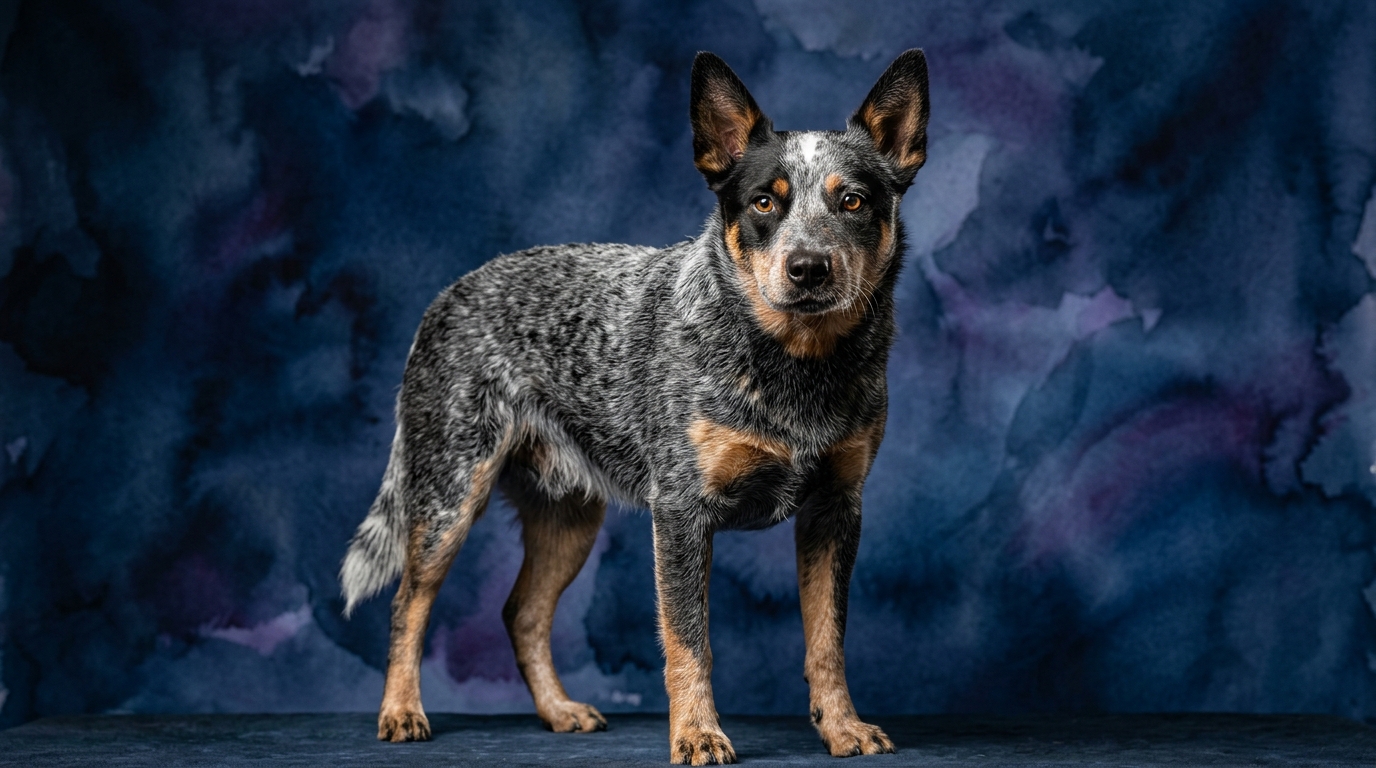

Side-by-Side Cognitive Profiles: Australian Cattle Dog vs. Manchester Terrier
The Pet IQ Lab provides a unique lens through which to examine the mental faculties of different breeds, and when we place the Australian Cattle Dog (ACD) next to the Manchester Terrier (MT), their cognitive blueprints diverge significantly. The ACD, a Herding group member, boasts a Coren rank of #10, placing it among the top echelons for obedience and working intelligence, a stark contrast to the MT, a Terrier, which doesn't feature in the top ranks, suggesting a different, though no less valid, cognitive approach.
**Problem Solving:** The ACD scores an exceptional 5/5, reflecting its historical role in independently managing livestock across vast landscapes; this breed exhibits a remarkable capacity to assess complex situations, devise strategies, and execute solutions, often without direct human intervention. Conversely, the MT registers a 3/5 in problem-solving; while capable of navigating challenges, their solutions might be more direct or require more human guidance, rather than the intricate, multi-step thought processes seen in the ACD.
**Training Speed:** Here, the ACD shines with a perfect 5/5; their eagerness to learn, coupled with their inherent drive to work alongside humans, makes them incredibly quick studies, absorbing new commands and complex routines with impressive efficiency. The MT, at 3/5, demonstrates a respectable ability to learn but often requires more repetition and consistent motivation; their terrier independence means they might question the 'why' of a command or require more enticing rewards to maintain focus.
**Social Intelligence:** Both breeds score 3/5 in social intelligence, but the manifestation of this score differs. For the ACD, this often means a strong bond with their primary handler and family, but a reserved or watchful demeanor towards strangers, reflecting their protective herding instincts, with social interactions often being purposeful. The MT's 3/5 typically translates to a moderately outgoing nature, friendly with familiar faces but perhaps with a discerning eye for newcomers, characteristic of a terrier's self-assuredness, with social interactions often driven by curiosity and companionship.
**Instinctive Drive:** The ACD's 5/5 in instinctive drive is a testament to its powerful herding heritage; this drive manifests as an intense desire to control, gather, and direct, whether it's livestock, family members, or even inanimate objects, and requires outlets and management. The MT's 3/5 instinctive drive is primarily focused on its terrier roots: hunting small vermin; while present, this drive is generally less overwhelming than the ACD's herding impulse, making them less prone to constantly 'working' their environment.
**Memory:** With a 5/5, the ACD possesses an outstanding memory, crucial for recalling complex patterns of movement, learned commands, and geographical layouts essential for their working tasks; they remember good habits and bad ones with equal tenacity. The MT's 3/5 memory indicates a solid capacity for recall, sufficient for daily routines and learned behaviors, but perhaps without the ACD's photographic precision for intricate details or long-term retention of highly complex sequences.
Where the Australian Cattle Dog Wins Cognitively
The Australian Cattle Dog's cognitive strengths are undeniably rooted in its history as a demanding working dog. Its 5/5 in problem-solving means it can independently assess and react to dynamic situations, such as a straying sheep, designing a path to retrieve it without human micromanagement; this isn't just about following commands, it's about initiating solutions, a significant cognitive advantage for tasks requiring independent judgment.
Their 5/5 training speed allows them to master intricate multi-step commands and complex routines at an accelerated pace. An ACD can learn entire sequences of actions, like an agility course or a herding trial pattern, with fewer repetitions than many other breeds, reflecting a superior capacity for processing and integrating novel information quickly, making them exceptionally adaptable to new challenges and advanced training endeavors.
Furthermore, their 5/5 instinctive drive, while requiring significant management, is a cognitive win in its sheer intensity and focus. This powerful underlying motivation fuels their engagement with tasks, making them relentless in their pursuits and highly resilient to distractions when focused on a 'job'; this profound drive translates into sustained mental effort and unwavering dedication to a given objective, a cognitive trait that sets them apart.
Where the Manchester Terrier Finds Its Cognitive Niche
While the Manchester Terrier's scores are generally balanced at 3/5, this equilibrium represents a distinct cognitive advantage for specific lifestyles. Their 3/5 instinctive drive, primarily focused on vermin hunting, is present but typically less overwhelming than the ACD's intense herding instinct, meaning an MT is less likely to constantly try to 'herd' children or other pets, which can be a cognitive 'win' for owners seeking a companion whose mental demands are more manageable and less all-consuming in a typical home environment.
The MT’s balanced cognitive profile across problem-solving, training speed, and memory at 3/5 often translates into an adaptable and less intense mental presence. They possess sufficient cognitive faculties to learn household rules, enjoy puzzle toys, and engage in basic obedience without the ACD's potential for becoming destructive or overstimulated if not constantly challenged, making them excellent companions for owners who appreciate a clever dog without the extreme cognitive demands of a dedicated working breed.
Their 3/5 social intelligence, combined with their terrier self-assurance, often allows them to navigate social situations with a confident yet less intense focus than an ACD. They are often more outwardly curious about their surroundings and less preoccupied with 'controlling' the social dynamics, making them potentially more straightforward companions for social outings where an ACD might be more reserved or task-oriented, allowing them to integrate more seamlessly into diverse social settings.
Which is Easier to Train and Why
Based on the Pet IQ Lab scores, the Australian Cattle Dog is unequivocally easier and faster to train than the Manchester Terrier. The ACD's 5/5 training speed is a direct result of its ingrained desire to cooperate and its high biddability, honed over generations to respond to human direction in complex working scenarios; they often anticipate commands and find immense satisfaction in performing tasks correctly, making them highly responsive to positive reinforcement and eager to please their handler, meaning fewer repetitions are needed for command mastery.
In contrast, the Manchester Terrier's 3/5 training speed reflects a more independent and sometimes stubborn terrier temperament. While capable of learning, MTs often require more patience, consistency, and highly motivating rewards; they are less inherently driven to please and more prone to evaluating whether a command is worth their effort or if there's something more interesting to pursue. Their independent streak means that training sessions need to be engaging and varied to hold their attention, rather than relying solely on their intrinsic desire to work with a handler, making their learning process steady but requiring more deliberate effort from the trainer.
Which Suits Active Owners vs. Relaxed Owners
The Australian Cattle Dog is ideally suited for highly active owners who are prepared to provide significant mental and physical engagement. Their 5/5 instinctive drive and problem-solving capacities mean they thrive on having a job, whether it's competitive dog sports like agility, obedience, herding, or extensive hiking and training; owners who enjoy structured activities, consistent training, and spending hours outdoors will find an ACD a rewarding partner. Their cognitive makeup demands an outlet for their considerable mental energy, otherwise, they can become bored and channel their intelligence into undesired behaviors.
The Manchester Terrier, with its balanced 3/5 scores across the board, is a better fit for owners who appreciate an active companion but don't require the extreme intensity or constant 'work' ethic of an ACD. MTs enjoy daily walks, playtime, and engaging with puzzle toys, but their cognitive needs are generally met with moderate activity and consistent interaction; they are adaptable to various living situations, including urban environments, as long as they receive regular stimulation and companionship. Relaxed owners who still enjoy daily activity and consistent, but not overwhelming, mental engagement will find the MT a delightful and manageable companion.
The Verdict
Opt for an Australian Cattle Dog if you are an experienced, highly active individual or family seeking a dedicated working partner for demanding dog sports, complex training, or an outdoor lifestyle that provides consistent mental and physical challenges. Their exceptional cognitive drive and problem-solving ability demand an owner committed to harnessing their unique talents.
Select a Manchester Terrier if you desire an alert, spirited, and adaptable companion who thrives on moderate daily activity, consistent training, and engaging family interaction without the intense cognitive demands of a high-drive working breed. They suit owners who appreciate a clever dog but prefer a more balanced approach to mental and physical stimulation.
🧠 Find Your Pet's IQ Score
Our Pet IQ Lab assessment covers 25+ tests across 5 cognitive dimensions — personalized to your breed.
Take the Full IQ Test →Frequently Asked Questions
Can a Manchester Terrier participate in dog sports like agility?
Absolutely. While their training speed is rated 3/5, Manchester Terriers are agile, quick, and enjoy learning. With consistent, positive reinforcement and engaging training methods, they can excel in sports like agility, obedience, and earthdog trials, though they might require more patience than an ACD.
How do the social intelligence scores of 3/5 for both breeds manifest differently?
For the Australian Cattle Dog, 3/5 social intelligence often means a deep, focused bond with their primary handler and family, but a reserved or watchful nature towards strangers, viewing them with less inherent trust. For the Manchester Terrier, 3/5 social intelligence typically indicates a confident, sometimes discerning, but generally amiable demeanor, capable of forming bonds and interacting politely with a wider circle of people once they've accepted them.
What are the risks of not adequately stimulating an Australian Cattle Dog's cognitive needs?
An Australian Cattle Dog not receiving sufficient mental stimulation, especially given its 5/5 problem-solving and instinctive drive, can become bored, frustrated, and channel its considerable intelligence into destructive behaviors. This might include excessive chewing, obsessive herding of people or objects, or developing anxiety-related issues, underscoring the critical need for consistent engagement.