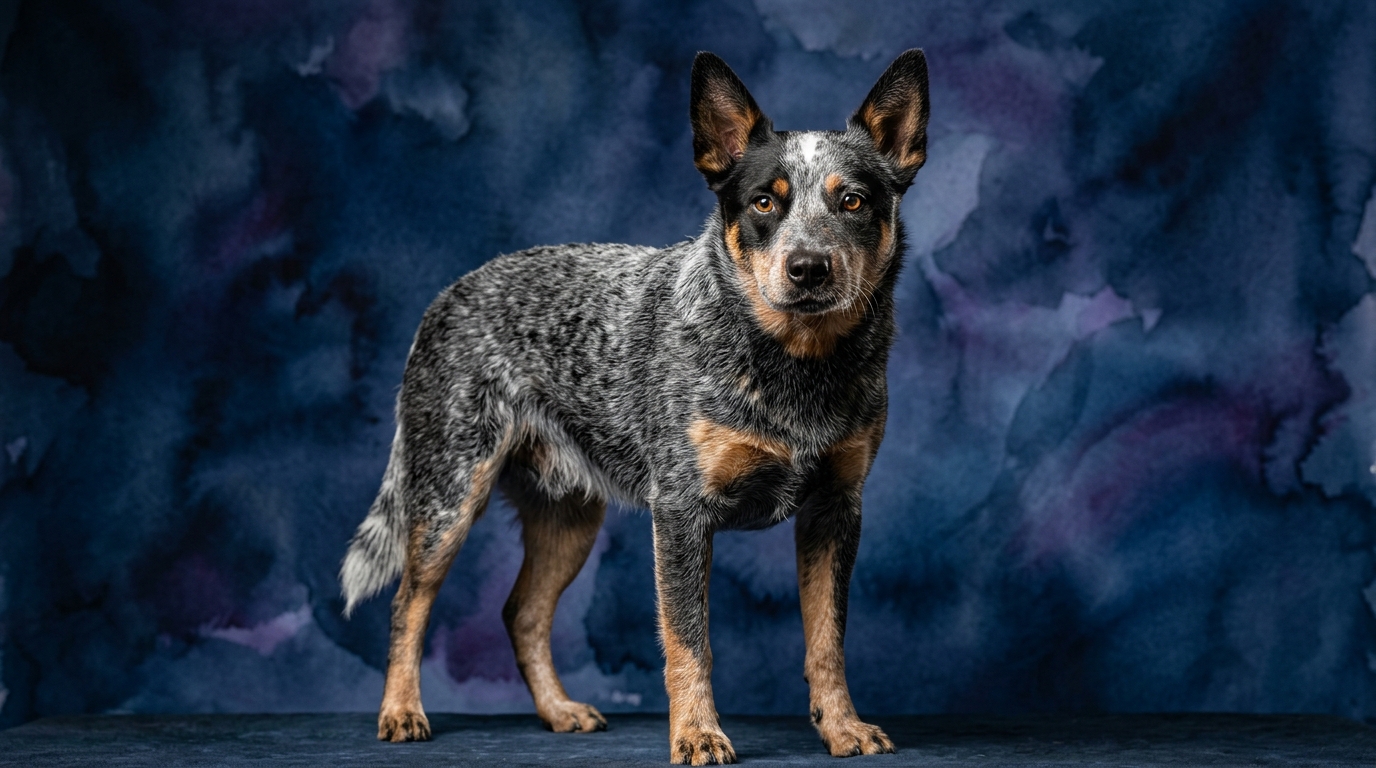

Side-by-Side IQ Profile: Australian Cattle Dog vs. Neapolitan Mastiff
The Cosmic Pet Pet IQ Lab offers a detailed glimpse into the cognitive architecture of our canine companions. For the Australian Cattle Dog, a Herding breed ranked #10 by Coren, its profile shows exceptional problem-solving (5/5), rapid training speed (5/5), a strong instinctive drive (5/5), and remarkable memory (5/5), balanced by a social intelligence score of 3/5, indicating an independent spirit.
In contrast, the Neapolitan Mastiff, a Working breed not Coren-ranked, presents a more moderate cognitive landscape. Its scores are consistent across the board: problem-solving (3/5), training speed (3/5), social intelligence (3/5), instinctive drive (3/5), and memory (3/5). This suggests a breed that approaches tasks with a more measured pace, relying on consistency and its inherent protective nature rather than quick, agile thinking.
Where the Australian Cattle Dog Wins Cognitively
The Australian Cattle Dog's cognitive strengths make it an unparalleled partner for complex tasks. Its superior problem-solving (5/5) allows it to quickly assess and navigate intricate scenarios, whether outmaneuvering livestock or mastering an agility course with precision. This isn't merely about speed; it's about the ability to adapt and innovate solutions on the fly, a hallmark of its herding lineage.
The breed's rapid training speed (5/5) means it absorbs new commands and routines with impressive efficiency, often requiring fewer repetitions than many other breeds. This cognitive agility translates into a vast repertoire of learned behaviors, making them highly versatile in various roles, from service work to competitive sports. Coupled with exceptional memory (5/5), they retain complex sequences and routines over extended periods, excelling in activities demanding long-term recall and consistency.
Furthermore, their intense instinctive drive (5/5) is a cognitive advantage, manifesting as an inherent desire to work, control, and engage with their environment. This mental engine makes them self-starters, often seeking out challenges and demonstrating initiative without constant human prompting, a clear win for owners seeking a proactive and mentally robust companion.
Where the Neapolitan Mastiff Wins Cognitively
While the Neapolitan Mastiff's cognitive profile may not showcase the same rapid-fire brilliance as the Australian Cattle Dog, its strengths lie in a different kind of intelligence, one perfectly suited to its guardian role. Its deliberate approach to problem-solving (3/5) can be an asset, fostering a calm assessment of situations rather than a hasty reaction. This measured processing allows for considered decisions, crucial for a dog whose primary function is protective vigilance.
Their social intelligence (3/5), though not overtly effusive, translates into a profound and discerning understanding of their family's dynamics and a nuanced ability to differentiate between welcomed individuals and potential threats. This cognitive strength enables them to form deep, steadfast bonds while maintaining a reserved demeanor towards strangers, making them highly reliable and judicious guardians.
The Neapolitan Mastiff's instinctive drive (3/5) is channeled into a focused, unwavering protective presence. This cognitive advantage is rooted in their steady territorial awareness and imposing demeanor, which doesn't necessitate complex manipulation but rather a consistent, authoritative discernment. Their memory (3/5) supports this by recalling who belongs and who doesn't, reinforcing their role as a discerning sentinel. These attributes collectively create a cognitive profile that promotes steadfast loyalty and a calm, imposing demeanor, essential for their historical role as estate guardians.
Which is Easier to Train and Why
Based on their cognitive profiles, the Australian Cattle Dog is significantly easier to train. Their 5/5 training speed means they grasp new concepts almost immediately, responding enthusiastically to positive reinforcement and quickly associating commands with actions. Their 5/5 problem-solving ability further aids this, as they often try to understand the 'why' behind a task, leading to proactive and engaged participation. Their high instinctive drive means they actively seek to work and engage, making them eager learners.
The Neapolitan Mastiff, with a 3/5 training speed, requires more patience and consistency. They need more repetitions to solidify learning and may not generalize learned behaviors to new situations as readily as an ACD. Training must be clear, consistent, and reward-based, focusing on building trust and motivation rather than expecting rapid comprehension. Behavioral differences are notable: an ACD often anticipates cues and seeks to perform, whereas a Neapolitan Mastiff might take a more considered approach, sometimes requiring more compelling motivation or a clearer, step-by-step instruction before complying. Their 3/5 problem-solving means they might not independently 'figure out' what you want, necessitating more direct guidance.
Which Suits Active Owners vs. Relaxed Owners
For active owners, the Australian Cattle Dog is an ideal match. Their 5/5 problem-solving, 5/5 training speed, and 5/5 instinctive drive demand constant mental and physical engagement. An owner who enjoys activities like herding, agility, flyball, or advanced obedience will find the ACD a willing, capable, and enthusiastic partner. Their profound cognitive needs mean they can become bored and potentially destructive without sufficient challenges and outlets for their mental energy.
Conversely, the Neapolitan Mastiff is generally better suited for more relaxed owners. While still requiring exercise and mental stimulation, their consistent 3/5 scores across cognitive dimensions mean they are less prone to anxiety or destructive behaviors from under-stimulation in the same way an ACD might be. A relaxed owner who appreciates a calm, watchful companion for quiet companionship and enjoys shorter, deliberate walks will find the Neapolitan Mastiff a more compatible fit. Their cognitive demands are centered more on companionship, territorial awareness, and a steady presence than on complex daily tasks or high-octane activities.
The Verdict
Choose the Australian Cattle Dog if you seek a dynamic, engaged partner for advanced training, competitive dog sports, or a working role, and are prepared to meet their profound cognitive and physical needs daily.
Choose the Neapolitan Mastiff if you value a steadfast, protective companion with a calm presence, appreciating their deliberate nature and requiring a dog whose cognitive demands align with a more relaxed, yet consistent, lifestyle.
🧠 Find Your Pet's IQ Score
Our Pet IQ Lab assessment covers 25+ tests across 5 cognitive dimensions — personalized to your breed.
Take the Full IQ Test →Frequently Asked Questions
Is the Australian Cattle Dog too clever for a novice owner?
Their exceptional cognitive abilities and high drive can be challenging for a novice owner. They require consistent training, early socialization, and significant mental stimulation to prevent boredom and undesirable behaviors, making them better suited for experienced individuals who can channel their abilities productively.
Do Neapolitan Mastiffs require extensive socialization given their protective instincts?
Yes, early and consistent socialization is crucial for Neapolitan Mastiffs. While their social intelligence helps them discern threats, proper exposure to various people, places, and sounds from a young age helps them develop into confident, well-adjusted adults who can differentiate between normal situations and actual dangers, ensuring they are protective without being overly reactive.
How does a Neapolitan Mastiff's memory (3/5) affect daily life compared to an Australian Cattle Dog's (5/5)?
A Neapolitan Mastiff's memory is sufficient for daily routines and recognizing family members, but they might take longer to solidify complex commands or recall specific past events compared to an Australian Cattle Dog. This means training needs more repetition and consistency, and they might not learn from single adverse experiences as quickly, requiring more structured reinforcement.