Side-by-Side Cognitive Profiles
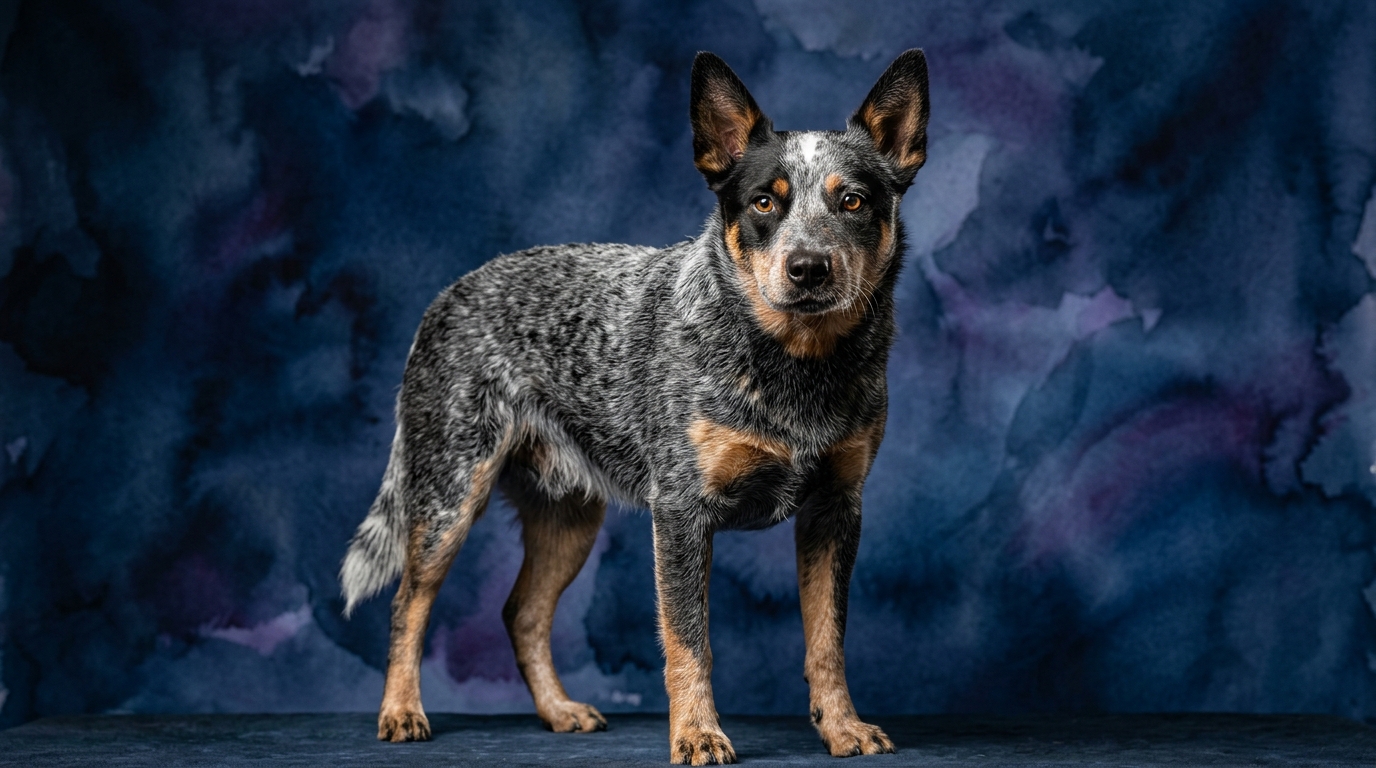
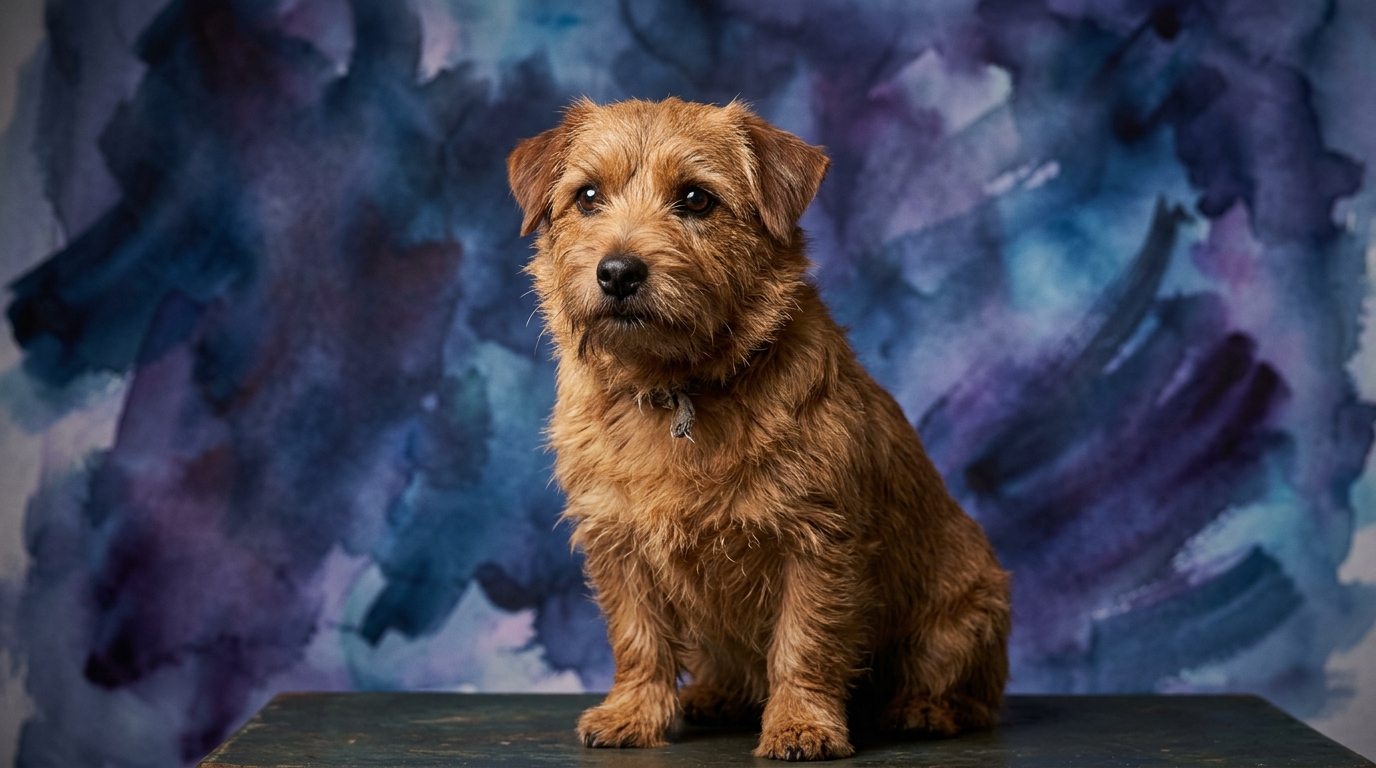
At The Cosmic Pet Pet IQ Lab, we evaluate canine intelligence across five key dimensions, revealing the distinct mental architectures of different breeds. For the Australian Cattle Dog (ACD), ranked #10 by Coren, and the Norfolk Terrier (NT), unranked, these profiles paint a clear picture of their innate capabilities and tendencies.
The Australian Cattle Dog's profile showcases a formidable intellect forged by demanding herding roles. Their Problem Solving is rated 5/5, indicating an exceptional ability to independently analyze and resolve complex situations. Training Speed also scores 5/5, signifying rapid acquisition of new commands and routines. Social Intelligence is 3/5, suggesting a reserved but capable understanding of social cues, particularly within their immediate pack. Instinctive Drive is a powerful 5/5, reflecting their intense herding impulse, and Memory is an outstanding 5/5, allowing for long-term retention of intricate information and experiences.
The Norfolk Terrier presents a balanced, yet distinct, cognitive profile. Their Problem Solving ability is rated 3/5, indicating an average capacity to tackle new challenges, often relying on persistence. Training Speed is also 3/5, meaning they learn at a moderate pace, requiring consistent reinforcement. Social Intelligence matches the ACD at 3/5, suggesting a generally adaptable social demeanor, though expressed differently. Their Instinctive Drive is 3/5, reflecting a typical terrier zest for exploration and pursuit, but without the overwhelming intensity of a herding breed. Finally, Memory is 3/5, capable of retaining commands and routines with regular practice, but not to the same intricate degree as the ACD.
Where the Australian Cattle Dog Wins Cognitively
The Australian Cattle Dog's cognitive strengths distinctly outshine the Norfolk Terrier's in several critical areas, primarily driven by their demanding herding heritage. Their Problem Solving score of 5/5 against the Terrier's 3/5 highlights a profound difference in their capacity for independent thought and strategic action. An ACD can quickly assess a complex situation and formulate an efficient path to resolution, often without direct human instruction. This advanced cognitive mapping and predictive ability is a hallmark of their working lineage. Furthermore, their Training Speed, also at a perfect 5/5 compared to the Terrier's 3/5, means they acquire new skills and commands with remarkable alacrity, mastering multi-step routines in a fraction of the time. Finally, the ACD's Memory at 5/5, versus the Terrier's 3/5, allows them to retain vast amounts of information, from complex task sequences to specific locations, over extended periods. This superior recall is crucial for sustained performance in demanding environments.
Where the Norfolk Terrier Wins Cognitively
While the Australian Cattle Dog excels in raw processing power and extensive memory, the Norfolk Terrier's cognitive profile presents different advantages in specific contexts. Their average Social Intelligence (3/5), mirroring the ACD's, suggests a less intense social engagement style. Unlike the ACD, whose intense focus can translate into wariness around strangers, the Norfolk Terrier’s average social drive often manifests as a more generally outgoing and less guarded disposition. This makes them potentially quicker to accept new people into their immediate circle, suitable for households with frequent visitors without requiring the same careful introduction. Their Instinctive Drive, at 3/5, is also less overwhelming than the ACD's 5/5 herding compulsion. While they possess a terrier's zest for exploration, this drive is more manageable and less prone to redirecting onto inappropriate targets like nipping at heels. This moderate instinctive energy allows for simpler management of their daily activities, requiring less specialized outlets for their inherent drives.
Training Ease: Nature vs. Nurture
Evaluating ease of training involves understanding both cognitive capacity and inherent drives. The Australian Cattle Dog, with its 5/5 scores in Problem Solving, Training Speed, and Memory, is undeniably faster and more efficient at learning new commands and complex behaviors, requiring fewer repetitions. They thrive on mental challenge and structure, eager to engage in stimulating training. However, their equally strong Instinctive Drive (5/5) and average Social Intelligence (3/5) mean that while they learn rapidly, managing their powerful herding instincts and potential wariness towards strangers requires dedicated effort. An ACD needs a 'job' – without it, their problem-solving skills might be applied to finding mischief. In contrast, the Norfolk Terrier, with its 3/5 across all cognitive dimensions, learns at a more average pace, requiring consistent repetition and patience. Their independent terrier spirit can lead to charming stubbornness. However, their Instinctive Drive (3/5) is less intense, meaning while they have a prey drive, it's generally easier to manage than the ACD's herding impulse. They are often more focused on their human family and less prone to intense, redirected drives. Therefore, while an ACD learns *faster*, a Norfolk Terrier might be *easier* for an average owner to integrate into a standard family life, provided the owner commits to consistent, positive reinforcement.
Matching Breeds to Lifestyles: Active vs. Relaxed Owners
The choice between these breeds heavily depends on an owner's lifestyle. An Australian Cattle Dog is unequivocally suited for active owners. Their exceptional instinctive drive (5/5) demands significant physical exertion and intense mental stimulation daily. These dogs are partners for hiking, running, dog sports, and complex obedience. They thrive when given a 'job,' whether managing livestock or competing in trials. A relaxed owner, unable to provide several hours of structured activity, will likely find an ACD becomes restless, potentially developing undesirable behaviors. Their need for purpose means they are not content to simply be a couch companion. The Norfolk Terrier, conversely, is a better fit for owners seeking a more balanced activity level, leaning towards relaxed but still engaged. While energetic and enjoying walks and playtime, their instinctive drive (3/5) is less demanding. They appreciate regular outings and mental engagement through training or games, but lack the relentless drive of an ACD. A Norfolk Terrier is generally content with a good daily walk, garden exploration, and plenty of interactive family time, transitioning easily between activity and quiet companionship.
The Verdict
Choose the Australian Cattle Dog if you are an experienced, highly active owner seeking a dedicated canine partner for demanding sports, complex training, or genuine working roles, ready to channel their exceptional intellect and drive.
Opt for the Norfolk Terrier if you desire a cheerful, sturdy companion with a balanced energy level, suitable for regular walks and family interaction, willing to commit to consistent, patient training for their charming terrier spirit.
🧠 Find Your Pet's IQ Score
Our Pet IQ Lab assessment covers 25+ tests across 5 cognitive dimensions — personalized to your breed.
Take the Full IQ Test →Frequently Asked Questions
Are Australian Cattle Dogs good family pets despite their high drive?
Yes, with proper socialization, training, and sufficient mental and physical outlets, Australian Cattle Dogs can be loyal and protective family members. However, their herding instincts mean they might try to 'manage' children or other pets, requiring supervision and consistent redirection to ensure harmonious interactions.
Do Norfolk Terriers bark a lot?
Norfolk Terriers can be vocal, often using their bark to alert their owners to new sights, sounds, or visitors, a remnant of their vermin-hunting days. Consistent training from a young age can help manage excessive barking, but they will likely always be a diligent little watchdog.
How much exercise does each breed need daily?
An Australian Cattle Dog requires extensive exercise, typically 1-2 hours of vigorous activity, coupled with significant mental stimulation daily, such as training sessions or puzzle work. A Norfolk Terrier needs moderate exercise, generally 30-60 minutes of walking or active play each day, along with regular opportunities for mental engagement.