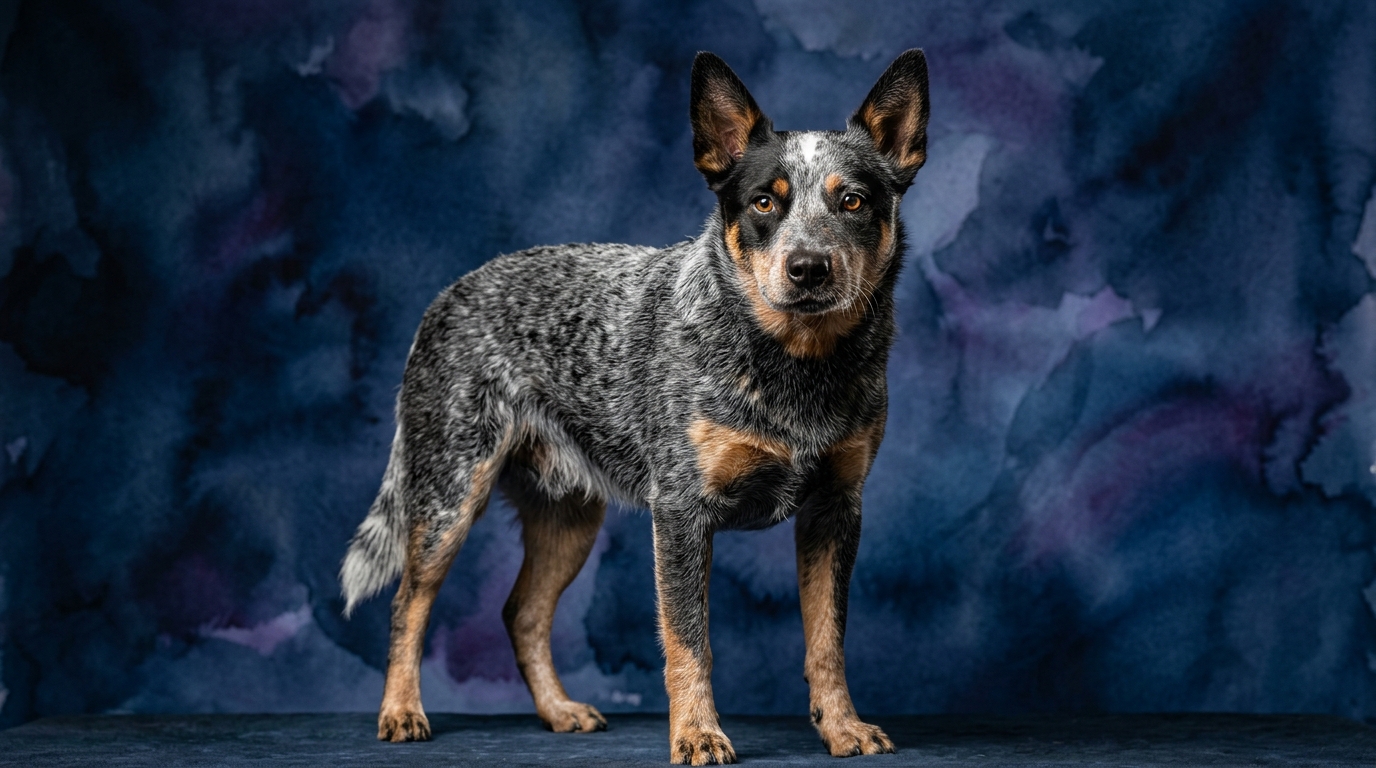
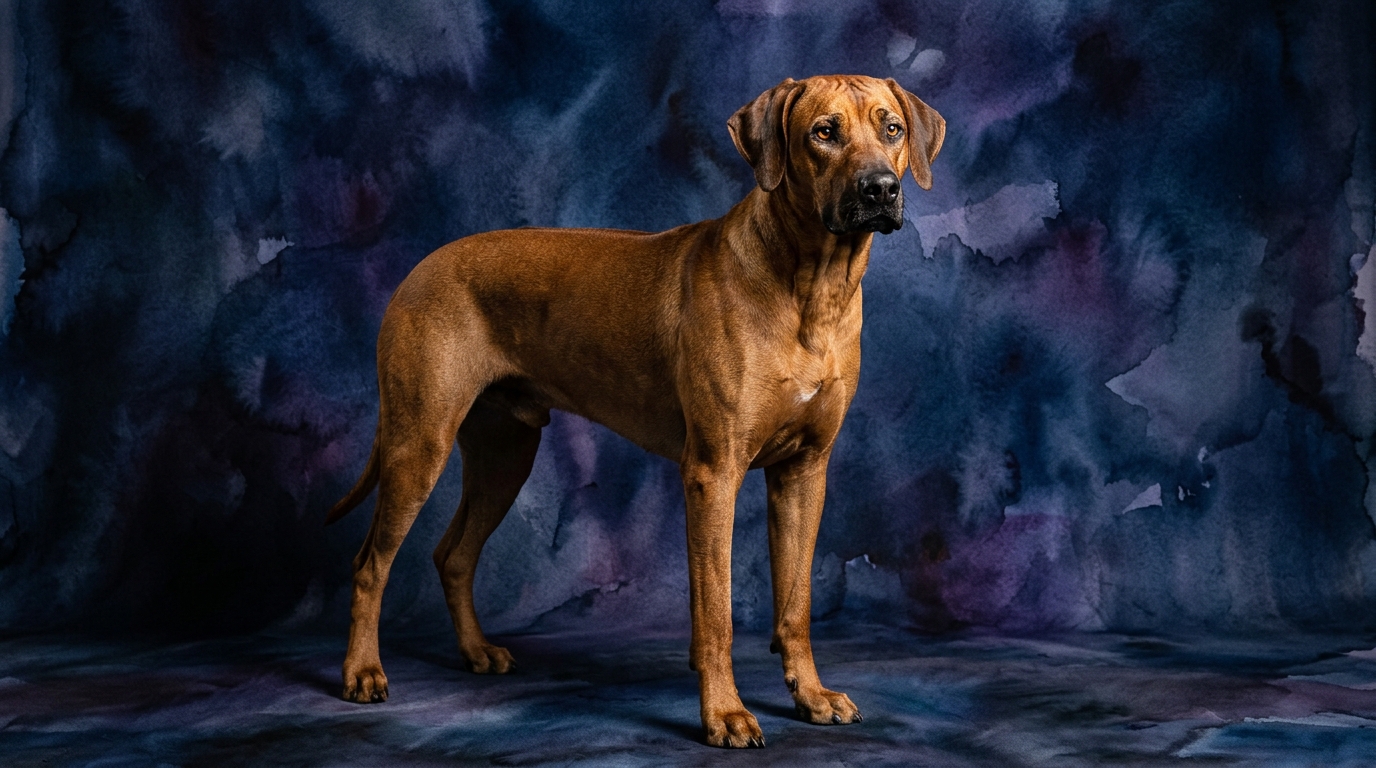
Side-by-Side IQ Profile: Herder vs. Hound
The Australian Cattle Dog (ACD), a Herding breed, consistently demonstrates exceptional cognitive capabilities, reflected in its Coren rank of #10. Their Problem Solving is rated 5/5, indicating a profound ability to independently navigate complex situations and strategize. Training Speed, also 5/5, signifies their remarkable aptitude for quickly grasping and executing new commands, making them highly responsive learners. Social Intelligence is 3/5, suggesting they understand and respond to social cues adequately, while their Instinctive Drive is a perfect 5/5, highlighting an intense, purposeful work ethic. Finally, their Memory is 5/5, ensuring they retain learned information and experiences with remarkable fidelity.
In contrast, the Rhodesian Ridgeback (RR), a Hound breed, presents a different cognitive profile, with a Coren rank of #52. Their Problem Solving is rated 3/5, meaning they can solve challenges but might take a more measured approach or require more guidance than the ACD. Training Speed is also 3/5, indicating they are capable learners but might need more repetition and patience to solidify commands. Social Intelligence matches the ACD at 3/5, showing an equivalent capacity for understanding social dynamics. Their Instinctive Drive is 3/5, reflecting a strong, but perhaps more independently focused, innate motivation. Lastly, their Memory is 3/5, suggesting they retain information well, though perhaps not with the same immediate recall as the ACD.
Where the Australian Cattle Dog Excels Cognitively
The Australian Cattle Dog's cognitive strengths are deeply rooted in its herding heritage, where quick thinking and precision are paramount. Their 5/5 Problem Solving score means they are adept at figuring out intricate tasks without constant human intervention, such as strategically moving livestock or navigating complex obstacle courses. This isn't just about following commands; it's about anticipating outcomes and making real-time adjustments, a skill honed by managing unpredictable animals in vast spaces. For an owner, this translates to a dog that can often find solutions to everyday challenges, sometimes in ways you didn't expect.
Furthermore, the ACD's 5/5 Training Speed and 5/5 Memory create a powerful learning combination. They absorb new commands and routines with impressive rapidity and retain them over extended periods. This cognitive efficiency allows them to master advanced obedience, agility, and even complex trick training with relative ease. Their instinctive drive, also 5/5, provides the underlying motivation to apply these cognitive skills relentlessly, making them highly focused and persistent in tasks. This combination of mental processing speed, retention, and intrinsic motivation positions the ACD as a remarkably capable student, always eager to engage their mind in meaningful work.
Where the Rhodesian Ridgeback Demonstrates Unique Cognitive Strengths
While the Rhodesian Ridgeback's scores are generally lower than the ACD's in task-oriented cognition, their unique strengths lie in areas crucial to their hound purpose. Their 3/5 Problem Solving, though moderate, is often expressed through independent decision-making when tracking or surveying their environment. This isn't about solving human-devised puzzles quickly, but rather about independently navigating complex terrains, interpreting scent trails, and making judgments about their surroundings with a self-assured confidence that is characteristic of a dog bred to work without constant human direction. They can solve problems related to their environment, albeit at their own pace.
The Ridgeback's 3/5 Instinctive Drive, while not as intense as a herder's, is a powerful motivator for exploration and scent work. This drive fuels their ability to focus intently on a trail, demonstrating a persistent, methodical approach to tasks that engage their senses. Their balanced 3/5 Social Intelligence means they are just as adept as the ACD at understanding social cues, allowing for harmonious interactions within a family. This blend of independent problem-solving, driven by a strong sense of purpose in their environment, and moderate social understanding, highlights a cognitive profile geared towards self-reliance and a nuanced engagement with their world, rather than constant human direction.
Which is Easier to Train and Why
Based on the Cosmic Pet Pet IQ Lab data, the Australian Cattle Dog is demonstrably easier to train, primarily due to its exceptional 5/5 Training Speed and 5/5 Memory. These scores indicate a dog that not only grasps new concepts quickly but also retains them reliably. ACDs typically exhibit a strong desire to work alongside their human partners, often watching for cues and anticipating commands, a behavioral trait stemming from their need for precise communication in herding. Their high instinctive drive (5/5) means they are highly motivated to engage in structured activities, making them eager participants in training sessions and quick to generalize learned behaviors to new situations.
The Rhodesian Ridgeback, with a 3/5 Training Speed and 3/5 Memory, requires a more patient and consistent approach to training. Ridgebacks possess an independent nature, a hallmark of many hound breeds, which means they are less inclined to offer constant attention and more prone to following their own instincts, particularly when a compelling scent is present. Their problem-solving (3/5) is often more deliberate, and they may test boundaries or require more repetition to fully internalize commands. Successful training with a Ridgeback often involves highly motivating rewards, positive reinforcement, and making training feel like a collaborative effort rather than a strict command-and-obey dynamic, accounting for their less immediate responsiveness.
Cognitive Fit: Active Owners vs. Relaxed Owners
For active owners seeking a true partner in demanding physical and mental pursuits, the Australian Cattle Dog is an ideal cognitive match. Their 5/5 Problem Solving, 5/5 Training Speed, and 5/5 Instinctive Drive mean they thrive on structured activities that challenge both their bodies and minds. These dogs excel in dog sports like agility, obedience, and herding trials, where their rapid learning, impressive memory, and intense focus are fully utilized. An ACD needs a owner who can provide consistent mental stimulation, engage them in complex tasks daily, and appreciate a dog that is always 'on' and ready for the next challenge, making them unsuitable for owners preferring a passive companion.
The Rhodesian Ridgeback suits active owners who appreciate a dog with periods of intense activity balanced with a more relaxed demeanor indoors, and who value independent thought. While they require substantial exercise to satisfy their 3/5 Instinctive Drive, their cognitive profile suggests they might not crave constant, structured mental tasks in the same way an ACD does. Their 3/5 Problem Solving and Memory mean they can certainly learn and participate in activities, but they might prefer exploring on a long hike, engaging in scent work, or enjoying independent play over intricate obedience routines every day. Owners who respect a dog's self-possessed nature and are comfortable with a companion that makes its own decisions during outdoor adventures will find the Ridgeback a rewarding fit.
The Verdict
Choose the Australian Cattle Dog if you are an experienced, highly active owner seeking a constant canine partner for advanced training, dog sports, and intricate mental challenges, appreciating their rapid learning and relentless drive.
Opt for the Rhodesian Ridgeback if you are an active owner who values an independent companion for outdoor adventures, appreciates a dog with a self-assured temperament, and is prepared for a patient, reward-based approach to training.
🧠 Find Your Pet's IQ Score
Our Pet IQ Lab assessment covers 25+ tests across 5 cognitive dimensions — personalized to your breed.
Take the Full IQ Test →Frequently Asked Questions
Do Australian Cattle Dogs require more mental stimulation than Rhodesian Ridgebacks?
Yes, Australian Cattle Dogs, with their 5/5 Problem Solving and Instinctive Drive, typically demand significantly more structured mental stimulation. They thrive on complex tasks, puzzles, and consistent training to prevent boredom and destructive behaviors, whereas Ridgebacks, while needing engagement, are often more content with independent exploration.
Can a Rhodesian Ridgeback excel in dog sports like agility or obedience?
Rhodesian Ridgebacks can certainly participate and enjoy dog sports, but their 3/5 Training Speed and more independent nature mean they might not achieve the same level of precision or speed as an Australian Cattle Dog. Success requires consistent, patient training, focusing on motivation and making the activities enjoyable to harness their physical capabilities.
Which breed is better for a first-time dog owner?
Neither breed is typically recommended for first-time dog owners due to their strong drives and specific needs. However, if forced to choose, the Rhodesian Ridgeback might be slightly more manageable for a novice willing to commit to extensive training, as the Australian Cattle Dog's intense mental demands and high-energy drive can quickly overwhelm an inexperienced owner.