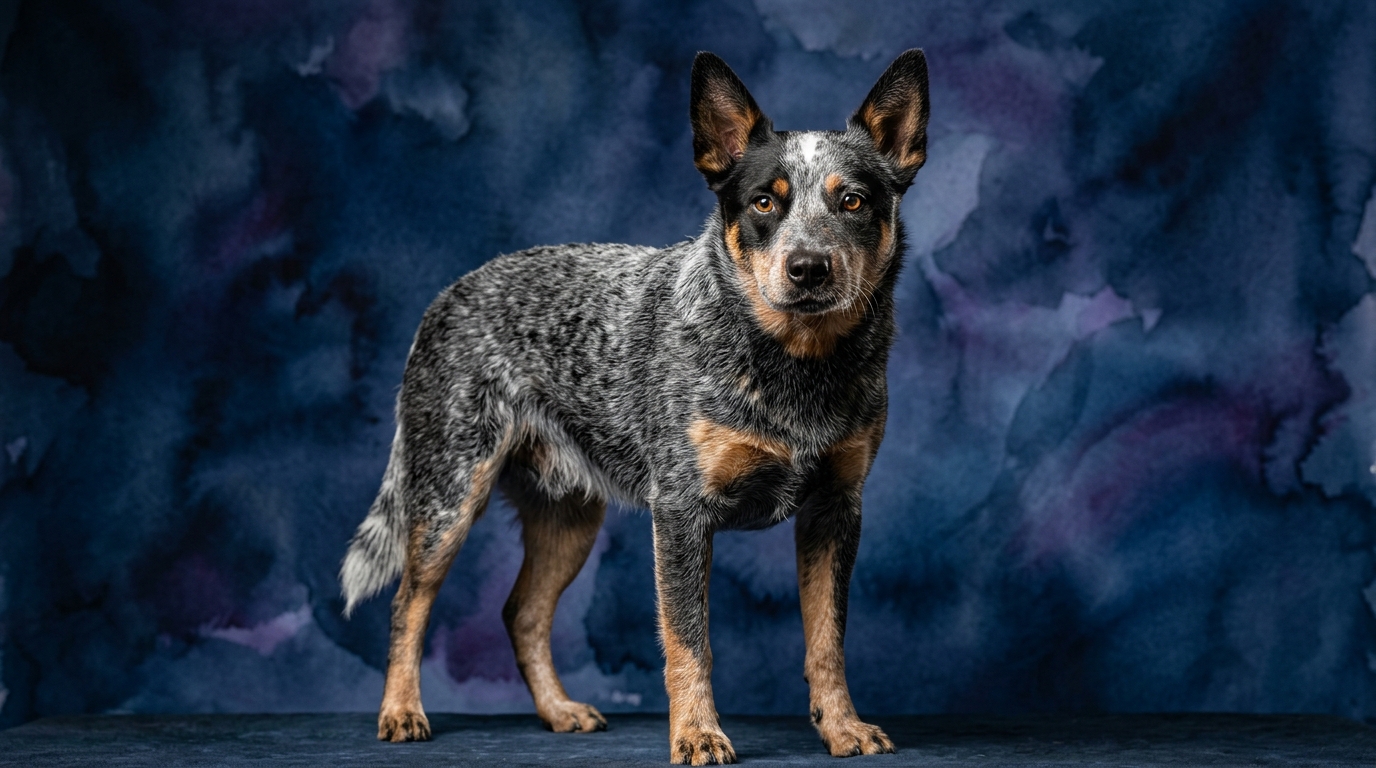

Side-by-Side IQ Profile: Unpacking Canine Cognition
The Cosmic Pet Pet IQ Lab categorizes canine intelligence across five key dimensions, offering a nuanced view beyond simple obedience. For the Australian Cattle Dog (ACD), a breed with a profound working heritage, these scores reflect their demanding original purpose. The Russian Toy, developed primarily for companionship, presents a different, yet equally valid, cognitive blueprint.
The Australian Cattle Dog is a highly ranked breed (Coren #10), demonstrating exceptional cognitive prowess in areas critical for herding. Their Problem Solving is rated 5/5, indicating an innate capacity to strategize and overcome complex challenges independently. Training Speed also scores 5/5, meaning they assimilate new commands and routines with remarkable efficiency. Their Social Intelligence is a competent 3/5, suggesting an understanding of human cues but often a more task-oriented or reserved demeanor. Instinctive Drive is a powerful 5/5, reflecting their profound herding impulses, while Memory is an excellent 5/5, ensuring long-term retention of learned behaviors and experiences.
In contrast, the Russian Toy, a breed not traditionally Coren-ranked, showcases a consistent and balanced cognitive profile aligned with its companion role. Their Problem Solving is rated 3/5, indicating an adequate ability to navigate their environment and solve simple puzzles without the intense strategic thinking of a working dog. Training Speed is also 3/5, meaning they learn at a moderate pace, responsive to consistent positive reinforcement. Social Intelligence is 3/5, reflecting their capacity for strong bonds and understanding emotional cues within their immediate family. Instinctive Drive is a moderate 3/5, manifesting as typical dog behaviors like chasing toys rather than strong working urges. Finally, Memory is 3/5, sufficient for retaining commands and routines essential for a well-adjusted household member.
Where the Australian Cattle Dog Excels Cognitively
The Australian Cattle Dog's cognitive strengths are undeniably rooted in their 5/5 scores across Problem Solving, Training Speed, Instinctive Drive, and Memory. Their ability to problem-solve is not merely about following commands; it's about independent thought and strategic action. This breed can assess dynamic situations, such as anticipating livestock movements or navigating complex obstacles, and devise effective solutions on the fly. In a home environment, this translates to figuring out sophisticated puzzle toys, opening latched gates, or even devising clever ways to get attention, demonstrating a proactive intelligence that constantly seeks engagement.
Complementing their problem-solving prowess is their exceptional Training Speed and Memory. An ACD can absorb a vast repertoire of commands with astonishing rapidity, often grasping new concepts in very few repetitions. This efficiency, combined with their 5/5 memory, means that once a behavior is learned, it is retained for the long term, making them reliable partners for advanced obedience, intricate dog sports like agility, or complex working roles. Their powerful instinctive drive, while demanding management, is also a cognitive asset, providing an enduring source of motivation and focus that fuels their engagement with tasks and challenges.
Where the Russian Toy Shines Cognitively
While the Russian Toy's cognitive profile appears more moderate compared to the ACD, their consistent 3/5 scores across all dimensions are precisely what makes them shine as adaptable and devoted companions. Their Social Intelligence, rated 3/5, means they are adept at forming deep, personal bonds with their chosen humans. They are attentive to emotional cues and capable of offering comfort and companionship without the demanding social intensity or broad, complex social needs of some other breeds. They thrive on intimate interaction and are often content to be a focused family member.
The Russian Toy's moderate Problem Solving and Instinctive Drive (both 3/5) are distinct advantages for a household pet. Their problem-solving is perfectly adequate for navigating the domestic environment, learning house rules, and engaging with simple, fun challenges without the need for constant, high-stakes mental work. Similarly, their instinctive drives are present but not overwhelming; they enjoy play, chasing toys, and exploring, but these urges are easily satisfied through daily interaction and don't manifest as intense, unmanageable working behaviors. This balance contributes to their reputation as a charming and relatively low-maintenance cognitive partner.
Ease of Training: A Tale of Two Temperaments
Training an Australian Cattle Dog is a fast-paced endeavor, given their 5/5 Training Speed. They grasp commands almost immediately and are eager to learn. However, their formidable 5/5 instinctive drive and problem-solving capabilities mean they require an experienced and consistent handler who can channel their intensity and independent thought. Without proper direction and sufficient mental stimulation, their drive can lead to undesirable behaviors, such as herding children's heels or destructive chewing out of boredom. They are quick learners, but their training journey demands a skilled leader capable of managing their potent will.
The Russian Toy, with a 3/5 Training Speed, will learn new commands at a more moderate pace, requiring patience and consistent positive reinforcement. Yet, this can be an advantage for many owners. Their lower instinctive drive and less intense cognitive demands often make them more agreeable and less prone to 'outsmarting' their human. While they might take more repetitions to master a command, once learned, their less forceful inherent drives mean they are less likely to deviate from expected behavior. Their training is often a gentler, more gradual process, making them an approachable option for novice dog owners who appreciate a steady, rewarding learning curve.
Lifestyle Match: Active Adventurer vs. Relaxed Companion
The Australian Cattle Dog is unequivocally suited for active owners who can provide substantial mental and physical outlets. Their 5/5 problem-solving and instinctive drive mean they require a 'job' or an equivalent level of engagement. They excel in dog sports like agility, flyball, or herding trials, and thrive on long hikes, extensive interactive play, or even farm work. An ACD without sufficient stimulation will likely become bored, potentially destructive, or develop behavioral issues stemming from unchanneled energy and an underutilized cognitive capacity. They need a partner who values intense activity and purposeful engagement.
Conversely, the Russian Toy is an ideal companion for owners seeking a more relaxed lifestyle. Their moderate 3/5 scores across all cognitive dimensions mean they are content with shorter walks, indoor games, and plenty of cuddle time. They are highly adaptable to apartment living, provided they receive regular attention, gentle play, and opportunities for moderate exploration. Their cognitive needs are met through consistent interaction with their family, basic training, and a comfortable, stimulating home environment. They offer devoted companionship without the intense demands of a high-drive working breed.
The Verdict
Select an Australian Cattle Dog if you are an experienced, active owner seeking a highly engaged partner for demanding activities, dog sports, or a working role, capable of providing consistent mental and physical stimulation for a dog that thrives on purpose.
Opt for a Russian Toy if you desire a charming, adaptable companion for a quieter lifestyle, valuing close indoor companionship, moderate activity, and a dog whose cognitive needs are met through gentle interaction and basic training.
🧠 Find Your Pet's IQ Score
Our Pet IQ Lab assessment covers 25+ tests across 5 cognitive dimensions — personalized to your breed.
Take the Full IQ Test →Frequently Asked Questions
Do Russian Toys require a lot of mental stimulation?
Russian Toys have a moderate need for mental stimulation, rated 3/5 in problem-solving and instinctive drive. They enjoy learning new tricks, puzzle toys, and interactive play with their owners, but they don't demand the intense 'work' or complex challenges that a working breed like the Australian Cattle Dog requires. Their cognitive needs are generally satisfied through consistent positive reinforcement training and engaging daily interactions within the home.
Can an Australian Cattle Dog adapt to apartment living?
An Australian Cattle Dog's 5/5 instinctive drive and problem-solving necessitate substantial mental and physical outlets, making apartment living challenging without significant commitment. They can adapt if their owners provide multiple hours of vigorous exercise daily, extensive training sessions, and engaging dog sports to channel their energy and cognitive abilities. Without these provisions, their high demands can lead to frustration and destructive behaviors in a confined space.
How do their social intelligence scores (3/5 for both) differ in manifestation?
While both breeds score 3/5 in social intelligence, its manifestation varies. The Australian Cattle Dog's social intelligence is often directed towards understanding its handler's commands and cues for task completion, sometimes appearing reserved with strangers as they prioritize their work or primary human. The Russian Toy's 3/5 social intelligence focuses on deep, intimate bonds with its immediate family, often being affectionate and attuned to their emotions, but potentially shy or wary of unfamiliar people or situations.