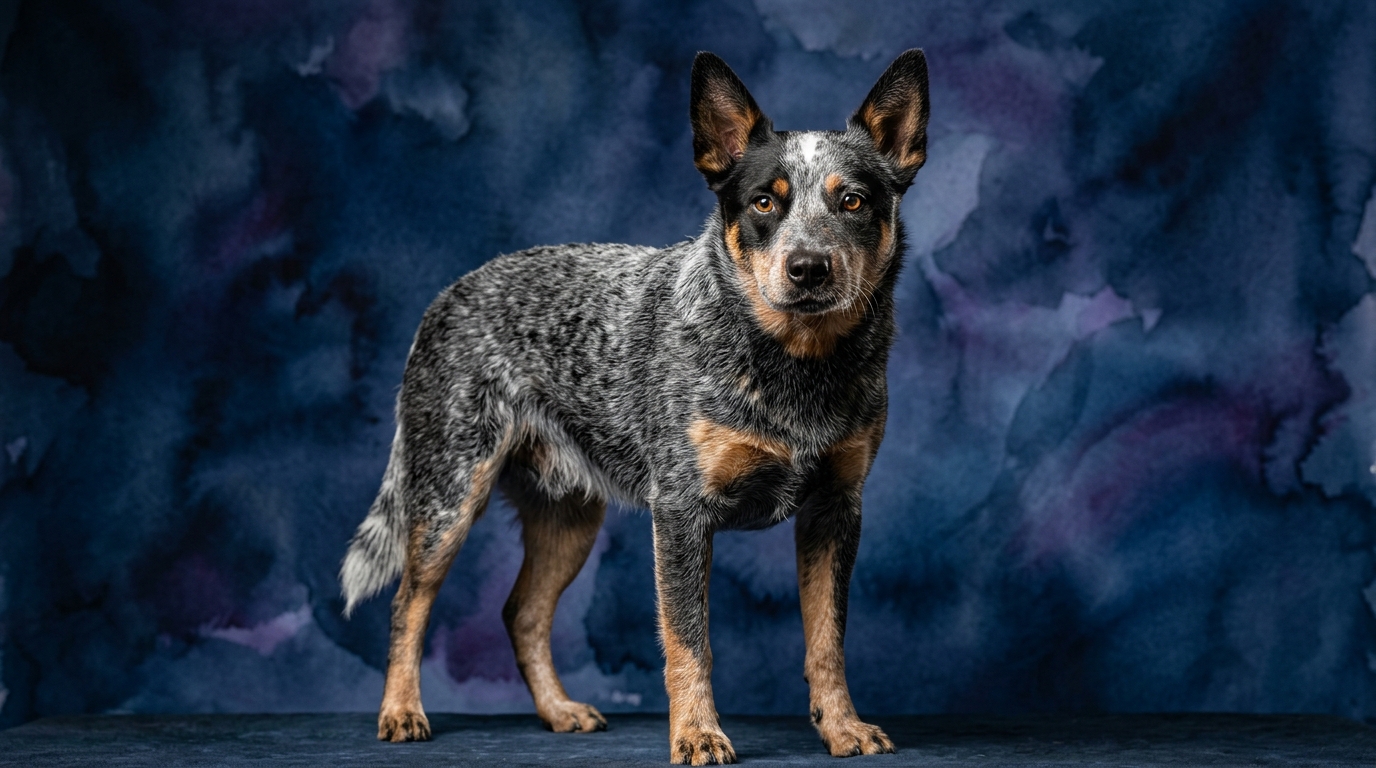
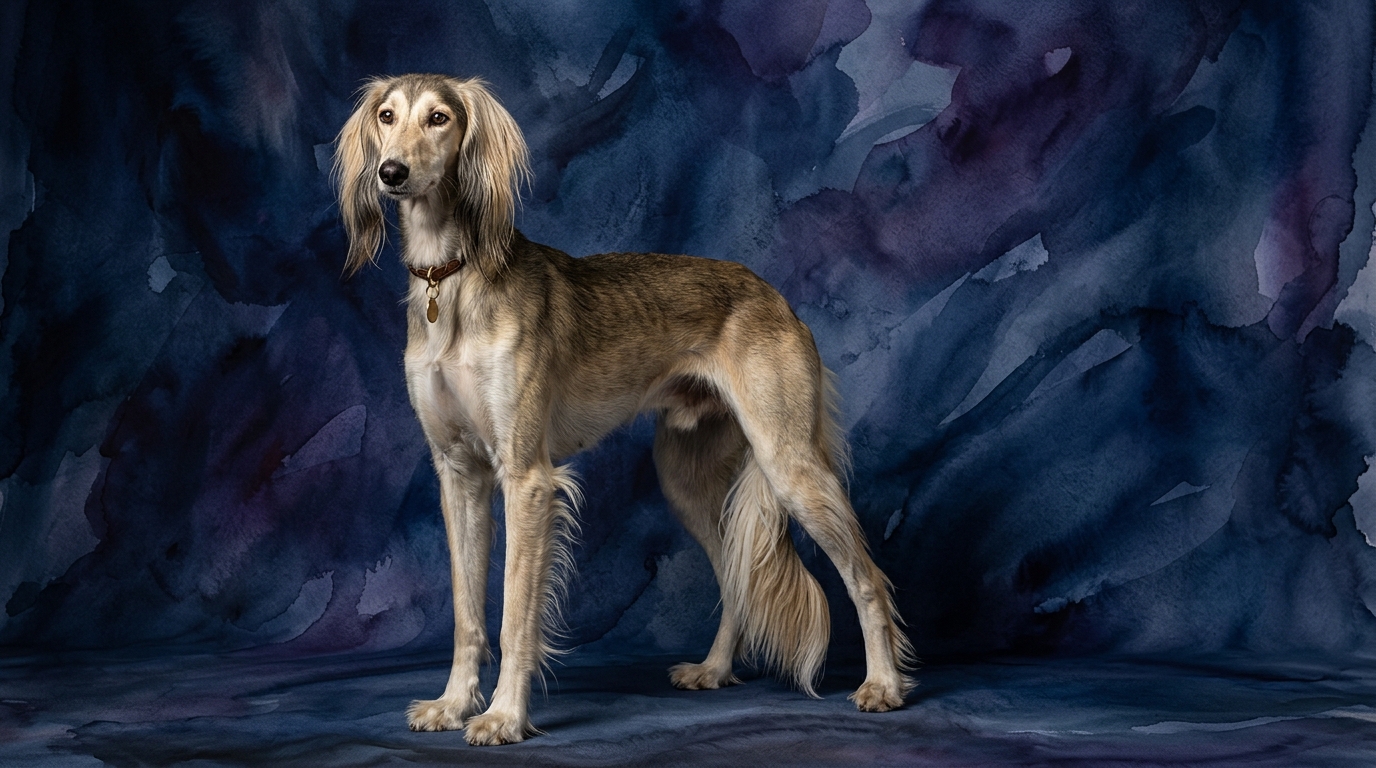
Side-by-Side IQ Profile: Australian Cattle Dog vs. Saluki
The Cosmic Pet Pet IQ Lab employs a five-dimensional framework to evaluate canine intelligence, offering a granular view beyond simple labels. For the Australian Cattle Dog (ACD), a Herding breed, its cognitive scores are notably elevated across most metrics. It scores 5/5 for Problem Solving, indicating an exceptional capacity to figure out new challenges and adapt strategies independently. Its Training Speed is also 5/5, meaning it learns commands and routines with remarkable rapidity, requiring few repetitions. Social Intelligence for the ACD is 3/5, suggesting strong bonds within its immediate pack but often a reserved demeanor with strangers, while interpreting social cues effectively. With an Instinctive Drive of 5/5, this breed possesses an intense, innate desire to work, chase, and control, often manifesting as herding or guarding behaviors. Finally, its Memory is 5/5, allowing it to retain information, commands, and experiences over long periods, making complex training cumulative.
In contrast, the Saluki, a Hound breed, presents a more moderate and evenly distributed cognitive profile. It scores 3/5 for Problem Solving, indicating it's capable of solving straightforward problems but less inclined to innovate or persist with abstract puzzles. Its Training Speed is also 3/5, meaning it learns at a moderate pace, requiring consistent and patient repetition for mastery. Social Intelligence for the Saluki is 3/5, much like the ACD, but this often reflects an independent nature where it engages with its family on its own terms, discerning human moods but valuing personal space. Its Instinctive Drive is 3/5, exhibiting a strong prey drive for visual targets, but generally lacking the incessant need for a 'job' or constant mental stimulation beyond this specific focus. Lastly, the Saluki's Memory is 3/5, retaining essential information and routines but perhaps not recalling intricate details or past events with the same precision or longevity as a breed with higher scores.
Where the Australian Cattle Dog Wins Cognitively
The Australian Cattle Dog's cognitive strengths are starkly evident in its top-tier scores across problem-solving, training speed, instinctive drive, and memory. An ACD excels at independent problem-solving, capable of assessing a situation like a gate left ajar or a flock needing redirection, and devising a solution without direct human instruction. Their 5/5 training speed means they grasp new commands, intricate sequences, and behavioral expectations almost instantly, making them prime candidates for advanced obedience, agility, or complex working roles. Coupled with a 5/5 memory, an ACD builds upon past lessons, retaining vast repertoires of cues and experiences, which allows for sophisticated, cumulative training that rarely needs reteaching. Their 5/5 instinctive drive means they possess an inherent, unwavering motivation to engage with tasks, whether it’s herding livestock, retrieving objects, or mastering a new trick, making them highly self-starting and persistent in their endeavors. This combination results in a dog that is not only quick to learn but also driven to apply its learning, constantly seeking mental engagement and purpose.
Where the Saluki Wins Cognitively
While the Saluki's cognitive profile emphasizes a different set of strengths compared to the ACD, its specific blend of traits can be a distinct 'win' for certain owners and lifestyles. The Saluki's moderate instinctive drive (3/5), while still strong in its specific prey pursuit, means it generally does not possess the same relentless need for a 'job' or the constant mental output that a 5/5 drive breed might demand. This can translate into a more relaxed home companion once its exercise needs are met, less prone to inventing its own (potentially destructive) mental challenges if not constantly stimulated. Its 3/5 problem-solving and training speed, while not excelling in complex innovation, allows for a straightforward learning process that isn't burdened by a dog constantly trying to outsmart the system or over-analyze tasks. This can be less mentally taxing for an owner who appreciates a clear, consistent training approach rather than a constant intellectual battle. Furthermore, its 3/5 social intelligence, combined with its independent nature, means a Saluki forms deep, loyal bonds without being overly clingy or demanding constant attention, offering a dignified and self-sufficient companionship that many owners cherish. This cognitive makeup fosters a partnership built on mutual respect and understanding, rather than constant direction and engagement.
Which is Easier to Train and Why
The Australian Cattle Dog is unequivocally easier to train, primarily due to its exceptional training speed (5/5), problem-solving ability (5/5), and memory (5/5). An ACD can learn new commands in just a few repetitions, often anticipating expectations and making connections rapidly. For example, teaching an ACD to 'stay' or 'heel' might take minutes, and they will reliably perform it even after a long break. Their high problem-solving capacity means they actively try to understand what is being asked and adapt their behavior to achieve the desired outcome. This contrasts sharply with the Saluki's moderate training speed (3/5) and problem-solving (3/5), which necessitate more patience, consistency, and repetition. A Saluki might learn 'stay' but requires more frequent practice to solidify the command and might not generalize it to new environments as quickly. While both breeds respond well to positive reinforcement, the ACD’s cognitive make-up allows for faster progress, more complex command chains, and a greater willingness to engage in structured learning, making the training process feel more fluid and rewarding for an owner seeking a highly biddable companion.
Which Suits Active Owners vs. Relaxed Owners
The Australian Cattle Dog is an ideal match for active owners who thrive on constant engagement and outdoor pursuits. Its 5/5 instinctive drive and problem-solving skills mean it requires substantial physical exercise paired with rigorous mental challenges daily. Owners who enjoy dog sports like agility, obedience, herding, or even long, challenging hikes and runs will find the ACD to be an eager and tireless partner. A less active owner would quickly find an ACD bored, potentially leading to destructive behaviors or excessive barking as the dog seeks to fulfill its profound need for purpose. The Saluki, conversely, can suit a somewhat more relaxed owner, provided its specific exercise needs are met. While possessing a strong prey drive (3/5 instinctive drive), it typically manifests as bursts of intense running rather than continuous, grinding work. Owners who appreciate a dog that enjoys a good sprint in a secure area or a long, brisk walk, but is then content to lounge gracefully indoors, might find the Saluki a better fit. Its moderate social intelligence and lower demand for constant mental work mean it can be a calmer presence in the home, valuing its comfort and independence once its physical requirements are satisfied.
The Verdict
If you seek a highly biddable, intensely driven, and cognitively agile partner for demanding activities, complex training, and a life filled with purpose, the Australian Cattle Dog is an exceptional choice.
If you value an independent, graceful, and moderately trainable companion that enjoys bursts of intense exercise followed by serene relaxation, and offers a more self-sufficient yet devoted presence, the Saluki will be a rewarding addition.
🧠 Find Your Pet's IQ Score
Our Pet IQ Lab assessment covers 25+ tests across 5 cognitive dimensions — personalized to your breed.
Take the Full IQ Test →Frequently Asked Questions
Is the Australian Cattle Dog harder to live with due to its high drive?
An Australian Cattle Dog's intense 5/5 instinctive drive and need for mental engagement mean it can indeed be challenging if not adequately stimulated. Without a 'job' or consistent activity, this drive can manifest as unwanted behaviors like excessive herding of people, nipping, or destructive tendencies born of boredom. However, for owners prepared to meet these needs, they are incredibly rewarding and well-adjusted companions.
Do Salukis need a lot of exercise despite their lower drive score?
While a Saluki's 3/5 instinctive drive is not as constant as a working breed, they still require significant exercise, primarily in the form of fast, open running. Their heritage as sighthounds means they need opportunities to sprint and stretch their powerful bodies, ideally in a securely fenced area. After these intense bursts, they are typically content to relax indoors.
How does 'social intelligence' differ between these two breeds, given they both score 3/5?
Despite the same 3/5 score, their social intelligence manifests differently. The Australian Cattle Dog’s 3/5 often means a strong bond with its immediate family but a reserved, sometimes suspicious, demeanor towards strangers, driven by protective instincts. The Saluki’s 3/5 tends to reflect an independent nature; they are affectionate with their chosen people but often aloof or indifferent to strangers, valuing their personal space and communicating affection on their own terms rather than demanding constant interaction.