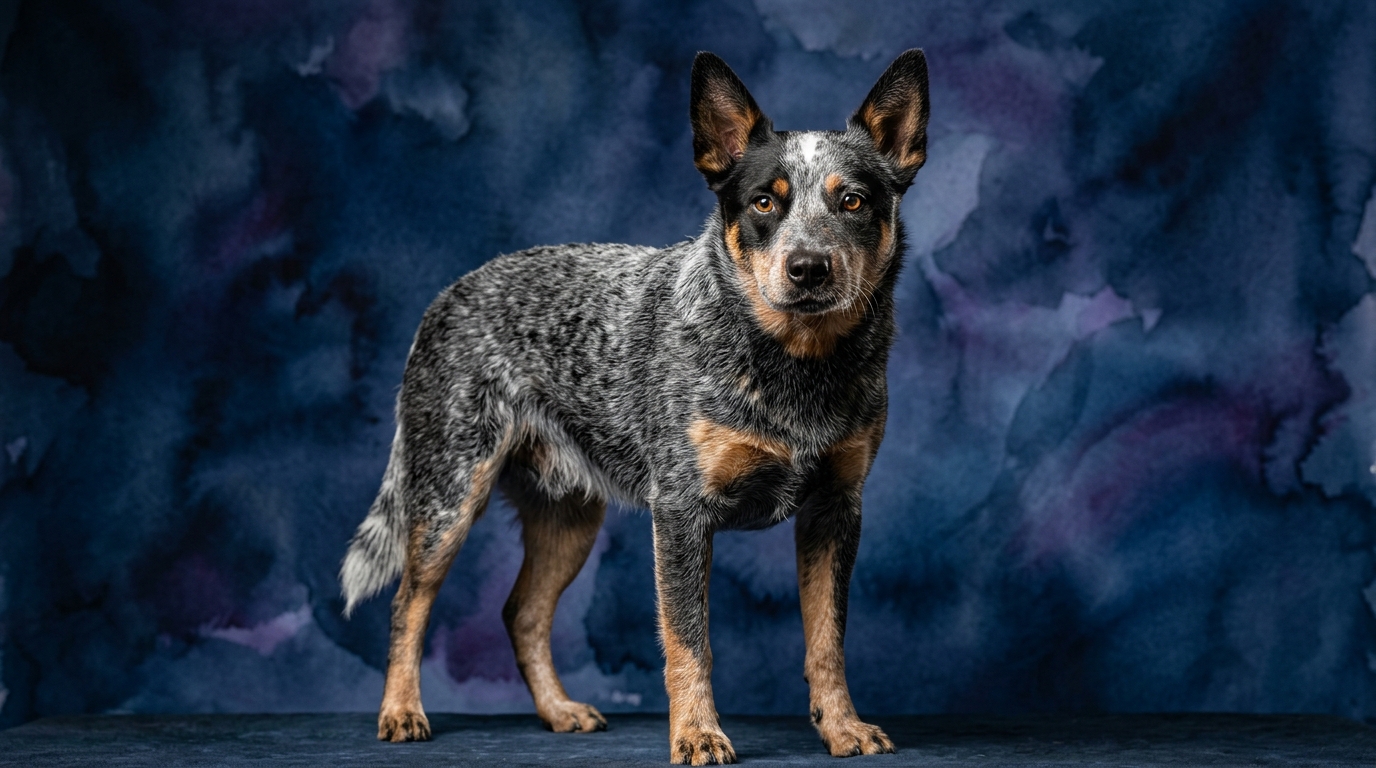
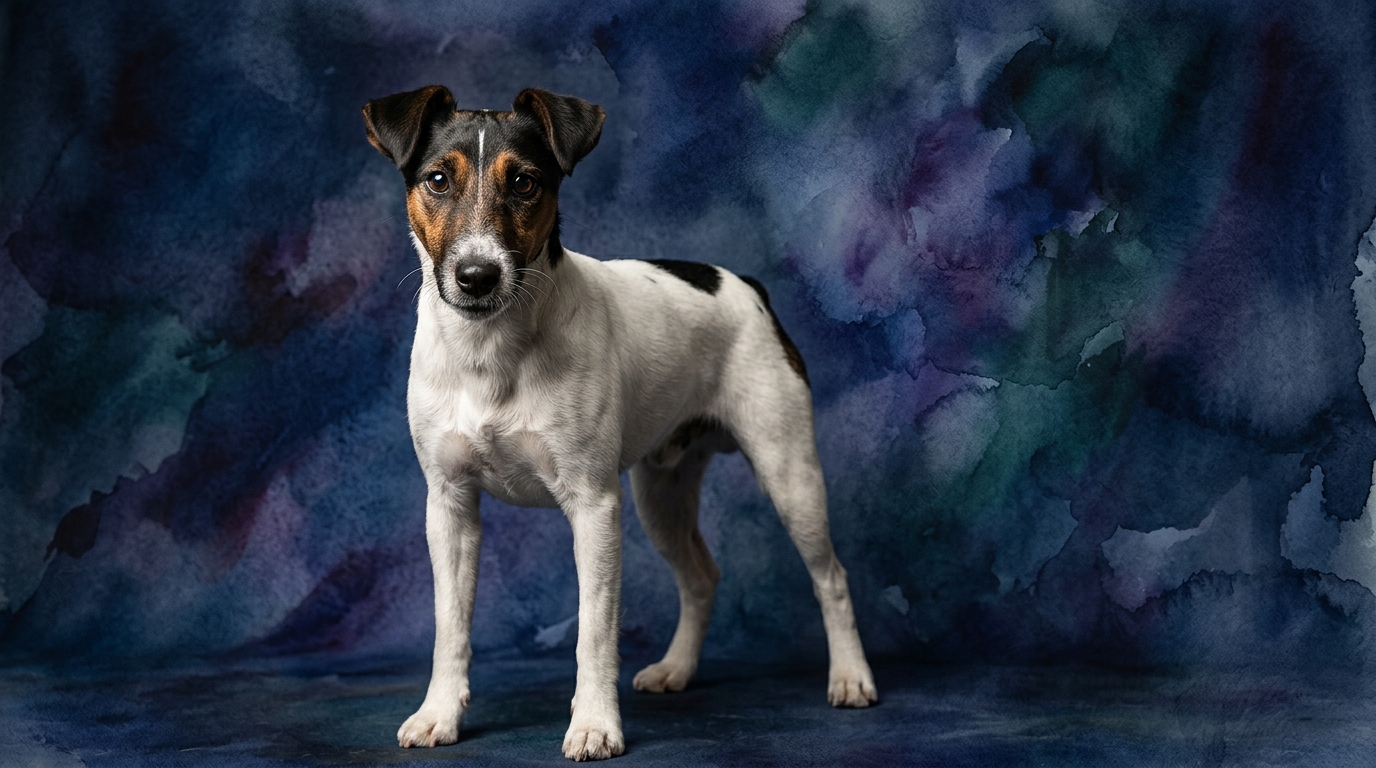
Side-by-Side Cognitive Profiles
The Cosmic Pet Pet IQ Lab provides a unique framework for evaluating canine intelligence across five key dimensions. For the Australian Cattle Dog, a Herding breed, its cognitive scores reflect its demanding working heritage: Problem Solving (5/5), Training Speed (5/5), Social Intelligence (3/5), Instinctive Drive (5/5), and Memory (5/5). This breed also holds a Coren rank of #10, indicating its exceptional capacity for learning and obedience.
In contrast, the Smooth Fox Terrier, a Terrier breed, presents a different cognitive blueprint with consistent scores across the board: Problem Solving (3/5), Training Speed (3/5), Social Intelligence (3/5), Instinctive Drive (3/5), and Memory (3/5). This breed is not Coren-ranked, suggesting its intelligence, while competent, does not align with the same metrics of working obedience as a top-ranked breed.
Specifically, the Australian Cattle Dog’s Problem Solving at 5/5 highlights its ability to devise complex, multi-step strategies for livestock management and adapting to changing conditions. Its Training Speed (5/5) means rapid absorption of new commands, while its Memory (5/5) allows retention of vast information. Its Instinctive Drive (5/5) is a powerful force for focus and determination. Social Intelligence (3/5) indicates it interprets human signals efficiently but may prioritize task execution over constant appeasement.
For the Smooth Fox Terrier, Problem Solving (3/5) reflects competence in persistent navigation of physical obstacles to reach a goal, with solutions that are direct rather than complex. Training Speed (3/5) requires consistent engagement to solidify learning. Social Intelligence (3/5) shows an understanding of routines but their independent spirit may prioritize their own interests. Instinctive Drive (3/5) centers on hunting and pursuit, providing determined focus on specific tasks, and Memory (3/5) is functional for retaining learned behaviors and routines.
Where the Australian Cattle Dog Excels Cognitively
The Australian Cattle Dog’s cognitive strengths are evident in its superior scores across problem-solving, training speed, instinctive drive, and memory, reinforced by its Coren rank of #10. This breed demonstrates an advanced capacity for working intelligence. For instance, an Australian Cattle Dog can quickly learn and execute intricate multi-step commands, such as gathering and moving livestock through specific gates, adapting its strategy if an animal deviates. Their exceptional memory allows them to retain these complex sequences and routes, recalling them accurately even after long periods. This breed’s powerful instinctive drive, coupled with its problem-solving prowess, enables it to anticipate and manipulate the movements of livestock, demonstrating a forward-thinking cognitive process rather than just reactive responses.
The mental agility of an Australian Cattle Dog allows it to thrive in demanding roles where quick, independent thought and the recall of vast amounts of information under pressure are paramount. They process complex data efficiently, making them adept at tasks requiring continuous analysis and strategic adjustments. This cognitive architecture makes them unparalleled in environments that demand both physical exertion and profound mental engagement.
Where the Smooth Fox Terrier Shines Cognitively
While the Smooth Fox Terrier's cognitive profile might appear less 'complex' on paper, its consistent 3/5 scores highlight a different, yet equally effective, type of intelligence tailored to its original purpose. This breed excels in focused, persistent problem-solving, particularly when it involves independent action and overcoming physical challenges. For example, a Smooth Fox Terrier might not devise a multi-layered strategy to herd livestock, but it will relentlessly pursue a scent trail through dense undergrowth, navigating obstacles with determined ingenuity to locate its quarry.
Their social intelligence, while not geared towards intricate human-canine collaboration in the same way a herding dog's might be, allows them to operate effectively as independent hunters, making their own decisions based on immediate sensory input. This independence is a cognitive advantage in scenarios requiring self-reliance and unwavering focus on a specific, often physical, task without constant human direction. Their memory, while not 5/5, is more than sufficient for recalling effective hunting techniques or the locations of interesting smells, demonstrating a practical and tenacious form of cognitive application.
Training Dynamics: ACD vs. Smooth Fox Terrier
The distinction in training ease between these two breeds is significant, largely due to their differing cognitive profiles. The Australian Cattle Dog, with its 5/5 training speed and memory, typically demonstrates a rapid uptake of new commands and an eagerness to engage, especially when the training involves mental stimulation and a clear purpose. Their high instinctive drive (5/5) means they thrive on having a job, making them highly responsive to task-oriented training. They quickly generalize learned behaviors to new environments and remember extensive command repertoires, exhibiting a strong desire for collaboration and purpose.
In contrast, the Smooth Fox Terrier, scoring 3/5 in training speed and memory, requires a more patient and persistent approach. Their independent nature and instinctive drive (3/5), though present, are less about collaborative work and more about focused self-direction. This can manifest as a tendency to get distracted by environmental stimuli or to prioritize their own immediate interests over human directives. Training a Smooth Fox Terrier often necessitates making sessions highly engaging, short, and varied to maintain their attention, using positive reinforcement to overcome their inherent terrier tenacity and independence. While both are trainable, the ACD’s cognitive architecture is designed for quicker, complex learning, whereas the SFT requires a more nuanced approach to harness its independent spirit.
Matching Canine Cognition to Owner Lifestyles
The cognitive and instinctive differences between the Australian Cattle Dog and the Smooth Fox Terrier profoundly influence their suitability for various owner lifestyles. The Australian Cattle Dog, with its intense instinctive drive (5/5), high problem-solving capacity (5/5), and need for mental stimulation, is undeniably suited for highly active owners. These dogs require consistent engagement in challenging activities like herding, agility, flyball, or advanced obedience to prevent boredom and destructive behaviors. Their cognitive need to 'work' means they are not content with simple walks; they need complex tasks that tap into their strategic thinking and boundless energy. A relaxed owner who cannot provide this level of physical and mental engagement would quickly find an Australian Cattle Dog becoming restless or inventing its own (often unwelcome) 'jobs.'
Conversely, while the Smooth Fox Terrier is also an active breed, its cognitive demands are different. Its 3/5 instinctive drive and problem-solving, coupled with its smaller size, mean it can thrive with active daily walks, vigorous play sessions, and opportunities for scent work or digging. While they benefit from mental challenges, their needs are generally less intense and less complex than an Australian Cattle Dog's. A moderately active owner enjoying consistent outdoor activity and providing engaging play and training would find a Smooth Fox Terrier a rewarding companion, whereas an Australian Cattle Dog might overwhelm them with its relentless cognitive demands.
The Verdict
When seeking a canine partner for complex, high-stakes tasks requiring rapid learning, strategic problem-solving, and exceptional memory, the Australian Cattle Dog is the clear choice.
For owners who appreciate an independent spirit, tenacious pursuit, and a more direct approach to problem-solving in a smaller, energetic package, the Smooth Fox Terrier offers a distinct and rewarding companionship.
🧠 Find Your Pet's IQ Score
Our Pet IQ Lab assessment covers 25+ tests across 5 cognitive dimensions — personalized to your breed.
Take the Full IQ Test →Frequently Asked Questions
Is an Australian Cattle Dog always easier to train than a Smooth Fox Terrier?
Generally, yes, due to the Australian Cattle Dog's 5/5 training speed and memory, which allows for quicker absorption of complex commands. The Smooth Fox Terrier, with a 3/5 training speed, requires more consistent, engaging, and patient methods, often needing to overcome its independent streak.
Do Smooth Fox Terriers ever show problem-solving skills comparable to an Australian Cattle Dog?
While a Smooth Fox Terrier's problem-solving (3/5) is less about complex strategy than an Australian Cattle Dog's (5/5), they excel at persistent, focused problem-solving related to their instincts, such as finding a way through an obstacle to reach a scent. Their solutions are often direct and determined.
How does social intelligence differ between these two breeds?
Both breeds score 3/5 in social intelligence, but this manifests differently. The Australian Cattle Dog's social intelligence is often geared towards understanding human cues for task execution, while the Smooth Fox Terrier's might involve understanding routines but also asserting its independent will when its instincts are engaged.