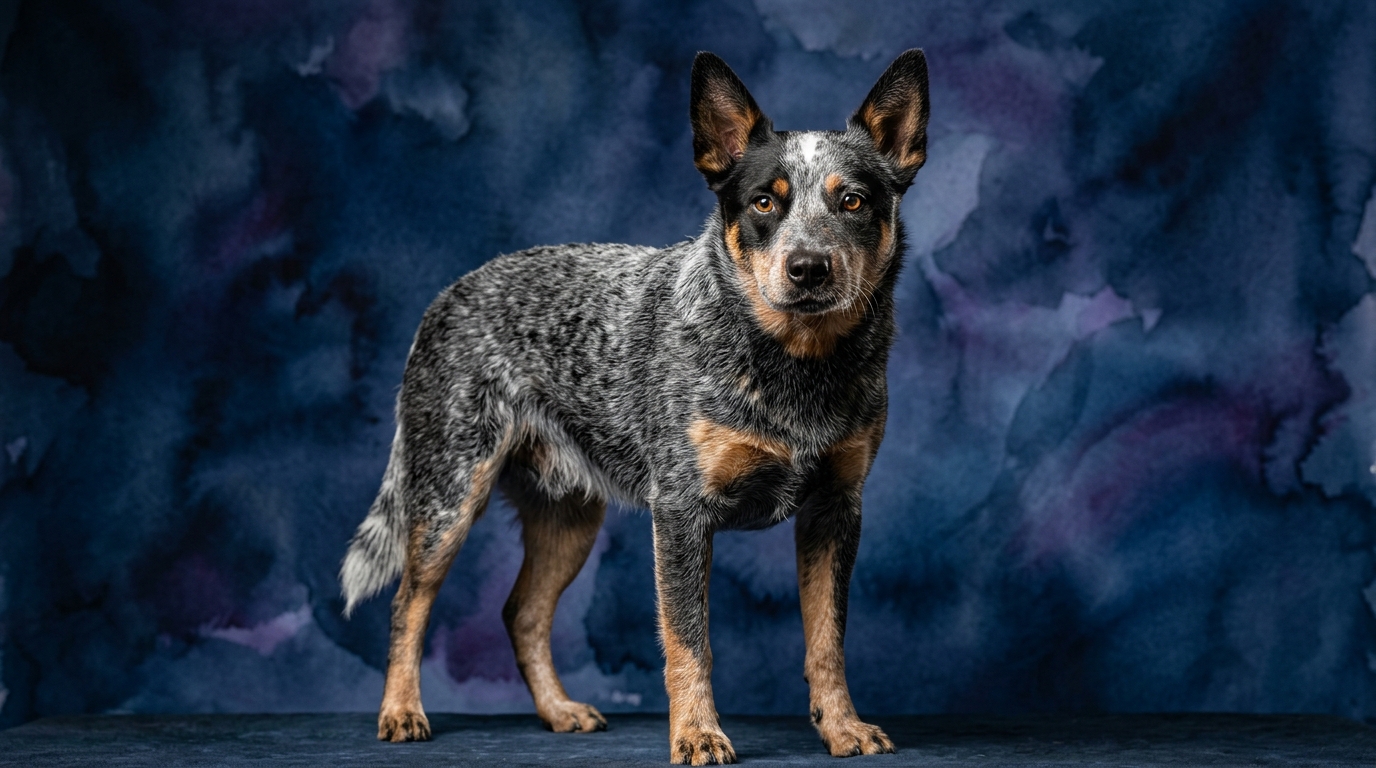
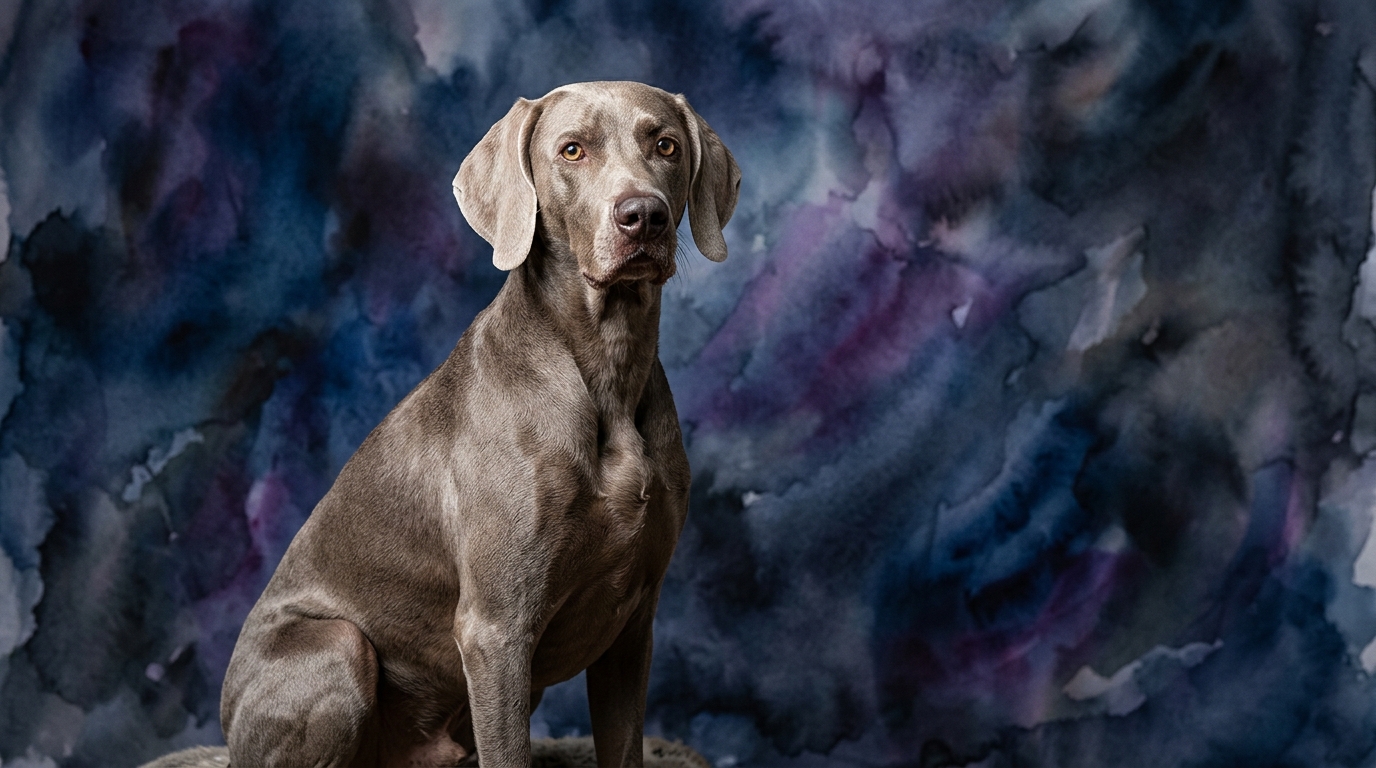
Side-by-Side IQ Profile: Australian Cattle Dog vs. Weimaraner
Our Cosmic Pet Pet IQ Lab data positions the Australian Cattle Dog (ACD) at Coren rank #10, highlighting a formidable cognitive makeup. They score an exceptional 5/5 in Problem Solving, indicating an advanced capacity to analyze situations and devise solutions, which is critical for their original herding tasks. Training Speed is also 5/5, reflecting rapid acquisition of new commands and routines, often needing minimal repetitions. Their Social Intelligence is 3/5, meaning they are competent in reading human cues but often prioritize task over nuanced social interaction. Instinctive Drive is a powerful 5/5, representing a profound, inherent urge to work, herd, and chase, demanding constant engagement. Finally, their Memory scores 5/5, signifying long-term retention of complex sequences, routes, and learned behaviors.
The Weimaraner, ranked #21 by Coren, presents a slightly different yet equally compelling cognitive blueprint. Their Problem Solving capability is rated 4/5, demonstrating a strong capacity for analytical thought, particularly effective in navigating complex hunting scenarios. Training Speed also stands at 4/5, indicating quick learning with consistent, positive reinforcement, though it may require slightly more repetition than a top-tier working breed. Where they notably differ is in Social Intelligence, scoring 4/5, showcasing an adeptness at understanding human emotions and intentions, fostering strong bonds and cooperative efforts. Their Instinctive Drive is a robust 5/5, manifesting as an intense prey drive and stamina for sustained fieldwork, characteristic of a gundog. Memory is rated 4/5, pointing to reliable recall of commands and experiences, though perhaps not at the same level of detail as the Australian Cattle Dog.
Where the Australian Cattle Dog Wins Cognitively
The Australian Cattle Dog's dominant cognitive edge lies in its unparalleled combination of problem-solving, training speed, and memory, all fueled by an intense instinctive drive. A 5/5 in problem-solving means an Australian Cattle Dog isn't just following commands; it's actively strategizing how to move a stubborn cow or outmaneuver a flock of sheep, often anticipating their movements and adapting on the fly. Their 5/5 training speed isn't just about quick obedience; it translates to rapidly grasping multi-step tasks, like navigating an intricate agility course with precision after minimal instruction or learning complex scent discrimination. Furthermore, their 5/5 memory ensures these intricate skills and solutions are retained for life, allowing them to build a vast repertoire of responses to diverse situations, making them incredibly adaptable in challenging environments. This cognitive profile means they excel at tasks demanding independent thought and enduring recall, far surpassing many other breeds in the ability to learn and apply intricate solutions without constant human intervention.
Where the Weimaraner Wins Cognitively
The Weimaraner's primary cognitive advantage shines in its superior social intelligence, scoring 4/5 compared to the Australian Cattle Dog's 3/5. This higher social aptitude means a Weimaraner is generally more attuned to human emotional states and subtle non-verbal cues. They often exhibit a greater desire for direct cooperative interaction, seeking to work *with* their owner in a more emotionally integrated way, which is vital for a gundog that needs to maintain constant communication and collaboration during a hunt. This enhanced social awareness translates into a more empathetic response to their human companions, often displaying a deeper understanding of social dynamics within a family unit. While both breeds are loyal, the Weimaraner's specific strength here fosters a more emotionally reciprocal partnership, making them exceptionally responsive to praise and connection, often seeking to please their human partner above all else.
Which is Easier to Train and Why
Based on The Cosmic Pet Pet IQ Lab data, the Australian Cattle Dog generally presents as the "easier" breed to train for complex, task-oriented behaviors, primarily due to its 5/5 scores in problem-solving, training speed, and memory. An ACD will typically grasp new commands and multi-stage sequences with fewer repetitions, often needing only a few exposures before solidifying the behavior. Their inherent drive to work and figure things out means they often *seek* to understand what's being asked, rather than merely complying. For instance, teaching an ACD a new agility obstacle or a complex herding pattern might involve less struggle with initial concept acquisition and more rapid mastery. In contrast, while the Weimaraner's 4/5 in training speed and memory is still strong, it suggests they might require a slightly more consistent and perhaps longer reinforcement schedule to achieve the same level of precision and retention. Weimaraners, with their higher social intelligence, thrive on positive, connection-based training that emphasizes their bond with the owner, whereas an ACD might be more motivated by the challenge of the task itself. Therefore, for an owner seeking rapid mastery of advanced obedience or intricate working tasks, the ACD's cognitive profile provides a more streamlined training experience.
Which Suits Active Owners vs. Relaxed Owners
Neither the Australian Cattle Dog nor the Weimaraner is suitable for truly relaxed owners, as both possess a 5/5 instinctive drive demanding significant daily engagement. However, their ideal "active owner" profiles differ. The Australian Cattle Dog, with its intense problem-solving and herding drive, thrives with owners who can provide structured work, complex mental puzzles, and rigorous physical activity that taps into their need to manage and control. They need a job, whether it's herding, advanced obedience, agility, or long, challenging hikes with purpose. An owner who enjoys teaching intricate behaviors and is prepared for a dog that constantly seeks mental stimulation will find a perfect match. The Weimaraner, while equally active with its powerful hunting drive, often prefers to channel that energy *with* its human companion. They excel with owners who enjoy sustained physical activities like running, hiking, or retrieving games, but also value a close, interactive partnership. Their higher social intelligence means they are more likely to be satisfied with energetic companionship and less independent problem-solving. So, active owners who want a relentless working partner will gravitate towards the ACD, while active owners who prefer an equally energetic but more socially integrated adventure companion will find the Weimaraner appealing.
The Verdict
Choose the Australian Cattle Dog if you are an experienced owner seeking a relentless, independent problem-solver for complex tasks like herding, advanced dog sports, or a demanding working role, and are prepared to meet their intense need for mental engagement.
Choose the Weimaraner if you desire an energetic, highly social companion for sustained physical activities like hunting or running, valuing a strong, cooperative bond and a dog that thrives on shared adventures, often preferring to work alongside you.
🧠 Find Your Pet's IQ Score
Our Pet IQ Lab assessment covers 25+ tests across 5 cognitive dimensions — personalized to your breed.
Take the Full IQ Test →Frequently Asked Questions
Do Australian Cattle Dogs get along well with other pets?
Australian Cattle Dogs, with a social intelligence of 3/5 and a strong herding drive, can be prone to "herding" other pets or children by nipping or nudging. Early and consistent socialization is crucial to ensure they learn appropriate interactions and boundaries within a multi-pet household, often requiring careful management.
Are Weimaraners good family dogs?
Weimaraners, with their 4/5 social intelligence, often form deep bonds with their families and can be wonderful companions, especially for active households. However, their high energy and strong prey drive mean they require extensive exercise and consistent training to ensure they integrate safely and happily into family life, particularly with young children.
Which breed sheds more?
Both breeds shed, but generally, the Weimaraner with its short, smooth coat sheds moderately year-round, often with fine, sparse hairs. The Australian Cattle Dog, possessing a dense double coat, tends to shed more heavily seasonally, particularly during spring and fall, requiring more intensive grooming during these periods.