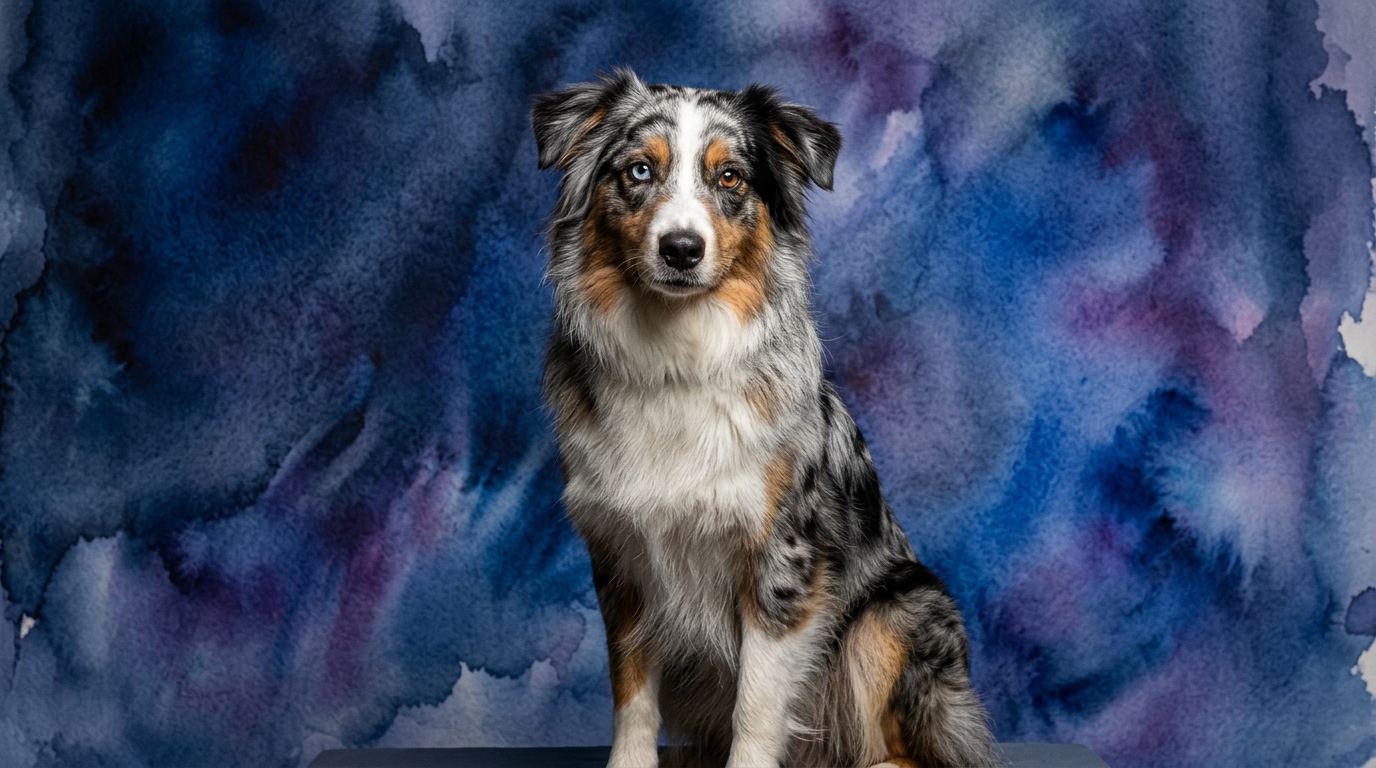

Side-by-Side IQ Profile: Australian Shepherd vs. Boxer
The Cosmic Pet Pet IQ Lab assesses canine intelligence across five key dimensions, revealing distinct mental blueprints for each breed. For the Australian Shepherd, their Problem Solving is rated 5/5, indicating an exceptional capacity to navigate complex scenarios and devise novel solutions. Their Training Speed also scores a perfect 5/5, reflecting a remarkable ability to grasp new commands and routines with minimal repetition. Social Intelligence stands at 4/5, showing strong discernment in relationships and an understanding of human directives, while their Instinctive Drive is 5/5, a powerful force fueling their herding focus and persistence. Finally, their Memory is rated 5/5, signifying an outstanding capacity for recall of intricate sequences and past interactions.
In contrast, the Boxer presents a different cognitive profile. Their Problem Solving is 3/5, suggesting they approach challenges with enthusiasm but may rely more on trial-and-error or human guidance rather than independent, multi-step strategizing. Training Speed is 3/5, meaning they learn at a moderate pace, often requiring more repetition and patience due to their playful nature. However, the Boxer truly shines in Social Intelligence, scoring 5/5, indicating deep empathy and an acute understanding of human emotions and intentions. Their Instinctive Drive is 4/5, manifesting as loyalty, protective vigilance, and a desire for companionship. Their Memory is 3/5, functional for routines and key people, but not as expansive for intricate, long-sequence tasks as some other breeds.
Where the Australian Shepherd Wins Cognitively
The Australian Shepherd's cognitive strengths are deeply rooted in its herding lineage, manifesting in superior capacities for independent thought and intricate task mastery. Their Problem Solving score of 5/5 isn't just about figuring out a puzzle toy; it reflects an ability to assess dynamic situations—like a scattered flock of sheep—and devise a strategy to bring order. This involves anticipating movement, understanding spatial relationships, and executing a multi-step plan, all without constant human direction. Paired with a Training Speed of 5/5, Aussies absorb complex commands and sequences with remarkable efficiency, often requiring fewer repetitions to solidify learning. This swift uptake is invaluable for advanced obedience, agility, or competitive herding, where precision and quick reactions are paramount. Furthermore, their perfect Memory (5/5) means they retain these intricate lessons over long periods, building a vast cognitive library of experiences and learned behaviors. This allows them to apply past solutions to new problems, demonstrating a sophisticated form of adaptive learning. Their high Instinctive Drive (5/5) isn't merely about energy; it’s a powerful internal compass that directs their focus and persistence towards goal-oriented activities, whether it’s moving livestock or mastering a complex agility course. This combination of cognitive traits makes the Australian Shepherd an exceptional candidate for roles demanding sustained mental engagement and independent decision-making.
Where the Boxer Wins Cognitively
The Boxer’s cognitive strengths lie profoundly in its social and emotional intelligence, making it an unparalleled family companion. While the Australian Shepherd excels in independent problem-solving, the Boxer's Social Intelligence (5/5) indicates a deep attunement to human emotional states and intentions. They are masters of reading subtle cues, understanding mood shifts, and providing comfort or playful distraction precisely when needed. This isn't just about being friendly; it's a sophisticated form of empathy that allows them to integrate seamlessly into a human household, often acting as a sensitive emotional anchor. Their Instinctive Drive (4/5) channels into loyalty and a protective vigilance over their family, rather than herding, showcasing a different kind of working intelligence focused on companionship and guardianship. Although their Problem Solving (3/5) and Training Speed (3/5) might suggest a more straightforward learning style compared to the Aussie, the Boxer's Coren rank of #48 among working breeds highlights their solid capacity for obedience and task learning when motivation is tied to social interaction and positive reinforcement. They thrive on collaborative tasks and derive immense satisfaction from pleasing their people. Their memory, while not photographic, is strong for beloved routines, people, and positive interactions, solidifying their bond-driven learning. The Boxer’s cognitive profile emphasizes connection, emotional understanding, and a joyful, engaged presence, making them exceptional at understanding the nuances of human relationships.
Which is Easier to Train and Why
When considering ease of training, the Australian Shepherd generally presents a more straightforward path for owners seeking rapid skill acquisition and advanced obedience. Their 5/5 Training Speed and Problem Solving scores mean they pick up new commands and complex routines with remarkable alacrity, often anticipating what’s asked of them. An Aussie thrives on mental challenges and possesses an innate desire to work and please, making them highly receptive to instruction. Their sustained focus, a direct result of their strong instinctive drive, allows them to concentrate on tasks for extended periods, minimizing distractions. Conversely, the Boxer, with a Training Speed of 3/5, requires more patience and repetition. While certainly capable of learning, their playful and sometimes boisterous nature means training sessions might need to be shorter, more engaging, and punctuated with fun to maintain their interest. They are easily distracted by exciting smells or sounds, and their delightful stubbornness can sometimes surface if they don't see the immediate point of an exercise. However, the Boxer's high Social Intelligence (5/5) means they respond exceptionally well to positive reinforcement rooted in praise and connection, making training effective when it's a shared, joyful activity rather than a rigid command structure. For an owner prioritizing efficiency and advanced skill development, the Australian Shepherd offers a smoother, faster training journey. For an owner who enjoys the process of building a strong bond through patient, interactive training, the Boxer will be a rewarding partner, albeit one that might take a little longer to master certain concepts.
Which Suits Active Owners vs. Relaxed Owners
For the highly active owner seeking a constant mental and physical partner, the Australian Shepherd is an ideal match. Their perfect 5/5 Problem Solving and Instinctive Drive scores demand outlets for their cognitive and physical energy. An Aussie isn't content with just a daily walk; they require engaging activities like agility, flyball, competitive obedience, or even mock herding to truly flourish. Their minds are constantly seeking new challenges, and without sufficient mental stimulation, they can become bored and potentially destructive. This breed thrives with owners who are committed to providing structured work, training, and ample outdoor adventures. In contrast, while the Boxer is undoubtedly an energetic breed, their needs are somewhat different, making them more suitable for active owners who also appreciate periods of relaxed companionship. With an Instinctive Drive of 4/5, Boxers need regular exercise to burn off steam – brisk walks, runs, or vigorous play sessions are essential. However, their high Social Intelligence (5/5) means they are equally content cuddling on the couch after a good workout, thoroughly enjoying their family's presence. They are less about sustained, independent work and more about interactive play and companionship. A Boxer would be a good fit for an owner who enjoys daily physical activity but also values a dog that can settle down easily indoors and is deeply involved in family life, rather than constantly seeking the next 'job.'
The Verdict
Choose an Australian Shepherd if you are an active individual or family prepared to provide consistent, high-level mental stimulation and structured training, valuing a dog that excels in problem-solving and learns complex tasks with exceptional speed and recall.
Choose a Boxer if you seek a deeply social, emotionally perceptive companion who thrives on human connection and interactive play, and you are willing to invest patient, positive training into a dog that values companionship above all else.
🧠 Find Your Pet's IQ Score
Our Pet IQ Lab assessment covers 25+ tests across 5 cognitive dimensions — personalized to your breed.
Take the Full IQ Test →Frequently Asked Questions
Does the Australian Shepherd's lack of a Coren rank mean it's not intelligent?
No, the Coren ranking primarily assesses obedience and working intelligence based on trainability; many breeds, including the Australian Shepherd, aren't included due to their specific herding roles and the ranking methodology. The Aussie's high scores in problem-solving and training speed indicate a very capable mind, just evaluated differently here.
Can a Boxer excel in dog sports like agility, despite its moderate training speed?
Absolutely. While they may take longer to master complex sequences than an Australian Shepherd, Boxers bring enthusiasm, strength, and a strong desire to please their handler to dog sports. Their social intelligence makes them highly responsive to encouragement, making agility a fun, bonding experience.
How does instinctive drive differ between these two breeds?
The Australian Shepherd's 5/5 instinctive drive is primarily focused on herding, manifesting as a strong urge to control movement and work independently on tasks. The Boxer's 4/5 instinctive drive is more geared towards companionship, protection, and interactive play within its human pack, demonstrating a different type of inherent motivation.