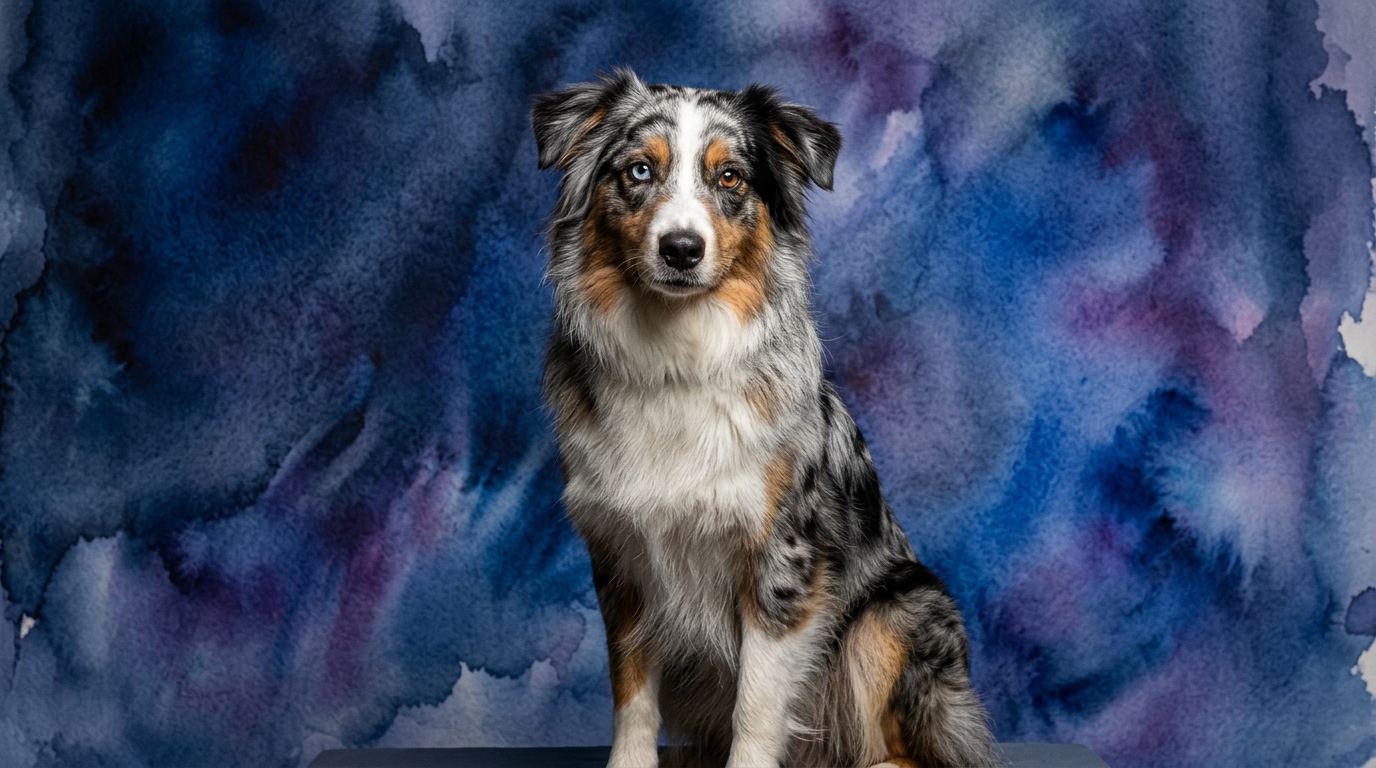

Side-by-Side IQ Profile: Australian Shepherd vs. Bull Terrier
The Australian Shepherd presents a formidable cognitive profile, scoring 5/5 in Problem Solving, reflecting a profound ability to analyze novel situations and devise effective, often independent, solutions. Their Training Speed also rates 5/5, showcasing an impressive aptitude for rapidly grasping new commands and complex sequences, a trait honed by generations of intricate herding work. With a 4/5 in Social Intelligence, they exhibit a keen awareness of human cues and group dynamics, essential for collaborative tasks. An Instinctive Drive of 5/5 underscores their innate desire to work and fulfill a purpose, often manifesting as a strong drive for structured activities. Finally, their Memory, rated 5/5, allows them to retain vast amounts of information, from complex command chains to spatial details over extended periods.
The Bull Terrier offers a distinct cognitive blueprint, with a Coren rank of #66. Their Problem Solving is rated 3/5, indicating they can navigate challenges but often rely on persistence or trial-and-error rather than immediate, elegant solutions. Training Speed also sits at 3/5; while capable, they typically require more repetition and specific motivation than a herding breed. A Social Intelligence of 3/5 suggests they form deep bonds but might be less broadly attuned to subtle human social cues or large group dynamics, often preferring a focused connection with their chosen people. Their Instinctive Drive, also 3/5, leans more towards terrier-typical pursuits like chasing or digging, which may not always align with human-directed tasks. Memory at 3/5 means they retain information adequately, but perhaps not with the same breadth or complexity as breeds bred for multi-faceted working roles.
Where the Australian Shepherd Excels Cognitively
The Australian Shepherd's cognitive strengths, deeply rooted in its herding heritage, manifest in distinct advantages. Their 5/5 Problem Solving allows them to excel at multi-step tasks like navigating agility courses, learning complex tricks, or strategically guiding livestock; it's about applying learned principles to novel scenarios. The 5/5 Training Speed means they absorb new commands rapidly, often needing only a few repetitions before mastery. This efficiency, coupled with a 5/5 Memory, enables them to recall a vast repertoire of commands, routines, and spatial information over extended periods, crucial for complex working roles. Their 4/5 Social Intelligence ensures high attunement to handler cues, fostering seamless collaboration.
Where the Bull Terrier Shines Cognitively
The Bull Terrier's cognitive profile emphasizes a different set of strengths, primarily their unique tenacity. Their 3/5 Problem Solving often manifests as robust persistence; they might not find the most elegant solution immediately, but they are unlikely to abandon a task they deem important, whether retrieving a favorite toy or accessing a forbidden treat. This sheer willpower and resilience can be a distinct cognitive advantage. Their 3/5 Social Intelligence, while not broadly encompassing, allows them to form incredibly deep, focused bonds with their immediate family, often displaying a nuanced understanding of their specific human's moods and preferences within that close circle. They demonstrate a robust independence of thought, engaging with their environment on their own terms rather than constantly seeking direction.
Training Dynamics: A Study in Contrasts
Training ease distinctly separates these two breeds. The Australian Shepherd, with its 5/5 Training Speed and 5/5 Instinctive Drive, is generally more straightforward. Their working heritage instills an innate desire to collaborate and please, viewing training as a fulfilling “job.” They rapidly connect cause and effect, quickly learning complex command sequences due to their excellent memory and problem-solving skills, responding enthusiastically to positive reinforcement. In contrast, the Bull Terrier, with 3/5 scores across the board, presents a different challenge. Their terrier independence means they often require more intrinsic motivation and patience; they might question commands or prioritize their own interests. Training a Bull Terrier demands making it highly engaging and rewarding, as repetition without fun can lead to disinterest. Their “instinctive drive” leans towards self-directed activities, needing careful channeling. Consistency, clear boundaries, and creativity are paramount.
Matching Canine Cognition to Owner Lifestyles
The Australian Shepherd is unequivocally suited for active owners meeting substantial mental and physical needs. Their 5/5 Instinctive Drive means they thrive on purpose, requiring consistent engagement through dog sports, advanced training, or daily vigorous activities. An owner providing structured mental challenges will find an Aussie a balanced companion; without adequate stimulation, their energy and cognitive strengths can manifest as boredom-driven behaviors. The Bull Terrier, while needing regular exercise, suits owners who are “active but discerning,” appreciating a dog with a strong personality and independent streak. They enjoy vigorous play and walks, but their independence means they may not constantly demand a job. They appreciate quality family time, whether active or relaxed. They suit owners prepared to provide structured exercise and consistent boundaries, understanding a Bull Terrier needs outlets for physical energy and mental engagement to prevent boredom, rather than a constantly busy schedule.
The Verdict
Choose an Australian Shepherd if you are an active, dedicated owner seeking a biddable, intelligent companion eager for collaborative work, advanced training, and consistent mental challenges.
Opt for a Bull Terrier if you appreciate a dog with an independent spirit, a tenacious personality, and a deep, focused bond with its immediate family, and are prepared to invest patience and creativity into their training journey.
🧠 Find Your Pet's IQ Score
Our Pet IQ Lab assessment covers 25+ tests across 5 cognitive dimensions — personalized to your breed.
Take the Full IQ Test →Frequently Asked Questions
Do Bull Terriers understand human emotions?
Bull Terriers, with a 3/5 social intelligence, can certainly understand human emotions, particularly within their close family circle. They are often very attuned to the moods of their primary caregivers and can offer comfort or react to distress, though perhaps not with the broad social awareness of a highly collaborative working breed.
Are Australian Shepherds good family dogs?
Yes, Australian Shepherds can be excellent family dogs, especially for active families willing to provide ample mental and physical stimulation. Their 4/5 social intelligence means they typically bond well with all family members and can be very protective, though their herding instincts might lead them to “herd” children if not properly channeled.
How much exercise does a Bull Terrier need daily?
A Bull Terrier generally requires a moderate amount of daily exercise, typically 30-60 minutes of vigorous activity like brisk walks, running, or playtime. Consistent physical activity is crucial to keep them physically healthy and mentally content, preventing boredom-related behaviors and channeling their natural energy.