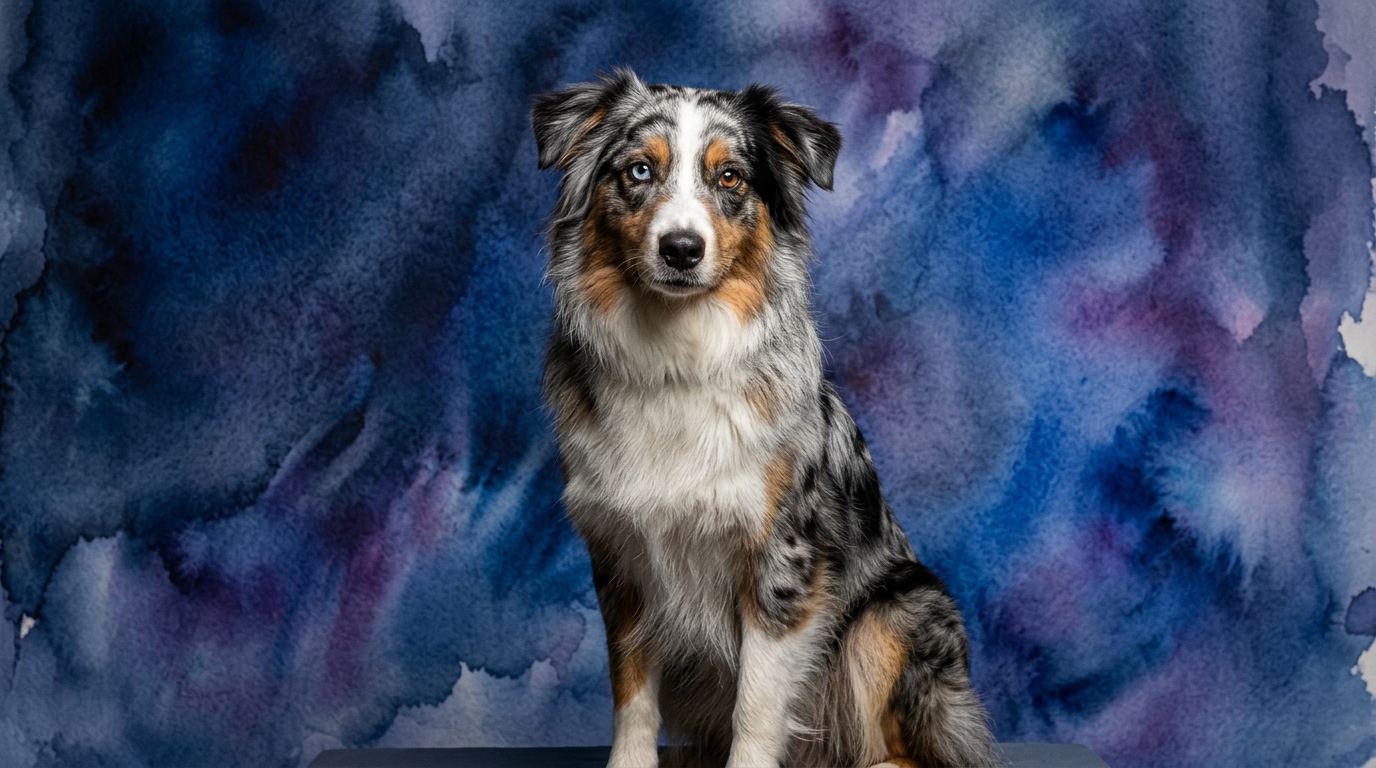

Side-by-Side IQ Profile: Australian Shepherd vs. Chinese Crested
The Cosmic Pet Pet IQ Lab assesses canine intelligence across five key dimensions, offering a unique lens into a breed's cognitive strengths. For the Australian Shepherd, a Herding group dog, their scores reflect a heritage of complex work: Problem Solving 5/5, Training Speed 5/5, Social Intelligence 4/5, Instinctive Drive 5/5, and Memory 5/5. These top-tier ratings suggest a dog built for intricate tasks and rapid learning.
In contrast, the Chinese Crested, a Toy group companion, presents a different cognitive blueprint. Their scores are consistently moderate: Problem Solving 3/5, Training Speed 3/5, Social Intelligence 3/5, Instinctive Drive 3/5, and Memory 3/5. These scores indicate a capable but less intensely driven mind, perfectly suited for a different kind of companionship and daily engagement than their herding counterpart.
Where the Australian Shepherd Wins Cognitively
The Australian Shepherd's cognitive prowess shines brightly across multiple dimensions, particularly with their 5/5 ratings in Problem Solving, Training Speed, Instinctive Drive, and Memory. This breed's intellect manifests in their remarkable ability to quickly grasp intricate sequences, like those required in advanced obedience or agility courses. Their strong problem-solving skills mean they often devise creative solutions to challenges, such as figuring out how to open gates or retrieve out-of-reach toys, consistently seeking mental engagement.
The intense instinctive drive translates into a persistent focus on tasks, making them relentless in pursuing a goal once given, whether it's herding livestock or mastering a new trick. Their exceptional memory allows them to retain a vast repertoire of commands and routines, even after long breaks, making retraining quick and efficient. This combination fosters a dog that not only learns rapidly but also actively seeks mental engagement, thriving on complex challenges and purposeful activity.
Where the Chinese Crested Excels in Its Context
While the Chinese Crested's cognitive profile doesn't boast the same high numerical scores as the Australian Shepherd's, their balanced 3/5 ratings across all dimensions offer distinct advantages for specific homes. Their moderate instinctive drive (3/5) means they are less prone to demanding constant mental work or developing obsessive behaviors, making them calmer companions for a relaxed household. This reduced intensity can be a significant benefit for owners seeking a less demanding canine partner.
A 3/5 in social intelligence indicates they are perfectly attuned to their human family's emotions and desires for companionship without the intense need to 'manage' a pack, as a herding breed might. Their problem-solving (3/5) is sufficient for navigating daily home life and learning routine tasks without constantly seeking complex puzzles, which can be a blessing for owners who prefer a less intellectually demanding companion. This balance makes them wonderfully adaptable to quiet home environments, excelling at being affectionate, low-key companions who enrich lives with their devoted presence rather than their working drive.
Which is Easier to Train and Why
When it comes to ease of training, the Australian Shepherd, with its 5/5 Training Speed score, stands out. Their rapid training speed means they pick up new cues in very few repetitions, often just a handful. They possess an inherent eagerness to work alongside their human, coupled with a keen focus, making them highly responsive to guidance. This breed excels in learning complex multi-step commands and chaining behaviors together, often anticipating the next step in a sequence. Their high instinctive drive means they are naturally motivated by tasks and purpose, which translates into a strong desire to perform and please, making them ideal candidates for competitive dog sports or service work where precision and quick learning are paramount. Training an Australian Shepherd often feels like a collaborative effort, with the dog actively participating in the learning process.
While not as quick to absorb new information, Chinese Cresteds are certainly trainable, reflected in their 3/5 Training Speed score. They require more patience and consistent repetition to solidify new commands. They respond best to positive reinforcement techniques, such as treats and praise, and thrive on short, engaging training sessions that prevent boredom. Unlike the Aussie, their motivation is often more focused on direct reward and companionship rather than the inherent joy of a 'job.' They can learn basic obedience, house-training, and even fun tricks, but owners should expect a more gradual learning curve. Behavioral differences include the Aussie's intense focus and drive to perform versus the Crested's tendency to be more easily distracted or to prioritize comfort over continuous work, meaning owners need to make training highly rewarding and consistent to maintain engagement.
Which Suits Active Owners vs. Relaxed Owners
The Australian Shepherd's cognitive profile, marked by a 5/5 in instinctive drive, problem-solving, and memory, demands an active and highly engaged owner. These dogs need significant daily physical exercise, far beyond a simple walk, often involving running, fetching, or structured play that mimics their herding instincts. Crucially, their high problem-solving and memory scores mean they also require extensive mental stimulation. Without challenging puzzles, training sessions, or 'jobs' to do, Australian Shepherds can become bored, potentially leading to destructive behaviors or excessive barking. They thrive with owners who enjoy outdoor adventures, dog sports like agility or flyball, or who are committed to advanced obedience training, providing both physical exertion and cognitive challenges.
With moderate scores across all cognitive dimensions (3/5), the Chinese Crested is an ideal companion for more relaxed owners. Their instinctive drive is not overwhelming, meaning they are content with moderate daily exercise, such as short walks around the neighborhood or indoor play sessions. They don't possess the intense need for constant mental puzzles that an Aussie does; a few interactive toys or simple training games are usually sufficient to keep their minds engaged. Their social intelligence, while not as expansive as a herding dog's, is perfectly suited for close companionship, enjoying quiet time on the couch as much as a gentle stroll. This breed flourishes in a home environment where affection and comfort are prioritized, making them excellent choices for individuals or families seeking a devoted, less physically and mentally demanding companion.
The Verdict
Choose an Australian Shepherd if you are an active individual or family seeking a highly engaged, mentally agile companion for competitive dog sports, advanced training, or an outdoor-centric lifestyle.
Opt for a Chinese Crested if you desire a devoted, less demanding companion perfect for a relaxed home environment, enjoying moderate activity and abundant affection.
🧠 Find Your Pet's IQ Score
Our Pet IQ Lab assessment covers 25+ tests across 5 cognitive dimensions — personalized to your breed.
Take the Full IQ Test →Frequently Asked Questions
Do Chinese Cresteds shed much?
Chinese Cresteds are often considered hypoallergenic, especially the hairless variety. The Powderpuff variety has a soft, flowing coat that sheds minimally compared to many other breeds, requiring regular grooming to prevent tangles.
Are Australian Shepherds good with children?
Australian Shepherds can be wonderful family dogs, but their strong herding instincts mean they might try to 'herd' children by nipping at heels. Early socialization and training are crucial to direct these instincts appropriately and ensure positive interactions.
How much exercise does a Chinese Crested need daily?
Chinese Cresteds have moderate exercise needs, typically satisfied with 20-30 minutes of daily activity. This can include short walks, indoor playtime, or gentle romps in a secure yard, fitting well into a less active lifestyle.