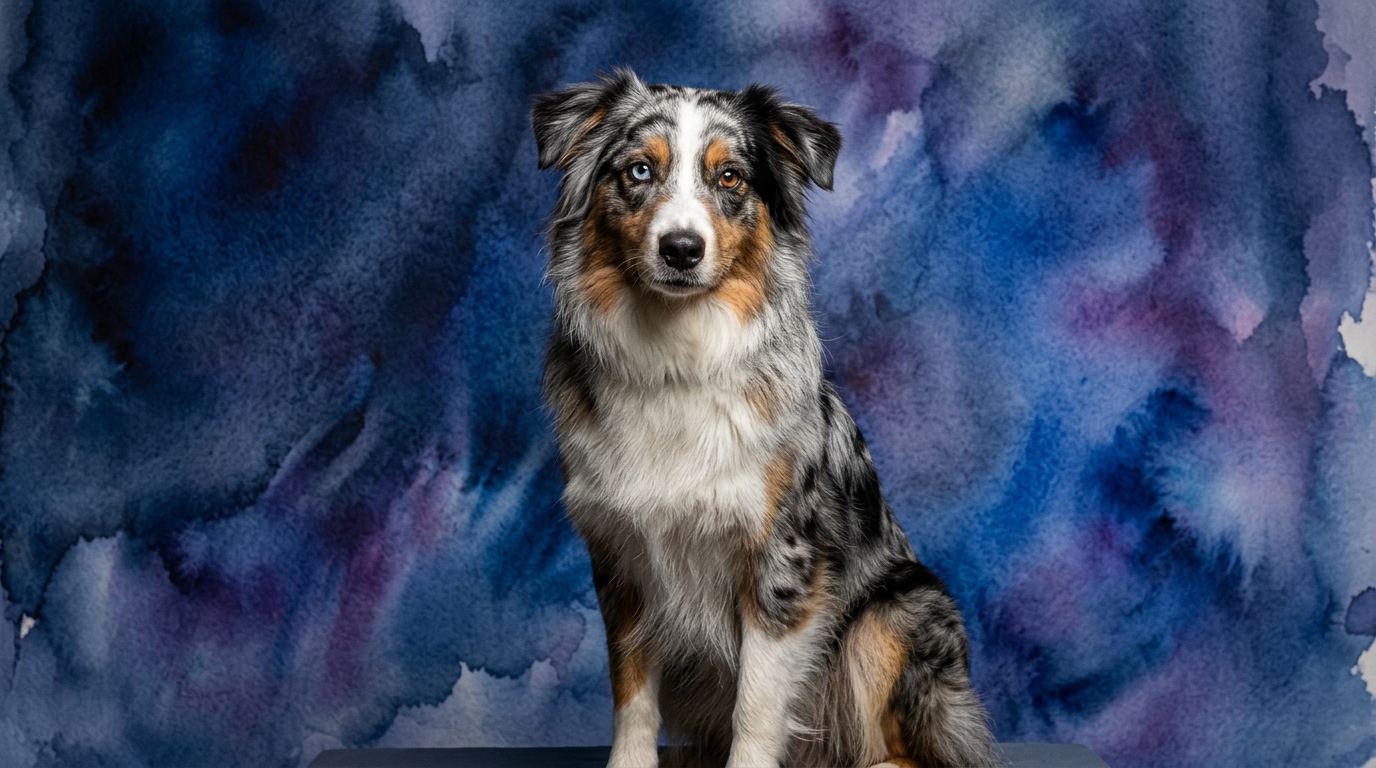

Side-by-Side Cognitive Profiles: Aussie vs. Manchester Terrier
The Cosmic Pet Pet IQ Lab provides a detailed lens through which to examine the distinct mental architectures of these two breeds, categorizing intelligence across five key dimensions. The Australian Shepherd, a herding breed, consistently scores at the top of the scale in most categories, reflecting its heritage of complex, cooperative work. Its Problem Solving is rated 5/5, indicating an exceptional capacity to navigate novel situations and devise solutions. Training Speed also hits 5/5, suggesting a rapid assimilation of new commands and routines. Social Intelligence, at 4/5, points to a strong ability to interpret human cues and adapt to social contexts. An Instinctive Drive of 5/5 highlights a powerful innate inclination towards its breed-specific tasks, and a Memory score of 5/5 means it retains learned information with remarkable consistency.
In contrast, the Manchester Terrier, a terrier breed, presents a different cognitive blueprint, scoring 3/5 across all five dimensions. A Problem Solving score of 3/5 suggests competence in figuring out straightforward challenges but perhaps less inclination for intricate, multi-step puzzles. Its Training Speed at 3/5 indicates that while capable of learning, it might require more repetition and consistent motivation to master new skills. Social Intelligence at 3/5 implies a discerning social nature, perhaps more reserved or selective in its interactions compared to a universally eager-to-please breed. The 3/5 Instinctive Drive points to a focused, albeit not overwhelming, inherent motivation for terrier-typical behaviors like chasing and digging. Finally, a Memory score of 3/5 means it retains information adequately but may not recall complex sequences or less-practiced commands as readily as a breed with a higher rating.
Where the Australian Shepherd Excels Cognitively
The Australian Shepherd's exceptional cognitive scores are direct reflections of its historical role as a working dog. Its 5/5 in Problem Solving allows it to dynamically assess and respond to changing environmental variables, such as re-gathering a scattered flock or navigating an agility course with unforeseen obstacles. This isn't just about following commands; it's about anticipating needs and making independent decisions within a framework. For instance, an Aussie might figure out how to open a complex gate to access its 'flock' (be it sheep or family members) if it perceives a need.
The perfect 5/5 in Training Speed means these dogs absorb new information with impressive velocity. They can link a verbal cue to a complex action almost immediately, often requiring only a few repetitions before cementing the behavior. This rapid learning extends beyond basic obedience to intricate tasks, such as scent work discrimination, advanced obedience routines, or learning sequential tricks. Their 5/5 Memory further reinforces this, ensuring that once a skill is learned, it is retained long-term, making them reliable partners for ongoing training and performance in competitive dog sports where consistency is key. The 5/5 Instinctive Drive, channeled appropriately, manifests as a profound desire for purpose and engagement, driving them to seek out and excel at 'jobs' whether real herding or intricate puzzle toys.
Cognitive Strengths of the Manchester Terrier
While the Manchester Terrier's scores are lower across the board, they reflect a distinct set of cognitive strengths suited to its terrier heritage, not a deficit. Its 3/5 Problem Solving, for example, translates into a focused, independent approach to challenges. A Manchester Terrier might not seek out complex abstract puzzles, but it excels at practical, self-serving problem-solving, such as figuring out how to unearth a hidden toy or squeeze through a gap to investigate an interesting scent. This isn't about cooperative problem-solving, but rather an efficient, determined approach to individual goals.
The 3/5 Social Intelligence can be interpreted as a discerning nature rather than a lack of social capacity. Manchester Terriers tend to bond deeply with their immediate family, showing loyalty and affection, but may be more reserved or less overtly enthusiastic with strangers. This selective social engagement means they aren't constantly seeking external validation but are content within their trusted circle. Their 3/5 Instinctive Drive, while not as broad as a herding dog's, is acutely focused on prey drive, manifesting as keen observation skills, quick bursts of speed, and tenacity in pursuing small game. This drive, combined with their problem-solving, makes them efficient and determined hunters of vermin, a task requiring specific, rather than generalized, cognitive application.
Trainability: A Tale of Two Temperaments
When it comes to trainability, the Australian Shepherd's 5/5 Training Speed and high Social Intelligence make it a highly cooperative and responsive student. They thrive on positive reinforcement and clear communication, eagerly soaking up new commands and complex sequences. Their innate desire to work alongside their handler, combined with excellent memory and problem-solving, means they often anticipate cues and are quick to offer desired behaviors. Training an Aussie often feels like a dynamic partnership, where the dog is actively trying to understand and please, making it a rewarding experience for owners committed to engagement.
The Manchester Terrier, with its 3/5 Training Speed and Social Intelligence, presents a different training dynamic. While capable of learning, they possess a more independent and sometimes stubborn streak, characteristic of many terrier breeds. Training requires patience, consistency, and a strong understanding of what motivates the individual dog – often food or high-value toys. They may question the 'why' behind a command or decide that their own agenda (like chasing a squirrel) is more pressing than a human directive. Their problem-solving skills might even be employed to find ways around commands rather than strictly adhering to them. Success with a Manchester Terrier often hinges on making training fun, varied, and ensuring the owner is more interesting than any environmental distraction, rather than relying solely on a dog's inherent desire to please.
Matching Breeds to Lifestyles: Active vs. Relaxed Owners
The Australian Shepherd is an ideal companion for highly active owners who seek a true partner in adventure and mental engagement. Their 5/5 Instinctive Drive demands an outlet, whether it's through herding, agility, flyball, disc dog, or extensive hiking and running. These dogs require consistent mental stimulation, through puzzle toys, trick training, or complex obedience routines, to prevent boredom-induced behaviors. Owners who can dedicate significant time daily to structured activities, training sessions, and outdoor exploration will find an Aussie to be an incredibly fulfilling and devoted companion, thriving on a shared purpose.
The Manchester Terrier, while possessing a 3/5 Instinctive Drive, is still an active breed, but perhaps one suited to a slightly different type of 'active' owner. They enjoy brisk walks, playful games of fetch, and opportunities to explore securely fenced yards, but might not demand the same intensity or duration of highly structured activity as an Aussie. Their independent nature and focused drive mean they can entertain themselves with appropriate toys or scent work for periods, but still require daily exercise and interaction. They are well-suited for owners who enjoy regular, moderate activity and appreciate a dog with a strong, self-possessed personality, but who might not be looking for a canine partner in extreme sports or complex working roles every single day. They fit well into homes where they are integrated into family life but are also given space to express their terrier instincts.
The Verdict
Choose an Australian Shepherd if you are an active individual or family seeking a highly trainable, cognitively dynamic partner for extensive training, sports, and cooperative activities, willing to dedicate significant daily time to their mental and physical needs.
Opt for a Manchester Terrier if you appreciate a spirited, independent companion with a discerning personality, capable of learning and enjoying moderate activity, and are prepared for a consistent, patient approach to training their terrier tenacity.
🧠 Find Your Pet's IQ Score
Our Pet IQ Lab assessment covers 25+ tests across 5 cognitive dimensions — personalized to your breed.
Take the Full IQ Test →Frequently Asked Questions
Do Australian Shepherds get bored easily?
Yes, Australian Shepherds, with their 5/5 Problem Solving and Instinctive Drive, are prone to boredom if not adequately stimulated mentally and physically. They require daily engagement through training, puzzles, and structured activities to prevent destructive behaviors or excessive barking.
Are Manchester Terriers good for first-time dog owners?
Manchester Terriers can be suitable for first-time owners who are committed to consistent training and socialization. Their 3/5 Training Speed means they need patience, and their independent nature requires an owner who can be a firm, fair leader, understanding of terrier traits.
Which breed is better for apartment living?
Given their lower overall activity demands compared to the Aussie, a Manchester Terrier could adapt to apartment living if provided with sufficient daily exercise and mental stimulation. An Australian Shepherd typically requires more space and extensive outdoor activity to thrive, making apartment life more challenging for them.