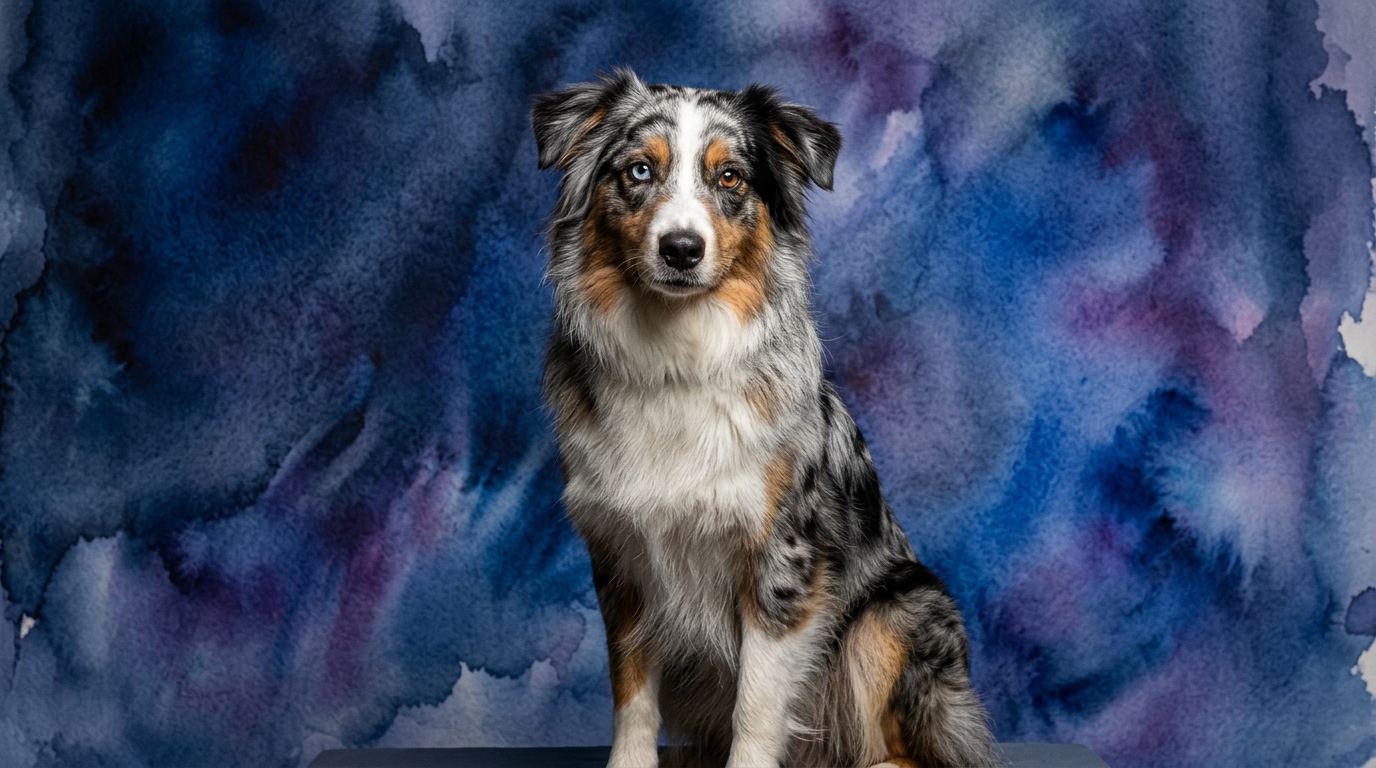

Side-by-Side IQ Profile: Australian Shepherd vs. Mastiff
The Australian Shepherd, a breed rooted in complex herding tasks, presents a cognitive profile indicating a dynamic and highly engaged mind. Their Problem Solving is rated 5/5, reflecting their need to make quick, independent decisions in unpredictable environments, such as managing livestock. Training Speed is also 5/5, showcasing their remarkable ability to grasp and retain new commands with minimal repetition, driven by an eagerness to work and collaborate. Social Intelligence, at 4/5, points to their capacity to read human cues and group dynamics, essential for effective partnership. An Instinctive Drive of 5/5 highlights their strong inherent motivation for purposeful activity, while their Memory, a perfect 5/5, underpins their ability to recall intricate patterns, routes, and a vast repertoire of learned behaviors.
In contrast, the Mastiff, a breed historically focused on guardianship and companionship, exhibits a cognitive makeup that prioritizes stability and discernment. Their Problem Solving is rated 3/5, indicating a more deliberate approach to challenges, often relying on their imposing presence or established routines rather than quick improvisation. Training Speed is 3/5; while capable of learning, they typically require more patience and consistency, learning at a steady pace rather than with rapid acquisition. Their Social Intelligence, also 3/5, centers on deep loyalty to their immediate family and a watchful awareness of their surroundings, less about nuanced social games. An Instinctive Drive of 3/5 reflects their primary motivation for calm vigilance and protection, not constant active work. Finally, their Memory, rated 3/5, is reliable for core commands and family recognition, though less for complex, multi-step sequences.
Where the Australian Shepherd Wins Cognitively
The Australian Shepherd's cognitive strengths are profoundly shaped by their herding heritage. Their problem-solving prowess, rated 5/5, allows them to rapidly assess dynamic situations, such as a scattering flock, and devise on-the-fly strategies to re-gather them. This isn't just about following commands; it's about independent thought and quick decision-making under pressure, often anticipating movements before they happen. They demonstrate exceptional cognitive flexibility, able to switch tactics if an initial approach proves ineffective. This capacity for intricate, adaptive problem-solving is a hallmark of their mental makeup, distinguishing them from breeds with more straightforward tasks.
Their training speed, also a perfect 5/5, stems from an inherent eagerness to collaborate and a capacity to quickly form associations between commands and actions. They absorb new information with minimal repetition, making them highly responsive to novel cues and complex sequences. This rapid acquisition of skills means they can progress through advanced training programs swiftly, mastering intricate routines that demand both physical and mental coordination. This quick uptake is not just about obedience; it reflects a deep engagement with their handler's intentions and a desire to fulfill a working role, making them exceptionally rewarding for those who enjoy teaching complex behaviors.
Furthermore, their memory (5/5) is a critical component of their working success. An Australian Shepherd can retain a vast repertoire of commands, differentiate between numerous objects or individuals, and recall intricate patterns of movement or routes, even after long periods. This robust memory allows them to perform multi-stage tasks with precision and consistency, without constant prompting. When working livestock, for instance, remembering specific boundaries, individual animal quirks, or the most efficient path to take is paramount. This cognitive advantage allows them to operate with a high degree of autonomy and reliability, executing learned behaviors with remarkable accuracy and recall.
Where the Mastiff Wins Cognitively
The Mastiff's cognitive strengths, though different from the Australian Shepherd's, are equally vital to their historical role as guardians. While their problem-solving is rated 3/5, it's characterized by a deliberate, thoughtful approach rather than rapid improvisation. They excel at assessing situations that require calm discernment, such as identifying a genuine threat versus a harmless visitor. Their cognitive process in these scenarios is less about quick, active intervention and more about measured observation, often relying on their imposing presence as a primary deterrent. This measured response reflects a stable temperament and a capacity for sustained vigilance without unnecessary excitability, a critical trait for a protective companion.
Their social intelligence, rated 3/5, manifests as profound loyalty and a subtle understanding of their family's emotional states. While they may not engage in complex social games, they are highly attuned to the dynamics within their household, offering comfort or support when needed. Their protective instincts are guided by this social awareness, allowing them to differentiate between playful roughhousing and actual distress. This deep, steadfast connection to their inner circle forms the core of their social cognition, making them dedicated and watchful companions who understand their role within the family unit, even if their expressions are more understated.
Furthermore, the Mastiff’s instinctive drive (3/5) is profoundly rooted in their guardian nature. This isn't a drive for constant physical activity or complex tasks, but rather a deep-seated, unwavering commitment to protect their territory and family. Their cognitive processes in this realm are geared towards vigilance and a quiet assessment of their surroundings, rather than proactive herding or hunting. They possess an innate ability to recognize and respond appropriately to potential threats, often with a calm, imposing presence that serves as a powerful deterrent. This consistent, reliable protective instinct, combined with their substantial physical presence, forms a unique cognitive strength, emphasizing stability and unwavering dedication over rapid, dynamic action.
Training Dynamics: Australian Shepherd vs. Mastiff
When evaluating ease of training, the Australian Shepherd (Training Speed 5/5) generally presents a more straightforward experience for most owners. Their exceptional eagerness to please, combined with their rapid grasp of commands and high motivation for mental stimulation, means they learn new behaviors quickly and enthusiastically. Aussies thrive on structured activities and mental challenges, often viewing training as an engaging game. They possess a strong desire for a 'job,' and channeling this drive into training makes them highly receptive. However, their high energy and sharp minds also mean they can become easily bored or overstimulated if not provided with consistent, engaging training, potentially leading to undesirable behaviors if their cognitive needs are neglected. Their quickness can also sometimes mean they learn undesirable behaviors just as fast as desirable ones, requiring vigilant management.
The Mastiff (Training Speed 3/5), by contrast, requires a different approach to training. They are not as inherently driven by a desire for constant activity or rapid learning. Their independence and sometimes stoic nature mean they can be slower to respond and may require more patience and repetition to solidify commands. Mastiffs are less motivated by endless drills and more by clear, consistent, and positive reinforcement. Once a Mastiff has learned a command, however, it is typically deeply ingrained and reliable. Their training is less about speed and more about building a solid foundation of trust and respect. They respond best to calm, firm guidance rather than frantic energy. Owners must understand that a Mastiff's learning process is a marathon, not a sprint, and celebrate consistency over rapid acquisition. Their large size also necessitates early and thorough socialization and obedience training to ensure they are manageable and well-mannered companions.
Matching Breeds to Owner Lifestyles
The choice between an Australian Shepherd and a Mastiff hinges significantly on an owner's lifestyle and energy levels. For active owners, the Australian Shepherd is an ideal match. Their boundless energy and profound instinctive drive (5/5) demand consistent and vigorous physical exercise, far beyond a simple daily walk. They thrive on activities like agility, flyball, herding trials, or extensive hiking, requiring owners who are equally enthusiastic about an active outdoor life. Beyond physical exertion, their sharp problem-solving (5/5) and memory (5/5) capabilities necessitate significant mental engagement through training, puzzle toys, and structured 'jobs.' Without these outlets, an Aussie can become bored, anxious, and potentially destructive, channeling their pent-up energy and intelligence into undesirable behaviors. They are truly partners for those who embrace a dynamic, engaged lifestyle.
Conversely, the Mastiff is a far better fit for relaxed owners who appreciate a more sedate pace. While they do require regular, moderate exercise to maintain their health and prevent obesity, their needs are not nearly as demanding as an Australian Shepherd's. A couple of leisurely walks a day or playtime in a securely fenced yard typically suffices. Their instinctive drive (3/5) leans more towards calm vigilance and companionship rather than constant activity. Mentally, they are content with a stable routine, comfortable companionship, and their role as a watchful presence. They are not dogs that constantly seek out complex mental challenges or require intricate daily tasks to remain content. For an owner who enjoys a quiet evening at home and a loyal, calm presence by their side, the Mastiff offers a deeply rewarding, less demanding partnership, prioritizing comfort and steady companionship over perpetual motion and intense mental stimulation.
The Verdict
For dedicated individuals or families eager for a highly engaged, energetic partner who thrives on complex tasks, extensive training, and a consistently active lifestyle, the Australian Shepherd is an unparalleled choice.
For owners seeking a calm, loyal, and protective companion who values a relaxed home environment and appreciates a steadfast presence over constant activity and mental gymnastics, the Mastiff offers an ideal partnership.
🧠 Find Your Pet's IQ Score
Our Pet IQ Lab assessment covers 25+ tests across 5 cognitive dimensions — personalized to your breed.
Take the Full IQ Test →Frequently Asked Questions
Is an Australian Shepherd suitable for a first-time dog owner?
An Australian Shepherd can be a challenging choice for a first-time owner due to their significant exercise, training, and mental stimulation needs. They require consistent guidance and an owner committed to their specific cognitive and physical requirements to prevent problem behaviors.
Do Mastiffs require a lot of grooming?
Mastiffs have short, dense coats that are relatively low-maintenance, requiring only weekly brushing to remove loose hair and keep their coat healthy. Their grooming needs are minimal compared to many other breeds, making them a practical choice in this regard.
Can Australian Shepherds live in apartments?
While possible with extraordinary dedication, Australian Shepherds typically do not thrive in apartment settings due to their immense energy and need for space to run and work. They require a large, securely fenced yard and owners committed to daily, intensive exercise and mental engagement outside the home.