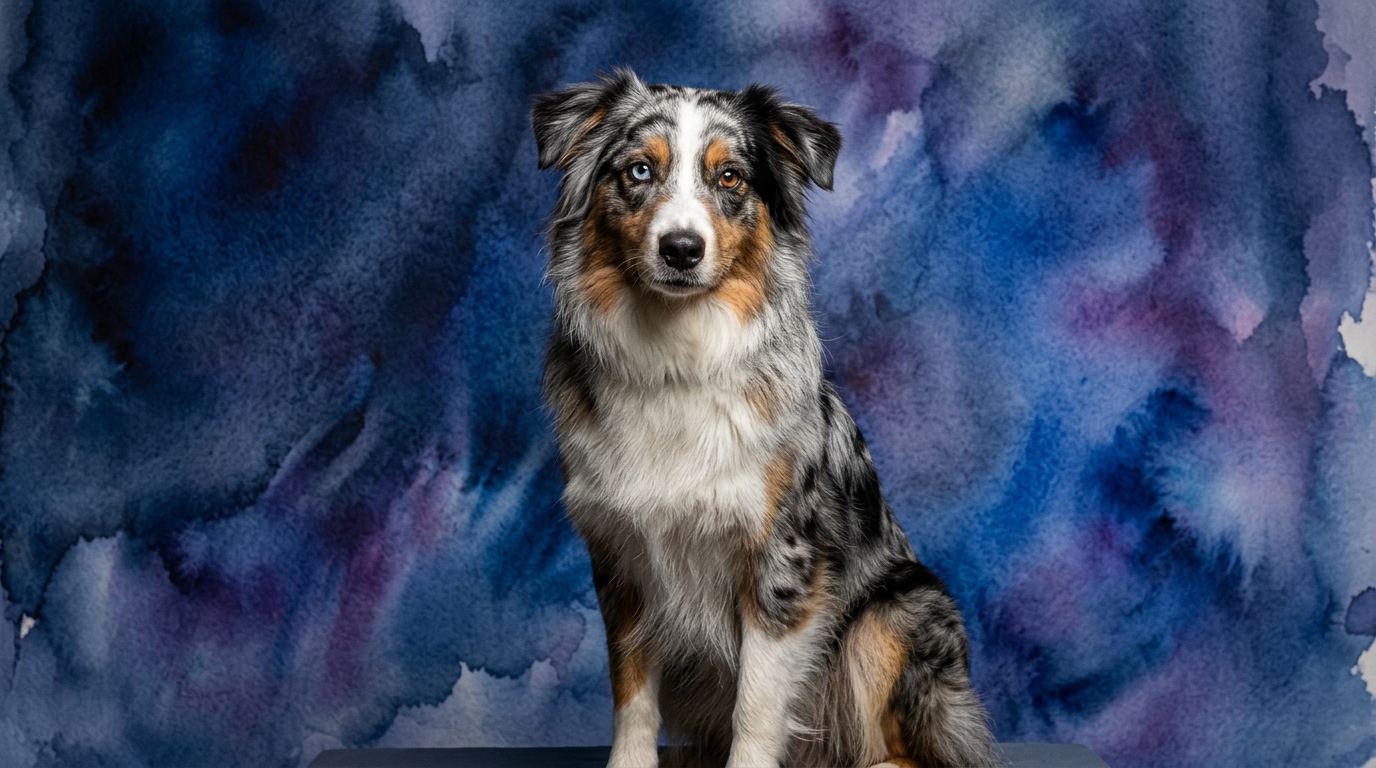

Side-by-Side Cognitive Profiles: Herder vs. Terrier
The Cosmic Pet Pet IQ Lab provides a granular look at five key cognitive dimensions, helping us understand the unique mental landscapes of each breed. For the Australian Shepherd, a breed forged for demanding herding tasks, their profile reflects a formidable mental capacity. They achieve a perfect 5/5 in Problem Solving, indicating an exceptional ability to analyze situations and devise solutions, whether it's navigating complex obstacles or understanding intricate command sequences. Their Training Speed also stands at 5/5, suggesting a rapid assimilation of new information and commands, making them exceptionally responsive to instruction. Instinctive Drive, rated 5/5, points to a profound internal motivation for work and purpose, a hallmark of their herding heritage. Memory, another perfect 5/5, speaks to their capacity for retaining vast amounts of information, from routines to complex cues. Finally, their Social Intelligence is a strong 4/5, demonstrating a keen awareness of human cues and a cooperative spirit that facilitates effective partnership.
In contrast, the Norfolk Terrier, a plucky breed originally bred for hunting vermin, presents a different but equally purposeful cognitive blueprint. Across all five dimensions—Problem Solving, Training Speed, Social Intelligence, Instinctive Drive, and Memory—the Norfolk Terrier consistently scores 3/5. These scores do not imply a lack of mental capacity, but rather reflect a distinct configuration of intelligence tailored to their terrier role. Their Problem Solving at 3/5 suggests a practical, often independent approach to challenges, relying on persistence and direct action rather than intricate strategy. A 3/5 in Training Speed indicates they are capable learners, though perhaps requiring more consistency and motivation tailored to their independent nature. Social Intelligence at 3/5 means they are companionable and aware, but may exhibit a more self-reliant demeanor compared to their herding counterparts. Their Instinctive Drive, also 3/5, is highly focused on specific terrier activities like digging and chasing. Lastly, a 3/5 in Memory shows they retain information relevant to their immediate environment and routines, proving functional for their spirited lives.
Where the Australian Shepherd Excels Cognitively
The Australian Shepherd's scores paint a picture of a dog built for complex, dynamic work, where foresight and rapid adaptation are paramount. Their 5/5 in Problem Solving means they don't just react; they strategize. Owners often observe Aussies anticipating next steps, figuring out how to open gates, or devising routes to retrieve a toy from an inaccessible spot. This translates into a dog that can excel in advanced obedience, agility, and even search and rescue, where independent thought under pressure is critical. They are adept at understanding multi-step commands and adapting their approach when faced with novel scenarios, showcasing an impressive cognitive flexibility.
The perfect 5/5 in Training Speed is a direct advantage, allowing Australian Shepherds to absorb new commands and routines with remarkable efficiency. They often grasp concepts in fewer repetitions than many other breeds, making them a joy for experienced trainers or those looking to delve into dog sports. Coupled with their 5/5 Memory, an Aussie can build an extensive repertoire of learned behaviors and commands, remembering them even after long periods. This robust memory also contributes to their ability to follow complex sequences and recall past experiences, enhancing their adaptability in new environments. Their 5/5 Instinctive Drive fuels their desire for engagement, providing a powerful internal motivation that can be channeled into constructive activities, making them tireless partners in learning and work. The 4/5 Social Intelligence further enhances their trainability, as they are keen observers of human body language and vocal cues, fostering a deep, cooperative working relationship with their handlers.
Unique Cognitive Strengths of the Norfolk Terrier
While the Norfolk Terrier's IQ scores of 3/5 across the board might seem modest compared to the Australian Shepherd's stellar ratings, it's crucial to interpret these within the context of their breed purpose. The Norfolk's Problem Solving at 3/5 isn't about grand strategy; it's about tenacious, independent ingenuity. A Norfolk might not devise an elaborate plan to herd sheep, but they will relentlessly figure out how to squeeze under a fence to investigate a captivating scent, or persistently work a puzzle toy until it yields its reward. Their problem-solving is often driven by an unwavering focus on a specific goal, demonstrating a practical, hands-on approach that is highly effective for their original role.
Their 3/5 Instinctive Drive, though not as broad as a herding dog's, is intensely focused and potent for its intended purpose: hunting vermin. This manifests as a spirited determination and an unflagging curiosity. They are dogs with a strong sense of purpose in their immediate environment, whether it's exploring every corner of the yard or meticulously 'hunting' a squeaky toy. This contained yet powerful drive means they are less likely to seek out large-scale 'jobs' but are immensely satisfied by activities that engage their natural terrier instincts. Their 3/5 Social Intelligence means they are affectionate and loyal companions, but often with a charmingly independent streak. They enjoy human company but are not typically as overtly people-focused as a herder, which can be a strength for owners who appreciate a dog with a strong, self-possessed personality. This independence often translates into a dog that is comfortable entertaining themselves, provided their basic needs are met.
Training Dynamics: A Study in Contrasts
When it comes to ease of training, the cognitive profiles of these two breeds present a clear divergence. The Australian Shepherd, with its 5/5 Training Speed, 5/5 Problem Solving, and 4/5 Social Intelligence, is generally a dream to train for those seeking a highly compliant and capable canine student. They possess an inherent eagerness to please and a remarkable ability to understand and execute complex commands quickly. Their powerful memory allows them to retain a vast vocabulary of cues and behaviors, making advanced training like competitive obedience, agility, or even trick training a rewarding endeavor. They thrive on mental challenges and the cooperative bond formed through structured training, often seeking out opportunities to learn and engage with their handler.
The Norfolk Terrier, with its consistent 3/5 scores, presents a different training experience. While certainly trainable, their independence and specific instinctive drives mean that training requires more patience, creativity, and consistent motivation. A Norfolk might learn a command, but their inclination to follow it will often depend on its perceived value or immediate reward. Their problem-solving manifests as determined persistence, which can sometimes translate into stubbornness if they don't see the point of a task. They respond best to positive reinforcement, short, engaging sessions, and a trainer who understands their terrier spirit. They are less likely to be motivated by the sheer joy of cooperation and more by tangible rewards or the satisfaction of their own interests. Owners must be prepared to make training a consistent, engaging game rather than a rigorous lesson, acknowledging their spirited, self-reliant nature.
Lifestyle Suitability: Active Engagement vs. Spirited Companionship
The cognitive profiles of the Australian Shepherd and Norfolk Terrier strongly dictate their ideal living environments and owner types. An Australian Shepherd, with its high scores across Problem Solving, Training Speed, Instinctive Drive, and Memory, requires an owner who is equally engaged and active. These dogs need significant mental stimulation and physical exercise to thrive. Their inherent drive to work means they are not content to be couch potatoes; they need a 'job,' whether it's herding, dog sports, extensive hiking, or complex interactive games. Owners who can provide consistent training, challenge their cognitive abilities, and channel their abundant energy will find the Aussie an unparalleled partner. They are best suited for active individuals or families who are prepared to dedicate substantial time daily to their dog's mental and physical well-being.
The Norfolk Terrier, while energetic in its own right, suits a different kind of owner. Their 3/5 scores suggest a dog that is competent and engaged but doesn't typically demand the same intensity of structured work or expansive exercise as an Aussie. They enjoy walks, playtime, and exploring their surroundings, but their needs can often be met with regular walks, indoor play, and opportunities to satisfy their terrier instincts in a controlled environment (like digging in a sandpit). Owners who appreciate a spirited, charming companion with a distinct personality, and who are prepared for a dog that might occasionally follow its own agenda, will find a Norfolk rewarding. They are excellent for owners seeking a loyal, compact companion who brings character and zest to daily life without requiring a full-time working dog commitment.
The Verdict
Choose an Australian Shepherd if you seek a highly trainable, intensely cooperative, and mentally agile partner for demanding activities like dog sports, herding, or complex family integration, and you are prepared for significant daily engagement.
Opt for a Norfolk Terrier if you desire a spirited, independent, and tenacious companion with a charming personality, who thrives on consistent, positive training and moderate activity, and you appreciate a dog with a strong sense of self.
🧠 Find Your Pet's IQ Score
Our Pet IQ Lab assessment covers 25+ tests across 5 cognitive dimensions — personalized to your breed.
Take the Full IQ Test →Frequently Asked Questions
Are Australian Shepherds difficult for first-time dog owners?
Australian Shepherds can be challenging for first-time owners due to their high cognitive needs and intense energy. Their 5/5 scores in problem-solving and instinctive drive mean they require consistent mental and physical stimulation to prevent boredom and undesirable behaviors. An experienced owner who understands their working dog nature is often a better match.
Do Norfolk Terriers bark a lot?
Norfolk Terriers can be prone to barking, a common trait among terrier breeds, often stemming from their instinctive drive (3/5) to alert or react to perceived intruders or interesting sounds. Consistent training and early socialization can help manage excessive barking, but their alert nature means they will often voice their opinions.
Can a Norfolk Terrier live in an apartment?
Yes, a Norfolk Terrier can adapt well to apartment living thanks to their compact size and moderate exercise needs. While they don't require vast spaces, they still need regular walks, playtime, and mental enrichment to satisfy their instinctive drives (3/5) and keep their problem-solving minds (3/5) engaged. Consistent training is key to managing their spirited nature in smaller spaces.