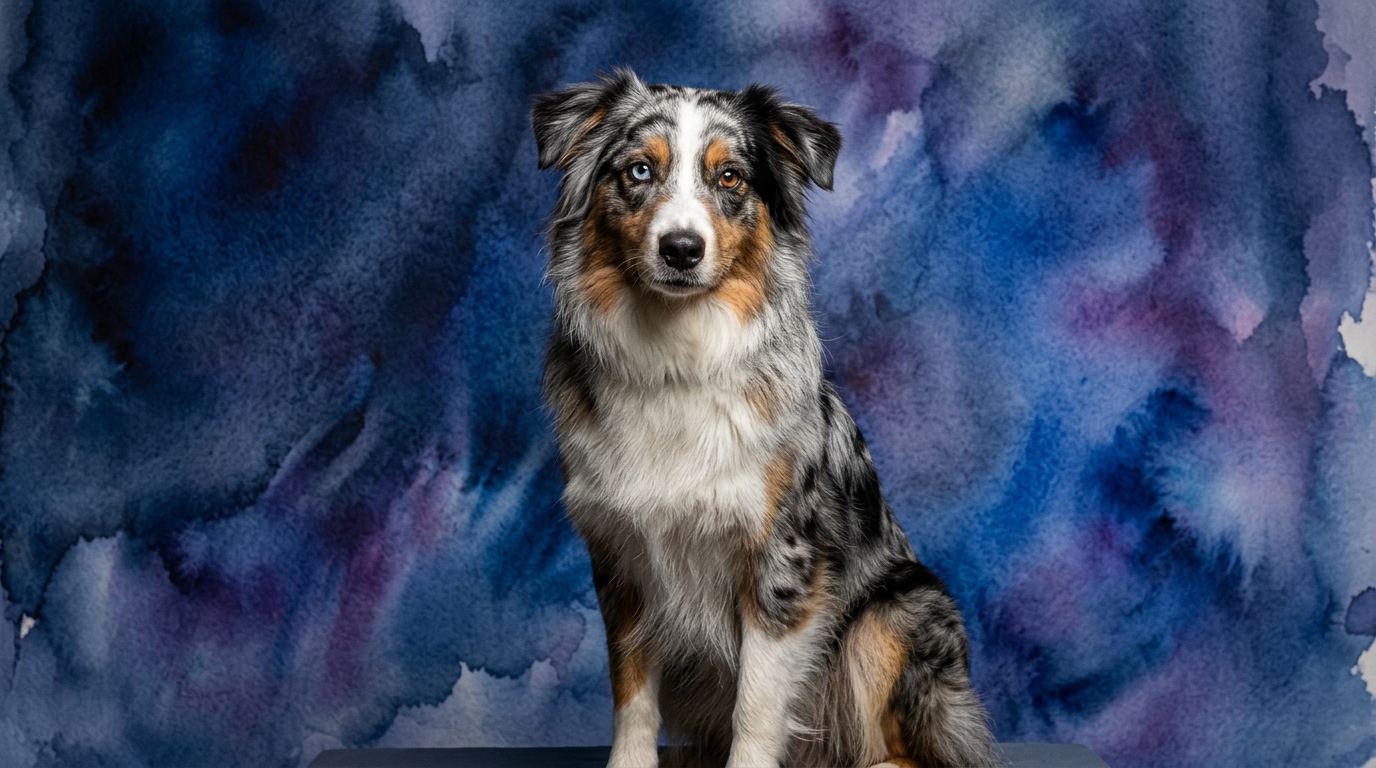
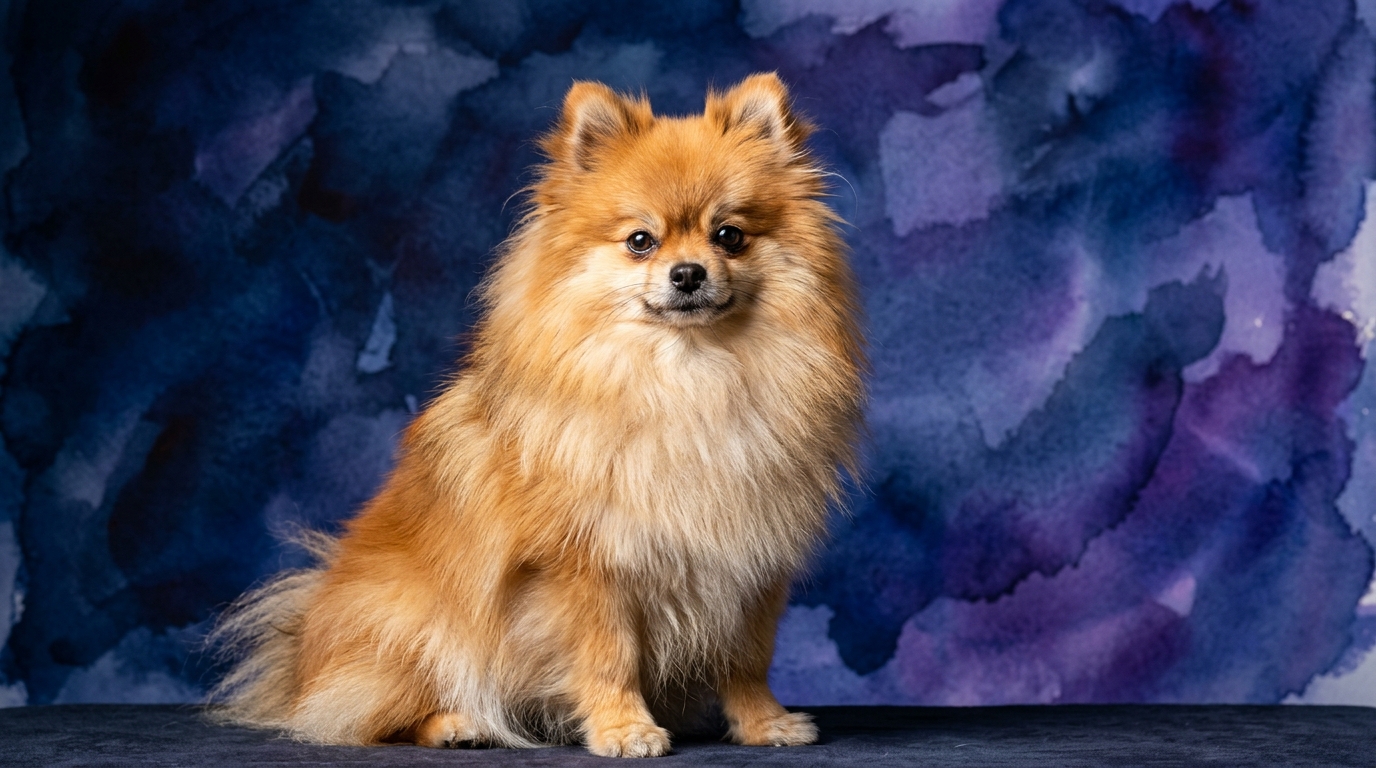
Side-by-Side IQ Profile: Australian Shepherd vs. Pomeranian
The Cosmic Pet Pet IQ Lab employs a five-dimensional framework to assess canine intelligence, moving beyond single scores to provide a nuanced understanding of each breed's cognitive strengths. Let's examine how the Australian Shepherd and Pomeranian measure up across these specific metrics.
**Australian Shepherd (Herding Group)**
**Problem Solving (5/5):** This breed demonstrates exceptional ability to independently navigate complex situations and devise solutions, reflecting their heritage in dynamic working environments where quick, adaptive thinking is paramount.
**Training Speed (5/5):** Australian Shepherds absorb new commands and routines with remarkable rapidity, requiring few repetitions. Their eagerness to learn and strong desire to collaborate with their human partners contribute to this swift acquisition of skills.
**Social Intelligence (4/5):** Highly attuned to human companions and family dynamics, Australian Shepherds typically exhibit a more reserved initial approach towards strangers. They are adept at reading cues within their established social circle but may take time to assess new individuals.
**Instinctive Drive (5/5):** Possessing a profoundly strong innate herding instinct, this manifests as a persistent urge to gather, manage, and control movement. This drive is a powerful internal motivator, shaping much of their cognitive engagement with the world.
**Memory (5/5):** Australian Shepherds exhibit an outstanding capacity to recall learned behaviors, commands, and spatial information over extended periods. This superior memory aids their complex task performance and allows for sophisticated, multi-step routines to be ingrained effectively.
**Pomeranian (Toy Group)**
**Problem Solving (4/5):** Pomeranians show a commendable capacity for solving puzzles and navigating their environment, often employing clever strategies to achieve desired outcomes for comfort or access to favored items.
**Training Speed (4/5):** These small companions learn new commands at a good pace, responding well to positive reinforcement for basic obedience and tricks. However, their independent streak might occasionally prompt a moment of charming defiance, requiring consistent motivation.
**Social Intelligence (4/5):** Often socially astute, Pomeranians are capable of discerning moods and intentions within their human family. They can be outgoing and charming with familiar faces, though some may exhibit a watchful or even feisty demeanor towards unfamiliar dogs or people, reflecting their keen awareness of their surroundings.
**Instinctive Drive (3/5):** Lacking the intense working drives of herding breeds, a Pomeranian's primary motivation often centers on companionship and engaging with their human family, rather than a specific task-oriented purpose, though playful chase instincts can be present.
**Memory (4/5):** Pomeranians demonstrate a solid ability to remember commands, routines, and the locations of favored toys or treats. This reliable memory contributes to their trainability and helps them adapt well to consistent household schedules and expectations.
Where the Australian Shepherd Wins Cognitively
The Australian Shepherd's cognitive strengths lie in its exceptional capacity for complex, sustained mental effort. Their 5/5 Problem Solving means they don't just follow instructions; they can adapt, innovate, and make intelligent decisions independently in dynamic environments, a trait invaluable in work or dog sports where conditions constantly change. This superior cognitive processing is paired with a 5/5 Training Speed, allowing for remarkably swift acquisition of advanced skills, from intricate agility sequences to nuanced herding commands. The powerful 5/5 Instinctive Drive, while needing management, also serves as a potent internal motivator for focused engagement, pushing them to interact with tasks with tenacity. Furthermore, their 5/5 Memory ensures that extensive learnings, complex routines, and intricate commands are retained over long periods, building a deep foundation for sophisticated task performance. This integrated cognitive package makes the Australian Shepherd a master of strategic thinking and collaborative problem-solving within a demanding working context, far beyond simple obedience.
Where the Pomeranian Wins Cognitively
While the Australian Shepherd excels in raw processing power for work, the Pomeranian carves its own niche in cognitive strengths, particularly in areas often overlooked by traditional working dog metrics. Their 4/5 Problem Solving, combined with 4/5 Social Intelligence, makes them remarkably adept at navigating human social structures and cleverly manipulating their environment for comfort and attention. Pomeranians frequently demonstrate ingenuity in achieving desired outcomes, whether figuring out how to access a favorite spot or using expressive communication to solicit interaction. Their solid 4/5 Memory and 4/5 Training Speed mean they readily learn household rules and tricks, often enjoying the mental stimulation of puzzle toys and interactive games. What truly distinguishes the Pomeranian's cognitive advantage is its finely tuned, intimate social perception within its smaller domestic sphere, acutely aware of family routines and emotional states. This isn't the broad social intelligence of a herding dog managing a flock, but a specialized acumen perfect for a close companion animal. Their relatively lower 3/5 Instinctive Drive also translates to less compulsion for intense, task-specific urges, making them a more relaxed and adaptable indoor companion for many owners.
Which is Easier to Train, and Why?
Based on the Pet IQ Lab metrics, the Australian Shepherd, with its 5/5 Training Speed, holds a distinct edge in ease of training for complex tasks. Their inherent eagerness to work, coupled with a profound capacity for learning, means they absorb new commands and intricate sequences with remarkable efficiency. An Australian Shepherd's robust 5/5 Instinctive Drive also acts as a powerful internal motivator; once an owner taps into this drive, training becomes a highly rewarding collaborative experience, swiftly progressing through advanced tasks like agility or advanced obedience routines. They thrive on mental challenges and quickly grasp the cause-and-effect of their actions, making them highly responsive to consistent, positive reinforcement. Conversely, the Pomeranian, while scoring a commendable 4/5 in Training Speed, might present a different training dynamic. While they are quick to learn basic commands and house rules, their independent streak and lower 3/5 Instinctive Drive mean they might require more creative motivation or a slightly longer commitment to consistency to achieve the same level of precision in advanced tasks. A Pomeranian might learn "sit" quickly but might choose not to perform it if a more interesting distraction arises, whereas an Aussie's intense focus often overrides such competing interests during a training session.
Matching Canine Cognition to Owner Lifestyles
The choice between an Australian Shepherd and a Pomeranian heavily hinges on an owner's lifestyle and capacity for engagement. An Australian Shepherd is unequivocally suited for active owners who can provide substantial daily mental and physical stimulation. Their 5/5 instinctive drive and 5/5 problem-solving capacity mean they require consistent outlets for their energy and intellect. This breed thrives with activities like competitive dog sports (agility, flyball), herding, long hikes, and regular, challenging training sessions that engage their superior memory and quick learning. A relaxed owner who cannot commit to such a demanding schedule risks an Australian Shepherd becoming bored, potentially leading to destructive behaviors or excessive "herding" of family members, reflecting their unmet cognitive and physical needs.
Conversely, the Pomeranian, with its 3/5 instinctive drive and focus on companionship, is an excellent match for more relaxed owners. While they enjoy walks and playtime, their exercise requirements are significantly lower than an Aussie's. They are content with indoor games, short strolls, and ample cuddle time, making them ideal for apartment living or individuals with less active routines. Their 4/5 social intelligence shines in a household where they can be a constant, engaging presence, observing and participating in family life without needing intense, task-oriented work. A relaxed owner will appreciate the Pomeranian's adaptability and willingness to simply *be* with them, requiring less structured activity and more affectionate interaction.
The Verdict
Opt for an Australian Shepherd if you are an active, experienced owner eager for a highly engaged canine partner who thrives on complex training, dog sports, and extensive outdoor adventures.
Select a Pomeranian if you seek a charming, socially astute companion for a more relaxed lifestyle, appreciating a dog that enjoys indoor activities and close family interaction without demanding intense work.
🧠 Find Your Pet's IQ Score
Our Pet IQ Lab assessment covers 25+ tests across 5 cognitive dimensions — personalized to your breed.
Take the Full IQ Test →Frequently Asked Questions
Does the Australian Shepherd's 'Not Coren-ranked' status mean it's less intelligent than a Coren-ranked breed?
Not at all. Coren's ranking primarily assesses obedience and working intelligence based on trainer surveys, and some breeds, like the Australian Shepherd, may not have been extensively surveyed or recognized at the time of some rankings. Pet IQ Lab's direct assessment of cognitive dimensions provides a specific, performance-based evaluation, confirming the Aussie's exceptional mental capabilities independently.
Can a Pomeranian be trained for agility despite its lower instinctive drive?
Absolutely. While a Pomeranian's instinctive drive is lower than a herding breed's, their 4/5 problem-solving and training speed scores mean they can certainly excel in agility. Success depends on making it fun, using positive reinforcement, and leveraging their desire for companionship to motivate them, rather than relying on an innate working drive.
How does 'social intelligence' differ between these two breeds, given they both score 4/5?
While both score 4/5, their social intelligence manifests differently due to their heritage. The Australian Shepherd's social intelligence is geared towards understanding and managing a dynamic group, often with an initial reservedness towards strangers. The Pomeranian's social intelligence is more focused on intimate family dynamics, adept at reading human emotions and subtle cues within a close-knit domestic environment.