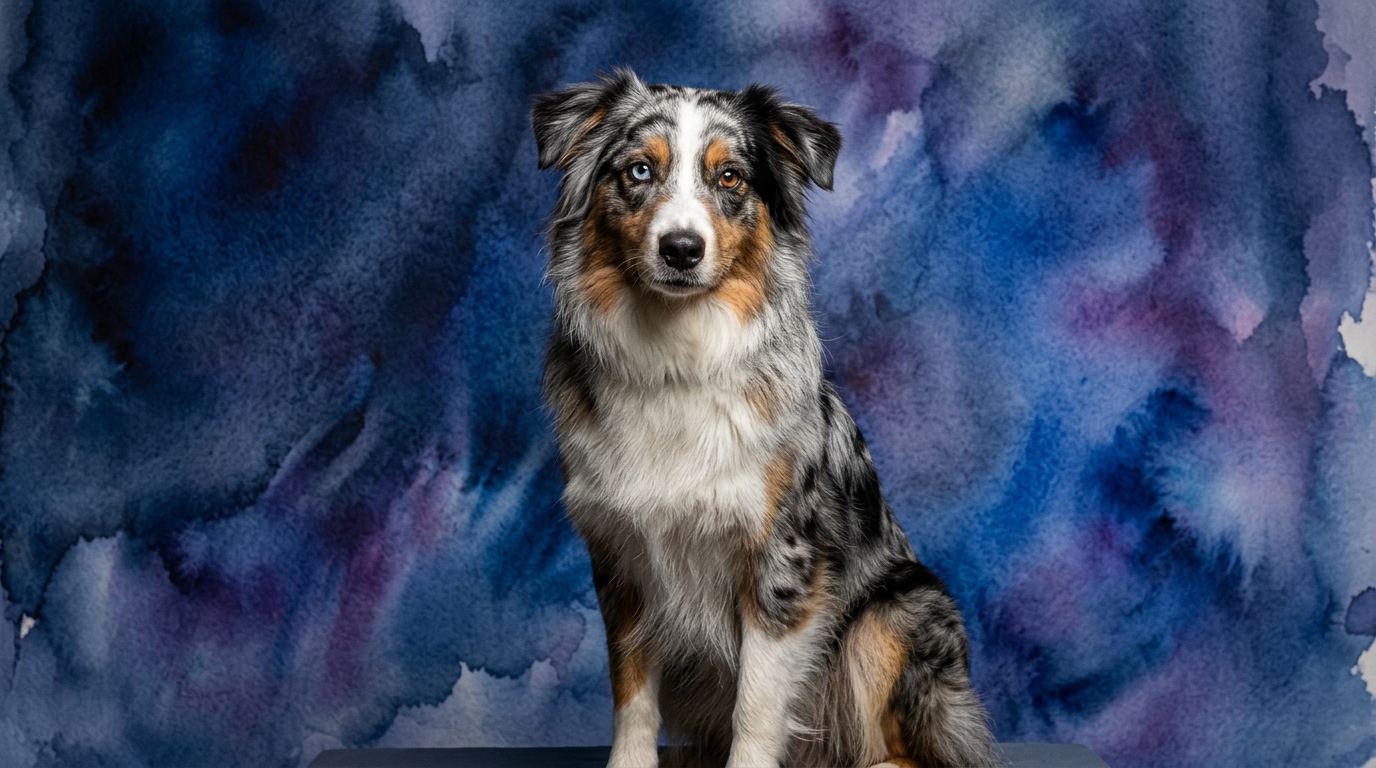

Side-by-Side IQ Profile: Herding Prowess vs. Companion Charm
The Australian Shepherd, steeped in herding tradition, consistently scores at the highest end of our cognitive spectrum. Its 5/5 in Problem Solving reflects an innate capacity to strategize and independently navigate complex tasks, often seen in its ability to manage livestock or figure out intricate puzzle toys. A Training Speed of 5/5 means new commands are absorbed with remarkable efficiency, often after just a few repetitions, making them highly responsive learners.
Their Social Intelligence, rated 4/5, indicates a strong understanding of human cues and pack dynamics, allowing them to form deep bonds and anticipate needs, though sometimes with an independent streak. The 5/5 Instinctive Drive fuels their tireless energy and inherent desire to work, whether herding, retrieving, or engaging in sport. Finally, a 5/5 in Memory ensures they retain learned behaviors and past experiences with exceptional recall.
In stark contrast, the Russian Toy exhibits a more moderate cognitive profile, aligned with its role as a dedicated companion. Its Problem Solving score of 3/5 suggests they can grasp straightforward tasks and learn routines, but may not excel at abstract reasoning or complex, multi-step challenges without extensive guidance. A Training Speed of 3/5 means they are trainable, but require more patience and repetition than a herding breed, often benefiting from positive reinforcement and short, engaging sessions.
Their Social Intelligence, also 3/5, indicates they are capable of forming strong attachments to their primary caregivers and understanding basic social cues, but might not possess the nuanced interpretive skills of a working dog. An Instinctive Drive of 3/5 means they enjoy play and interaction, but lack the intense, focused drive seen in breeds bred for specific tasks, making them generally less demanding of constant mental stimulation. A Memory score of 3/5 suggests they remember commands and routines, but might require occasional refreshers or struggle with recalling less frequently practiced behaviors.
Where the Australian Shepherd Excels Cognitively
The Australian Shepherd’s cognitive framework is built for purpose and self-reliance, giving it significant advantages in specific areas. Its 5/5 Problem Solving means it doesn't just learn *what* to do, but *how* to adapt and innovate within a task, such as finding creative ways to gather stray sheep or bypass an obstacle. This problem-solving prowess is deeply intertwined with its 5/5 Instinctive Drive, manifesting as a persistent focus to achieve a goal, whether it’s winning a frisbee toss or mastering a new agility course.
The breed’s exceptional Memory (5/5) allows it to recall extensive sequences of commands and complex routes, crucial for herding large flocks or excelling in competitive dog sports where precision and retention are key. Furthermore, their 4/5 Social Intelligence, while not quite 5/5, ensures they are attuned enough to human direction to work collaboratively, but retain enough independence to make decisions when direct instruction isn't feasible, a vital trait for a working dog.
Where the Russian Toy’s Cognitive Profile Shines
While the Russian Toy's raw IQ scores are moderate, its cognitive profile is perfectly suited for its intended role, offering unique advantages for certain owners. Its 3/5 Instinctive Drive means it possesses enough curiosity and playfulness to engage with its family without the relentless need for a "job" that defines herding breeds. This lower drive translates into a generally calmer demeanor indoors and a reduced likelihood of developing destructive behaviors born from boredom or unfulfilled work ethic.
The 3/5 Social Intelligence, though not as high as the Aussie's, is entirely sufficient for forming deep, affectionate bonds and responding to the emotional states of its human companions, making it an excellent emotional support animal. Its moderate Problem Solving (3/5) means it's capable of learning household rules and routines without the potential for overthinking or outsmarting its owners, leading to a more straightforward and less challenging companionship experience. Owners seeking a devoted lap companion who enjoys gentle play and consistent affection will find the Russian Toy's cognitive makeup aligns beautifully with those desires.
Training Ease: A Tale of Two Learners
When it comes to training, the disparity between these breeds is pronounced, largely due to their differing Training Speed and Problem Solving scores. The Australian Shepherd, with its 5/5 Training Speed and 5/5 Problem Solving, absorbs new information with astonishing rapidity. They often grasp a concept after just a few repetitions and generalize learned behaviors quickly, applying them to new situations. This breed thrives on varied training, complex sequences, and mental challenges, often finding joy in mastering intricate tricks or advanced obedience. Their inherent drive means they are eager to please and highly motivated by tasks.
In contrast, the Russian Toy's 3/5 Training Speed means owners should anticipate a more gradual learning curve. They require shorter, more frequent training sessions, abundant positive reinforcement, and consistent repetition to solidify commands. While they are certainly trainable, their problem-solving approach is less about independent deduction and more about consistent guidance. Owners will find success by making training fun and rewarding, focusing on foundational commands and reinforcing good habits rather than expecting rapid mastery of complex multi-step tasks.
Active vs. Relaxed Owners: Matching Mental Needs
The cognitive demands of these two breeds dictate vastly different lifestyles for their owners. The Australian Shepherd, fueled by its 5/5 Instinctive Drive and 5/5 Problem Solving, requires an active owner who can provide substantial mental and physical stimulation daily. Without outlets for their cognitive energy, such as advanced training, dog sports (agility, flyball, obedience), or herding activities, these dogs can become bored and channel their considerable intellect into less desirable behaviors like excessive barking, destructive chewing, or attempting to "herd" family members. They thrive with owners who enjoy structured activities and can dedicate significant time to engaging their keen minds.
The Russian Toy, with its 3/5 Instinctive Drive and 3/5 Problem Solving, is far better suited for relaxed owners. While they enjoy regular walks and playtime, their mental needs are met with less intensity. They appreciate puzzle toys and learning simple tricks, but do not crave constant, rigorous mental challenges. Their cognitive profile makes them content with a comfortable home life, enjoying cuddles on the couch and gentle interactions, making them ideal for individuals or families seeking a devoted, low-key companion.
The Verdict
Opt for an Australian Shepherd if you are an experienced, active owner eager to engage a dog in demanding mental and physical activities, thriving on a partner for dog sports, advanced training, or a working role.
Select a Russian Toy if you seek a devoted, affectionate companion that thrives on close human interaction and consistent, gentle training, fitting seamlessly into a relaxed home environment.
🧠 Find Your Pet's IQ Score
Our Pet IQ Lab assessment covers 25+ tests across 5 cognitive dimensions — personalized to your breed.
Take the Full IQ Test →Frequently Asked Questions
Can a Russian Toy learn complex tricks?
While their problem-solving and training speed scores are moderate (3/5), Russian Toys can certainly learn a variety of tricks with patience and consistent positive reinforcement. They may take longer to grasp complex sequences than an Australian Shepherd, but their desire to please their owner makes them willing students.
Do Australian Shepherds need a job to be content?
Yes, their 5/5 instinctive drive means Australian Shepherds are wired for purpose and work. While a formal herding job isn't always feasible, engaging them in demanding dog sports, advanced obedience, or extensive interactive play helps fulfill their deep-seated cognitive and physical needs.
How do their social intelligence scores impact household dynamics?
The Australian Shepherd's 4/5 social intelligence allows them to be highly attuned to family dynamics and cues, sometimes anticipating needs but potentially attempting to "manage" situations. The Russian Toy's 3/5 social intelligence means they form strong bonds and understand basic interactions, but generally exhibit less complex social maneuvering within the home.