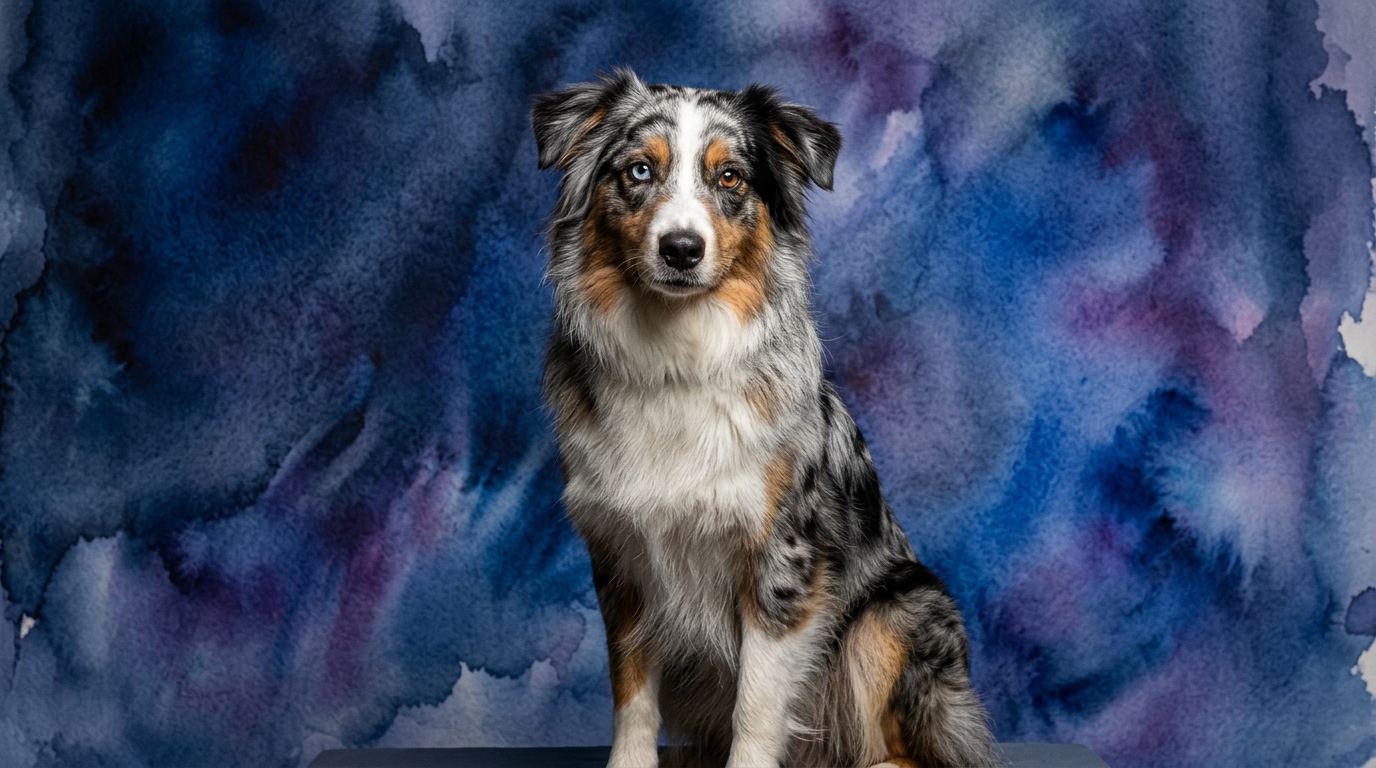
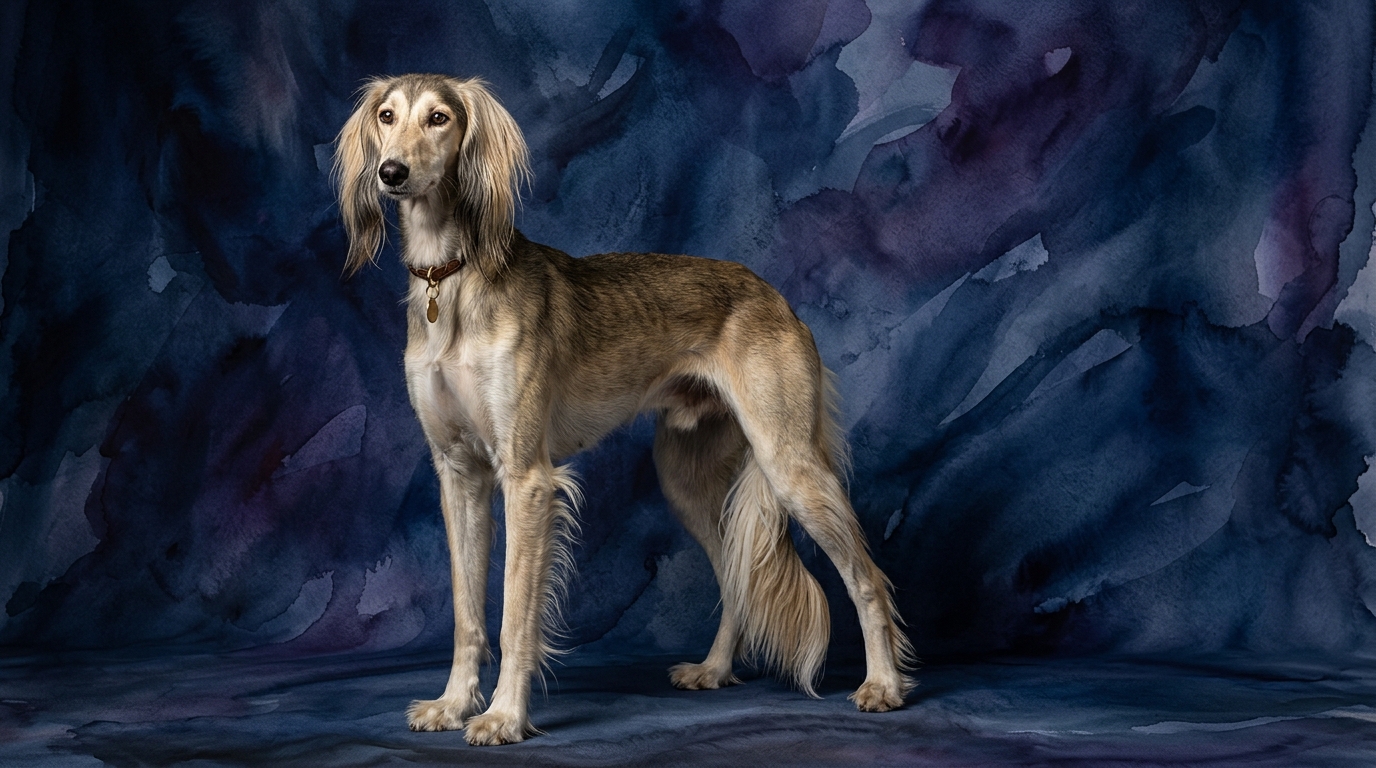
Cognitive Blueprint: Australian Shepherd vs. Saluki IQ Profiles
The Cosmic Pet Pet IQ Lab provides a five-dimensional framework to understand canine cognition, offering a granular view beyond general perceptions. For the Australian Shepherd, a herding breed, their profile is marked by exceptional scores across the board. They achieve a 5/5 in Problem Solving, indicating a robust capacity for devising solutions to complex, dynamic situations. Their Training Speed also rates 5/5, reflecting a rapid grasp of new commands and sequences. Social Intelligence stands at a strong 4/5, showing a good ability to read human cues and form bonds, though they can be discerning with strangers. Their Instinctive Drive is a powerful 5/5, rooted in their potent herding impulse and desire to control movement. Finally, their Memory is a perfect 5/5, allowing them to retain vast repertoires of commands and experiences.
In contrast, the Saluki, a hound breed, presents a profile reflecting its independent sighthound heritage. Their Problem Solving is rated 3/5, suggesting they are capable of solving direct, immediate challenges but are less inclined towards abstract or intricate puzzles that require manipulation. Training Speed also scores 3/5; they learn at a steady pace, but often require more repetition and motivation tailored to their self-directed nature. Social Intelligence is 3/5, indicating deep bonds with their chosen family, yet a tendency towards aloofness or independence rather than overt people-pleasing. Their Instinctive Drive is 3/5, characterized by a powerful sighthound chase instinct focused on pursuit rather than control. Memory is also 3/5, meaning they retain routines and basic commands, but may not hold as extensive a mental library as breeds with higher scores.
Australian Shepherd's Cognitive Edge: Adaptability and Drive
The Australian Shepherd's exceptional scores in Problem Solving (5/5), Training Speed (5/5), and Instinctive Drive (5/5) collectively paint a picture of a dog built for intricate, collaborative work. Their problem-solving isn't just about following instructions; it’s about interpreting a task, strategizing, and adapting to changing variables, such as when directing a scattered flock. This breed's cognitive strength lies in its capacity for multi-step tasks and decision-making within a structured environment. They can quickly grasp new concepts and apply them, making them adept at learning complex sequences for sports like agility or obedience.
Furthermore, their potent instinctive drive manifests as a deep desire for purpose and engagement. This isn't merely a physical energy; it's a mental drive to organize, direct, and control, requiring continuous processing and anticipation. Their superior Memory (5/5) underpins this, allowing them to recall an extensive array of commands, routines, and past experiences, ensuring reliable performance even in novel contexts or after long breaks. This combination of mental agility, rapid learning, and robust recall makes them exceptionally versatile and responsive partners in a wide range of activities.
Saluki's Unique Cognitive Strengths: Independent Acuity
While the Saluki's scores appear lower in general, their cognitive strengths are specialized and finely tuned to their historical role as a sighthound. Their 3/5 in Problem Solving, for instance, doesn't imply a lack of mental capacity, but rather a focus on a different type of problem: the rapid assessment and execution of a chase. Salukis possess an unparalleled visual acuity and the cognitive speed to process complex environmental data – like changing terrain, target speed, and wind direction – to intercept fast-moving prey over vast distances. This decision-making is largely autonomous, reflecting a specialized form of intelligence centered on independent action and immediate, instinctual responses.
Their Instinctive Drive (3/5) is a significant strength in its own domain, characterized by an intense, focused pursuit drive rather than a manipulative or controlling one. This drive is paired with a capacity for bursts of extreme speed and endurance, demanding a particular kind of mental fortitude and focus. The Saluki's relatively lower social intelligence (3/5) can also be seen as a strength for those who appreciate a companion that forms deep, selective bonds and maintains a dignified independence, rather than constantly seeking human direction or validation. Their memory, while not extensive for complex human commands, is sufficient for remembering their primary mission and personal routines.
Training Trajectories: Understanding Compliance and Motivation
When it comes to training, the Australian Shepherd (Training Speed 5/5, Problem Solving 5/5) typically presents an easier and faster learning curve. Their inherent desire to work and strong social intelligence (4/5) make them highly receptive to human direction and eager to collaborate. They quickly internalize commands, often anticipating the next step in a sequence, and are highly motivated by opportunities to engage their minds and bodies. Their herding drive translates into a willingness to be guided and to follow structure, making them well-suited for advanced obedience, trick training, and dog sports where precision and speed are valued. They thrive on clear communication and consistent expectations.
The Saluki (Training Speed 3/5, Social Intelligence 3/5), on the other hand, approaches training with a different mindset. Their independence and less pronounced drive for human appeasement mean that while they are capable of learning, the process often requires more patience, creativity, and high-value rewards. They are less driven by the act of learning for its own sake and more by what benefits them directly, especially if it involves their chase instinct. Repetitive drills might bore them, and their focus might be easily diverted by visual stimuli. Owners need to understand that a Saluki's 'compliance' often stems from a choice, not an inherent desire to please, making consistent and engaging positive reinforcement crucial for success.
Lifestyle Match: Energy Levels and Mental Engagement
The Australian Shepherd is a breed that demands significant physical exercise coupled with intensive mental stimulation. Their 5/5 Problem Solving and Instinctive Drive mean they need a 'job' to feel fulfilled. Owners must be prepared for daily structured activities, such as long walks, runs, advanced training sessions, or participation in dog sports like agility, flyball, or herding. Without sufficient outlets for their cognitive and physical energy, an Aussie can become bored, potentially leading to destructive behaviors or excessive vocalization. They thrive with active owners who enjoy challenging their dog's mind and body consistently.
The Saluki, while possessing incredible bursts of speed and requiring opportunities for safe, off-leash running in a secure area, is often surprisingly calm and dignified indoors. Their mental stimulation primarily comes from the thrill of the chase, not from complex puzzles or demanding obedience drills. They suit owners who appreciate a companion that is independent and elegant, content to lounge after their exercise needs are met. While they need regular opportunities to stretch their legs at full speed, they do not typically require the constant mental engagement that an Australian Shepherd thrives upon, making them a good fit for owners who enjoy a more relaxed home environment coupled with specific, intense outdoor activity.
The Verdict
Choose an Australian Shepherd if you thrive on active engagement, enjoy complex training, and seek a highly collaborative companion eager to participate in demanding activities and problem-solving tasks. They flourish with owners who provide consistent mental and physical challenges.
Opt for a Saluki if you admire independent grace, appreciate a companion that is content with bursts of intense physical activity followed by calm repose, and are prepared for a less overtly biddable, yet deeply affectionate, presence. They suit owners who can provide secure running spaces and value a dog with a unique, self-reliant spirit.
🧠 Find Your Pet's IQ Score
Our Pet IQ Lab assessment covers 25+ tests across 5 cognitive dimensions — personalized to your breed.
Take the Full IQ Test →Frequently Asked Questions
Is an Australian Shepherd difficult to manage due to its high IQ?
An Australian Shepherd's high cognitive capacity means they require consistent mental stimulation and purposeful tasks to prevent boredom, which can lead to undesirable behaviors. They are not 'difficult' due to IQ, but rather because their minds need constant engagement and direction from their owners.
Do Salukis enjoy learning new tricks or sports?
Salukis can certainly learn tricks and participate in sports like lure coursing, which taps into their natural sighthound instincts. However, their motivation often differs from that of an Australian Shepherd; they may require more patience and high-value rewards, as they are less driven by human appeasement for complex, non-instinctual tasks.
How do their social intelligence scores impact household dynamics?
An Australian Shepherd's 4/5 social intelligence means they are generally attuned to family dynamics and eager to interact, though they might be reserved with strangers. A Saluki's 3/5 score suggests they form deep bonds with their immediate family but might display more independence or aloofness, requiring a family that understands and respects their self-possessed nature.