Side-by-Side Cognitive Profiles
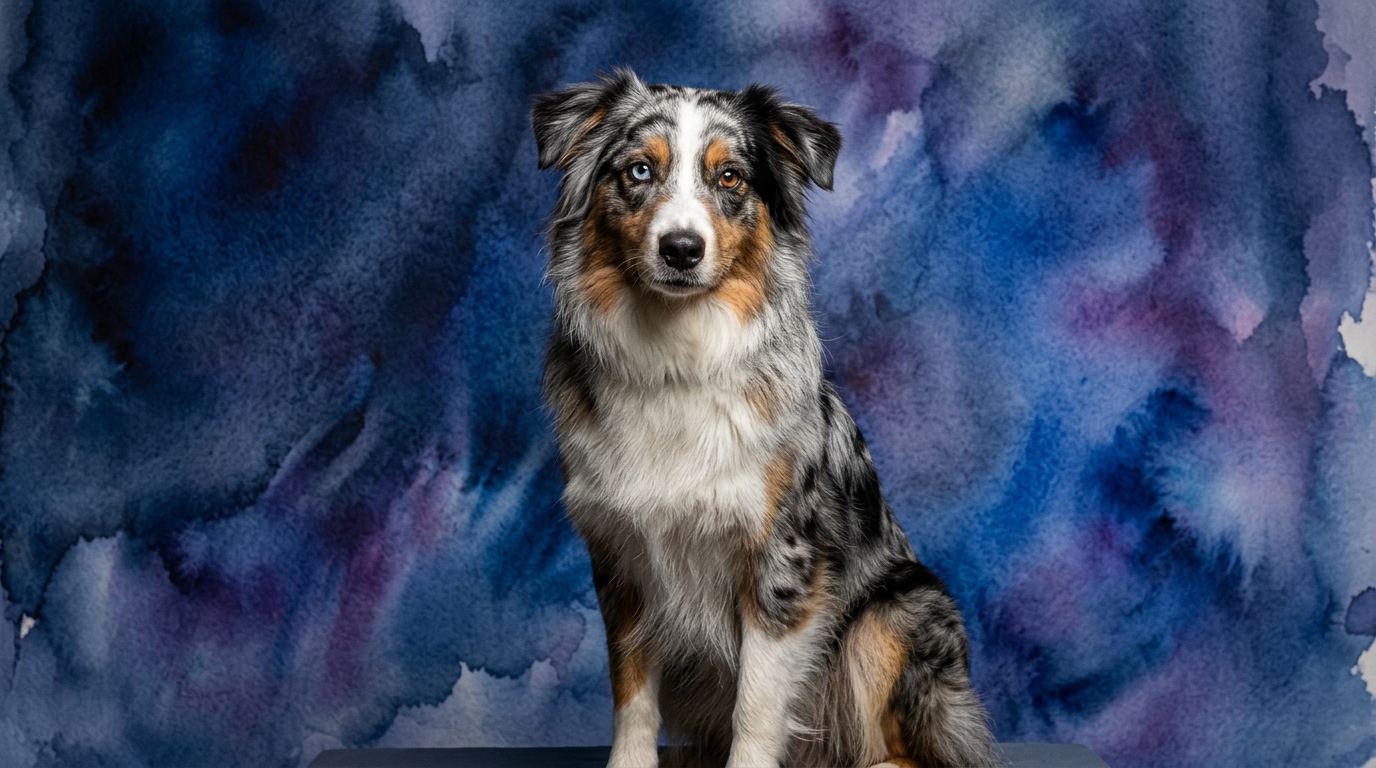
At The Cosmic Pet Pet IQ Lab, we evaluate canine intelligence across five key dimensions. The Australian Shepherd, a breed rooted in herding, presents a profile of exceptional cognitive prowess. Their Problem Solving is rated 5/5, indicating an outstanding capacity to independently navigate complex tasks and adapt to novel situations with strategic thinking. Training Speed is also 5/5, reflecting their remarkable swiftness in grasping new commands and routines, often requiring minimal repetitions. Social Intelligence stands at 4/5, showing a deep attunement to human cues and intentions, though sometimes focused primarily on their immediate human 'flock.' An Instinctive Drive of 5/5 highlights their profound innate urge to manage and control movement, a legacy of their herding origins. Finally, their Memory is 5/5, signifying an exceptional ability to retain learned behaviors, routes, and associations over extended periods.
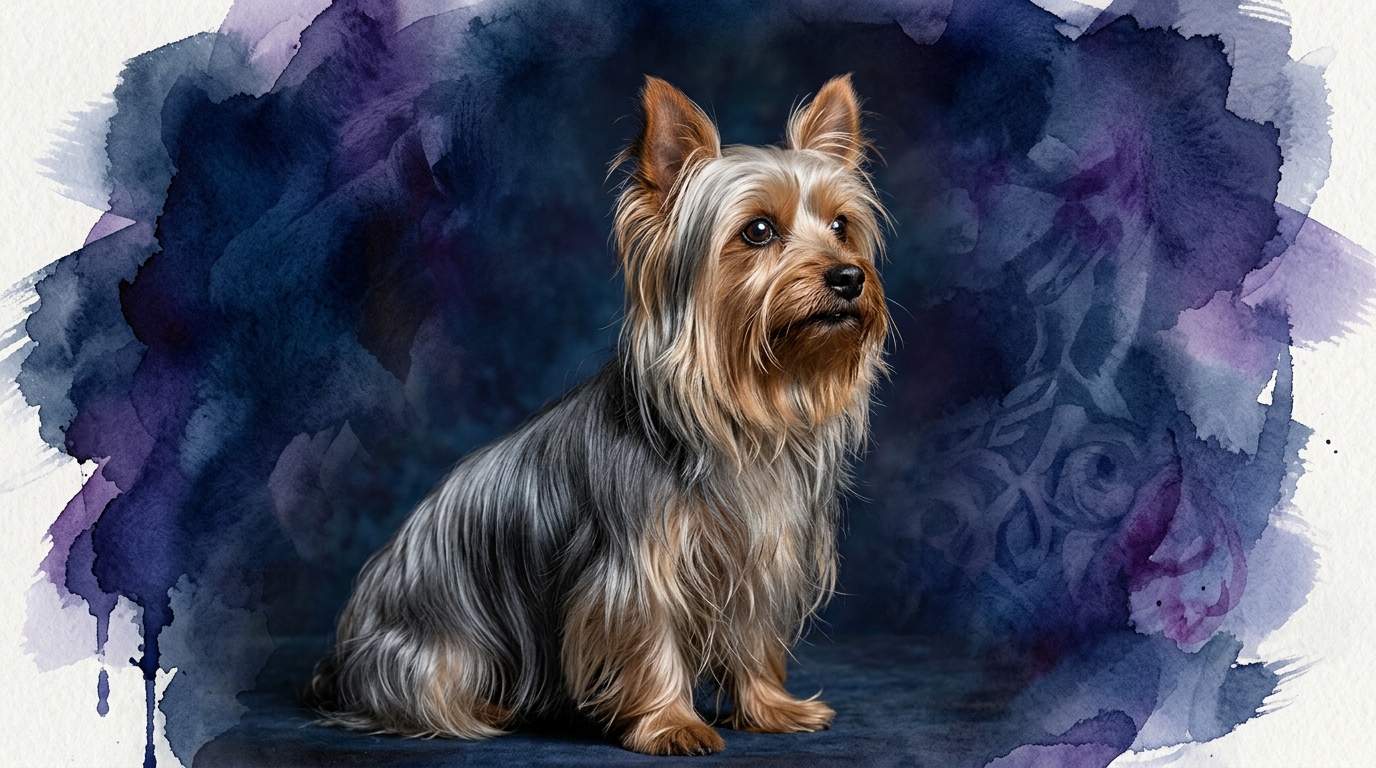
In contrast, the Silky Terrier, a spirited toy breed, exhibits a more balanced and domestically oriented cognitive profile. Their Problem Solving is rated 3/5, indicating a moderate ability to tackle new challenges, often through learned trial-and-error rather than complex strategizing. Training Speed is 3/5; while capable of learning, they require consistent approaches and more repetitions compared to breeds with higher training aptitudes. Social Intelligence is 3/5, meaning they are generally aware of human moods and intentions but might prioritize their own desires or instincts in certain situations. An Instinctive Drive of 3/5 reflects a moderate prey drive and inclination for digging and exploration, present but less intense than a specialized working breed. Their Memory is also 3/5, demonstrating a good capacity for retaining learned commands and routines, though perhaps needing occasional refreshers for less frequently used skills.
Where the Australian Shepherd Excels Cognitively
The Australian Shepherd's superior Problem Solving (5/5) means they can independently navigate intricate challenges, such as figuring out how to manipulate complex latches or devising strategies to retrieve toys from tricky spots. Their capacity for abstract thought allows them to generalize learning from one situation to another, adapting quickly to novel environments or changing rules in games with remarkable ingenuity.
Their unmatched Training Speed (5/5) is a direct result of their intense focus and an innate desire to collaborate with their human companions. This translates into quickly mastering intricate agility sequences or advanced obedience commands with fewer repetitions, often anticipating the next step in a routine. This rapid acquisition makes them highly receptive to advanced training.
The Aussie's perfect score in Instinctive Drive (5/5) signifies a deep-seated motivation for purposeful activity, translating into an eagerness to engage in tasks that simulate herding, such as guiding family members or 'rounding up' objects. This intrinsic drive provides a powerful cognitive engine, making them self-starters in learning and engagement when given appropriate outlets.
Their exceptional Memory (5/5) allows them to recall vast repertoires of commands, associate specific words with actions, and even remember complex sequences of events over long durations. This robust recall makes them highly reliable in performing learned behaviors and adapting to routines, making retraining or refreshing skills relatively straightforward.
Where the Silky Terrier Shines Cognitively
While not excelling in the same cognitive domains as the Aussie, the Silky Terrier's moderate Instinctive Drive (3/5) allows for a more adaptable focus compared to breeds with overwhelming, specialized drives. This means their natural curiosity and desire to explore can be channeled into diverse activities without being constantly overridden by a singular, intense instinct like herding or guarding.
Their balanced Social Intelligence (3/5) means they are affectionate and alert without being overly demanding or intensely focused solely on their owner's every minute intention. This can foster a more independent yet still responsive companionship, where they appreciate human interaction but are also content to engage in self-directed play or relaxation.
The Silky Terrier's cognitive profile, particularly their Problem Solving (3/5) and Training Speed (3/5), indicates a practical intelligence well-suited for navigating a domestic environment rather than complex working roles. They are adept at learning the routines of a household and can be quite clever in finding comfortable spots or communicating their basic needs effectively without needing highly abstract thought.
Their moderate Memory (3/5) is perfectly sufficient for retaining household rules, potty training, and basic commands, allowing them to be well-adjusted and predictable companions within a typical family setting. This means they are reliable in their learned behaviors without requiring constant, high-intensity mental stimulation designed for a working breed.
Training Ease: Australian Shepherd vs. Silky Terrier
The Australian Shepherd is demonstrably easier to train due to their 5/5 scores in both Training Speed and Memory, combined with a 5/5 Instinctive Drive. Their inherent desire to work and please, coupled with rapid comprehension and excellent retention, means they grasp new commands quickly and reliably. For example, an Aussie might learn a complex agility sequence in a few short sessions, maintaining the behavior even after a break, because their brains are wired for absorbing and applying complex sequences. They actively seek mental engagement, making them highly receptive to training as a form of interaction and problem-solving. This breed thrives on clear direction and consistent reinforcement, often anticipating cues and taking initiative in learning, making them a joy for experienced trainers.
The Silky Terrier, with 3/5 in Training Speed and Memory, presents a different training experience. While capable of learning, they require more patience and repetition. Their independent terrier spirit means they might not always prioritize human directives over their own immediate interests, such as chasing a squirrel or investigating a captivating scent. For instance, teaching a Silky to 'stay' might involve more consistent practice in varied environments to overcome distractions, as their focus can be more fragmented. Their moderate instinctive drive means they respond well to positive reinforcement but might not possess the same intrinsic motivation to perform complex tasks as a herding breed. Training a Silky Terrier is more about consistent, engaging sessions that make learning fun, rather than leveraging an intense drive for work.
Suitability for Active vs. Relaxed Owners
The Australian Shepherd, with its 5/5 instinctive drive and high cognitive scores across the board, is ideally suited for active owners. These individuals thrive in environments that offer daily mental and physical challenges, such as advanced obedience, agility, flyball, or herding work. An active owner who can commit to several hours of stimulating activity daily will find an Aussie to be an unparalleled companion, channeling their boundless energy and sharp intellect into productive outlets. They excel when given a 'job' to do, whether it's competitive sports or intricate puzzle toys, and a relaxed owner might find their unmet cognitive and physical needs manifesting as destructive behaviors or excessive 'herding' of family members.
The Silky Terrier, with its moderate instinctive drive (3/5) and balanced cognitive profile, is a better fit for relaxed owners, or those seeking a companion happy with moderate daily activity. While they still require regular walks and playtime to stay healthy and engaged, their needs are less intense than those of a working breed. A Silky Terrier will enjoy exploring the neighborhood, playing fetch in the yard, or engaging with puzzle toys, but they are equally content to cuddle on the couch. Their independence means they don't constantly demand intense mental stimulation, making them suitable for individuals who appreciate a spirited companion that doesn't require a full-time commitment to canine sports or extensive training regimens.
The Verdict
Choose Australian Shepherd if you are an active individual or family seeking a highly trainable, intensely driven companion eager for complex mental and physical challenges, thriving on a consistent 'job' and deep engagement.
Choose Silky Terrier if you prefer a spirited yet adaptable companion with moderate exercise and training needs, offering affectionate loyalty without demanding constant, high-intensity mental or physical engagement.
🧠 Find Your Pet's IQ Score
Our Pet IQ Lab assessment covers 25+ tests across 5 cognitive dimensions — personalized to your breed.
Take the Full IQ Test →Frequently Asked Questions
Do Australian Shepherds need a lot of mental stimulation?
Yes, Australian Shepherds possess exceptional problem-solving and memory skills, coupled with a strong instinctive drive, meaning they require significant daily mental challenges to prevent boredom and potential behavioral issues. Activities like puzzle toys, advanced training, and canine sports are crucial for their well-being.
Are Silky Terriers difficult to train?
Silky Terriers are not inherently difficult to train, but their moderate training speed and independent terrier nature mean they require consistent, patient, and engaging sessions. They respond well to positive reinforcement and can learn basic commands and household rules effectively, though more complex tasks might take longer.
Can a Silky Terrier live in an apartment?
Yes, a Silky Terrier can thrive in an apartment setting, provided they receive regular daily walks and opportunities for play. Their moderate energy levels and smaller size make them adaptable to smaller living spaces, unlike breeds with very high instinctive drives that need expansive outdoor areas.