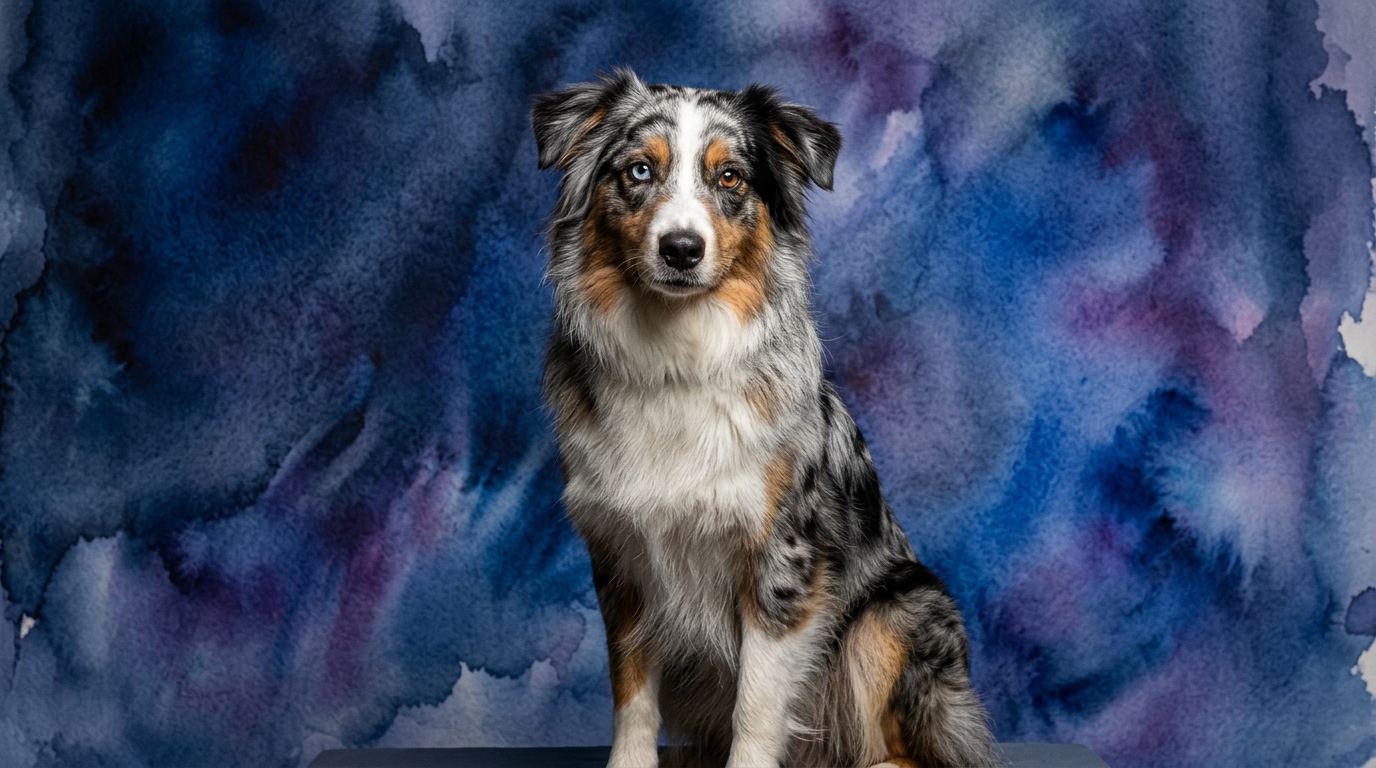
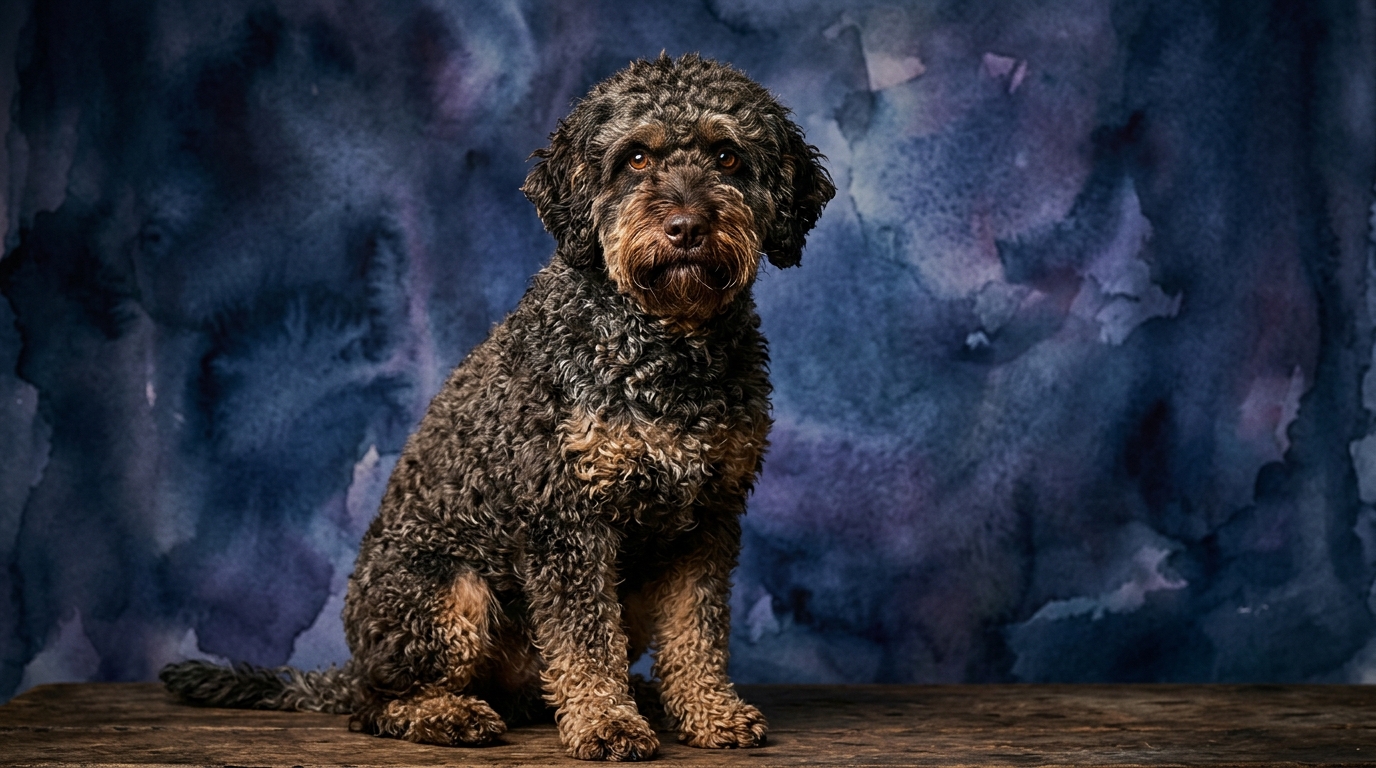
Side-by-Side IQ Profile: Aussie vs. SWD
Australian Shepherd (Aussie): This breed's IQ profile reveals exceptional cognitive prowess. Problem Solving is 5/5, indicating an extraordinary capacity for strategic thinking and adapting to novel situations. Training Speed scores 5/5, reflecting rapid comprehension and quick acquisition of intricate skills. Social Intelligence is 4/5, meaning they read human cues well and form deep bonds, though reserved with strangers. An Instinctive Drive of 5/5 highlights powerful herding instincts and a strong work ethic. Memory is 5/5, allowing recall of commands and experiences with remarkable accuracy over long periods.
Spanish Water Dog (SWD): The Spanish Water Dog presents a distinct cognitive blueprint. Problem Solving is 3/5, suggesting practical task orientation but less inclination for abstract challenges, preferring routine. Training Speed is 3/5, indicating a moderate learning pace requiring consistency, as they can be independent. Social Intelligence is 3/5; loyal to family but wary of strangers, needing early socialization. Instinctive Drive is 3/5, encompassing herding and retrieving, often channeled into guarding or companionship, with less intensity than an Aussie. Memory is 3/5, retaining learned information but potentially needing more repetition for long-term retention.
Where the Australian Shepherd Excels Cognitively
The Australian Shepherd consistently excels in areas demanding high mental agility and rapid processing. Their 5/5 Problem Solving means Aussies actively strategize new approaches to obstacles, demonstrating superior cognitive flexibility for dynamic environments like advanced agility or complex service tasks. Their perfect 5/5 Training Speed and Memory grant unparalleled learning efficiency; they absorb new commands and multi-step sequences with remarkable speed, requiring fewer repetitions and showing exceptional recall. This makes them ideal for intricate training regimens and swift adaptation. Furthermore, their profound 5/5 Instinctive Drive translates into an intrinsic motivation for engagement, ensuring focused intensity that propels them as tireless partners in work or sport.
Cognitive Strengths of the Spanish Water Dog
While numerically lower, the Spanish Water Dog's cognitive strengths are uniquely tailored to their historical roles. Their 3/5 in Problem Solving signifies a practical, grounded approach, adept at real-world challenges pertinent to their environment without always seeking complex novelties. Their 3/5 Social Intelligence, though leading to stranger wariness, fosters an exceptionally deep and protective bond with their immediate family, making them vigilant and devoted guardians. The SWD's 3/5 Training Speed ensures that once a skill is learned through consistent reinforcement, it is typically ingrained reliably. This measured learning style often leads to a highly dependable skill set for task-specific behaviors. Their moderate 3/5 Instinctive Drive, combining herding and retrieving, provides natural work aptitude without overwhelming intensity, making them adaptable to a wider range of active home environments.
Training Dynamics: Which Breed Learns Faster?
The Australian Shepherd generally offers a more straightforward and rapid learning experience due to their distinct cognitive profiles. The Aussie's 5/5 Training Speed means they grasp concepts with astonishing quickness, often learning behaviors in just a few repetitions, and their 5/5 Memory ensures long-term retention. Behaviorally, Aussies display an inherent eagerness to please and a strong desire to work, actively seeking engagement. This intrinsic motivation, coupled with their high Problem Solving ability, allows them to quickly generalize behaviors and even anticipate cues. Their profound Instinctive Drive makes training a natural and fulfilling outlet, ensuring high responsiveness to positive reinforcement.
Conversely, the Spanish Water Dog's 3/5 Training Speed means they learn at a more moderate pace, typically needing more repetitions and consistent reinforcement. Their 3/5 Memory, while adequate, may require periodic refreshers. Behaviorally, SWDs can exhibit an independent and sometimes stubborn streak; they might not always possess the same fervent desire to please or immediate enthusiasm as an Aussie. While capable learners, their engagement often depends on the perceived value of the task or reward. Their moderate Instinctive Drive means they appreciate work but might not relentlessly pursue it with the same intensity, requiring trainers to be more creative and patient. SWDs demand a nuanced, consistent approach, thriving on routine and clear expectations rather than rapid, complex skill acquisition.
Matching Breeds to Owner Lifestyles: Active vs. Relaxed
Understanding the cognitive and drive differences is crucial for matching these herding breeds with the right owner lifestyle. The Australian Shepherd, with its perfect 5/5 scores in Problem Solving, Training Speed, Instinctive Drive, and Memory, is unequivocally suited for highly active and engaged owners. These dogs thrive when given a “job,” whether herding, agility, or complex service work. Their high energy and profound mental stimulation needs mandate daily, structured activities beyond a simple walk. An Aussie requires an owner committed to consistent mental challenges and outlets for their powerful instinctive drives, preventing boredom and potential behavioral issues. They are partners for owners who embrace a dynamic lifestyle and dedicate significant time to training and interactive play.
The Spanish Water Dog, while still an active herding breed, offers a slightly more adaptable fit for owners who are “active but not intensely competitive.” Their 3/5 scores across most IQ dimensions suggest they enjoy stimulating activities but might not demand the same relentless pace or complex mental gymnastics as an Aussie. SWDs appreciate consistent daily exercise like long walks, hikes, or swimming, and benefit from regular training. However, their moderate instinctive drive means they can be content with less structured “work” once physical and mental needs are met. They can adapt to a slightly more relaxed pace than an Aussie, making them suitable for owners who enjoy an active lifestyle but perhaps don’t aspire to the highest levels of dog sports or daily, intensive training. They are vigilant companions appreciating involvement in family activities without needing to be the constant center of a high-octane performance schedule.
The Verdict
Choose an Australian Shepherd if you are an owner seeking an exceptionally intelligent, highly driven, and versatile working partner for advanced dog sports, service roles, or complex tasks, and are prepared to dedicate substantial time to their intense mental and physical stimulation.
Choose a Spanish Water Dog if you appreciate a loyal, vigilant, and adaptable companion with specific working aptitudes like water retrieval or guarding, and can provide consistent, clear training along with moderate daily activity without the extreme intensity an Aussie demands.
🧠 Find Your Pet's IQ Score
Our Pet IQ Lab assessment covers 25+ tests across 5 cognitive dimensions — personalized to your breed.
Take the Full IQ Test →Frequently Asked Questions
Are Australian Shepherds good for first-time dog owners?
While incredibly intelligent, their high drive and intense need for mental and physical stimulation can be overwhelming for inexperienced owners. They require significant commitment to training and enrichment to thrive.
Do Spanish Water Dogs shed a lot?
Spanish Water Dogs have a single coat that cords if left untrimmed, and they are considered low-shedding. However, their coat requires specific grooming to prevent matting and maintain health.
Which breed is better with children?
Both breeds can be good with children, but their approaches differ. Aussies are often playful and tolerant if properly socialized, while SWDs are fiercely loyal and protective, sometimes requiring supervision with unfamiliar children due to their reserved nature.