Side-by-Side Cognitive Profiles: Aussie vs. Griffon
The Cosmic Pet Pet IQ Lab provides a unique lens through which to examine the distinct cognitive architectures of the Australian Shepherd and the Wirehaired Pointing Griffon. While both are purpose-bred dogs, their intellectual priorities diverge significantly, reflecting their heritage.
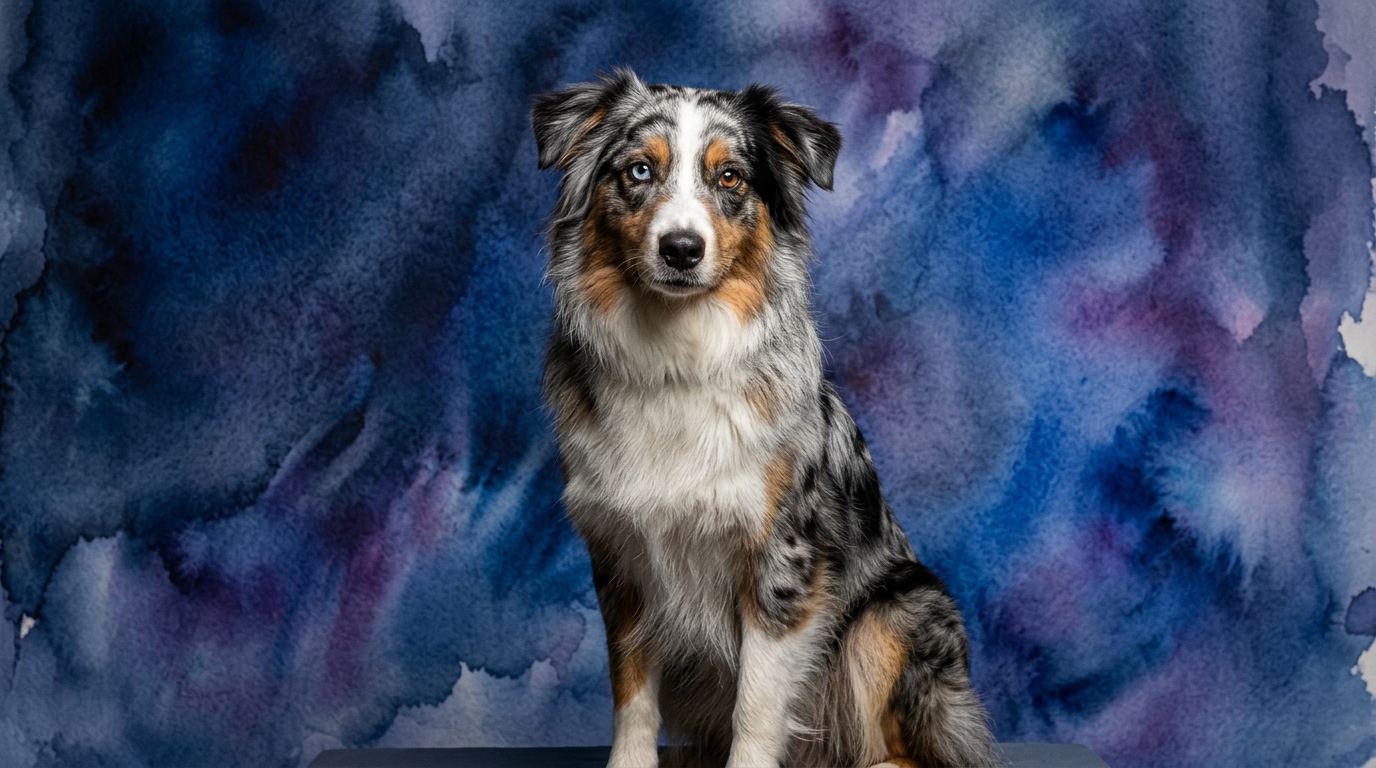
For the Australian Shepherd, a herding breed, the IQ profile paints a picture of exceptional cognitive agility. Their problem-solving ability scores a remarkable 5/5, indicating a strong capacity for independent thought and navigating complex scenarios. Training speed is also at a peak 5/5, suggesting rapid learning and retention of new commands and behaviors. Social intelligence, crucial for working closely with livestock and handlers, stands at a robust 4/5. Their instinctive drive, specifically for herding tasks, is rated 5/5, demonstrating an inherent motivation and aptitude for their foundational work. Finally, their memory is also top-tier at 5/5, essential for recalling intricate patterns, commands, and individual animals.
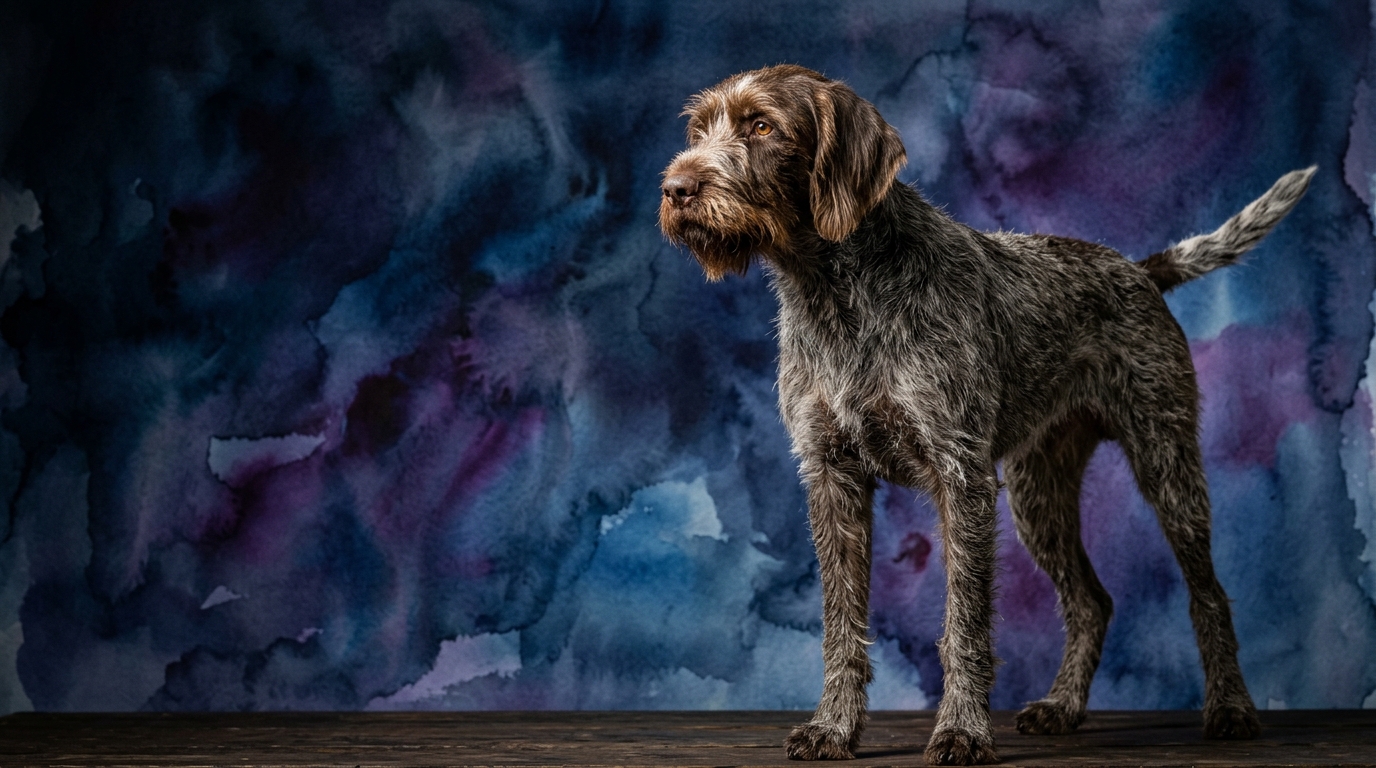
In contrast, the Wirehaired Pointing Griffon, a sporting breed, presents a profile geared towards different challenges. Their problem-solving ability is rated 3/5, indicating competence in practical tasks but perhaps less inclination for abstract or novel puzzle-solving. Training speed aligns at 3/5, suggesting they learn at a steady pace, requiring consistent reinforcement. Social intelligence is also 3/5, meaning they are capable companions but might not possess the nuanced interpretive skills of a herding dog. Their instinctive drive, focused on pointing and retrieving, is 3/5, demonstrating a reliable but perhaps less pervasive drive than the Aussie's herding impulse. Memory, at 3/5, allows them to retain learned behaviors and locate game effectively, though perhaps not with the expansive recall of an Aussie.
Where the Australian Shepherd Excels Cognitively
The Australian Shepherd's cognitive strengths are evident across multiple dimensions, particularly in their capacity for intricate thought and rapid learning. With a 5/5 in problem-solving, Aussies demonstrate an impressive ability to analyze situations and devise solutions, whether it's figuring out how to open a gate or strategically maneuvering livestock. This mental flexibility makes them adept at navigating novel environments and excelling in dog sports that demand complex sequences and quick decisions, such as agility or flyball.
Their 5/5 training speed means they grasp new concepts and commands with remarkable efficiency. An Australian Shepherd can often learn multi-step behaviors after only a few repetitions, and they retain this information over long periods thanks to their 5/5 memory score. This allows for the development of extensive repertoires of commands and tricks, making them highly responsive partners for advanced obedience or service work. The 5/5 instinctive drive, rooted in their herding heritage, means they possess an innate understanding of movement and control, translating into a profound motivation to work and organize, often seeking out tasks even when not explicitly given one.
Furthermore, their 4/5 social intelligence enables them to read human cues and intentions with considerable accuracy. This allows them to anticipate their owner's needs and respond appropriately in various social contexts, fostering a strong, communicative bond. They are not merely following commands; they are often interpreting and adapting based on subtle signals, making them highly attuned companions.
Where the Wirehaired Pointing Griffon Shines Cognitively
While the Wirehaired Pointing Griffon's cognitive scores are generally more moderate, their intellectual profile is perfectly tailored for their specific role as a versatile gun dog. Their 3/5 problem-solving, 3/5 training speed, and 3/5 memory, when combined with their 3/5 instinctive drive for pointing and retrieving, create a dog that is focused, tenacious, and incredibly effective in the field. Rather than complex abstract problem-solving, the Griffon excels at practical application: scent discrimination, tracking game, and executing precise retrieves.
Their cognitive strength lies in their unwavering focus on a task once engaged, a critical trait for a hunting companion. While they may require more repetitions to solidify a command compared to an Aussie, once learned, that behavior is reliably integrated into their working repertoire. Their memory, while not 5/5, is more than sufficient for recalling game locations, marking falls, and navigating familiar hunting grounds with precision. This specialized memory is less about recalling a vast array of tricks and more about practical, task-oriented retention.
The Griffon's 3/5 social intelligence means they are amiable and cooperative, but perhaps less prone to overthinking social dynamics or seeking constant complex interaction. This can translate into a more straightforward, less demanding social presence, allowing them to remain focused on their primary hunting duties without excessive distraction from their surroundings or handler's subtle cues beyond what is necessary for the hunt. Their strength is in their consistent, reliable application of their moderate cognitive abilities towards their singular purpose.
Training Dynamics: Ease and Engagement
When it comes to training, the core differences in their IQ profiles translate into distinct experiences. The Australian Shepherd, with its 5/5 training speed and 5/5 problem-solving, is generally easier to train in terms of learning new commands quickly and understanding complex sequences. They thrive on mental challenges and will often try to figure out what you want before you even fully articulate it, demonstrating a keen desire to engage and learn. This means they often excel in competitive obedience, agility, and other dog sports that demand rapid learning, intricate patterns, and precise execution. However, this cognitive power also means they require consistent mental stimulation; without it, their problem-solving skills might be directed towards undesirable behaviors like finding ways to escape or creating their own 'jobs' around the house.
The Wirehaired Pointing Griffon, with its 3/5 training speed, will typically require more repetitions and patience to learn new commands. Their focus is often more singular, driven by their powerful scenting and pointing instincts. While they are certainly trainable and eager to please their handler, their learning style is more about consistent reinforcement and clear, direct instruction rather than complex, abstract problem-solving. They might take longer to generalize a command to new environments, but once they understand it, they are highly reliable in executing it, especially when it pertains to their instinctive drive. Their social intelligence at 3/5 suggests they are good partners, but perhaps less prone to the nuanced 'mind-reading' that can make an Aussie seem effortless to train for certain tasks. Training a Griffon often involves harnessing their natural hunting instincts and channeling them productively.
Matching Cognitive Profiles to Lifestyles: Active vs. Relaxed Owners
The cognitive profiles of these two breeds offer clear guidance for potential owners regarding lifestyle compatibility. The Australian Shepherd, with its top-tier scores in problem-solving, training speed, instinctive drive, and memory, demands an owner who is not just active physically but also intellectually engaged. These dogs require significant mental stimulation daily to prevent boredom and channel their formidable cognitive energy constructively. Owners who enjoy teaching new tricks, participating in dog sports, or providing complex puzzle toys will find an Aussie to be an incredibly rewarding partner. Their high social intelligence also means they thrive on close interaction and can become distressed if left alone for extended periods without engagement. They are best suited for individuals or families committed to providing a stimulating, structured, and interactive environment.
The Wirehaired Pointing Griffon, while certainly an active breed, requires a different kind of engagement. Their 3/5 scores across the board, coupled with their strong sporting drive, suggest an owner who can facilitate opportunities for them to express their natural hunting instincts. This means regular outdoor excursions, opportunities for scent work, and perhaps actual hunting trips. While they benefit from mental stimulation, it is often more practical and less abstract than what an Aussie demands. They are not typically seeking out complex mental puzzles in the same way. Their more moderate social intelligence means they are affectionate companions but might be less prone to anxiety from being alone, provided their exercise and instinctual needs are met. They are a better fit for owners who appreciate a steadfast, purposeful companion for outdoor adventures, rather than one who constantly seeks intellectual challenges within the home environment.
The Verdict: When to Choose Each Companion
The Verdict
Choose an Australian Shepherd if you are an owner who thrives on intellectual engagement, enjoys teaching complex skills, and can provide extensive mental and physical stimulation for a highly responsive, problem-solving companion.
Opt for a Wirehaired Pointing Griffon if you seek a dedicated, purposeful outdoor companion, value a dog with focused hunting instincts, and are prepared to facilitate opportunities for scent work and field activities rather than abstract mental challenges.
🧠 Find Your Pet's IQ Score
Our Pet IQ Lab assessment covers 25+ tests across 5 cognitive dimensions — personalized to your breed.
Take the Full IQ Test →Frequently Asked Questions
Which breed is better for competitive dog sports?
The Australian Shepherd, with its 5/5 problem-solving and training speed, generally excels in competitive dog sports like agility, obedience, and flyball due to their rapid learning, adaptability, and desire for complex mental tasks. Their high social intelligence also makes them highly attuned partners.
Do Wirehaired Pointing Griffons require less exercise than Australian Shepherds?
While the type of mental stimulation differs, both breeds are active and require significant physical exercise. Griffons need outlets for their sporting instincts like long walks, scent games, or field work, but Aussies often demand both rigorous physical activity and complex mental tasks to prevent boredom, making their overall exercise requirements often more demanding in scope.
Which breed is more prone to behavioral issues if not properly stimulated?
The Australian Shepherd, with its exceptionally high cognitive scores and instinctive drive, is more prone to developing undesirable behaviors like excessive barking, destructive chewing, or herding people/objects if their significant need for mental and physical stimulation is not consistently met. Their problem-solving skills, if undirected, can lead to creative mischief.