
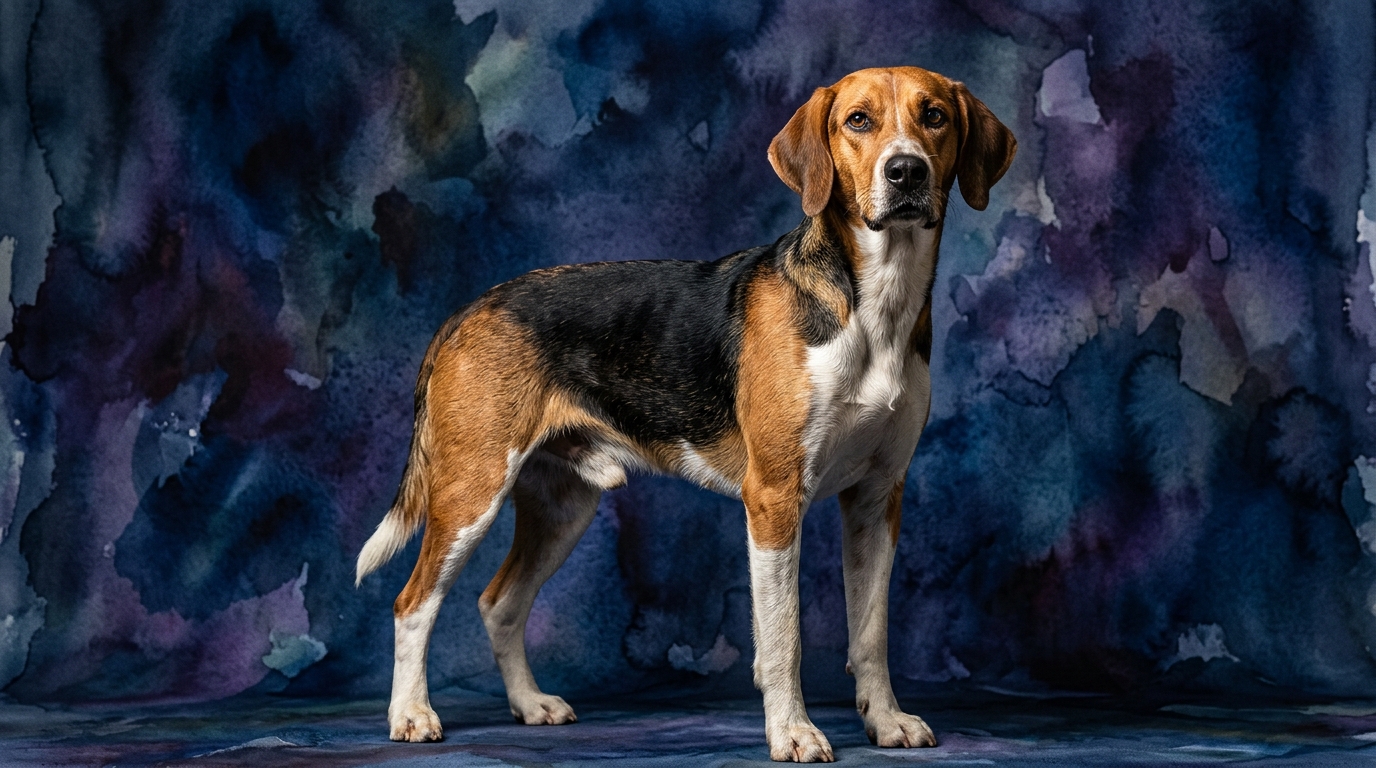
Side-by-Side Cognitive Profiles: Decoding Identical Scores
At first glance, the cognitive assessments of the Australian Terrier and the English Foxhound present a curious parity, with both breeds scoring 3/5 across all five dimensions: Problem Solving, Training Speed, Social Intelligence, Instinctive Drive, and Memory. However, a deeper exploration reveals how these identical numerical values translate into vastly different cognitive styles and behavioral expressions, rooted in their distinct historical roles and breed temperaments.
For the **Australian Terrier**, a 3/5 in **Problem Solving** manifests as tenacious resourcefulness, often involving independent thought to outwit small prey or navigate complex environments. They excel at figuring out how to access desired objects or locations, even if it requires digging, manipulating simple latches, or assessing weak points in a barrier. Their **Training Speed** (3/5) indicates they learn quickly when motivated, but their inherent independent spirit means they often weigh commands against their own perceived priorities. Consistency and engaging, reward-based methods are crucial to harness their learning capacity effectively. Their **Social Intelligence** (3/5) shines in reading their immediate human family, forming strong bonds, but their interactions with strangers or other dogs can be more assertive, rooted in a self-assured terrier nature. The **Instinctive Drive** (3/5) is primarily predatory, focused on small vermin, translating into a strong urge to dig, chase, and bark at perceived intruders or moving objects, often acting on their own initiative. Finally, their **Memory** (3/5) allows them to retain routines, recognize people, and recall successful strategies for achieving their personal goals, which can also extend to remembering negative experiences or inconsistencies.
The **English Foxhound**, conversely, applies its 3/5 scores through a lens of endurance and sensory specialization. Their **Problem Solving** (3/5) typically centers around tracking and pursuit, involving navigating varied terrain, deciphering complex scent trails, and enduring long periods of focused effort. Their solutions are often about persistence and acute sensory interpretation rather than quick, manipulative tactics. Their **Training Speed** (3/5) means they learn effectively through repetition and positive reinforcement, especially when the training aligns with their natural drives. However, their profound scent-driven focus can make them appear less responsive to commands when a compelling scent is present, requiring immense patience and consistent recall work. As a quintessential pack animal, the English Foxhound’s **Social Intelligence** (3/5) excels in group dynamics; they are generally amiable and cooperative with other dogs and people, understanding their role within a larger social structure, often prioritizing harmonious co-existence over individualistic assertion. Their overwhelming **Instinctive Drive** (3/5) is the pursuit of scent, translating into an immense desire to follow a trail with characteristic baying, demonstrating impressive stamina and singular focus over long distances. Their **Memory** (3/5) is particularly strong for scent patterns, established hunting routes, and the cues associated with their work, though their primary sensory input can sometimes override other learned behaviors in highly stimulating environments.
Where the Australian Terrier Excels Cognitively
The Australian Terrier, despite sharing a 3/5 problem-solving score with the Foxhound, demonstrates a distinct cognitive edge in independent, self-initiated problem-solving within its immediate environment. While a Foxhound solves problems through persistent, sensory-driven tracking, the Terrier's approach is more about strategic manipulation and quick adaptation. For instance, an Aussie Terrier might rapidly deduce how to open a cupboard door to access treats, or ingeniously escape a confined space by assessing weak points and leveraging its agility. This isn't merely about tenacity; it's about a nimble analysis of cause-and-effect in a domestic or semi-wild setting, using cunning and physical dexterity rather than sheer endurance. Their problem-solving is often geared towards immediate gratification or overcoming an obstacle to achieve a personal goal, showcasing a 'thinking on their feet' cognitive style. This breed's terrier heritage imbues them with a self-reliant approach to challenges, making them adept at navigating novel situations without constant human direction, often displaying a cleverness in finding loopholes or alternative solutions to achieve their objectives.
Where the English Foxhound Excels Cognitively
The English Foxhound's cognitive strengths, while also rated 3/5, are profoundly specialized, particularly in the realm of sustained, sensory-driven problem-solving and memory. Their ability to follow an intricate scent trail for miles, distinguishing it from countless other environmental odors, represents a sophisticated form of intelligence. This isn't merely instinct; it involves complex cognitive mapping, memory recall of previous scent experiences, and an enduring focus that filters out distractions over extended periods. While an Australian Terrier might solve a puzzle box quickly, a Foxhound can 'solve' the mystery of a long-gone animal's path over hours, meticulously piecing together an invisible narrative through scent. Their memory for these olfactory puzzles, coupled with their stamina, allows for an unparalleled dedication to a single, long-term objective. Furthermore, their pack-oriented 3/5 social intelligence means they excel at cooperative effort, reading the subtle cues of fellow hounds to achieve a shared goal, a nuanced form of social cognition distinct from the Terrier's more individualistic approach. This makes them exceptional at tasks requiring synchronized group effort and a deep understanding of canine social hierarchy.
Training Dynamics: Australian Terrier vs. English Foxhound
When evaluating ease of training, both breeds present a 3/5 training speed, but the *nature* of the training challenge differs considerably, reflecting their breed-specific cognitive leanings. An Australian Terrier typically grasps new commands swiftly, often understanding concepts in fewer repetitions than many breeds. However, their independent streak and self-assured nature mean that *compliance* is not always guaranteed. They might understand 'sit' perfectly but choose to ignore it if a squirrel darts by, prioritizing their inherent chase drive. Training requires consistent, engaging, and varied methods to prevent boredom and leverage their quick wit, making it a constant exercise in convincing them that your agenda is more rewarding than their own, particularly in distracting environments. Their memory for past successes in 'getting their way' can also make them persistent in testing boundaries, demanding a firm yet fair handler.
The English Foxhound, conversely, also learns effectively, but their primary challenge stems from their powerful olfactory focus. They can be incredibly dedicated to a task once engaged, but if a compelling scent captures their attention, all other inputs can fade into the background. This single-mindedness means that recall, especially off-leash, can be a monumental task, requiring immense patience and highly rewarding reinforcement to compete with the lure of a scent. Training often involves extensive proofing in various environments and a high-value reward system to consistently redirect their focus. While they might not grasp a new trick as rapidly as a terrier, their persistence once motivated, particularly for tasks aligned with their tracking instincts, is remarkable. Therefore, while both are 3/5, the Terrier's training challenge is about managing their *willful independence*, while the Foxhound's is about *distraction management* against a formidable natural drive.
Lifestyle Suitability: Active Owners vs. Relaxed Owners
The Australian Terrier, with its terrier spirit and a 3/5 instinctive drive, suits an owner who enjoys active engagement and can provide consistent mental and physical stimulation. They thrive in environments where their problem-solving skills and tenacity can be channeled positively, perhaps through agility, earthdog trials, or extensive interactive play sessions that challenge their quick minds. While they appreciate comfort and cuddling, their active minds and bodies require daily outlets to prevent boredom and potential destructive behaviors. They are not suited for purely relaxed owners who prefer minimal interaction or exercise, as their energy and curiosity demand direction and purpose. Their independence means they appreciate a certain amount of self-directed activity, but still require a handler who can lead with confidence and consistency, integrating them fully into family life.
The English Foxhound, despite its 3/5 instinctive drive, requires a very specific type of active owner. Their drive is almost entirely focused on scent and endurance, meaning they need significant opportunities for long, sustained runs or walks, ideally where they can safely explore scents over vast distances. They are not typically suited for short, intense bursts of activity, but rather hours of steady, purposeful movement. A relaxed owner who cannot provide this level of consistent, enduring physical outlet will find a Foxhound challenging, as their pent-up energy will inevitably find an outlet, often through baying or destructive chewing. However, they are generally amiable and less demanding of constant mental 'puzzles' than a terrier, preferring to follow their nose. Owners who enjoy long hikes, trail running, or even participating in scent work would find a fulfilling companion, making them suitable for active owners with a particular type of sustained, outdoor activity in mind, rather than a generally 'relaxed' lifestyle focused on sedentary companionship.
The Verdict
Choose the Australian Terrier if you appreciate a clever, independent companion who thrives on mental challenges and engaging play, and you are prepared to channel their tenacious problem-solving and assertive nature with consistent, stimulating training. They are ideal for active owners seeking a dog with a distinct personality and a flair for self-directed ingenuity.
Opt for the English Foxhound if you are an owner dedicated to providing extensive, sustained physical exercise, particularly long outdoor excursions where their profound scent drive can be indulged safely. This breed suits those who value a good-natured, cooperative pack animal with impressive stamina and a singular focus when on a trail, understanding their need for a specific, enduring activity.
🧠 Find Your Pet's IQ Score
Our Pet IQ Lab assessment covers 25+ tests across 5 cognitive dimensions — personalized to your breed.
Take the Full IQ Test →Frequently Asked Questions
Do Australian Terriers and English Foxhounds learn at the same pace?
While both breeds rate 3/5 for training speed, their learning styles and challenges differ. Australian Terriers often grasp concepts quickly but require consistent motivation to overcome their independent streak, whereas English Foxhounds learn effectively through repetition but can be significantly distracted by their powerful scent drive, making consistent recall more challenging.
How does their problem-solving ability differ despite identical scores?
The Australian Terrier's 3/5 problem-solving manifests as independent, resourceful cunning in navigating immediate obstacles or outsmarting small prey within its environment. The English Foxhound's 3/5 problem-solving is specialized for sustained, sensory-driven tracking, deciphering complex scent trails over long distances, demonstrating endurance and focus on a singular objective.
Which breed is better for a family with other pets?
The English Foxhound, with its pack-oriented 3/5 social intelligence, often integrates well with other dogs and can be amiable with various pets if introduced properly, valuing group cohesion. The Australian Terrier's 3/5 social intelligence is more family-focused and can be assertive with other dogs or small pets due to their strong prey drive, requiring careful management and socialization from a young age.