Side-by-Side Cognitive Profile: Interpreting the 3/5 Score
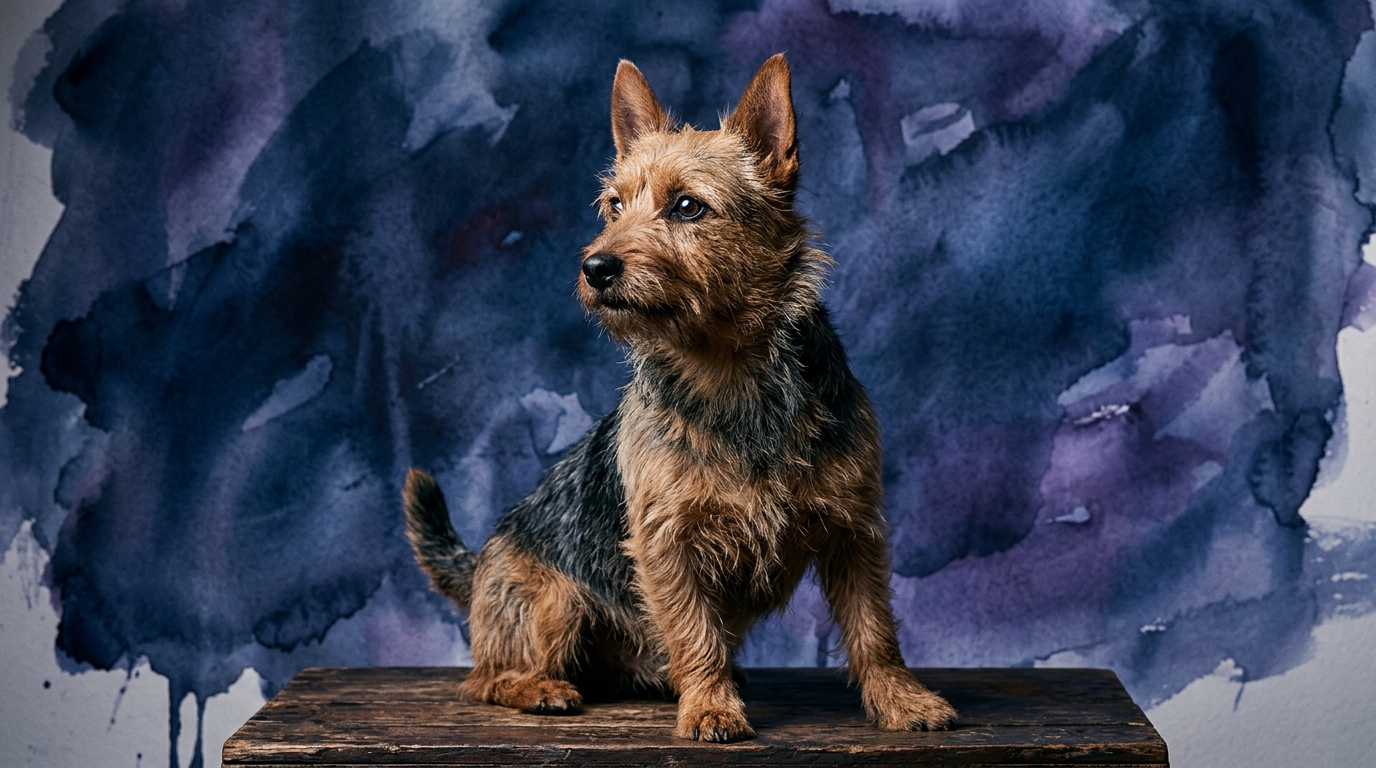
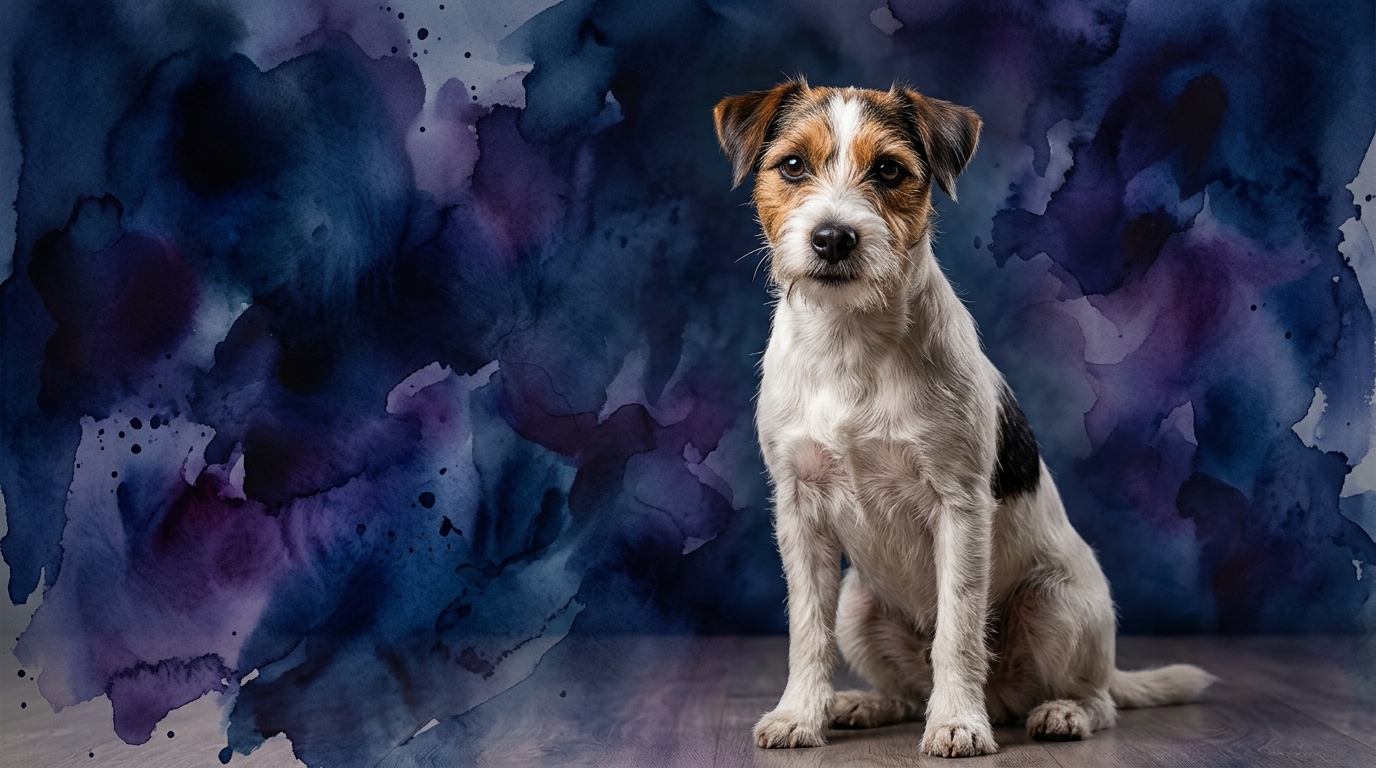
At The Cosmic Pet Pet IQ Lab, both the Australian Terrier and the Parson Russell Terrier register a consistent 3 out of 5 across all five cognitive dimensions: Problem Solving, Training Speed, Social Intelligence, Instinctive Drive, and Memory. This uniform scoring doesn't suggest identical minds, but rather a shared baseline of capability that manifests uniquely within each breed's historical context and typical temperament.
For Problem Solving (3/5), the Australian Terrier exhibits a practical, resourceful cunning, adept at figuring out how to access a coveted toy or navigate a familiar environment through persistent trial and error. Their solutions are often immediate and tangible, focused on comfort or securing a desired item. The Parson Russell Terrier's 3/5 in problem-solving, however, is expressed through determined, often single-minded focus on a goal. Their working history means they are skilled at persistent, strategic thinking when pursuing quarry or overcoming field obstacles, driven by a powerful, inherent motivation.
In Training Speed (3/5), the Australian Terrier shows a moderate learning pace, grasping new commands effectively when training is engaging and consistent. Their occasional stubborn streak is often a test of boundaries rather than a refusal to learn. The Parson Russell Terrier's 3/5 reflects a quick uptake of commands, especially when tasks tap into their prey drive. Yet, their intense focus and independent nature demand clear, firm, and inventive training to keep them engaged and prevent their sharp minds from inventing their own, often mischievous, activities.
Social Intelligence (3/5) in the Australian Terrier suggests they are perceptive to human moods and family dynamics, forming strong bonds and adjusting behavior based on subtle cues. They enjoy companionship but maintain a balanced independence. The Parson Russell Terrier's 3/5 means they are attentive to handler instructions and can discern social hierarchies, particularly in a working context. However, their intense task focus can sometimes override subtle social cues from those outside their immediate 'working' circle.
Regarding Instinctive Drive (3/5), the Australian Terrier possesses a well-defined yet generally manageable prey drive, a legacy of their vermin-hunting past. This drive is present and can be channeled into appropriate play without dominating their personality. For the Parson Russell Terrier, a 3/5 in instinctive drive is a core part of their identity; their urge to hunt, dig, and explore is robust and pervasive, reflecting their breeding for fox bolting. This is a powerful, inherent motivation that shapes much of their behavior.
Finally, Memory (3/5) for the Australian Terrier signifies a solid ability to recall commands, routines, and specific locations. They remember pleasant experiences and corrections, navigating familiar territories with ease. The Parson Russell Terrier's 3/5 in memory enables them to retain complex sequences of actions and locations, particularly those associated with their hunting instincts, building a detailed mental map of their environment and past successful endeavors.
Where the Australian Terrier Excels Cognitively
While both breeds possess admirable cognitive traits, the Australian Terrier demonstrates particular strengths in adaptable domestic problem-solving. Their 3/5 problem-solving score, coupled with their 3/5 social intelligence, often translates into a keen ability to navigate household routines and social dynamics with a more measured approach. They are adept at figuring out how to get attention or secure a favored spot without the same level of intense, relentless pursuit seen in some working terriers. This nuanced understanding of their human environment allows them to integrate smoothly into family life, making subtle adjustments to their behavior based on perceived household moods or rules. Their memory (3/5) serves them well in remembering household boundaries and preferred interaction styles, often requiring fewer repeated corrections once a routine is established. This cognitive blend makes them particularly adept at being a perceptive, yet not overwhelming, companion, excelling in subtle communication within the home.
Where the Parson Russell Terrier Excels Cognitively
Conversely, the Parson Russell Terrier's cognitive advantages shine brightest in scenarios demanding sustained focus and physical application of intelligence. Their 3/5 problem-solving and 3/5 instinctive drive are deeply intertwined, making them exceptionally effective at overcoming physical obstacles and persisting through challenges to achieve a specific goal, such as finding a hidden toy or navigating an agility course with precision. This isn't just about figuring out *how* to do something, but *doing* it with unwavering determination. Their memory (3/5) particularly excels at recalling complex routes, scent trails, and sequences of actions relevant to their active pursuits. This breed exhibits a remarkable capacity for sustained mental engagement when a task aligns with their inherent drives, allowing them to excel in activities that require both physical prowess and strategic thinking over extended periods, often outlasting other breeds in sheer tenacity.
Training Dynamics: A Tale of Two Terriers
Comparing the ease of training between these two breeds requires acknowledging their distinct temperamental nuances, despite identical 3/5 training speed scores. The Australian Terrier, while possessing a terrier's independence, often presents as slightly more amenable to direction. Their social intelligence (3/5) allows them to be quite responsive to positive reinforcement and praise, often valuing the cooperative bond with their owner. They can be motivated by treats and and engaging play, and while they might test boundaries, their enthusiasm for pleasing their human companions can make training a relatively straightforward, if consistent, endeavor. Their occasional stubbornness is often a gentle pushback rather than an outright refusal, making them generally more biddable for novice trainers.
The Parson Russell Terrier, on the other hand, brings a more intense and singular focus to the training process. Their powerful instinctive drive (3/5) means they learn quickly when the task is engaging or taps into their natural prey drive, but they can also become easily bored or distracted if the training isn't stimulating enough. Their problem-solving (3/5) can sometimes be directed towards finding ways *around* commands if they perceive a more interesting alternative, requiring a trainer to be one step ahead. Training a Parson Russell demands a firm, consistent, and creative approach, transforming their formidable drive into a positive force. While both learn at a moderate pace, the Australian Terrier's generally more agreeable disposition often makes the *process* of training feel less challenging for the average owner seeking a companion, whereas the Parson Russell demands a more experienced hand to channel their robust mental energy effectively.
Lifestyle Suitability: Active Adventurers vs. Balanced Companions
The choice between an Australian Terrier and a Parson Russell Terrier based on owner lifestyle hinges significantly on how their innate intelligence and drives manifest. For active owners seeking a dog to join them in vigorous outdoor pursuits, the Parson Russell Terrier is often the more fitting match. Their formidable instinctive drive (3/5) and tenacious problem-solving (3/5) make them tireless companions for hiking, running, agility, or earthdog trials. They thrive on having a 'job' and require consistent mental and physical stimulation to prevent boredom, which they might otherwise alleviate through less desirable behaviors like excessive digging or barking. Their cognitive profile demands an owner who is equally active and committed to providing structured outlets for their sharp minds and abundant energy, thriving on partnership in adventurous endeavors.
Conversely, for owners who appreciate activity but also value periods of relaxed companionship, the Australian Terrier often proves to be a more balanced choice. While still energetic and playful, their instinctive drive (3/5) is generally more manageable, and their social intelligence (3/5) allows them to transition more smoothly between periods of vigorous play and quiet downtime. They enjoy walks and games but are typically more content to curl up beside their owner after sufficient exercise. Their problem-solving skills are often applied to more domestic scenarios, making them excellent, perceptive household members without the constant demand for high-octane engagement, making them suitable for owners seeking a spirited but adaptable companion.
The Verdict
Choose the Australian Terrier if you seek a perceptive, spirited companion who integrates smoothly into family life, offering a balanced blend of playful energy and affectionate downtime.
Opt for the Parson Russell Terrier if you are an experienced, highly active owner eager to channel a powerful, task-oriented intellect into adventurous outdoor activities and challenging dog sports.
🧠 Find Your Pet's IQ Score
Our Pet IQ Lab assessment covers 25+ tests across 5 cognitive dimensions — personalized to your breed.
Take the Full IQ Test →Frequently Asked Questions
Are Australian Terriers good with children?
Australian Terriers, with their 3/5 social intelligence, can be good with respectful children, often forming close bonds within the family. However, their terrier nature means they might not tolerate rough play, so supervision is always recommended to ensure positive interactions for both dog and child, teaching boundaries to both.
How much exercise does a Parson Russell Terrier need daily?
Parson Russell Terriers, driven by their robust 3/5 instinctive drive, require significant daily exercise, typically an hour or more of vigorous activity. This includes structured walks, running, and mentally stimulating games to satisfy their high energy levels and prevent boredom, channeling their innate drive constructively.
Do Australian Terriers bark a lot?
Australian Terriers do possess a terrier's tendency to bark, especially when alerting to strangers or perceived threats, reflecting their historical role as guardians. While their 3/5 social intelligence allows for training to manage this, consistent effort is needed to ensure their vocalizations remain appropriate rather than excessive.