A Side-by-Side Look at Their Cognitive Profiles
The Cosmic Pet Pet IQ Lab assigns both the Australian Terrier and the Sealyham Terrier identical scores across five crucial cognitive dimensions: Problem Solving (3/5), Training Speed (3/5), Social Intelligence (3/5), Instinctive Drive (3/5), and Memory (3/5). These uniform scores suggest both breeds possess a robust, functional intelligence, characteristic of many working terriers, rather than exhibiting extreme highs or lows in any single area. A '3/5' rating generally indicates a capable, average aptitude, meaning these dogs are neither exceptionally quick nor particularly slow in their learning and mental processing.
For Problem Solving, a 3/5 indicates an ability to navigate familiar challenges, figure out how to retrieve a desired object, or adapt to minor changes in routine. This isn't about complex abstract thought, but rather practical, goal-oriented reasoning often driven by their terrier tenacity. Training Speed at 3/5 means they absorb new commands and behaviors at a moderate pace, requiring consistent, clear instruction rather than instant grasp or extensive repetition. Their Social Intelligence score of 3/5 suggests they are adept at understanding basic human cues and household dynamics, capable of forming strong bonds and recognizing social hierarchies within their family unit, though they may display typical terrier independence with strangers.
The Instinctive Drive score of 3/5 reflects a moderate, manageable level of innate behaviors such as prey drive, digging, and territorial alertness. For terriers, this means these drives are present and observable, influencing their interactions with the world, but not overwhelmingly so. Finally, a Memory score of 3/5 denotes solid retention of learned behaviors, routines, and past experiences. They will remember their training, the layout of their environment, and the people they encounter, contributing to their reliability and consistency within their established lives.
Where the Australian Terrier Shows Distinct Cognitive Strengths
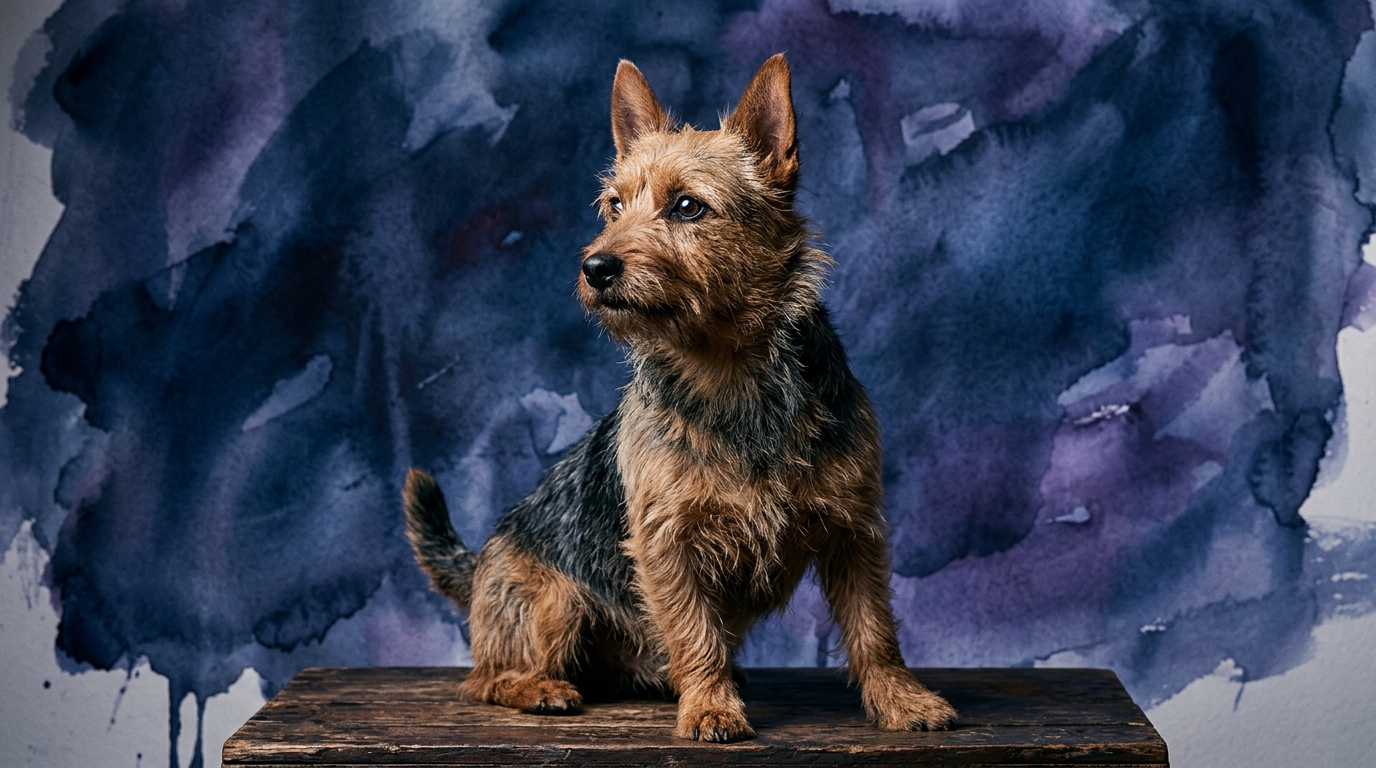
Despite identical numerical scores, the Australian Terrier often demonstrates its cognitive abilities with a characteristic versatility and adaptability. Its Problem Solving (3/5) frequently manifests as quick, resourceful thinking, particularly in varied environments. Bred to hunt vermin in diverse Australian landscapes, from rural properties to urban settings, this breed developed a pragmatic approach to obstacles. An Australian Terrier might quickly assess a new situation, like a novel puzzle toy or an unfamiliar walking route, and attempt several solutions with an energetic, trial-and-error approach until success is achieved.
The Australian Terrier's Social Intelligence (3/5) often presents as an outgoing, confident demeanor, allowing it to adapt readily to new people and social situations. While retaining a terrier's self-assuredness, their keen observation skills enable them to quickly gauge the mood of a room or the intentions of a new acquaintance. This contributes to their reputation as a plucky, engaging companion, capable of integrating smoothly into various family dynamics and social gatherings without excessive shyness or aggression, relying on their perception of social cues to navigate interactions effectively.
Its Memory (3/5) is robust for routines and the emotional states of its human companions. An Australian Terrier is likely to remember which family member is more lenient with treats or which park offers the best sniffing opportunities, demonstrating a practical application of memory tied to its daily enjoyments and social interactions.
Where the Sealyham Terrier Shows Distinct Cognitive Strengths
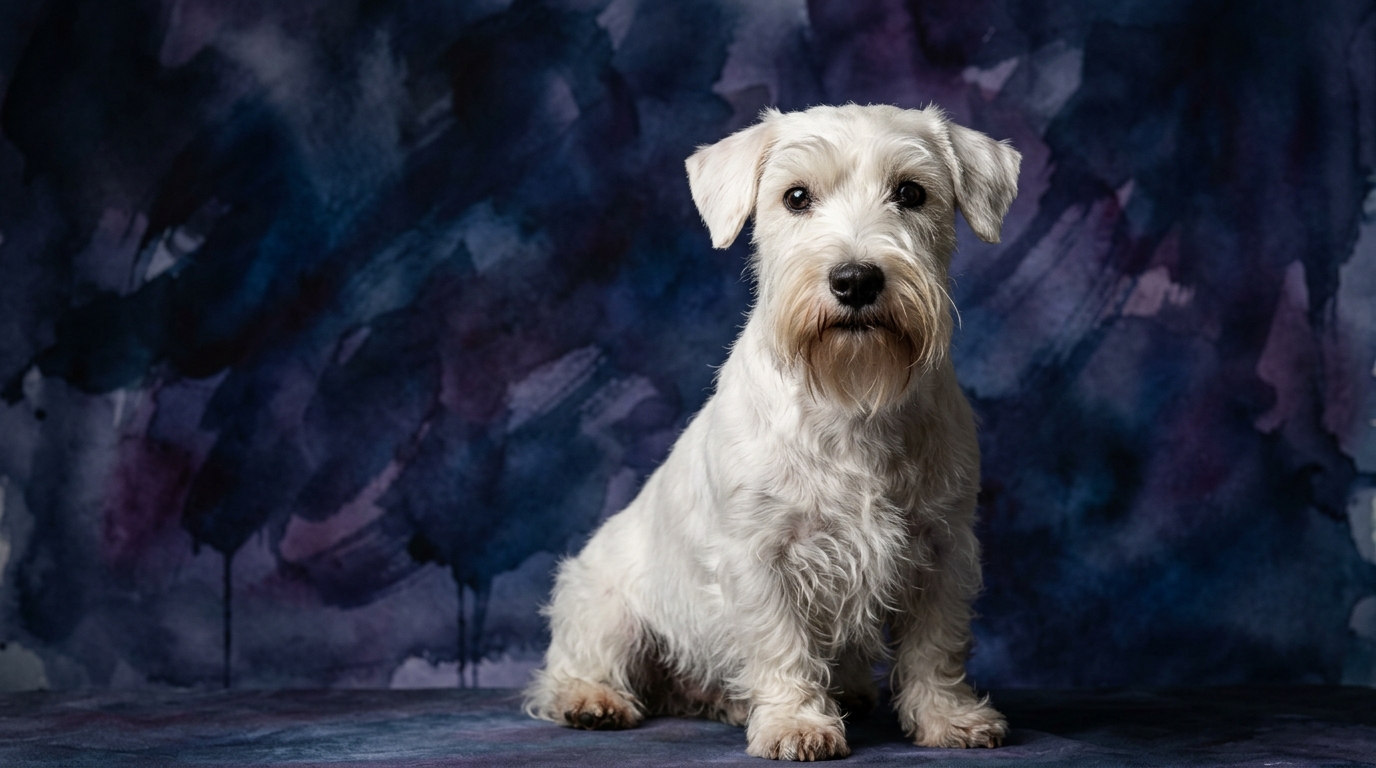
The Sealyham Terrier, while scoring identically, often showcases its cognitive prowess through a tenacious focus and a profound loyalty that shapes its mental processes. Its Problem Solving (3/5) is often characterized by persistence rather than rapid-fire adaptability. Originating as a specialized hunter of badgers and otters, the Sealyham was bred for methodical, determined work. This translates into a dog that, when faced with a challenge, might take a more deliberate, unyielding approach, sticking with a task until it's resolved, rather than easily giving up. This could be seen in their dedication to uncovering a scent or figuring out a gate latch.
The Sealyham's Social Intelligence (3/5) often leans towards deep, unwavering bonds with its immediate family, rather than broad social ease. They are perceptive regarding their family's emotions and routines, often forming an almost intuitive understanding with their chosen humans. While they might be more reserved or discerning with strangers, their ability to read and respond to their family's needs is a significant aspect of their social cognition. This manifests as a devoted companion who is deeply attuned to the nuances of their home environment and the moods of those closest to them, often displaying a quiet empathy.
Furthermore, their Instinctive Drive (3/5), while moderate, is notably channeled and focused. The Sealyham remembers and applies specific hunting or digging techniques with remarkable consistency once engaged. Their memory (3/5) is particularly strong for tasks they deem important or enjoyable, especially those that tap into their core terrier instincts, allowing them to recall learned behaviors with precision when the motivation is high.
Which is Easier to Train and Why
Both breeds share a Training Speed score of 3/5, indicating they are capable learners but possess the independent spirit typical of terriers, meaning 'easy' is relative. The Australian Terrier, often described as keen and alert, might appear to learn new commands with greater initial enthusiasm. Their desire to be involved and their generally outgoing nature can make them responsive to positive reinforcement and engaging training sessions. However, their terrier independence means they can also get bored easily or decide a command isn't worth their effort, requiring trainers to maintain novelty and motivation.
The Sealyham Terrier, with its sturdy and tenacious disposition, might require a bit more patience and consistent motivation during training. While they learn at the same pace, their stubborn streak can be more pronounced if they don't perceive the value in a command or if the training isn't engaging enough. Once a Sealyham understands a command and is motivated to perform it, their dedication can be unwavering. This means that while initial training might feel like a slow burn, the results are often very solid and reliable due to their inherent persistence. Trainers must be firm, fair, and incredibly consistent with a Sealyham, focusing on building a strong, trusting relationship to unlock their cooperative side.
In essence, the Australian Terrier might be quicker to pick up basic cues but might test boundaries more often, while the Sealyham might take longer to grasp concepts but will perform them with greater consistency once committed. Neither is inherently 'easier' in a straightforward sense; rather, they demand different approaches to harness their 3/5 training speed effectively.
Suitability for Active vs. Relaxed Owners
When considering an Australian Terrier, potential owners should be prepared for a spirited companion. Their 3/5 Instinctive Drive fuels a desire for regular activity and mental engagement. These are robust, energetic dogs that thrive on daily walks, playtime, and opportunities to explore. An active owner who enjoys outdoor activities, provides consistent mental stimulation through training or puzzle toys, and can keep up with a plucky, curious dog will find the Australian Terrier a delightful match. They adapt well to various living situations but truly flourish when their physical and cognitive needs for exploration and engagement are met consistently.
The Sealyham Terrier, while still a terrier with an inherent drive, often exhibits a slightly more moderate energy level indoors compared to some other terrier breeds. Their 3/5 Instinctive Drive is present, but their tenacious nature might lead them to be content with focused activities rather than constant motion. A Sealyham can be a good fit for an owner who appreciates a devoted companion and can provide regular, moderate exercise, such as daily walks and secure yard play, combined with mental enrichment. They can adapt well to apartment living or homes with smaller yards, provided their exercise needs are met and they receive ample attention and opportunities to use their problem-solving skills in a more structured, indoor setting. They are often content to curl up with their family after their physical and mental stimulation needs are satisfied, making them suitable for slightly less active, yet still engaged, owners.
The Verdict
Choose an Australian Terrier if you seek an adaptable, outgoing companion for an active lifestyle, who enjoys varied experiences and engages with the world with spirited curiosity.
Opt for a Sealyham Terrier if you value a deeply loyal, persistent companion for a moderately active household, appreciating their unwavering dedication and methodical approach to life.
🧠 Find Your Pet's IQ Score
Our Pet IQ Lab assessment covers 25+ tests across 5 cognitive dimensions — personalized to your breed.
Take the Full IQ Test →Frequently Asked Questions
Do Australian Terriers and Sealyham Terriers have similar cognitive needs?
Yes, with identical IQ scores, both breeds require moderate mental stimulation to thrive. They benefit from consistent training, puzzle toys, and opportunities to use their problem-solving skills, preventing boredom and channeling their innate terrier drives effectively.
Are these terriers difficult to live with due to their instinctive drives?
Both breeds have a 3/5 Instinctive Drive, meaning their terrier instincts are present but manageable. With proper socialization, consistent training, and appropriate outlets for their energy and curiosity, their drives can be channeled into positive behaviors, making them rewarding companions.
Which breed is better for first-time dog owners?
Both breeds can be suitable for first-time owners who are committed to consistent training and understanding terrier temperaments. The Australian Terrier's outgoing nature might be slightly more forgiving, while a Sealyham requires an owner ready for a bit more stubbornness but who will be rewarded with profound loyalty.