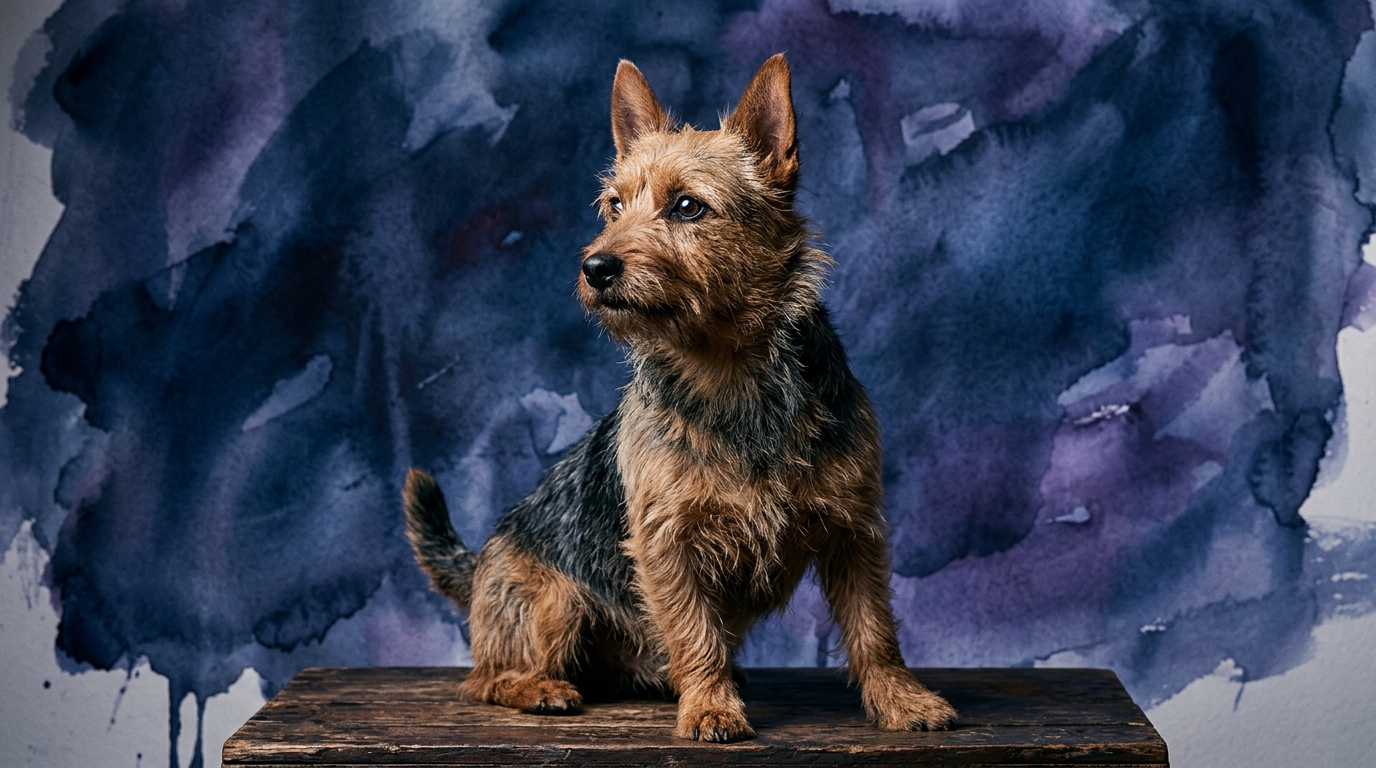
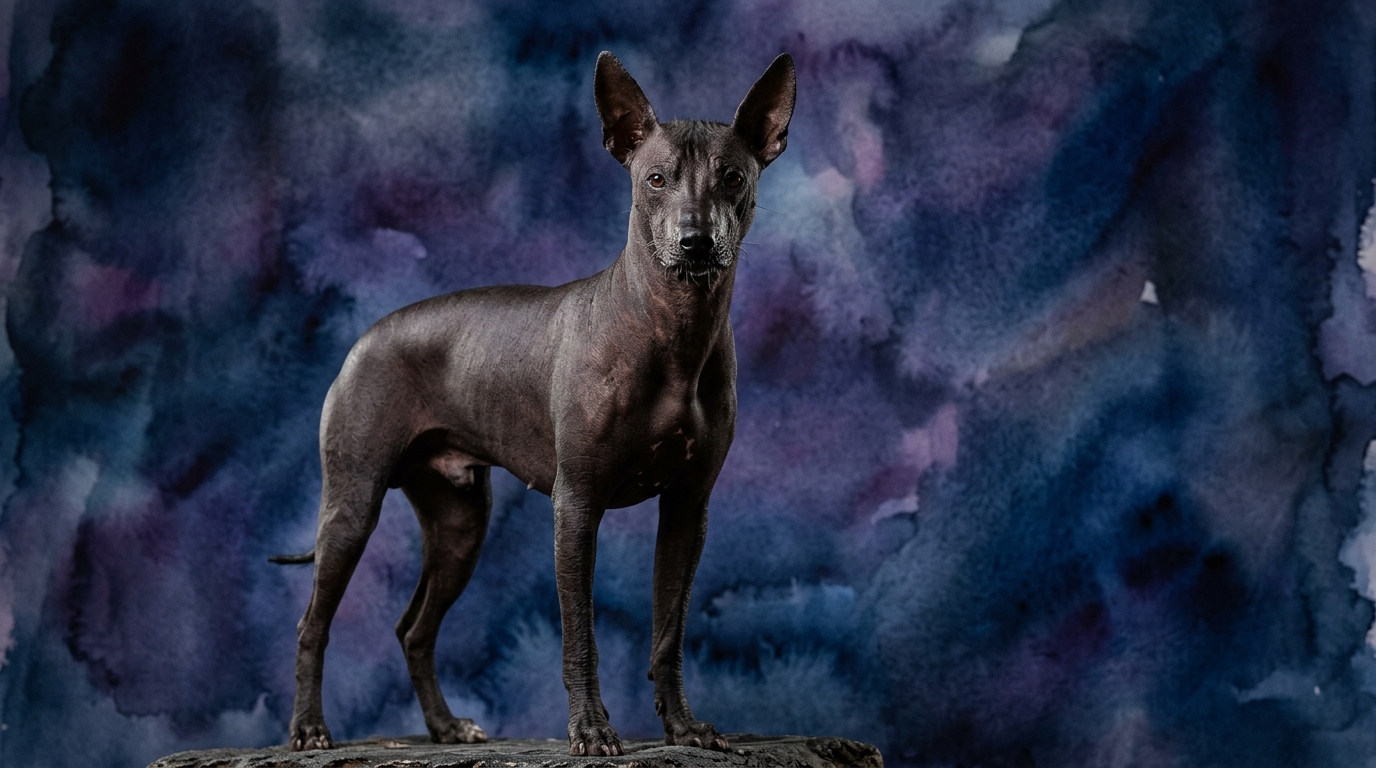
Side-by-Side Cognitive Profiles: Australian Terrier vs. Xoloitzcuintli
The Cosmic Pet Pet IQ Lab assigns both the Australian Terrier and the Xoloitzcuintli a consistent 3/5 rating across five key cognitive dimensions. This identical numerical assessment doesn't imply identical mental processes, but rather a similar *level* of capability expressed through very different breed-specific lenses. Let's explore how these scores manifest in each breed.
For the **Australian Terrier**, Problem Solving (3/5) often involves their tenacious pursuit of small prey or figuring out how to access intriguing spaces, driven by their terrier instincts rather than complex abstract thought. Their Training Speed (3/5) reflects a willingness to learn coupled with an independent streak; they grasp commands readily but might weigh their own desires against compliance. Social Intelligence (3/5) shows in their keen awareness of family dynamics and an ability to read other dogs, though often with a confident, assertive edge. Instinctive Drive (3/5) is robust, centered on chasing, digging, and alerting, a direct inheritance from their vermin-hunting heritage. Memory (3/5) is solid, allowing them to retain routines, learned behaviors, and the locations of favored items or past 'victories'.
The **Xoloitzcuintli**, an ancient breed, displays Problem Solving (3/5) through a different lens, often involving clever manipulation of their environment for comfort or subtly communicating needs to their chosen humans. Their Training Speed (3/5) is characterized by quick learning when treated with gentleness and consistency, though their sensitivity means harsh methods are counterproductive. Social Intelligence (3/5) is profoundly expressed within their family unit, where they are incredibly attuned to human emotions and subtle cues, though they remain famously aloof with strangers. Instinctive Drive (3/5) is strong in their protective and companionate nature, with less emphasis on prey drive and more on guarding their home and bonding deeply. Memory (3/5) is excellent, particularly for people and experiences, which means early positive socialization is crucial, as they can recall both pleasant and unpleasant encounters with clarity.
Where the Australian Terrier Excels Cognitively
The Australian Terrier's cognitive strengths shine in scenarios demanding persistence, quick physical reaction, and independent, practical problem-solving. Their '3/5' in Problem Solving, when paired with their tenacious Instinctive Drive, means they excel at tasks requiring them to overcome physical obstacles or outsmart small, quick targets. For example, in competitive earthdog trials or agility courses where determination is as valuable as precise execution, the Aussie Terrier's grit and quick reflexes give them an edge.
Their '3/5' in Training Speed, combined with their assertive Social Intelligence, allows them to adapt rapidly to new commands, especially when the task feels like a stimulating game. They are adept at learning sequences of actions that lead to a tangible reward, like finding a hidden toy or navigating a complex path to a treat. This breed's specific cognitive advantage lies in their ability to combine physical prowess with focused, goal-oriented thinking, making them particularly effective in dynamic, hands-on challenges.
Where the Xoloitzcuintli Shows Cognitive Prowess
The Xoloitzcuintli's cognitive prowess is most evident in areas requiring nuanced social understanding, observational learning, and a calm, discerning approach. Their '3/5' in Social Intelligence translates into an almost uncanny ability to read and respond to the emotional states of their family members. This makes them exceptional at providing comfort and companionship, often anticipating needs before they are explicitly communicated, a trait less about overt action and more about subtle empathy.
Their '3/5' in Problem Solving, combined with their watchful nature and strong Memory, allows them to excel in tasks that require quiet observation and strategic planning, such as figuring out the most comfortable spot in a room to monitor their environment, or subtly influencing human behavior to achieve their desires. They might not be the flashiest problem-solvers in a chaotic environment, but in a stable, familiar setting, their intuitive grasp of cause and effect, paired with their deep bond, allows for a sophisticated form of cognitive interaction.
Training Dynamics: Australian Terrier vs. Xoloitzcuintli
When it comes to training, both breeds present unique considerations despite their identical '3/5' Training Speed. The Australian Terrier, while quick to grasp concepts, often brings a typical terrier independence to the table. They learn rapidly when motivated, but their strong Instinctive Drive and self-assured Social Intelligence mean they might decide that chasing a leaf is more appealing than performing a 'stay'. Training them requires engaging, varied sessions that feel like fun and consistent reinforcement to keep their attention and commitment. Their persistence can be an asset in learning complex tasks, but also a challenge when they decide to be stubborn.
The Xoloitzcuintli's training experience is shaped by their profound sensitivity and deep loyalty. Their '3/5' Training Speed indicates quick learning, but only under the right conditions. Harsh corrections or impatient methods can cause a Xolo to shut down or become fearful, given their sensitive nature and strong Memory for negative experiences. They thrive on positive reinforcement, gentle guidance, and a trainer who understands their need for trust and respect. While they can be very biddable for their chosen person, their primitive roots mean they respond best to calm, clear leadership rather than forceful demands. Their aloofness with strangers also means early and consistent socialization is vital for their confidence in varied environments.
Matching Breeds to Lifestyles: Active vs. Relaxed Owners
For owners seeking an active, engaging companion, the Australian Terrier is often an excellent fit. Their spirited nature and robust Instinctive Drive mean they thrive with regular outdoor adventures, consistent mental stimulation, and opportunities to 'work,' even if it's just in the form of interactive games or dog sports. They are not content to be couch potatoes and require an owner who can channel their boundless energy and curiosity into constructive activities. Their problem-solving skills are best honed through varied experiences and active participation in family life, making them ideal for individuals or families with a dynamic lifestyle.
The Xoloitzcuintli, conversely, might appeal more to owners who appreciate a calm, deeply bonded, and watchful presence. While they certainly need daily walks and opportunities for play, their energy levels are generally moderate, and they are often content to spend significant time lounging with their family. They are particularly suited for owners who value a strong emotional connection and a companion attuned to their moods. Owners must be prepared for their sensitivity to weather (especially the hairless variety) and their need for consistent, gentle socialization. They are a wonderful choice for those who desire a devoted, serene, and intuitive companion within a stable home environment.
The Verdict: When to Choose Each Breed
The Verdict
Choose an Australian Terrier if you seek a tenacious, spirited companion eager for adventure and engaging training challenges, thriving on consistent interaction and mental puzzles that tap into their working drive.
Opt for a Xoloitzcuintli if you desire a deeply bonded, sensitive, and watchful companion who excels in reading human emotions and prefers a calm, devoted home environment where their unique social intelligence can flourish.
🧠 Find Your Pet's IQ Score
Our Pet IQ Lab assessment covers 25+ tests across 5 cognitive dimensions — personalized to your breed.
Take the Full IQ Test →Frequently Asked Questions
Do Australian Terriers get along with other pets?
Australian Terriers can coexist with other pets, especially if raised together, but their strong prey drive means small, fast-moving animals might trigger their instincts. Careful introductions and supervision are key to harmonious multi-pet households.
Are Xoloitzcuintli good family dogs?
Xoloitzcuintli form profound bonds with their families, often becoming very protective and affectionate towards their chosen humans, including children. However, their initial aloofness with strangers and sensitivity require good socialization from a young age to ensure they are comfortable in various family settings.
How do the grooming needs of these breeds compare?
Grooming needs differ significantly: Australian Terriers require regular brushing to prevent matting and occasional hand-stripping or trimming to maintain their wiry coat. Xoloitzcuintli, especially the hairless variety, need regular skin care, including moisturizing, sunscreen, and protection from cold, while coated Xolos have minimal grooming requirements.