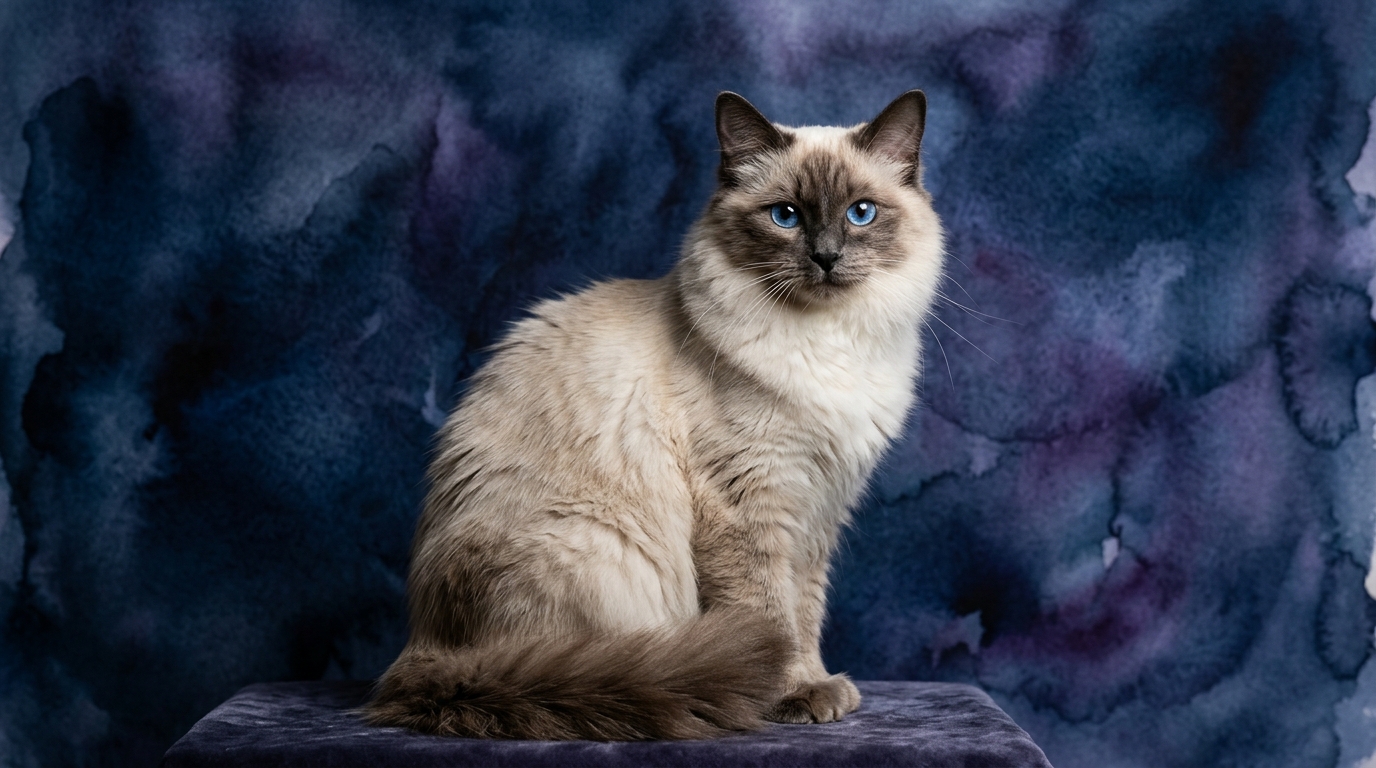
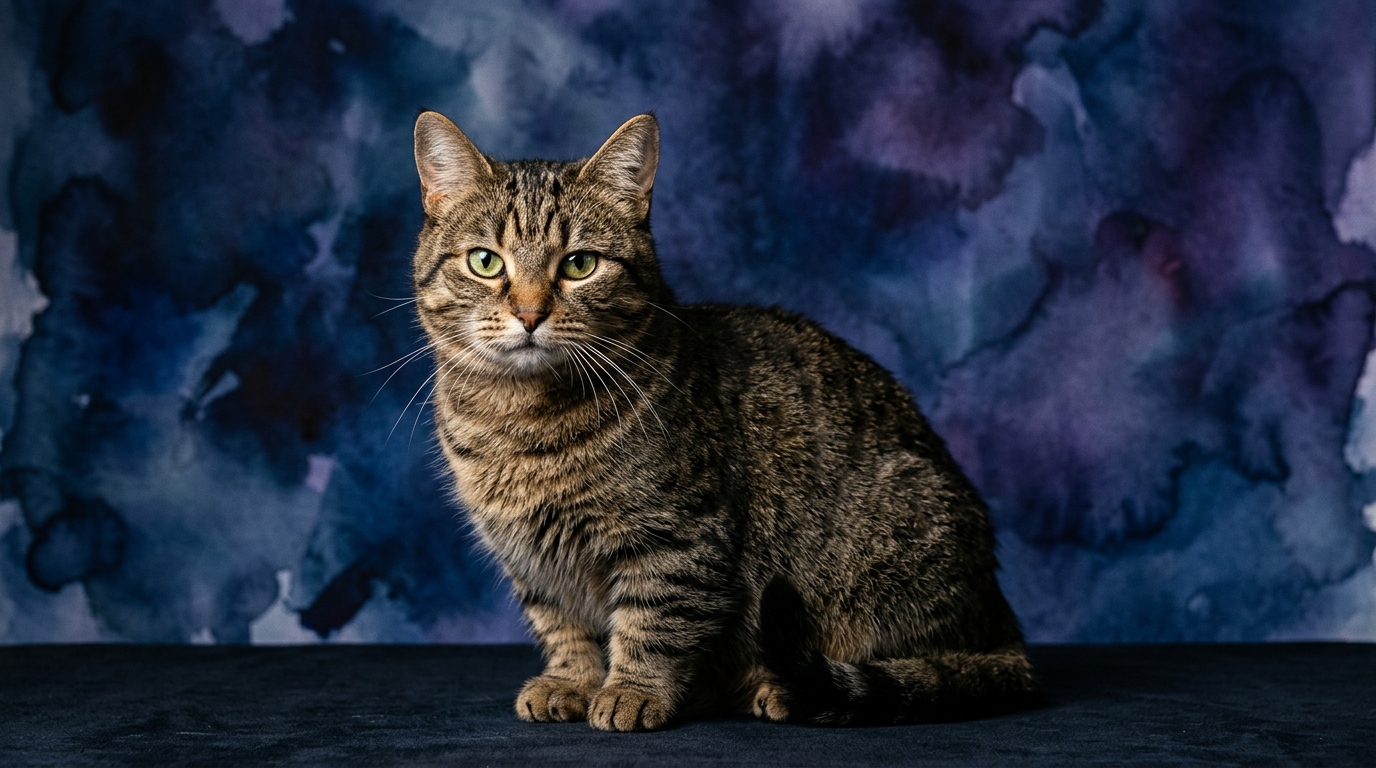
Side-by-Side IQ Profile: Balinese vs. Munchkin
The Cosmic Pet Pet IQ Lab offers a comprehensive look at feline cognitive dimensions, providing a valuable framework for comparing breeds. For the elegant Balinese, the profile paints a picture of a remarkably engaged mind: Problem Solving scores 4/5, indicating a strong capacity for navigating complex environmental challenges and figuring out how objects work. Their Training Speed is an impressive 5/5, suggesting a rapid grasp of new commands and routines. Social Intelligence also reaches the top tier at 5/5, reflecting a deep understanding of human cues and a desire for interactive engagement. Instinctive Drive is moderate at 3/5, meaning their natural hunting or territorial behaviors are present but not overwhelming, while Memory stands at a robust 4/5, enabling them to recall past experiences and learned associations effectively.
In contrast, the Munchkin presents a profile that, while perfectly suited to its unique charm, shows a more uniform cognitive approach. Their Problem Solving ability is rated 3/5, indicating they can tackle straightforward puzzles but might require more guidance for intricate tasks. Training Speed is also 3/5, suggesting they learn at an average pace, responsive to consistent, positive reinforcement. Social Intelligence sits at 3/5, meaning they appreciate companionship and interaction but may not exhibit the same depth of reciprocal understanding or communication as some other breeds. Their Instinctive Drive matches the Balinese at 3/5, pointing to a similar level of inherent predatory or territorial behaviors. Finally, Memory is also rated 3/5, allowing them to retain important information and routines, albeit perhaps with less detail or duration than a breed with a higher score.
Where the Balinese Excels Cognitively
The Balinese truly shines in areas demanding mental agility and interpersonal connection. Their Problem Solving score of 4/5 means they are adept at strategizing, often observing and experimenting to achieve a desired outcome, like opening a tricky cabinet or figuring out how to retrieve a toy from an inaccessible spot. This translates into a cat that might actively seek out mental stimulation, finding creative solutions to daily environmental challenges rather than waiting for assistance. Owners might notice their Balinese quickly adapting to new home layouts or mastering interactive puzzle toys with minimal frustration.
Perhaps the most striking advantage for the Balinese lies in its exceptional Training Speed (5/5) and Social Intelligence (5/5). These two dimensions often work in tandem, allowing them to not only quickly grasp human commands and routines but also to understand the subtle nuances of human emotion and communication. A Balinese is more likely to pick up on specific vocal tones, hand gestures, and even facial expressions, adjusting their behavior accordingly. This makes them highly receptive to clicker training, leash training, and even learning complex tricks, driven by their deep connection to their human companions and their capacity for quick association. Their superior memory (4/5) further cements these gains, ensuring that once a lesson is learned, it is likely retained long-term, building a rich repertoire of understood behaviors and experiences.
Where the Munchkin Shines Cognitively
While the Munchkin's cognitive scores are generally more moderate, this profile doesn't signify a lack of capacity but rather a different emphasis, making them particularly well-suited for certain environments and owner expectations. Their consistent 3/5 across most dimensions — Problem Solving, Training Speed, Social Intelligence, and Memory — means they are reliably capable and generally content without requiring constant, complex mental engagement. Their problem-solving skills, while not as elaborate as the Balinese, are perfectly adequate for navigating their environment, especially considering their unique physical structure. They will figure out how to get to their favorite sunbeam or access their food, albeit perhaps through simpler, more direct means.
The Munchkin's cognitive profile often translates into a charmingly straightforward companion. Their 3/5 in Social Intelligence means they are affectionate and enjoy companionship without necessarily demanding the deep, reciprocal 'conversations' that a Balinese might seek. They are content to be near their humans, enjoying petting and play, but might not analyze every human mood shift with the same intensity. This makes them excellent companions for individuals who appreciate a loving presence that is less cognitively demanding, offering steady affection and predictable interactions. Their moderate memory and training speed ensure they can learn household rules and routines effectively, contributing to a harmonious home life without the need for advanced cognitive challenges.
Training Dynamics: Balinese vs. Munchkin
The disparity in Training Speed scores (Balinese 5/5, Munchkin 3/5) fundamentally alters the training experience for prospective owners. A Balinese will typically absorb new commands and associate actions with consequences at an accelerated rate. For instance, teaching a Balinese to 'sit' on command or to come when called can often be achieved in fewer repetitions, as they quickly grasp the desired behavior and the reward associated with it. Their high Social Intelligence also means they are often eager to please and attuned to their owner's reactions, making positive reinforcement highly effective. This breed thrives on structured learning and mental engagement, often enjoying the process of being taught new tricks or even participating in agility courses.
The Munchkin, with its 3/5 Training Speed, requires a more patient and consistent approach. While certainly trainable, they may take more repetitions to solidify a new behavior. Owners should focus on short, frequent training sessions to maintain their interest and prevent frustration. Their moderate Social Intelligence means they respond well to affection and tasty treats as motivators, but they might not seek out training as a primary form of bonding in the same way a Balinese would. For example, teaching a Munchkin to use a puzzle feeder might involve more initial guidance and encouragement, breaking down the task into smaller, manageable steps. Behavioral differences also emerge: a Balinese might try various complex methods to open a door, whereas a Munchkin might stick to simpler attempts or look to its human for assistance more readily, reflecting their problem-solving scores. Consistency is key for the Munchkin, ensuring that learned behaviors become firmly ingrained through routine rather than rapid assimilation.
Matching Breeds to Lifestyles: Active vs. Relaxed Owners
The cognitive profiles of these two breeds offer clear guidance for matching them with suitable owner lifestyles. The Balinese, with its high Problem Solving, Training Speed, Social Intelligence, and Memory, is an ideal companion for active owners who relish interactive engagement and are prepared to provide significant mental stimulation. This breed will thrive in a home where they are involved in daily activities, taught new skills, and provided with challenging puzzle toys or interactive play sessions. Owners who enjoy teaching their cats tricks, walking them on a leash, or simply engaging in lengthy, communicative interactions will find the Balinese a profoundly rewarding and reciprocal companion. They are not content to merely observe; they want to participate and understand, making them a vibrant presence in an active household.
Conversely, the Munchkin's more moderate cognitive scores make it a wonderful fit for relaxed owners seeking a charming and affectionate presence without the demand for constant, high-level mental engagement. While still playful and loving, a Munchkin is generally satisfied with simpler forms of interaction, regular playtime with toys, and ample opportunities for cuddling. They adapt well to quieter homes where their primary role is that of a beloved, genial companion. Owners who prefer a cat that is less likely to experiment with complex escape routes or demand intricate daily training sessions will find the Munchkin's predictable and loving nature deeply appealing. They offer a steady, comforting presence, enriching a relaxed household with their unique charm and gentle demeanor.
The Verdict
Choose the Balinese if you desire a highly interactive, quick-learning feline partner eager for mental challenges and deep social connection; they thrive with owners who enjoy active engagement and consistent training.
Opt for the Munchkin if you seek a charming, affectionate companion with a more straightforward cognitive profile, content with simpler interactions and a relaxed home environment where their unique physical traits can be appreciated.
🧠 Find Your Pet's IQ Score
Our Pet IQ Lab assessment covers 25+ tests across 5 cognitive dimensions — personalized to your breed.
Take the Full IQ Test →Frequently Asked Questions
Do Balinese cats need more attention than Munchkins?
Yes, Balinese cats typically require more attention due to their high social intelligence and desire for interaction. Their cognitive profile suggests they thrive on engagement and can become bored if not adequately stimulated, whereas Munchkins are often content with moderate levels of interaction.
Are Munchkin cats difficult to train because of their lower IQ scores?
Munchkin cats are not difficult to train, but they learn at a more moderate pace compared to the Balinese. Their 3/5 training speed means they respond well to consistent, positive reinforcement and short, frequent sessions, rather than requiring advanced cognitive strategies.
Can Balinese cats learn complex tricks?
Absolutely. With a training speed of 5/5 and high problem-solving abilities, Balinese cats are exceptionally capable of learning complex tricks and even participating in feline agility. They enjoy the mental stimulation and the bonding experience with their owners.