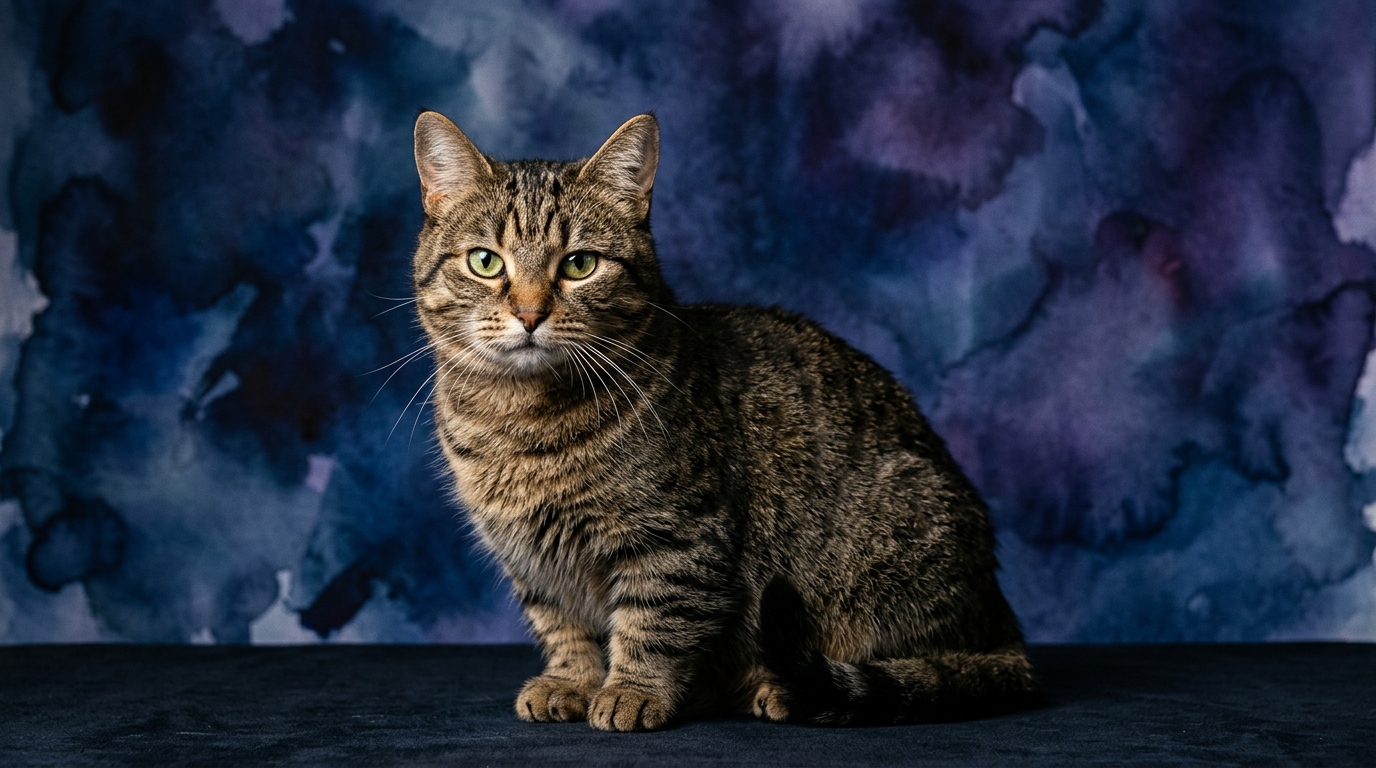
Munchkin at a glance
| IQ Rank / Score | 17/25 |
|---|---|
| Trainability | ★★★☆☆ (3/5) |
| Social Intelligence | ★★★★☆ (4/5) |
| Lifespan | 12-16 years |
| Shedding | Low to moderate |
| Exercise Needs | Moderate (20-40 min play/day) |
| Origin | USA |
Adaptive Problem-Solving: The Munchkin's Ingenious Edge
The primary angle for understanding Munchkin intelligence lies in their remarkable adaptive problem-solving. Unlike other felines that might rely on powerful leaps and stretches to reach high places or overcome obstacles, Munchkins develop alternative, often more ingenious, strategies. Their short stature necessitates a 'thinking outside the box' approach, where they might learn to utilize objects as stepping stones, develop complex multi-step plans to access desired items, or employ their dexterity in novel ways to manipulate their environment. This isn't a sign of weakness but rather a demonstration of a highly flexible and persistent cognitive process, showcasing how physical differences can, in fact, stimulate unique intellectual development. They are masters of ground-level tactics and finding unconventional routes.
This adaptive intelligence manifests in various everyday scenarios, from finding a way to reach a favorite toy perched on a low shelf by nudging it off with their nose or an extended paw, to figuring out how to navigate tight spaces that taller cats might overlook. Their tenacity in pursuing a goal, even when the obvious feline solution (jumping) is less viable, speaks volumes about their cognitive drive. This ability to reframe challenges based on their physical attributes highlights a sophisticated level of environmental awareness and creative strategy formation. Observers often note their persistence and willingness to experiment with different approaches until a solution is found, making them particularly engaging subjects for intelligence studies.
Curiosity and Exploration: Ground-Level Genius
Munchkins possess a profound sense of curiosity and a unique approach to exploration, often dubbed 'ferreting' due to their tendency to stand on their hind legs to get a better view or delve into nooks and crannies. While their short legs might limit vertical exploration, it fuels an intense investigation of their ground-level environment. They meticulously inspect every scent, texture, and small object, deriving extensive sensory information from their immediate surroundings. This isn't merely passive observation; it's active engagement, using their paws to prod, bat, and manipulate items, gathering data through direct interaction. Their world is often explored horizontally with unparalleled thoroughness.
This ground-level genius allows them to uncover hidden toys, treats, or interesting objects that might escape the notice of taller cats more focused on higher vantage points. Their method of exploration is often playful and persistent, indicating a strong desire to understand and interact with their surroundings. This deep-seated curiosity is a cornerstone of their intelligence, driving them to learn, adapt, and continually process new information from their unique perspective. It makes them excellent candidates for tests involving novel objects or puzzle feeders, where their meticulous approach to investigation can truly shine.
Social Grace and Emotional Acuity
Munchkins are renowned for their social intelligence, exhibiting a remarkable ability to bond deeply with their human companions and coexist harmoniously with other pets. They are often described as exceptionally friendly, outgoing, and adaptable cats, quick to pick up on human emotions and social cues. This isn't just about being affectionate; it speaks to a keen understanding of social dynamics and an innate ability to integrate into family structures. They seem to intuitively grasp the nuances of household routines and the moods of their people, often offering comfort or seeking interaction at opportune moments. Their social acumen extends to a cooperative nature, making them pleasant companions.
Their emotional acuity allows them to form strong attachments, often greeting owners at the door, engaging in interactive play, and even responding to their names with enthusiasm. This high level of social engagement is a significant indicator of cognitive flexibility and emotional intelligence, demonstrating their capacity for complex social learning. They thrive on companionship and positive reinforcement, which in turn makes them highly receptive to training and interactive games that strengthen their bond with their human family. Their friendly disposition and ability to integrate seamlessly into diverse households underscore their sophisticated understanding of social environments.
Trainability and Play: More Than Just Lap Cats
Despite their often-mischievous appearance, Munchkins are surprisingly trainable and highly enjoy interactive play, challenging the stereotype of the aloof cat. Their intelligence, combined with their playful and curious nature, makes them excellent candidates for learning tricks, leash training, and engaging in games like fetch. Their responsiveness to positive reinforcement is a testament to their cognitive capacity for association and memory. They quickly learn what behaviors lead to rewards, whether it’s a treat, praise, or extended playtime. This receptiveness indicates a strong desire for mental stimulation and interaction, proving they are far more than just decorative lap cats.
Munchkin cats possess a significant capacity for learning and retention when engaged in structured play and training sessions. Their ability to master commands, navigate obstacle courses designed for their stature, or even perform complex sequences of actions highlights a keen intellect and a willingness to cooperate. This trainability is a direct reflection of their cognitive flexibility, their ability to focus, and their enthusiasm for mental challenges. Owners who invest time in interactive play and positive reinforcement training will discover a highly intelligent and rewarding companion who thrives on engagement and continuous learning.
Instinctive Drives: Hunter's Heart, Unique Strategy
While their short legs might alter their physical approach, Munchkins retain the strong instinctive drives common to all felines, particularly their predatory instincts. They may not leap to the same heights as other cats, but their hunting strategies are adapted and equally effective. They are adept at stalking, often utilizing their low-slung bodies to stay hidden, moving with surprising speed and agility through undergrowth or low spaces. Their play behavior, which often mimics hunting, demonstrates this innate drive, showcasing their strategic thinking and quick reflexes. They are excellent at 'ferreting' out hidden toys and pouncing with precision, using their unique physique to their advantage.
This adaptation of instinctive drives underscores their intelligence, proving that their cognitive functions are not limited by their physical traits but rather optimized to work within them. Their strong prey drive is channeled into intricate games of chase and ambush, indicating a sophisticated understanding of cause and effect and spatial awareness. They derive immense satisfaction from successful 'hunts,' whether it's for a laser pointer dot or a feather toy, reinforcing the importance of regular interactive play to satisfy these fundamental feline instincts and provide crucial mental stimulation.
Memory and Routines: A Reliable Companion
Munchkin cats exhibit strong memory capabilities, particularly concerning routines, significant individuals, and key locations within their environment. They quickly learn daily schedules, anticipating meal times, play sessions, and their owners' return. This excellent recall contributes to their adaptability and their ability to thrive in structured home environments, providing comfort through predictability. They remember specific hiding spots for toys, preferred sleeping areas, and even which family members are most likely to dispense treats or engage in their favorite games. This reliable memory ensures they are consistent and predictable companions.
Their capacity to retain information over time extends beyond simple routines, encompassing an understanding of spatial relationships and learned associations. They remember the layout of their home, the locations of specific objects, and past experiences, both positive and negative. This strong memory underpins their overall intelligence, enabling them to build upon prior knowledge and adapt to new situations with greater ease. For Munchkin owners, this means a companion who understands and responds to their established patterns, reinforcing the bond through shared experiences and familiar interactions.
3 At-Home Tests to Measure Your Munchkin's IQ
These tests are adapted from peer-reviewed ethology research. No equipment is needed beyond items you have at home. Run each test 5–10 times for reliable results.
The Myth: "Munchkin cats are less agile and therefore less intelligent or capable than other cat breeds."
✅ While their physical approach differs, Munchkins are highly intelligent and adapt their strategies to overcome perceived physical limitations with cleverness, tenacity, and unique ground-level tactics, proving they are just as capable, albeit different, in their cognitive expression.
Munchkin vs. Similar Breeds
🧠 What's Your Cat's IQ Score?
Our full Pet IQ Lab assessment includes 12+ tests across 5 cognitive dimensions, calibrated for Munchkins specifically.
Take the Full IQ Test →Frequently Asked Questions
How smart is a Munchkin?
Our Pet IQ Lab framework scores cognition across five dimensions (max 25). The Munchkin totals 17/25 — high for a domestic cat. The full article breaks down each dimension with at-home tests.
Are Munchkins easy to train?
Munchkins can learn most cues, but expect to repeat lessons and keep sessions short. They score 3/5 on Training Speed in our breed profile.
Are Munchkins good with children and other pets?
Yes — their Social Intelligence rates 4/5 in our Pet IQ Lab framework. With early socialization and supervised play, most Munchkins integrate well into families with respectful children and other pets.
Do Munchkins need a lot of mental stimulation?
Absolutely. With Problem Solving 4/5 and Instinctive Drive 3/5, Munchkins need daily mental work — puzzle feeders, scent games, training sessions, or interactive wand toys — to avoid boredom.
How much exercise does a Munchkin need?
Munchkins do well with 20-40 minutes of interactive play plus a few short training moments.
How good is a Munchkin's memory?
Munchkins score 3/5 on memory. They remember high-value associations well; less-used cues fade without refresher sessions.
What is the typical lifespan of a Munchkin?
Most Munchkins live 12-16 years with good veterinary care, quality diet, and indoor living.
The Munchkin cat is a prime example of how cognitive intelligence can flourish uniquely, adapting ingeniously to physical traits. Their blend of adaptive problem-solving, deep curiosity, and social grace establishes them as remarkably intelligent and engaging companions, proving that true feline brilliance transcends traditional expectations and physical forms.